The One Rule That Overrides Everything Else
Before getting into specific items, the single most important clothing principle for hiking is this: no cotton. Not for your base layer, not for your mid-layer, not even for your socks if you can avoid it. Cotton absorbs sweat and rain and stays wet for hours, which pulls heat away from your body. In mild weather on a short trail, wet cotton is uncomfortable. In cool or windy conditions, wet cotton is how mild hypothermia starts.
Synthetic fabrics, polyester, nylon, polypropylene, and merino wool both wick moisture away from your skin and dry significantly faster than cotton. This difference is the foundation of functional hiking clothing, and you can feel it immediately the first time you hike in a proper moisture-wicking shirt versus a cotton T-shirt on a warm day.
Everything below builds on this foundation. Once you understand moisture management, layering, and protection, the specific brands and price points become secondary decisions.
Base Layer: The Layer Against Your Skin
Your base layer is the most important piece in terms of comfort, because it's the layer your skin is actually in contact with throughout the hike. The two functional choices are synthetic and merino wool, both work, with different tradeoffs.
Synthetic base layers (polyester, nylon blends) dry extremely fast, are durable, and cost less. Patagonia Capilene Cool Daily, REI Co-op Active Pursuits, and Columbia Zero Rules are all solid options in the $35–$55 range. The downside of synthetics is odor, they tend to develop persistent smell after several uses without washing, which matters on multi-day hikes but is irrelevant for day hiking.
Merino wool base layers are naturally odor-resistant, temperature-regulating (they work in both warm and cool conditions), and soft against skin, but they're significantly more expensive ($80–$150 for quality options like Smartwool or Icebreaker) and require more careful washing. For warm-weather day hiking, synthetics make more sense. For multi-day backpacking where you're wearing the same shirt for 3–4 days, merino's odor resistance justifies the cost.
For women, sun hoodies, UPF-rated long-sleeve shirts that provide sun protection, are extremely popular for desert and alpine hiking where you need sun protection on your arms but don't want to apply sunscreen every two hours. Outdoor Research Echo, Patagonia Tropic Comfort, and REI all make lightweight versions that serve as a base layer and sun protection simultaneously.
Mid-Layer: Insulation When You Need It
Your mid-layer provides warmth when temperatures drop, on cool mornings, at the summit, or in shoulder seasons. For most three-season hiking, the mid-layer lives in your pack and comes out at rest stops, at the summit, or when temperature drops unexpectedly.
Fleece jackets are the standard mid-layer for hiking. They're affordable, durable, dry quickly, and provide substantial warmth. Patagonia R1, Arc'teryx Kyanite, and REI Co-op Groundbreaker are all reliable at different price points. Quarter-zip fleece is slightly more packable than a full-zip and works for most hiking uses.
Down jackets offer more warmth per ounce than fleece and pack down to a much smaller size, a Patagonia Down Sweater compresses to about the size of a softball. The limitation is wet environments: down loses most of its insulating value when wet and takes a very long time to dry. For the Pacific Northwest or any hiking where you expect sustained rain, a synthetic insulated jacket (which retains warmth even when damp) is more practical than down.
Active insulationjackets designed to be worn while moving, bridges the gap. Patagonia Nano-Air, Arc'teryx Atom LT, and similar pieces are breathable enough to hike in when it's cold, and insulating enough to stand around in at a cold summit. These cost more than fleece but eliminate the start-stop-layer cycle on cold days.
Outer Layer: Wind and Rain Protection
A packable rain jacket is non-negotiable for any hike in mountain terrain or any hike longer than 2–3 hours. Weather changes faster than forecasts predict, and getting caught in rain without a shell, especially in cool temperatures, creates genuine hypothermia risk even in summer.
For most hiking, a 2.5-layer rain jacket is sufficient and significantly lighter than a heavy 3-layer hardshell. Marmot PreCip Eco ($100–$120), REI Co-op Rainier ($100), and Outdoor Research Helium ($190) are well-regarded options that weigh 10–14 oz and compress small enough to keep permanently in your pack. Features to look for: seam-sealed construction (not just water-resistant coating), hood with adjustment for helmet or hat compatibility, and pit zips or mesh lining for ventilation if you plan to hike in your shell rather than just wear it at rest stops.
Wind jackets (no waterproofing, just wind resistance) are useful in alpine environments where wind rather than rain is the hazard. They're lighter and more packable than rain shells but offer no protection against sustained rain. For desert and alpine hiking where rain is unlikely but wind is a constant, a wind jacket is worth carrying instead of or alongside your rain shell.
Pants and Shorts: What the Terrain Determines
Hiking pants and shorts are less critical than your upper body layers but still matter. The primary considerations are: protection from brush and insects, sun protection, moisture management, and comfort over a full range of motion.
Hiking shorts work for most warm-weather trails on maintained paths. Nylon or polyester blends dry fast and don't restrict movement. Compression shorts or a hiking skirt underneath are useful for preventing thigh chafing on longer hikes. A 7–9 inch inseam provides enough coverage for most scrambling and brush contact.
Convertible hiking pants (with zip-off legs) give you flexibility to go from pants to shorts as temperatures change, but they're heavier and bulkier than either dedicated pants or shorts. Many hikers prefer carrying a separate pair of shorts for warm miles and wearing lightweight pants for cold sections.
Softshell pants are excellent for shoulder-season hiking in cool or windy conditions, they're warmer than nylon trail pants, more breathable than hardshell rain pants, and work well in light rain. Prana Stretch Zion and Arc'teryx Gamma are the standard references at different price points.
For women, hiking leggings have largely replaced traditional hiking pants on trail. Modern technical leggings (Patagonia Centered, REI Hydro, Columbia Titan Peak) are built with UPF ratings, moisture-wicking fabric, and reinforced panels that handle scrambling and extended outdoor use. They're cooler than pants on hot days and more comfortable for most people than traditional trail pants.
Footwear: The Decision That Matters Most
What goes on your feet affects your safety, energy output, and enjoyment more than any other clothing item. Road running shoes lack the outsole grip to handle rocky, wet, or rooted terrain safely. Cotton socks cause blisters even on easy trails.
Trail runners are the right choice for most day hiking on maintained trails. They're lighter than hiking boots, break in immediately (no painful break-in period), and modern trail runners have outsoles that grip well on most surfaces. HOKA Speedgoat, Salomon Speedcross, Brooks Cascadia, and Merrell Moab Speed are all proven options. Expect to spend $110–$160 for quality trail runners that will last 300–500 miles.
Hiking boots make sense for heavy packs, technical terrain, or routes with significant ankle-twisting hazard from loose rock. A mid-cut hiking boot provides ankle support that trail runners don't. Salomon X Ultra 4, HOKA Anacapa, and Merrell Moab 3 Mid are reliable options. The tradeoff: boots are heavier than trail runners and require a break-in period of 3–4 hikes before they're comfortable for long days.
Socks are frequently underestimated. Wool or synthetic hiking socks with cushioning prevent blisters, regulate temperature, and last far longer than cotton athletic socks. Darn Tough (lifetime guarantee), Smartwool, and Farm to Feet are the go-to brands. Buy socks before boots, wear the socks when fitting boots, and replace socks before they wear thin.
Hats, Gloves, and Sun Protection
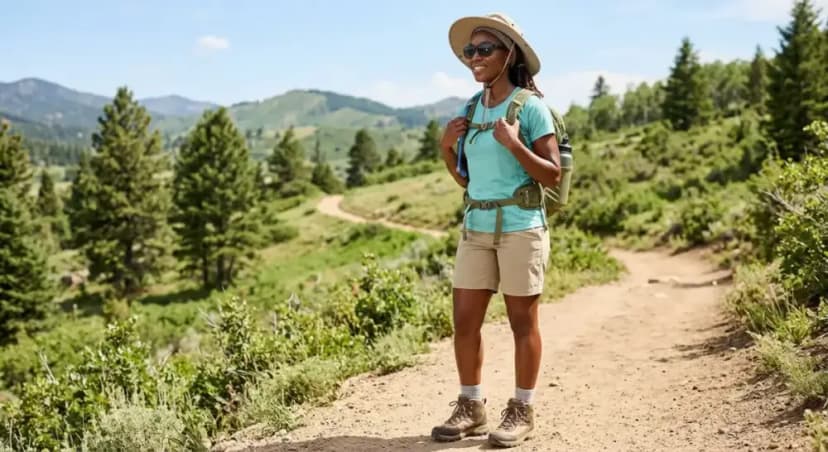
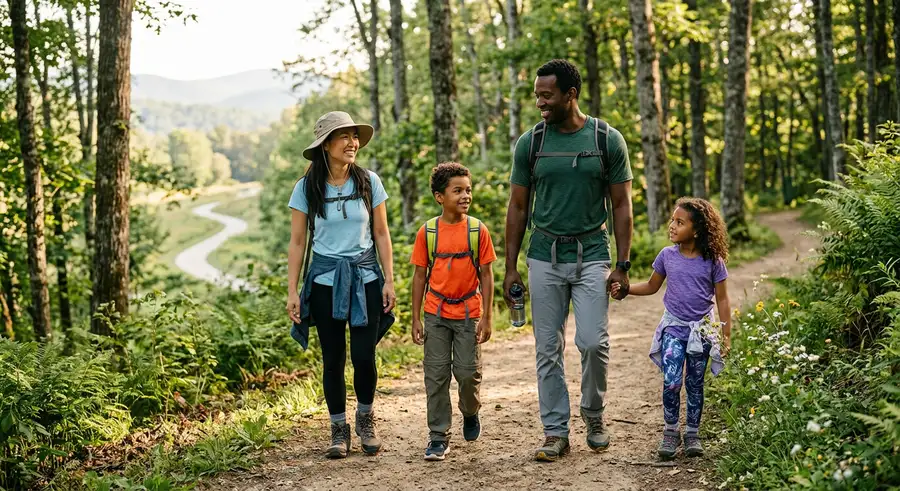
A hat is one of the most functional pieces of hiking clothing. A brimmed hat protects your face, ears, and the back of your neck from sun exposure, all areas that get burned easily on exposed terrain. A lightweight baseball cap works for forest hiking; a wide-brim hat matters on desert and alpine terrain where sun exposure is intense and sustained.
Gloves live in your pack on most warm-weather hikes and come out at summits, in shoulder season, and any time wind makes temperatures feel significantly colder than the air temperature. Lightweight liner gloves (merino or synthetic, $20–$30) are worth carrying on any hike above 8,000 feet regardless of season. In winter, insulated waterproof gloves or mittens replace liners entirely.
Sunglasses with UV protection are functional hiking equipment, not vanity. UVA/UVB exposure increases significantly at elevation, about 4% per 1,000 feet, and reflected UV from snow can cause snow blindness (painful, temporary vision loss) on glaciated terrain without eye protection. Polarized lenses reduce glare on snow and water. Wraparound frames provide better coverage on exposed ridges where sun angles low from the side.
What Not to Wear
To complete the picture: jeans are the worst possible hiking pants, heavy, slow to dry, restrictive when wet, and offer no technical benefit over proper trail pants. Sandals and flip flops belong at camp, not on trail. Rain ponchos, the disposable plastic type, are worse than a packable rain jacket in almost every way on an active hike: they catch wind, restrict arm movement, and don't protect your legs. A real rain jacket is worth the weight. And anything with pure cotton in the construction, check labels, should stay in your casual rotation rather than go on the trail.
What to Wear Hiking: A Beginner's Complete Clothing Guide FAQs
Technically yes, but it's a poor choice. Jeans are heavy, restrictive when wet, slow to dry, and offer no moisture-wicking properties. On a short, dry trail they're fine. On anything longer, hillier, or in changeable weather, proper trail pants or shorts made from nylon or polyester are dramatically more comfortable and functional.
Synthetic fabrics (polyester, nylon) and merino wool are both excellent choices, they wick moisture and dry quickly. Avoid cotton in any layer next to your skin. Cotton absorbs moisture and stays wet, which causes chafing on warm hikes and creates hypothermia risk in cool conditions. 'Cotton kills' is an exaggeration for mild scenarios, but it points to a real problem.
Yes, footwear with a grippy, trail-specific outsole is important for safety and comfort. Road running shoes lack the traction to handle rocky, wet, or rooted terrain. Trail runners (lighter, no break-in required) or hiking boots (more ankle support for heavy packs) are both good choices depending on the terrain and pack weight.
Moisture-wicking synthetic or merino base layer (long or short sleeve), lightweight shorts or hiking pants, trail runners with hiking socks, a wide-brim hat, sunglasses, and sunscreen. In desert heat, a lightweight long-sleeve sun hoodie provides UPF protection while keeping you cooler than bare arms by blocking radiant heat. Always carry a rain layer even in summer.
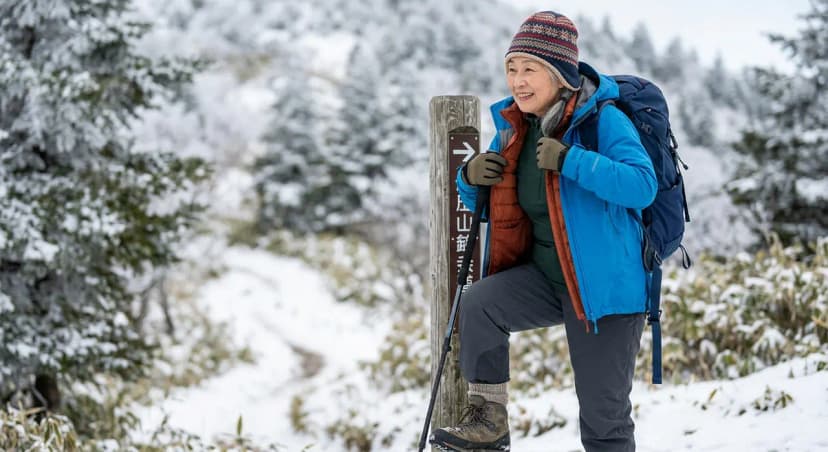
Layer system: moisture-wicking base layer (synthetic or merino), insulating mid-layer (fleece or down jacket), and a wind/rain outer shell. Warm hat and gloves, and merino wool socks. Waterproof hiking boots or trail runners with gaiters for snow. The key principle is layers you can add or remove as temperatures change with exertion and elevation.