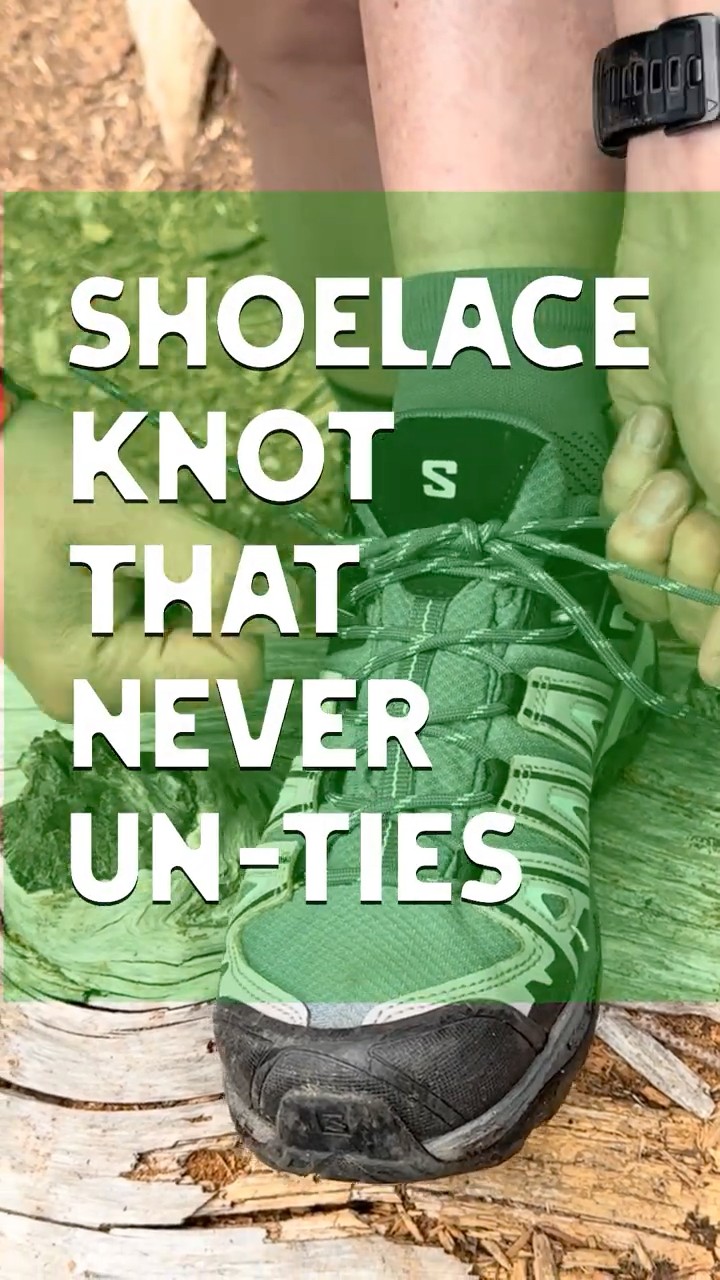
 Watch, 44 secondsThe shoelace knot that never un-tiesEugene from Team ExplorOFF ties the finishing knot we use on every boot. It is the fix for laces that come loose two miles in, and it takes one extra second at the trailhead.Watch on YouTube →
How to Lace Hiking Boots (Complete Guide to Every Technique)
Most hikers never think about how they lace their boots. They pull the laces tight, tie a knot, and head out. Then they wonder why their heels are slipping, their toes are bruised, or their ankles feel unstable on steep terrain.
The way you lace your hiking boots directly affects comfort, blister formation, ankle support, and foot fatigue over a long day. Different lacing techniques solve specific problems, and knowing which one to use, and when to switch mid-hike, can be the difference between a great day on trail and a miserable one.
This guide covers every major lacing technique, when to use each, how to execute the heel lock step-by-step, and how to diagnose lacing problems that show up after miles on trail.
Why Lacing Technique Actually Matters
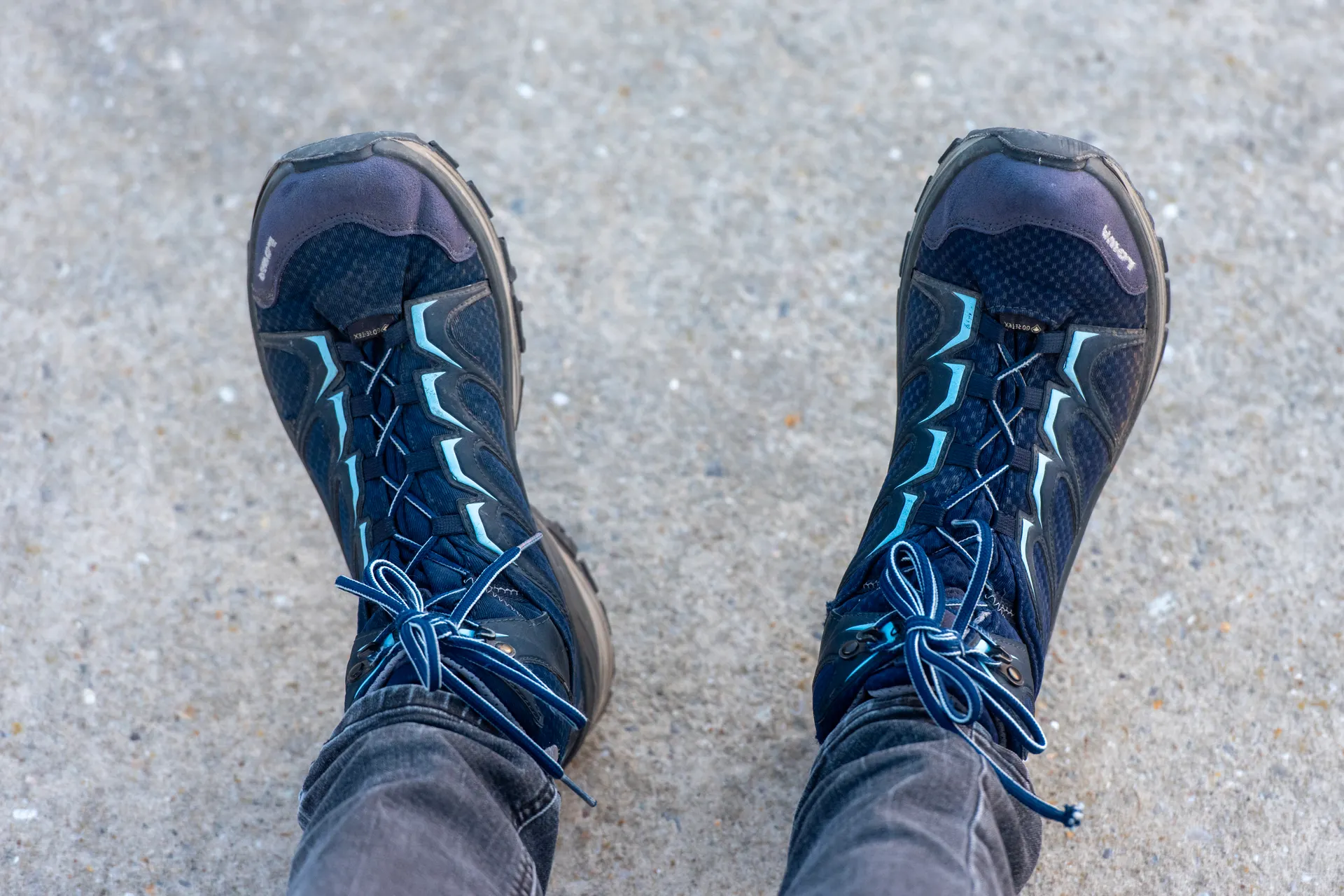
A hiking boot is only as good as how it fits your foot at the moment of use. Even a well-fitted boot can cause blisters, hot spots, and fatigue if laced incorrectly. The laces are your mechanism for customizing fit across five zones of the foot: the toe box, the ball of the foot, the arch, the instep, and the ankle.
Each zone has different needs. Your toes need room to splay and move, especially on descents. Your midfoot needs moderate compression to prevent slipping. Your heel needs to be locked in place, heel movement of even a few millimeters over thousands of steps creates the friction that causes blisters. Your ankle needs either freedom (on flat terrain) or support (on rocky, uneven ground).
Standard straight lacing gives moderate, uniform pressure across all zones. Most specific lacing techniques modify pressure in one or two zones to solve a particular problem. Learning three or four techniques gives you the ability to adjust on the trail as conditions change.
The Anatomy of a Hiking Boot Lacing System
Before covering techniques, understand what you are working with. Most hiking boots have:
- Eyelet section (lower): Traditional punched holes through the boot leather or synthetic upper, usually 3–5 pairs. These secure the toe box and midfoot.
- Speed hooks or D-rings (upper): Metal hooks or rings above the ankle that allow rapid tightening and adjustment. These control ankle support.
- Locking zone: The transition point between the eyelets and the hooks, usually one or two pairs of eyelets just at the ankle crease. This is where you apply the heel lock.
The locking zone is the most important and most overlooked part of boot lacing. Almost all heel slippage problems can be traced back to failure to use this zone correctly.
Technique 1: The Heel Lock (Surgeon's Knot)
The heel lock, also called the surgeon's knot or lace lock, is the single most important lacing technique for hikers. It virtually eliminates heel slippage and reduces blister formation on long days. Every serious hiker should use it by default.
How to Tie the Heel Lock, Step by Step
- Lace the lower section normally. Thread your laces through the eyelets from the toe up to the last pair of eyelets before the hooks begin, typically the pair of eyelets that sit right at your ankle crease.
- Create a loop on each side. Instead of crossing the laces and passing one under the other (as you would in a standard cross), bring each lace end around the outside of the same-side eyelet or hook and pass it back through to create a loop on each side. You now have one small loop on the left and one on the right.
- Cross the laces through the opposite loops. Take the right lace end and thread it through the left loop. Take the left lace end and thread it through the right loop. Pull both lace ends to tighten.
- Pull until the ankle section is snug but not painful. You should feel firm pressure across the ankle crease. There should be no play in the heel, when you lift your heel inside the boot, the boot heel should move with it.
- Continue lacing through the hooks normally. After the heel lock is set, lace up through the speed hooks to the top of the boot and tie your usual finishing knot.
The heel lock works by creating an independent tension point at the ankle crease that resists loosening independently of the rest of the lacing system. It takes about 30 seconds longer to lace up and makes a significant difference over a 10-mile day.
When to Use the Heel Lock
- Any time you are hiking more than 3–4 miles
- On steep descents where the foot tends to slide forward
- When you notice hot spots developing on the back of your heel
- Any time your heel feels like it is lifting slightly inside the boot
Technique 2: Window Lacing (Toe Box Relief)
Window lacing, also called box lacing or skip lacing, relieves pressure over a specific area of the foot by skipping one or two eyelet pairs, creating a "window" where the laces do not cross. It is the go-to solution for hikers who have high arches, a prominent toe, or a painful spot from a bump, bruise, or bunion.
How to Apply Window Lacing
- Lace normally from the toe up to the eyelet pair just below the problem area.
- Instead of crossing the laces to the next eyelet pair, run each lace straight up on its own side, left lace goes from the left eyelet straight up to the left eyelet of the next pair, and right lace does the same on the right.
- After bypassing the problem zone, resume crossing the laces normally from the next eyelet pair up.
The result is a section where the laces run parallel instead of crossing, removing the compressive pressure directly over the painful area. You can skip one or two eyelet pairs depending on how large the area of discomfort is.
Common Uses for Window Lacing
- Pressure from a ganglion cyst or tendon irritation on the top of the foot
- Hot spots from a previous hike that have not healed
- Nerve sensitivity or tingling on the top of the foot (often caused by compression)
- Swelling from a previous ankle injury
Technique 3: Toe Relief Lacing
Toe relief lacing is distinct from window lacing, it specifically addresses toe box tightness by redistributing pressure away from the front of the foot. It is particularly useful on long descents where feet swell and toes slide forward into the boot, causing the characteristic "black toenail" injury that many hikers know too well.
How to Apply Toe Relief Lacing
- Start by threading the lace through only one eyelet at the toe, either the left or right, on the side with more room needed.
- Cross to the opposite side normally. The asymmetric starting point shifts lace tension slightly across the toe box, creating more room on the side you started.
- Alternatively: lace the first two eyelet pairs looser than the rest of the boot. Some hikers skip the first eyelet pair entirely and begin lacing from the second pair, which gives the entire toe box more freedom.
For severe toe box issues, consider whether your boot is actually the right size. In hiking boots, you need a thumb's width of space between your longest toe and the front of the boot to account for swelling and forward slide on descents. If your boots are the right length but still causing toe problems, lacing technique is a meaningful fix.
Technique 4: Ankle Support Lacing
Standard lacing through the hooks gives moderate ankle support. For uneven, rocky terrain where you want more lateral stability, think talus fields, off-trail scrambling, or steep side slopes, you can increase ankle support by modifying how you use the upper hooks.
Figure-Eight Ankle Wrap
- After the heel lock, instead of threading each lace up through the hooks on its own side, wrap each lace once around the ankle in a figure-eight pattern before continuing up through the hooks.
- Bring the right lace around the outside of the left ankle, then cross behind the ankle and come up to the right hook. Repeat symmetrically on the other side.
- This creates a cross-strap at the ankle that adds lateral support without requiring a stiffer boot.
Note that more ankle support means less freedom of motion, this is appropriate for technical terrain but can cause fatigue on flat, easy trails. Remove the ankle wrap on gentle terrain and re-apply when terrain gets technical.
Lacing by Terrain Type
Flat Trail or Easy Day Hike
Standard lacing with a heel lock at the ankle crease. The top hooks can be left slightly looser than the lower section, enough to allow natural ankle flex without introducing play that causes blisters.
Steep Ascent
Looser at the toe box, tighter at the heel and ankle. Your Achilles tendon shortens on sustained uphill, if the upper part of the boot is too tight, you will feel pinching at the heel. After a long uphill section, stop and re-lace the upper section slightly looser if you feel discomfort behind the heel.
Steep Descent
Tighter everywhere, especially at the toe box and heel. Forward slide on descents bruises toes and causes heel blisters. Apply the heel lock firmly. If you feel your foot sliding forward on descents, stop and tighten the midfoot section before the problem gets worse.
Rocky or Talus Terrain
Maximum ankle support. Use the figure-eight wrap or ensure the upper hooks are laced as high as they go. A boot laced loosely around the ankle on rocky terrain provides almost no lateral support regardless of how stiff the boot itself is.
River Crossings
After a crossing, re-lace entirely. Wet laces and wet boots change the fit, the leather or synthetic material swells slightly, and wet laces stretch and lose tension faster. Take 3 minutes to redo your laces after a crossing rather than hiking in boots that are gradually loosening.
How to Diagnose Lacing Problems Mid-Hike
Heel Blisters
Cause: heel movement inside the boot. Fix: stop, remove the boot, and re-lace from the beginning using a firm heel lock. If the blister has already started, apply a blister pad or moleskin before relacing. Do not simply tighten the top laces, that addresses the symptom, not the cause.
Lacing controls pressure, but the sock controls friction, and a heel blister is usually friction. If you get them repeatedly in boots that otherwise fit, the sock is the more likely culprit: Hiking Feet has tested more pairs than anyone we read, and their hiking sock breakdown is the place to start. Our own guide on preventing blisters covers the taping and foot care side.
Toe Blisters or Black Toenails
Cause: toes sliding forward into the front of the boot, usually on descents. Fix: re-lace the lower section tighter and ensure there is enough space in the toe box. Check that your boot size is correct, black toenails on every hike usually mean boots that are too small.
Numbness or Tingling
Cause: laces too tight, usually across the top of the foot. This compresses the peroneal nerve or the blood vessels supplying the toes. Fix: loosen the laces across the problem area. If the problem persists after loosening, try window lacing over the affected zone. Never hike through numbness, it indicates blood flow restriction.
Ankle Fatigue or Rolling
Cause: upper hooks laced too loosely, leaving the ankle unsupported. Fix: re-lace the hooks with firm, even tension. If you feel lateral instability on rocky ground, consider the figure-eight wrap or switch to trekking poles to distribute load.
Laces Coming Undone
Cause: laces with high slippage (often synthetic laces or round-cross-section laces) tied with a standard bow knot. Fix: tie a double bow, after completing the standard bow, pass the loops through each other one more time. Alternatively, tuck the loop ends under the laces after tying. Waxed laces or flat-woven laces hold better than round nylon laces.
When to Replace Your Hiking Boot Laces
Laces are a consumable item. They fray, stretch, and weaken over time, and a lace that snaps mid-hike is a genuine problem. Inspect your laces before every long trip. Signs that replacement is needed:
- Fraying at the aglets (the tips) or at any eyelet contact point
- Laces that will not hold tension and constantly loosen
- Visible thinning or discoloration in the middle of the lace where it takes the most stress
- Any previous repair with a knot tied in the middle of the lace
Replacement laces cost $5–$15 and take two minutes to install. Carry a spare pair on any multi-day trip.
Hiking in low-cut shoes or trail runners instead? The techniques change, because there are no speed hooks and no ankle cuff to work with. See our guide on how to lace hiking shoes.
How to Lace Hiking Boots for Comfort and Blister Prevention FAQs
The heel lock (surgeon's knot) creates an independent tension point at the ankle crease that prevents heel slippage. Instead of simply crossing the laces at the last eyelet pair before the hooks, you loop each lace back through the eyelet on its own side, creating two small loops, then thread each lace through the opposite loop before pulling tight. This locks the heel firmly in place and is the most effective way to prevent heel blisters.
Toe numbness is almost always caused by laces that are too tight across the top of the foot, which compresses the nerves and blood vessels supplying the toes. Stop and loosen the laces in the area where the tightness is worst. If the problem persists, try window lacing, skip one pair of eyelets over the sensitive area to remove compressive pressure. Never hike through persistent numbness.
Apply the heel lock (surgeon's knot) at the pair of eyelets that sits at your ankle crease, the transition point between the eyelets and the speed hooks. This creates a locking point that holds the heel firmly against the back of the boot. Also ensure you are lacing the boot from the bottom up with firm, even tension in the midfoot before applying the heel lock.
Tight enough that your foot does not move within the boot, but not so tight that you feel pressure, tingling, or restricted blood flow. The lower section (toe box and midfoot) should be firm but allow natural toe splay. The heel lock zone should be tight. The upper hooks should be firm enough to support the ankle without causing pinching. Different terrain calls for different tension, re-lace when conditions change significantly.
Window lacing (also called skip lacing) removes compressive pressure over a specific area of the foot by skipping one or two eyelet pairs. Instead of crossing the laces at those eyelets, each lace runs straight up on its own side, bypassing the problem zone. It is the standard fix for hot spots, high-arch pressure, bunions, or any localized pain on the top of the foot.
Re-lace whenever you notice discomfort developing, after stream crossings (wet laces lose tension), at the start of a sustained descent, and whenever you feel your foot shifting inside the boot. For a typical 8–10 mile day, most hikers re-lace once or twice. Taking 3 minutes to fix lacing early prevents blisters that would take days to heal.