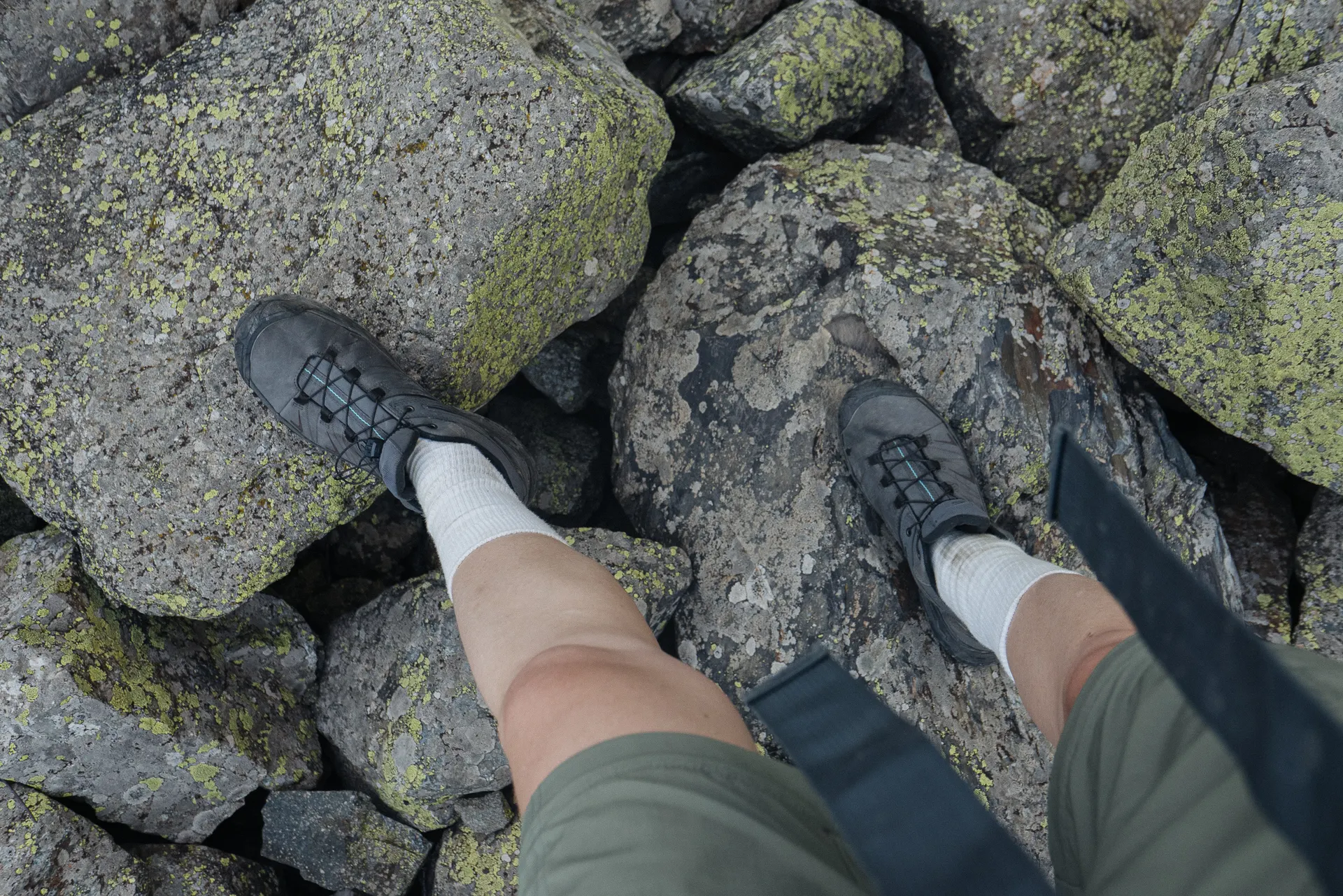
Blisters end more hikes than bad weather, bad fitness, and bad navigation combined. A blister on mile 4 of a 14-mile day is not a minor inconvenience, it is a multiplying problem that gets worse with every step. The good news: blisters are almost entirely preventable. They are not bad luck. They are the result of specific, fixable conditions: wrong boots, wrong socks, wrong lacing, or ignoring the warning signs until it is too late. This guide covers all of it, the mechanics of how blisters form, the gear decisions that matter most, the products that actually work, and exactly what to do the moment you feel a hot spot starting.
Why Blisters Form
Understanding blister mechanics is the fastest way to prevent them. Blisters are not caused by heat or moisture directly, they are caused by shear force. When the skin on your foot moves in a slightly different direction than the layer below it, that differential movement tears the connecting tissue between skin layers, and the resulting gap fills with lymphatic fluid. That fluid pocket is the blister.
Heat and moisture accelerate the process. Wet skin is softer and more susceptible to shear damage. Hot skin means swollen feet, a boot that fits fine in the morning gets tighter as the day heats up and your feet swell. The combination of wet and hot skin inside a poorly fitting boot is how a borderline-fit situation turns into a blister disaster in under an hour.
The three primary blister triggers are friction (boot rubbing against skin), heat (foot swelling from exertion and temperature), and moisture (sweat, water crossings, morning dew through trail shoes). Remove any one of these and blister risk drops significantly. Remove all three and you will almost never get a blister.
Boot Fit: The Most Important Decision You'll Make
No sock, tape, or lubricant compensates for a boot that fits badly. Boot fit is the foundation of blister prevention, and most hikers get it wrong in predictable ways.
The most common mistake is buying boots that are too short. Your foot slides forward on descents, jamming your toes into the toebox. Long descents, like the canyon hikes in Utah's national parks, create thousands of these micro-impacts. The result is black toenails, bruised toes, and blisters on the front of your foot. The fix: when trying boots, stand on an incline or kick your foot forward into the boot, you should be able to slide one finger behind your heel when your toes touch the front. That's approximately a thumb-width of space.
The second mistake is buying boots that are too wide or too narrow. A boot that is too narrow pinches across the ball of the foot and little toe, classic location for outside-edge blisters. A boot that is too wide lets your foot slide laterally with each step, creating friction across the sides and heel. When you try on boots, do it in the afternoon (feet swell throughout the day), wear the socks you will actually hike in, and walk up and down a ramp if the store has one.
Heel lift is the other critical fit check. Stand on a steep incline and your heel should not rise more than about a quarter inch inside the boot. If your heel is lifting significantly with each step going uphill, you will blister at the back of your heel within a few miles. This is often fixable with aftermarket insoles that fill volume or with a lacing change (more on that below).
Breaking in Boots Correctly
Modern hiking boots require less break-in time than leather boots of previous generations, but they still require some. Do not wear brand-new boots on a long or remote hike. The places that are going to rub will not reveal themselves until you have miles on the boots, and discovering a problem at mile 8 of a 16-mile day with no alternative is the worst possible discovery.
The right break-in sequence: start with 2–3 short urban walks (1–2 miles) in the boots to identify initial pressure points. Move to day hikes of 4–6 miles, then progress to your target mileage over 4–6 weeks. Pay attention to where the boots feel stiff, that stiffness is where the leather or synthetic material is still rigid enough to concentrate friction.
Hot spots that appear consistently in the same place during break-in are telling you something important. Do not tape over them and push through, investigate the fit issue. Common fixable problems: lacing pattern causing pressure on the top of the foot (try skipping an eyelet), rigid heel counter causing Achilles irritation (loosen the top two hooks), or toebox width issue (try a different last shape from a different brand).
Sock Selection: The Single Easiest Prevention Tool
Never hike in cotton socks. This is not preference, it is physics. Cotton absorbs moisture and holds it against your skin. A merino wool or synthetic sock that gets wet will still wick moisture away from your skin through capillary action. A wet cotton sock turns into a wet rag pressed against your foot, dramatically increasing friction coefficient and skin softening. The performance difference over a long hiking day is not small.
Merino wool is the gold standard for hiking socks. It regulates temperature better than synthetics (warm when cool, cool when warm), has natural odor resistance, and provides cushioning without bulk. Darn Tough and Smartwool make the most durable merino hiking socks; both brands offer unconditional lifetime warranties on their hiking lines, which tells you something about their confidence in durability. Choose cushioning weight based on your boot type, light cushion for trail runners and lightweight boots, medium cushion for day hiking boots, heavy cushion for mountaineering boots.
Double-layer socks, Wrightsock is the dominant brand, work by creating a slip plane between two sock layers rather than between sock and skin. The inner layer moves with your foot; the outer layer stays against the boot. This dramatically reduces blister formation and works exceptionally well for hikers who consistently get friction blisters even with good boots. The tradeoff is slightly more bulk and a different feel than a single layer.
Injinji toe socks are worth trying if you regularly blister between your toes, particularly common in trail runners with a wide toebox. By separating each toe, they eliminate skin-to-skin friction in the toebox entirely.
Sock thickness matters for fit. A thick cushion sock in a boot sized for thin socks creates pressure. A thin liner sock in a boot sized for thick socks creates slop. Always size boots with the socks you will hike in.
Lacing Techniques That Prevent Blisters
Lacing is underused as a blister prevention tool, and it addresses problems that no sock or tape can fix. The two most important techniques are the heel lock and the eyelet skip.
The heel lock (also called the runner's knot or surgeon's knot) prevents heel slippage, which is the primary cause of heel blisters. To create a heel lock: when you reach the top two hook or eyelet pairs, instead of crossing the lace to the other side, loop the lace back through its own side eyelet to create a small loop, then cross through those loops from both sides before tying. This locks the boot around the ankle and dramatically reduces the heel lift that causes rear-heel blisters. Many experienced hikers use this technique exclusively on the top two eyelets regardless of terrain.
The eyelet skip is useful when you have pressure on a specific part of the top of your foot, common on the high-volume part of the midfoot. Simply skip the eyelet or hook at the point of pressure when lacing. This creates a pressure-free window over that area. The boot will still be secure from the lacing above and below the skip.
Lace tension also matters for different terrain. On steep uphills, tighten the lower portion of the boot for support and loosen the top hooks slightly to allow ankle flex. On steep descents, tighten the top hooks firmly to prevent heel lift and toe-slamming. This is worth stopping to adjust, a 30-second lacing change at the top of a steep descent prevents the 30-minute blister treatment you might otherwise need at the bottom.
Pre-Hike Preparation
Blister prevention starts before you put your boot on. A few pre-hike habits make a significant difference, particularly on longer hikes.
Apply a lubricant to high-friction areas before you start hiking. Body Glide is the most popular option, it applies like a deodorant stick and reduces friction for several hours. Vaseline works equally well and costs a fraction of the price. Target areas: heel, ball of foot, little toe, and anywhere your boots have historically caused problems. Reapply on longer hikes during rest breaks.
If you are heading into wet conditions, river crossings, morning dew, rain, apply Leukotape P to your highest-risk areas before you start. Leukotape creates a physical barrier that stays adhered even when wet, unlike moleskin, which peels off in moisture. Pre-taping before a wet hike rather than responding to hot spots mid-hike is significantly more effective.
Foot hardening over time reduces blister susceptibility. Regular hiking gradually toughens the skin on your foot's high-contact zones. If you primarily hike in shoes and switch to boots for a big trip, the relatively untoughened skin under that boot contact zone will blister faster than it would on a seasoned hiker's foot.
Recognizing and Treating Hot Spots
A hot spot is the burning, warm sensation that precedes a blister. It means the shear force has started separating skin layers but has not yet filled with fluid. This is the critical intervention window. Stop and address it immediately, hiking through a hot spot for even 20 more minutes risks turning it into a blister that will require treatment for the rest of the trip.
When you feel a hot spot, stop. Remove your boot and sock. Look at the skin, it will be red and possibly slightly shiny or raised. Do not wait to see if it gets better on its own; it will not.
Apply Leukotape P directly to the skin over the hot spot, slightly larger than the affected area. Smooth it flat with no wrinkles or gaps. Leukotape is the superior product here, it stays on in sweat and water, it is thin enough that it does not bunch inside a boot, and it is strong enough to remain intact for multiple days. Moleskin is the traditional alternative, but it absorbs moisture, loosens at the edges in sweat, and can bunch and create new friction points. If Leukotape is the only thing you bring for blister prevention, that is the right call.
After taping, check your lacing. A hot spot on the heel often indicates heel slippage, tighten or apply a heel lock. A hot spot on the little toe often indicates the boot is too narrow or too tight across the forefoot.
Blister Products That Actually Work
The hiking blister product market is full of options of wildly varying quality. These are the ones that are genuinely effective:
- Leukotape P: Medical-grade athletic tape. Stays on in water. Thin. Extremely adhesive. The best blister prevention and treatment tape available. Buy a small roll and cut strips as needed. Available at pharmacies and outdoor retailers.
- Compeed hydrocolloid blister bandages: The best treatment for an existing blister. The gel pad cushions the blister and promotes healing by maintaining a moist wound environment. Keep them on until they fall off naturally, peeling them off early disrupts the wound bed. They do not stay on as well as Leukotape in wet conditions but are superior for healing once a blister has formed.
- Body Glide: Best pre-hike lubricant. Odorless, non-greasy, and significantly more durable than Vaseline. Worth the cost if you hike regularly.
- Moleskin: Still useful for cushioning around (not over) a blister, cut a donut shape so the blister sits in the hole. Not reliable as a prevention tape in wet conditions.
- Engo blister patches: Apply inside the boot or shoe on the friction point rather than on the skin. Useful for recurring blisters in the exact same spot, address the boot rather than the foot.
Multi-Day Trips and Foot Care
On multi-day backpacking trips, foot care becomes a daily practice rather than an emergency response. At camp each evening, air your feet for at least 30 minutes. Remove your socks and let your skin dry completely, sustained moisture is cumulative, and wet skin that never fully dries becomes increasingly susceptible to blisters each day.
Inspect your feet daily. Check between toes for maceration (white, wrinkled, softened skin from prolonged moisture). Look for new hot spots you did not notice forming during the day. Address minor issues before they compound over the next day's miles.
Alternate between two pairs of socks, rotating each day so one pair fully dries before you wear it again. Merino wool dries faster than cotton but still benefits from a full drying cycle. Hanging wet socks outside your pack during hiking dries them quickly on a sunny day.
At camp, change into lightweight camp shoes or sandals to rest the pressure points inside your boots. Your feet swell during the day and need recovery time. This also dramatically extends the life of your blister prevention taping, boots off at camp means less time for tape edges to catch and peel.
When a Blister Has Already Formed
If you have an intact blister, the conventional advice is to leave it unpopped, the intact skin provides a natural sterile barrier. For small blisters in low-friction locations, this is correct. Cover with a Compeed bandage and keep hiking.
For large blisters directly under a weight-bearing area (ball of foot, heel) that make walking painful, drainage is often the right call. Sterilize a needle with alcohol or a flame. Pierce the blister at the edge, not the center, and press gently to drain. Keep the overlying skin intact; do not remove it. That skin is your wound cover. Apply antibiotic ointment, cover with a hydrocolloid bandage and then a layer of Leukotape over that. Check twice daily for signs of infection: increasing redness spreading outward, warmth beyond the immediate area, pus, or red streaks. If any of these appear, get to a doctor, infected blisters on trail can become serious.
Frequently asked questions
Wear properly fitted hiking boots, use moisture-wicking socks, keep your feet dry, and treat hot spots immediately with tape or blister pads before they develop into blisters.
Blisters are caused by friction, heat, and moisture. Repeated rubbing between your skin and footwear causes the skin layers to separate and fill with fluid.
Yes. Sock liners or double-layer socks reduce friction by allowing movement between layers instead of directly against your skin, which helps prevent blisters.
No. Avoid popping blisters unless necessary. Cover them with a blister pad or bandage to protect the area and reduce further irritation while hiking.
Leukotape is one of the best options for preventing blisters because it sticks well, reduces friction, and stays in place even during long hikes.
How to Prevent Blisters When Hiking FAQs
Blisters are caused by shear force, when your skin moves in a slightly different direction than the layer beneath it, the layers tear apart and fill with fluid. Friction is the trigger, and heat and moisture accelerate it. Wet skin is softer and more vulnerable, and hot feet swell inside boots, turning a borderline fit into a blister-forming situation. The three root causes are boot fit, sock choice, and moisture management, fix all three and blisters become rare.
Merino wool or synthetic moisture-wicking socks are the correct choice. Never hike in cotton, it absorbs and holds moisture against your skin, dramatically increasing friction and skin softening. Darn Tough and Smartwool make the most durable merino options. Wrightsock double-layer socks work by creating a slip plane between two layers so friction happens between the layers, not against your skin. Injinji toe socks eliminate skin-to-skin blister formation between toes. Choose cushioning weight based on your boot type.
Start with 2–3 short urban walks in new boots to identify initial pressure points. Progress to 4–6 mile day hikes, then build toward your target mileage over 4–6 weeks. Always break in boots with the socks you will actually hike in. Pay attention to consistent hot spots, they signal a fit issue worth addressing (wrong last shape, width mismatch, heel volume) rather than a toughening problem you can push through.
Leukotape P is the best blister prevention tape. It is a medical-grade athletic tape that stays adhered even in sweat and water, remains thin enough not to bunch inside boots, and provides a durable friction barrier. Apply it directly to clean, dry skin before hiking, particularly on your heel, little toe, and any historically problematic areas. Moleskin is the traditional alternative but it absorbs moisture, peels in wet conditions, and can bunch.
Leave small, intact blisters alone, the unbroken skin is a sterile barrier. Cover with a hydrocolloid bandage (Compeed) and continue. For large, painful blisters directly under weight-bearing areas that make walking impossible, drain from the edge with a sterilized needle, keep the overlying skin intact, apply antibiotic ointment, and cover with a hydrocolloid bandage and then Leukotape over that. Monitor for infection signs: spreading redness, warmth, pus, or red streaks.
Stop the moment you feel burning or warmth in a specific spot. Remove your boot and sock. Apply Leukotape P directly over the red area. Smooth it flat with no wrinkles. Check your lacing, heel hot spots usually mean heel slippage, which a heel lock lacing technique can fix. A hot spot on your little toe usually signals the boot is too narrow across the forefoot. Address the hot spot immediately; hiking through it even 20 more minutes risks turning a minor friction point into a blister that will affect the rest of your trip.