Overview
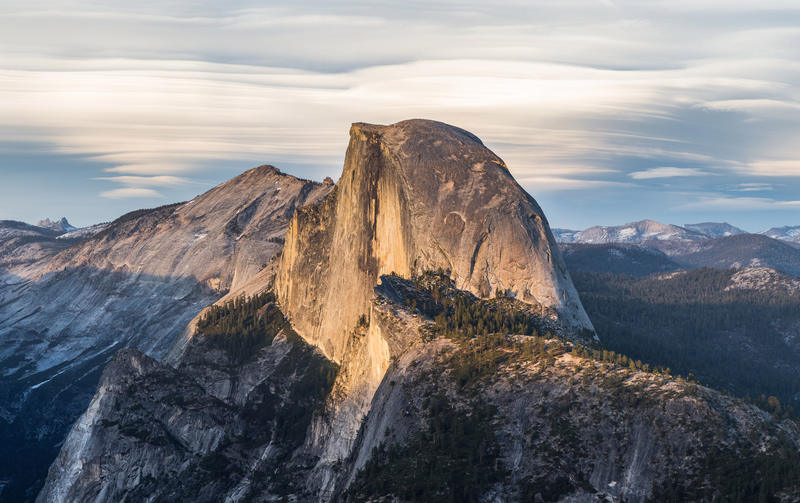
Half Dome is one of the most recognizable peaks in North America, rising 4,737 feet above Yosemite Valley to an elevation of 8,842 feet. The standard route is 14–17 miles round-trip from Yosemite Valley depending on your starting point, with about 4,800 feet of elevation gain. The final 400 feet are climbed using steel cables bolted into the granite, the only section that genuinely requires upper-body effort and a head for heights.
The hike is feasible as a long day hike (12–14 hours) for fit hikers, but many people split it into two days with a night at Little Yosemite Valley. Either way, a permit is required to hike above the Sub Dome, the broad granite shoulder below the cables.
Permit System
NPS runs two permit processes for Half Dome:
- Pre-season lottery: Opens in mid-March for dates March through May. Apply at recreation.gov. Results announced by April 1.
- Daily lottery: Two days before each hiking date, permits are released via a separate lottery at recreation.gov. Apply at midnight two days out (e.g., for Saturday, apply Thursday midnight). Results released by 10am.
Daily lottery permits are limited to 300 per day (including overnight users). Weekend permits are significantly harder to get than weekdays. Shoulder-season dates (May, early June, September, October) have better odds than peak July–August.
Cables are typically installed Memorial Day weekend and removed after Columbus Day weekend. Do not attempt the cables when they are not installed, the route becomes a technical climb.
Getting to the Trailhead
Most day hikers start from Happy Isles Nature Center in Yosemite Valley, accessed via the Valley Shuttle (stop 16). Parking in the valley fills by 7am on summer weekends, take the shuttle from Curry Village or your lodging. The trail follows the Mist Trail or John Muir Trail to the summit.
You'll need to purchase a Yosemite day-use or camping reservation in addition to the Half Dome permit. Both are required.
The Two Routes Up
Mist Trail (recommended)
The Mist Trail is shorter and more spectacular, it passes directly behind Vernal Falls and Nevada Falls, getting you soaked in spray in spring and early summer. From Happy Isles, it's 8.2 miles to the summit via this route. The stone steps are steep and slippery when wet; traction devices help in spring.
John Muir Trail
The JMT switchbacks around Nevada Falls rather than climbing its face, giving you views from above. It's slightly longer but gentler. Both routes converge at the top of Nevada Falls, then continue together to Little Yosemite Valley and the Sub Dome.
The Sub Dome and Cables
From Little Yosemite Valley (6.4 miles from Happy Isles), the trail continues through forest before breaking into open granite. The Sub Dome is a steep granite staircase, about 600 feet of scrambling up stone steps and slabs to reach the base of the cables.
The cables consist of two steel poles running the length of the final 400-foot pitch, with wooden crossbars every 10 feet as footholds. Gloves are strongly recommended, the cables are worn smooth and your hands will thank you. When the cables are crowded, you share the route going up and down simultaneously on the same two cables. Yielding etiquette matters here.
- Gloves: Work gloves or hiking gloves. Non-negotiable.
- Footwear: Approach shoes or trail runners with sticky soles. Sandals and smooth-soled shoes have caused falls.
- Do not attempt in wet conditions. Lightning and wet granite are deadly. Turn around at the Sub Dome if weather is building.
Timeline
Most day hikers leave Happy Isles by 6–7am. Summit by noon. Return by 5–6pm. Total: 10–14 hours. This is a long, demanding day. Eat a real breakfast, carry 3+ liters of water (there's a water source at Little Yosemite Valley), and bring food for full meals plus snacks.
Gear Recommendations
- Gloves: Work gloves or fingerless biking gloves
- Trekking poles: Stow them in your pack for the cables; use them everywhere else
- Water: 3 liters minimum; filter from streams at Little Yosemite Valley
- Layers: Summit temps can be 20°F cooler than valley; bring a windshell
- Headlamp: If you start early or finish late
Half Dome Hiking Guide FAQs
Very hard for peak summer weekends. Daily lottery (2 days before) and pre-season lottery both apply. Weekday and shoulder-season permits (May, Sept, Oct) have better odds. Check recreation.gov daily for cancellations.
Yes. The cables are metal and worn smooth, without gloves your hands will be shredded on the way down. Work gloves or biking gloves work well. Several hikers leave gloves at the base for others to borrow.
Typically Memorial Day weekend through Columbus Day weekend. The exact dates vary by year and snow conditions. Do not attempt the cables when they are down, the route becomes a technical climb.
No. Half Dome is a long, strenuous hike with significant exposure on the cables. You should be able to comfortably hike 10+ miles with 3,000+ ft gain before attempting it. The cables require comfort with heights and exposed scrambling.
Turn around. Wet granite is extremely slippery and lightning on the exposed summit and cables is life-threatening. Several deaths on Half Dome have involved wet conditions. Check the forecast and descend before weather rolls in.
Mist Trail is shorter and passes directly behind Vernal and Nevada Falls, more dramatic but very wet in spring. JMT switchbacks around Nevada Falls, slightly longer but drier. Many hikers do Mist Trail up and JMT down as a loop.