Backpacking Yosemite: The Big Picture
Day hikers see the valley, but backpackers get the real Yosemite: granite domes, alpine lakes, and quiet meadows where you can walk for hours without crowds. Roughly 95 percent of the park is designated wilderness. To sleep out there overnight you need a Yosemite wilderness permit, and the most popular trailheads fill up fast, so planning ahead is the whole game.
If you are new to multi-day hiking here, start by reading our Yosemite hiking itinerary to understand the valley trails before committing to a longer backcountry route.
How Wilderness Permits Work
Permits are assigned by trailhead and entry date, with a daily quota on each one. Most permits are released through an advance reservation lottery on Recreation.gov, with applications opening on a rolling basis about 24 weeks (roughly 168 days) before your start date. Key points:
- You reserve a specific trailhead and date, not a fixed campsite. After your first night out, you can camp where the rules allow.
- A share of each day's quota is held back for first-come, first-served walk-up permits, available the day before or day of your trip at wilderness centers.
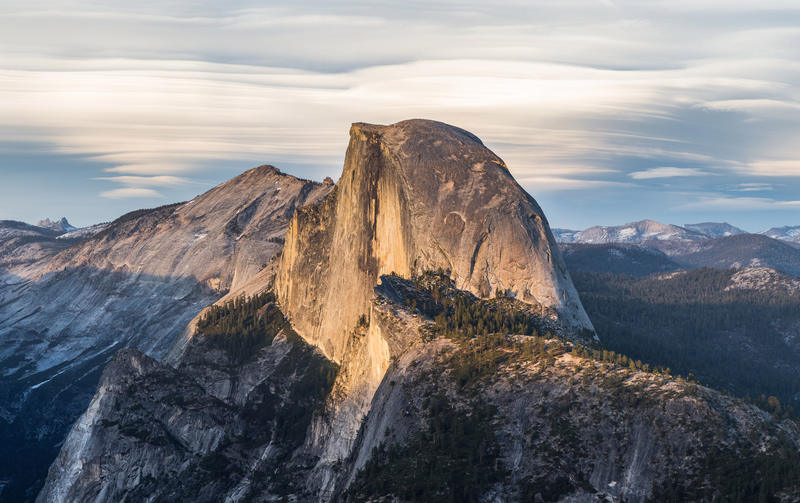
- The most competitive trailheads include Cathedral Lakes, Lyell Canyon, and anything that allows a climb of Half Dome.
Best Multi-Day Routes
A few classic itineraries cover the range of what Yosemite offers:
- Cathedral Lakes (Tuolumne Meadows): A short, scenic overnight to alpine lakes beneath Cathedral Peak, great for a first backcountry night.
- The High Sierra Loop: Connect the High Sierra Camps area past Vogelsang and Merced Lake for several days of high-country travel.
- Lyell Canyon on the John Muir Trail: Gentle riverside miles that climb toward Donohue Pass and the park boundary.
- Little Yosemite Valley: The standard staging camp for a backpacker ascent of Half Dome via the cables.
Bear Canisters and Food Storage
Approved bear-resistant canisters are required for overnight wilderness trips throughout Yosemite. Black bears are smart and persistent, so hanging food is not allowed. You can rent a canister at park wilderness centers. Store every scented item inside it, including toothpaste, wrappers, and sunscreen, and keep the canister at least 100 feet from your tent.
When to Go
The backcountry season is short. The Tioga Road, which accesses the best high-country trailheads from Tuolumne Meadows, typically opens in late May or June and closes with the first big snows in autumn. July and August offer the most reliable trail conditions; September brings cooler nights, fewer mosquitoes, and gold-tinged meadows. Early-season hikers should expect snow on high passes and cold, fast creek crossings from snowmelt.
Leave No Trace and Safety
Camp at least 100 feet from water and trails, pack out all trash, and bury human waste in a 6-inch cathole well away from water sources. Filter or treat all backcountry water. Afternoon thunderstorms are common in summer, so plan to be off exposed passes and domes by early afternoon. Tell someone your route and check the latest conditions at a wilderness center before you set out.
Yosemite Backpacking: Wilderness Permits and Best Routes FAQs
Most permits come from an advance lottery on Recreation.gov, with applications opening about 24 weeks before your trip date. You reserve a specific trailhead and start date. A portion of each day's quota is also held for first-come, first-served walk-up permits at park wilderness centers.
Yes. An approved bear-resistant canister is required for all overnight wilderness trips. Hanging food is not allowed. You can rent a canister at park wilderness centers and must store all scented items inside it.
July and August have the most reliable high-country trail conditions, while September offers cooler nights and fewer mosquitoes. The Tioga Road to the best Tuolumne trailheads usually opens in late May or June and closes with autumn snow.