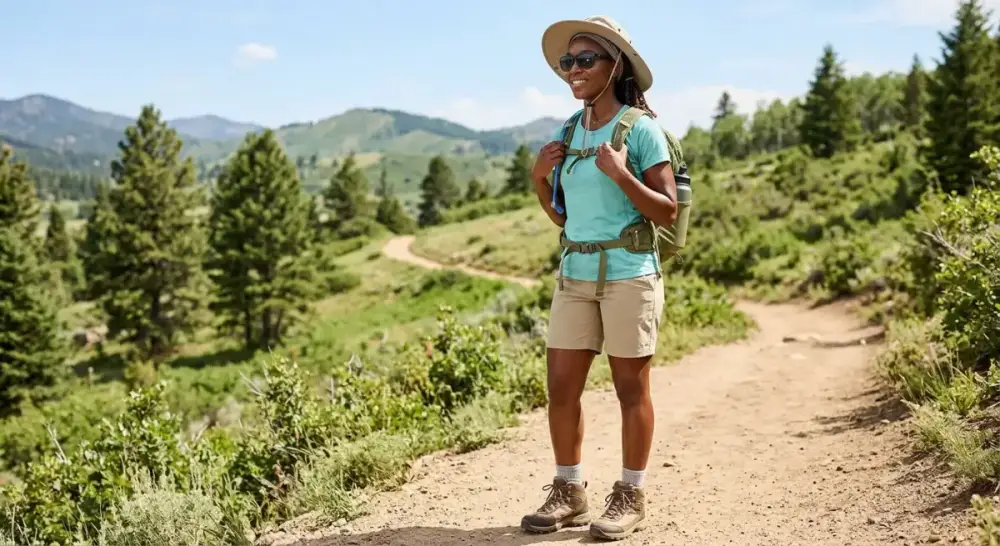
The First Rule: No Cotton
Cotton is the worst fabric you can wear hiking and it can be dangerous in cold or wet conditions. Cotton absorbs moisture (sweat, rain) and holds it against your skin instead of moving it away. Wet cotton doesn't insulate, it actively cools you down. "Cotton kills" is an extreme framing, but hypothermia from wet cotton in cold, wet conditions is a real and documented risk.
Replace cotton with synthetics (polyester, nylon) or merino wool for any layer touching your skin. Both wick moisture away from your body and retain some insulating value when wet. This single change makes a bigger difference than any other clothing decision you'll make for hiking.
Summer Hiking: Heat, UV, and Sweat Management
Base layer / shirt: A lightweight synthetic or merino wool short-sleeve tee. Patagonia Capilene Cool Daily (~$45) and REI Co-op Active Pursuits tee (~$35) are the best options at their respective price points. Synthetics dry faster; merino wool is more odor-resistant and more comfortable against skin for some people. For hot desert hiking, loose-fit UPF-rated long sleeves (Columbia Silver Ridge, Outdoor Research Echo) provide sun protection without overheating and dry fast enough that the extra coverage doesn't feel stifling.
Bottoms: Hiking shorts or lightweight hiking pants with a slight stretch. Prana Stretch Zion pants are the standard for good reason, they look acceptable in a restaurant, move freely on trail, and dry fast. Men's version: ~$90. Women's: Columbia Saturday Trail convertibles work well at a lower price (~$60). Avoid heavy cotton cargo shorts, they're heavy when wet, don't dry fast, and chafe on long hikes.
Footwear: Trail runners or light hiking shoes. In warm weather, full waterproof boots trap heat unnecessarily. Trail runners (Hoka Speedgoat, Salomon Speedcross) or non-GTX hiking shoes ventilate better and perform well in dry summer conditions.
Sun protection: A wide-brim hat (Sunday Afternoons Sun Guide) and UPF-rated sun hoodie beat sunscreen application for sustained sun exposure. Sunscreen is still needed for face and hands.
Fall Hiking: Layering for Variable Conditions
Fall is the most variable hiking season, morning temperatures can be 20°F colder than afternoon, rain is common, and conditions above treeline can turn genuinely dangerous with little warning. The layering system becomes critical.
Base layer: Midweight merino wool or synthetic long-sleeve shirt. Smartwool Classic Thermal Crew (~$120) or Icebreaker 200 Oasis (~$100) are the standards. Merino is worth the premium in fall because the odor resistance matters more on multi-day trips, and the temperature regulation is better across a wider range.
Mid layer: Fleece or down vest for warmth over the base layer. Patagonia R1 Fleece (~$130) is the versatile standard, warm enough for cold mornings, breathable enough to wear while moving without overheating. A light down vest (Patagonia Down Sweater Vest, ~$150) is a good alternative if you run warm while moving but get cold when you stop.
Shell / rain layer: A waterproof-breathable shell jacket. This is the most important piece in fall. Marmot PreCip Eco (~$110) is the best budget option. For a meaningful upgrade, the Arc'teryx Zeta SL (~$300) is significantly more breathable while equally waterproof, worth it if you hike often in rain. Softshells (water-resistant but not waterproof) are acceptable in light rain but will soak through in sustained downpours.
Bottoms: Lightweight hiking pants rather than shorts, with the option to add midlayer tights underneath in cold conditions. Convertible pants work in fall, zip off the legs in the warm afternoon, zip them back on for the cool descent.
Winter Hiking: Insulation and Waterproofing
Winter hiking is a different activity from three-season hiking and the clothing requirements are significantly more serious. Hypothermia risk is real even on mild winter days if you get wet and the temperature drops.
Base layer: Heavyweight merino wool or synthetic thermal base layer top and bottom. Smartwool 250 series or Patagonia Capilene Thermal Weight. Base layers that are too light in winter create an insulation gap you can't close with mid layers alone.
Mid layer: A substantial insulating layer, either a thick fleece (Patagonia R2, Polartec 200 fleece) or a synthetic insulated jacket. Down insulation is not ideal in winter conditions because down loses loft when wet and takes a long time to dry. Synthetic insulation (Patagonia Nano Puff, Arc'teryx Atom LT) retains warmth when wet and is the winter standard.
Outer layer: A waterproof, wind-resistant hard shell or insulated shell. On days with heavy snow or rain, this layer needs to be fully waterproof. On dry cold days, a softshell works and is more breathable.
Extremities: This is where winter hikers get surprised. Heat escapes fastest from your head, neck, hands, and feet. Wool or synthetic beanie, neck gaiter (Buff), insulated waterproof gloves or mittens (Black Diamond Mercury Mitts for serious cold), and wool socks (Darn Tough, Smartwool) are non-negotiable. Waterproof boot gaiters keep snow out of your footwear on trail.
Spring / Rainy Conditions
Spring hiking means wet, mud on trails, rain more than half the days, and streams running high. The priority is waterproofing without roasting.
Key principle: Accept that you'll get wet from sweat even with a waterproof shell. The goal is to stay warm when wet, not to stay perfectly dry. A good moisture-wicking base layer, a breathable shell, and the understanding that dampness is normal will serve you better than trying to achieve perfect dryness through gear alone.
Gaiters: Low gaiters (Outdoor Research Crocodile Gaiters, ~$65) keep mud and water out of your boots on muddy trails. Knee-high gaiters for post-holing in deep snow. This single piece of gear makes spring hiking dramatically more comfortable.
Fabric Cheat Sheet
- Merino wool: Best odor resistance, best temperature regulation, most comfortable against skin. Slower to dry than synthetics. Best for base layers on multi-day trips.
- Polyester / synthetic: Dries fastest, most durable, least expensive. Best for active-use mid layers and base layers for single-day outings.
- Down insulation: Warmest for weight when dry. Useless when wet. Best for dry conditions and camp use.
- Synthetic insulation (PrimaLoft, Polartec): Retains warmth when wet, dries faster than down. Heavier and bulkier for equal warmth. Best for wet climates.
- Gore-Tex / waterproof-breathable: Keeps rain out, lets some sweat vapor out. The breathability rating matters, cheaper membranes breathe less and cause more sweat buildup inside.
How to Dress for Hiking: The Complete Guide for Every Season FAQs
Cotton, especially for the base layer (shirt touching your skin). Cotton holds moisture against your skin, loses all insulating value when wet, and takes far longer to dry than synthetics or wool. In cold or wet conditions, a wet cotton shirt can cause hypothermia. Also avoid jeans (heavy when wet, no stretch), unsupported sandals on anything technical, and waterproof rain gear without a breathable membrane in summer heat.
Yes, for base layers, especially on multi-day trips. Merino's odor resistance means you can wear the same shirt multiple days without becoming offensive to other hikers. Its temperature regulation keeps you comfortable across a wider range than synthetic. The price premium ($80–$120 for a quality base layer vs. $35–$50 for synthetic) pays off if you hike frequently. For day hikes, synthetic is fine.
Lightweight synthetic or merino wool tee, hiking shorts or lightweight convertible pants, trail runners rather than heavy boots, a wide-brim hat, and sunglasses. For desert or exposed alpine hiking, add a UPF-rated long-sleeve sun shirt, it sounds counterintuitive but the UV protection and slight wind barrier keep you cooler than shorts-and-sunscreen alone on exposed terrain.
You need pants that dry quickly, have some stretch, and won't chafe on long days. Dedicated hiking pants (Prana Stretch Zion, Columbia Saturday Trail) are purpose-built for this. Athletic leggings work well for women and increasingly for men. What doesn't work: jeans (too heavy, take forever to dry), cotton athletic shorts (same problem), and any non-stretch work pants. Dedicated hiking pants aren't required but they perform noticeably better.
Yes, whenever conditions are cool enough to warrant more than one layer, or on any hike where you'll sweat significantly. A moisture-wicking base layer moves sweat off your skin, which keeps you more comfortable and prevents chilling when you stop moving. In summer heat on short hikes, a single wicking shirt acts as the base layer. In fall and winter, a dedicated thermal base layer under your mid and outer layers is essential.
Yes. The worked day-by-day plan is Going-to-the-Sun Road: The Drive, Every Stop, in 2 Days (2 Days), with the permits, the stays and the drive times already sorted. Tell us your dates and we will put it together for you and confirm what is genuinely open on those days. Asking is free: no card, no deposit, and nothing is held until you say yes.