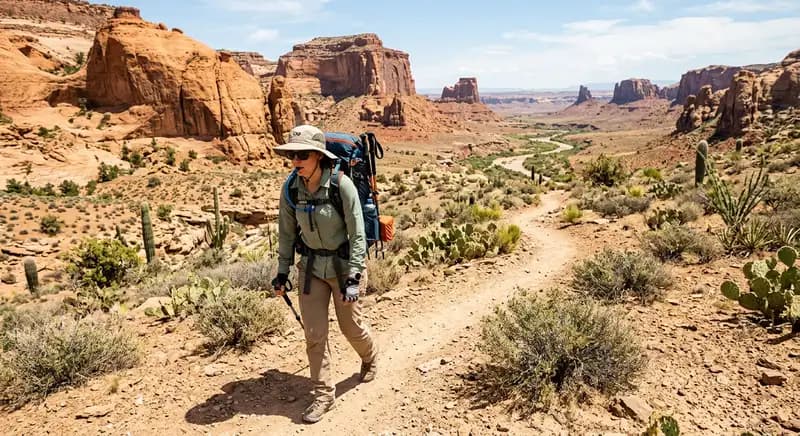
The Reality of Hiking Alone as a Woman
Solo hiking is one of the most rewarding experiences the outdoors offers, a level of self-reliance, presence, and connection to the environment that's hard to replicate in a group. Millions of women hike alone every year without incident. The risks are real but manageable with preparation, and the rewards are genuinely worth it.
This guide is practical, not reassuring theater. It covers what actually matters for safety, because the goal isn't to make you feel better about taking risks; it's to give you the specific tools to reduce risk substantially and hike with genuine confidence.
Tell Someone Your Plan, Specifically
This is the single most important thing you can do for solo hiking safety, regardless of gender. Tell a specific person, not just "I'm going hiking", the following: the exact trailhead, the trail name and planned route, the car you'll be in and where you're parking, your expected return time, and what to do if they don't hear from you by a specific time (usually "call search and rescue at this number").
This contact doesn't have to be a hiking buddy. A family member, roommate, or friend who knows to call 911 if you don't check in by 7pm is adequate. What doesn't count: a vague text saying "hiking today." Be specific and establish a clear check-in protocol.
Communication Devices
A cell phone is your first line of communication, but cell coverage is unreliable on most backcountry trails. For anything beyond popular day hikes, consider a dedicated satellite communicator.
- Garmin inReach Mini 2: Two-way satellite messaging, SOS function, and GPS tracking. Requires a subscription ($15–$50/month) but is the most capable option. Lets you text with anyone from anywhere, and you can enable live tracking so someone can watch your location in real time.
- Spot X: Similar capability at a slightly lower price point. Good SOS function.
- Apple iPhone 14+ Satellite SOS: Newer iPhones can contact emergency services via satellite, but this is one-way only and limited to SOS situations, not general communication.
Live GPS tracking is particularly valuable for solo hikers. With a Garmin inReach, you can share a tracking link with a contact who can see exactly where you are in real time. This significantly reduces the stakes of being unreachable by phone.
Trail Selection for Solo Hiking
Trail choice is a real safety variable. The same level of preparedness means very different risk on different trails.
- Traffic level matters: Popular trails with consistent foot traffic are safer for solo hikers because other people are available to help in an emergency and less conducive to predatory behavior. For your first solo hikes, choose trails that show high traffic on AllTrails.
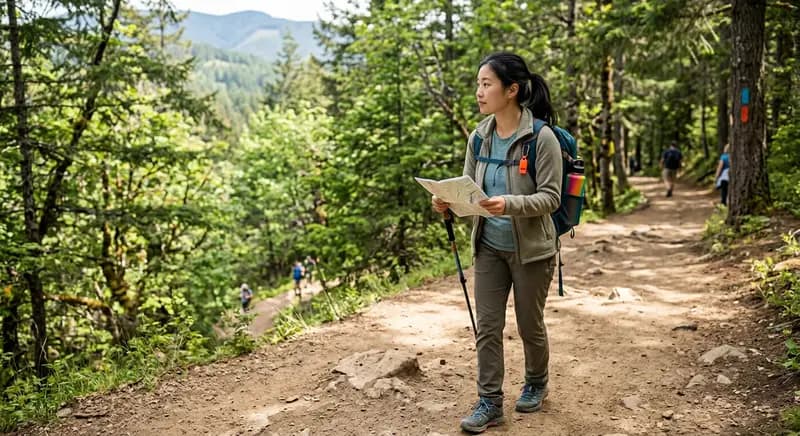
- Avoid unmarked or unofficial trails: Marked, well-maintained trails with clear signage are significantly safer than user-made paths or routes that require navigation skill to follow. Fewer things go wrong when the path is obvious.
- Know what you can handle: Solo hiking raises the stakes on technical mistakes. If you're not confident with creek crossings, skip the trail with three unbridged crossings. If you're not comfortable with scrambling, skip the class 3 summit. The first rule of solo hiking is stay well within your ability level, leave a comfortable margin.
- Check recent reviews: AllTrails reviews from the past few weeks tell you about current conditions, downed trees, high water crossings, trail damage, wildlife activity. Pay attention to them before solo trips.
Situational Awareness Without Paranoia
Effective situational awareness isn't about being suspicious of everyone. It's a set of low-effort habits that keep you informed about your environment.
- Notice who's around you: Be aware of who you pass and whether you encounter the same person multiple times in odd patterns. Most people have innocent explanations; the habit of noticing is what matters.
- Trust your instincts: This is not vague advice. The human threat-detection system is real and often notices things before the conscious mind catches up. If something feels off about a situation or person, you don't need to explain it, just act on it by increasing distance, changing direction, or leaving the area.
- Don't share your solo status unnecessarily: If someone asks if you're alone, you don't owe them an honest answer. "Meeting some friends at the summit" is fine.
- Headphones on one ear only, or none: Being able to hear your environment, footsteps, approaching weather, wildlife, is a real safety advantage. Save the podcast for the drive.
What to Carry Beyond the Standard Ten Essentials
Every solo hiker should carry the standard ten essentials (navigation, sun protection, insulation, illumination, first aid, fire, repair tools, nutrition, hydration, emergency shelter). For solo women specifically, consider adding:
- Personal locator beacon or satellite communicator (discussed above)
- Bear spray: Effective against bears (obviously) and also a powerful deterrent against human threats. Legal in most places. Accessible, not buried in your pack.
- Whistle: Three short blasts is the universal distress signal. Audible from much farther than a human voice in the backcountry.
- Personal alarm: A 130dB personal alarm ($10–15) is loud enough to disorient an attacker. Attach it to a zipper pull for instant access.
Building Confidence Progressively
Don't start your solo hiking career with a 3-day backcountry trip. Build up through stages:
- Solo on a short, popular day hike near a trailhead (1–3 miles). Get comfortable with being alone on trail.
- Longer solo day hikes on well-traveled trails (5–8 miles). Practice navigation, pacing yourself, and decision-making alone.
- Remote or less-traveled day hikes where you might encounter fewer people. Practice full self-reliance.
- Solo overnight camping if desired. The first solo overnight is a significant but manageable step once you're comfortable with solo day hiking.
Each stage builds skills and confidence that make the next one feel natural rather than terrifying. Most women who hike solo regularly report that the first solo trip felt more intimidating than any after it.
After the Hike
When you return, check in with your emergency contact. If you said "back by 7pm, call SAR if you don't hear from me by 8pm", text them when you're back. This closes the loop and means they don't panic unnecessarily, and it reinforces the habit of clear communication that keeps the system working.
Solo Hiking Tips for Women FAQs
Yes, with proper preparation. Millions of women hike solo every year without incident. The most meaningful safety measures are: telling someone your specific plan, carrying a satellite communicator for backcountry hikes, choosing well-trafficked trails while building experience, and trusting your instincts about situations that feel wrong.
Beyond the standard hiking essentials: a satellite communicator (Garmin inReach), bear spray (accessible, not buried in your pack), a 130dB personal alarm, and a whistle. Tell someone your specific plan including trailhead, route, and expected return time.
Trust your instincts. You don't have to be polite to someone who makes you uneasy. Increase distance, change direction, or turn back without explanation. If you feel threatened, make noise, get around other people, or use your personal alarm. You don't owe anyone your company or your solo status.
No, you don't need to volunteer that information. If someone asks, you can say you're meeting friends further up the trail. This isn't deception; it's reasonable privacy. Do tell your emergency contact at home exactly where you're going.
Start with popular, well-trafficked trails with consistent foot traffic and clear signage. AllTrails popularity ratings help identify these. As you build experience, you can expand to less-traveled trails. National park trails and well-known state park trails are good starting points.