How to Use This Checklist
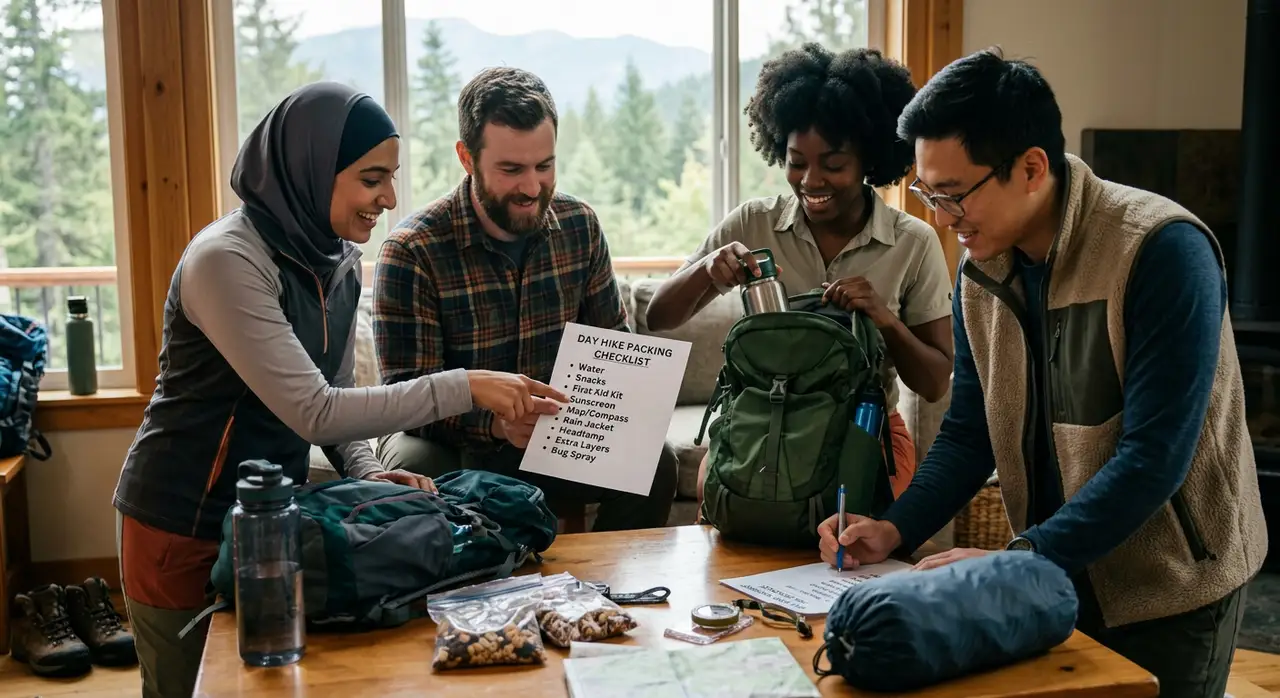
This list is organized by category and scaled for a 4–8 hour day hike in variable mountain or forest terrain. For shorter, easier hikes on well-traveled trails near a trailhead, you can strip it down significantly. For remote trails, longer days, or exposed ridgeline terrain, treat every item as essential. Notes in each section tell you what to adjust based on conditions.
The goal isn't to carry everything, it's to carry the right things. A 15-pound day pack is genuinely too heavy for most hikes. Target 10–12 pounds loaded including water, or lighter if you can manage it. Every pound you save on your back translates directly into less fatigue and more enjoyment.
Water and Hydration
Water is the one item where you should never compromise on quantity. Dehydration on trail impairs judgment, energy, and physical performance before you feel thirsty.
- Water: 2 liters minimum3 liters in heat, at altitude, or on hikes over 6 hours. Half a liter per hour of hiking is the baseline guideline. Two 1-liter Nalgenes weigh 6.6 oz empty and are nearly indestructible. A 2-liter CamelBak reservoir saves you from stopping to drink and is marginally lighter than Nalgenes.
- Water filter or purification tabletsCarry even if you don't plan to use a water source. Sawyer Squeeze weighs 3 oz and processes thousands of liters. Aquatabs (iodine tablets) weigh almost nothing and fit in any pocket. If you run low unexpectedly, a water source on trail without a filter is unusable.
- ElectrolytesOn hikes over 4 hours, especially in heat, plain water without electrolytes can cause hyponatremia (dangerously low sodium from overhydration). Nuun tablets, liquid IV, or even a few salty crackers prevent this. Symptoms include headache, nausea, and confusion, easy to mistake for dehydration, which makes the problem worse if you respond by drinking more plain water.
Food and Snacks
Aim for 200–300 calories per hour of hiking, eaten every 60–90 minutes whether you feel hungry or not. Your body depletes glycogen faster than hunger signals keep up.
- Lunch or main mealA real sandwich, wraps, or a substantial meal for mid-hike. Calorie-dense options (nut butters, cheese, avocado) give more energy per ounce than lean protein alone.
- Trail mix or nutsMixed nuts are roughly 170 calories per ounce, making them the most calorie-dense portable food you can carry. Raisins add sugar for fast energy. A 4-oz bag of trail mix covers 1–2 snack stops.
- Energy barsClif Bar, RX Bar, or similar. Aim for bars with 200+ calories and at least 5g protein. Carry 1–2 per 4 hours of hiking beyond breakfast.
- Salty snacksCrackers, pretzels, jerky. Salt matters for electrolyte replacement, not just flavor. Include something salty even if you're carrying electrolyte tablets.
- Emergency snackOne extra bar or handful of trail mix beyond your planned food. If you take longer than expected or someone in your group needs extra fuel, this matters.
Navigation
Cell service is unreliable on most trails. Assume you'll have no signal once you're more than a mile from the trailhead.
- AllTrails or Gaia GPS with offline map downloadedDownload the specific trail before you leave the parking lot. Open the app and confirm the map loads with no signal. This is the single most important navigation step most beginners skip.
- Screenshot of the trail mapA backup for when your phone dies or the app fails. Screenshot the full trail with its junction points labeled and save it to your camera roll.
- CompassA basic orienteering compass (Silva Starter or similar, under $15) adds navigation capability that GPS apps can't fully replace when batteries die. Learn to use it before you need it, not during an emergency.
- Note of trailhead coordinatesSave the trailhead GPS coordinates in your phone's native maps app. If you get disoriented, "navigate to saved location" gets you back regardless of whether you have AllTrails loaded.
Safety and First Aid
The items below add minimal weight and cover the situations that most frequently turn a hike into an emergency.
- Headlamp with fresh batteriesCarry even for day hikes. Hikes run long, descents take longer than expected, and being caught on trail after dark without a light is a significant safety issue. Black Diamond Spot weighs 3.2 oz and provides 6+ hours of runtime. Test the batteries before every hike.
- First aid kit (basic)Minimum contents: adhesive bandages in multiple sizes, moleskin or Leukotape for blisters, gauze pads, medical tape, antiseptic wipes, ibuprofen or acetaminophen, antihistamine, and nitrile gloves. Pre-assembled kits from Adventure Medical Kits cover all of this in a 4-oz package for under $25.
- Emergency whistleThree blasts is the universal distress signal. A Fox 40 pea-less whistle weighs under half an ounce and can be heard over a mile away in still conditions. Attach it to your pack strap so it's immediately accessible. Yelling yourself hoarse in an emergency exhausts you; a whistle doesn't.
- Emergency blanketThe foil type weighs 2 oz and compresses to the size of a deck of cards. If someone in your group is injured and you're waiting for help, preventing hypothermia becomes the immediate priority. These retain 90% of body heat even when wet.
- Lighter or waterproof matchesFire-starting capability matters in emergency overnight scenarios. A simple Bic lighter works unless you're in extreme cold (below 20°F). Waterproof matches are more reliable in wet conditions.
- Pocket knife or multi-toolA basic folding knife handles rope cutting, gear repair, food prep, and a dozen other small tasks. Victorinox Hiker weighs 2.7 oz and costs under $30.
Clothing (What to Carry Beyond What You're Wearing)
Layer logic for day hiking: wear enough to stay comfortable at rest, carry what you'll need if conditions change.
- Rain jacketMandatory on any hike in mountain terrain, regardless of the forecast. Lightweight packable options (Marmot PreCip, REI Rainier) weigh under 14 oz. If you get caught in rain without one, wet plus cold plus tired creates real hypothermia risk even in summer.
- Insulating mid-layerA fleece or down jacket for alpine hikes, shoulder-season hikes, or anywhere above treeline. Summit temperatures are 10–20°F colder than trailhead temperatures with wind added. A compressed down jacket weighs 10–12 oz and fits in a fist.
- Warm hat and glovesOn shoulder-season hikes (May, October, November) above 6,000 feet. You don't need them for most summer valley hikes, but they weigh almost nothing and hypothermia from wet and wind is not a summer-only risk.
- Extra socksOne extra pair. Wet socks cause blisters and cold feet. On any hike with stream crossings or in rainy conditions, dry socks mid-hike matter more than almost any other comfort item.
- GaitersOptional for most, mandatory in deep mud, snow, or scree. Low gaiters (ankle height) keep debris out of your shoes and are useful on brushy trails or trails with loose rock.
Sun and Skin Protection
- Sunscreen SPF 30+Apply before you leave the car, not at the trailhead. UV radiation increases 4% per 1,000 feet of elevation gain, which means the exposure at 10,000 feet is roughly 40% higher than at sea level. Reapply every 2 hours on exposed skin.
- SunglassesPolarized lenses reduce glare on snow, water, and bright rock. UV protection is the functional requirement; polarization is a bonus. On glaciated terrain or in snow, UV-blocking glasses are mandatory to prevent snow blindness.
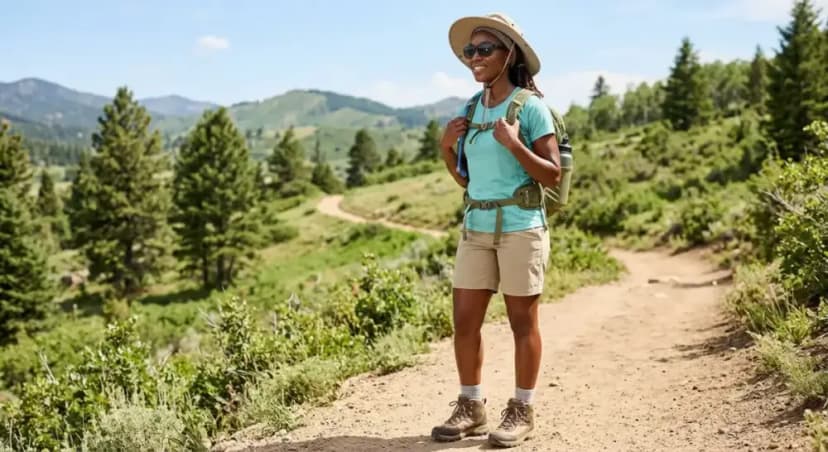
- Sun hat or capA brimmed hat protects your face, ears, and the back of your neck. Baseball caps are adequate for forest hiking; a broad-brimmed hat matters on exposed, treeless terrain.
- Lip balm with SPFFrequently forgotten and genuinely useful. Chapped lips at altitude are painful and slow to heal.
Pack and Accessories
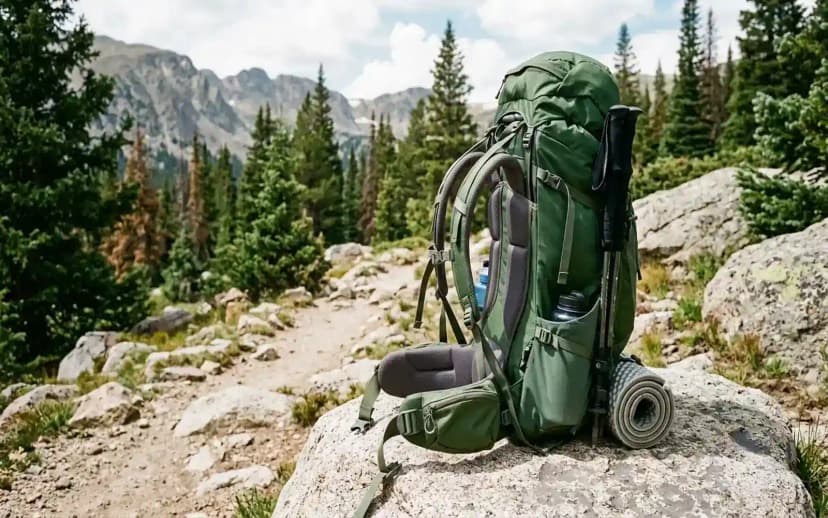
- Daypack (20–30L)Large enough for all of the above plus your layers, small enough to stay under 15 lbs loaded. Hip belt distributes weight and reduces shoulder fatigue on hikes over 3 hours.
- Pack rain coverMost daypacks include one under the bottom panel. If yours doesn't, a contractor garbage bag weighs nothing and keeps gear dry in heavy rain.
- Trekking poles (optional)Reduce knee strain on descents by roughly 25%, improve balance on loose terrain, and help with stream crossings. Not necessary for short flat hikes, but worth borrowing or renting for your first steep-descent trail.
- Charged phoneYour navigation device, emergency communication tool, and camera. Bring a small battery pack (Anker PowerCore 5000, 5 oz) if you're using your phone heavily for navigation or photography on hikes over 5 hours.
What to Leave Behind
Gear you don't need on a day hike: a tent, sleeping bag, cooking system, full first aid kit, bear canister (unless area regulations require one), more than one change of clothes, or a heavy DSLR camera. Every pound of unnecessary gear translates into unnecessary fatigue. Day hiking isn't camping, resist the urge to overpack "just in case."
Day Hike Packing Checklist: Everything You Actually Need FAQs
Target 10–12 pounds loaded including water for a typical day hike. Going over 15 pounds on a day hike is usually a sign you're carrying unnecessary items. The pack weight rule of thumb from backpacking (no more than 20–30% of body weight) is overly generous for day hiking, lighter is always better when you're not also carrying camping gear.
Water, and enough of it. Half a liter per hour of hiking is the baseline. More experienced hikers would add a headlamp as equally important, since being caught on trail in the dark without light is a genuine safety issue even on well-marked trails.
Not for most beginner hikes on moderate terrain. Trekking poles become valuable on steep descents (they reduce knee stress by about 25%), on loose or unstable terrain, and on stream crossings. If you have knee issues, borrow or buy a pair before your first significant descent hike.
Yes, a basic one. Focus on blister treatment (moleskin, Leukotape), pain relief (ibuprofen), wound care (bandages, antiseptic wipes), and an emergency blanket. Pre-assembled kits like the Adventure Medical Kits Day Tripper cover all of this in a small, organized package.
Audit every item for necessity on this specific hike. Carry only the water you need (don't bring 3 liters for a 2-hour hike). Wear layers instead of packing them when possible. Choose multi-use items, a phone with downloaded maps replaces a paper map and dedicated GPS device. The biggest weight savings usually come from water volume, food quantity, and cutting redundant safety items.