Start With the Right Trail, Not the Right Gear
Most beginners make the same mistake: they spend two weeks researching hiking boots before they've ever walked more than three miles on dirt. The gear matters, but the trail matters more. Your first hike should be short, well-marked, and close to a parking lot. Two to four miles with under 500 feet of elevation gain is the right range. AllTrails filters for exactly this, set difficulty to "Easy," sort by distance, and pick something with at least 100 reviews so you know the trail is real and the description is accurate.
Good first trails share a few traits: a clear trailhead with signage, cell service or a downloadable map, other people around, and a turnaround point that's obvious. Don't start with an unmarked forest road or a peak that requires scrambling. Save those for month three.
The Only Gear You Actually Need for Your First Hike
You don't need a $200 pack or $160 boots for a 3-mile walk in the woods. Here's what you genuinely need for a beginner day hike:
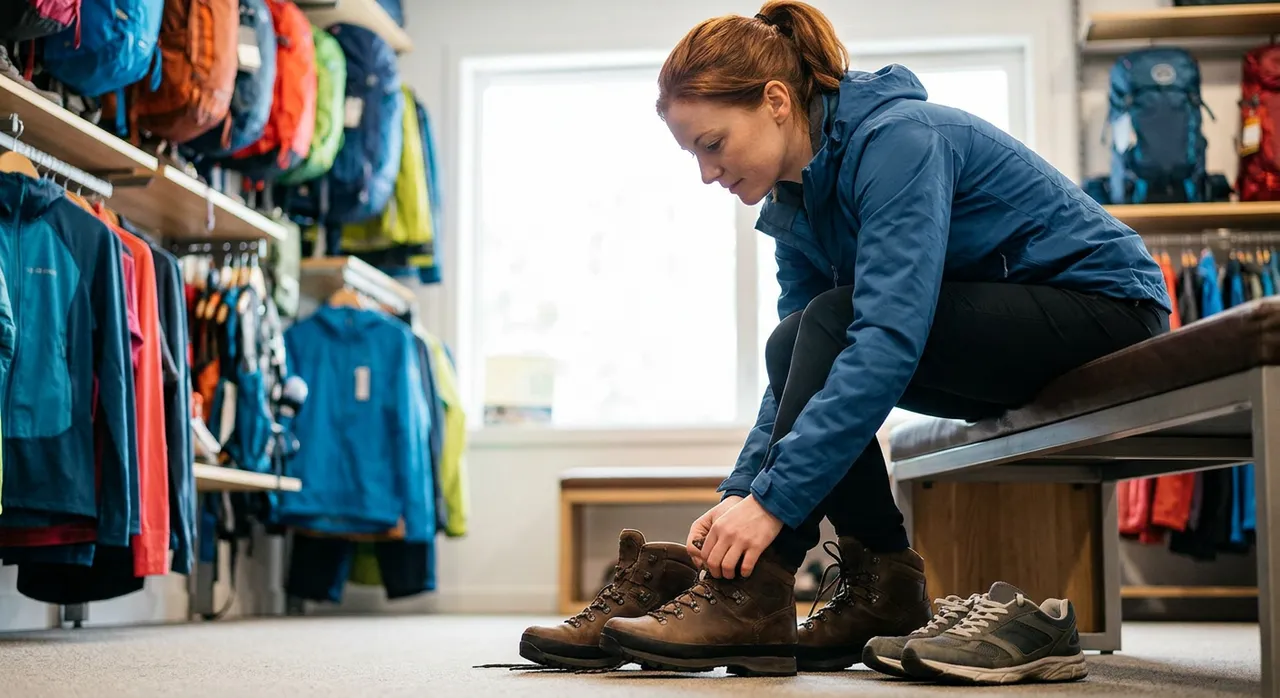
- Footwear: Trail runners or hiking shoes with a grippy sole. HOKA Speedgoat, Salomon Speedcross, or Merrell Moab 3 are all under $130 and work for most terrain. Avoid road running shoes (no grip) and heavy leather boots (overkill for day hikes). Break them in on two or three short walks before your first real hike.
- Water: 0.5 liters per hour of hiking is a solid baseline. A 2-liter hydration reservoir (Platypus or CamelBak Crux) or two 1-liter Nalgenes covers a 3-4 hour hike. Don't rely on trail water sources for a day hike.
- Snacks: Trail mix, energy bars, or a sandwich. You'll burn roughly 300-500 calories per hour depending on terrain and weight.
- Daypack: 20-25L is right for a day hike. Osprey Daylite Plus or REI Flash 22 hold everything without being excessive. You don't need a pack with a frame for day hiking.
- Navigation: Download the trail to AllTrails or Gaia GPS before you leave the parking lot. Screenshots work too. Don't rely on cell service.
- Sun protection: Sunscreen, sunglasses, and a hat. You'll get more UV exposure above treeline than you expect.
- Rain layer: Even on clear days, bring a lightweight shell. Marmot PreCip or REI Co-op Rainier weigh under 14 oz and pack down small. Mountain weather changes fast.
What to Wear (and What Not to Wear)
The single most important rule: no cotton. Cotton holds moisture against your skin, gets heavy, and makes you cold when wet. This includes jeans and cotton T-shirts. Wear synthetic or merino wool for every layer touching your skin.
For a mild-weather day hike, a synthetic or merino base layer top plus hiking pants or shorts covers most situations. Patagonia Capilene Cool Daily and REI Co-op Active Pursuits are popular, reasonably priced base layers. For pants, anything with a slight stretch works, Prana Stretch Zion, Columbia Silver Ridge, or even athletic leggings for women.
Building Fitness Before Your First Hike
If you're sedentary, a 5-mile hike with 1,500 feet of gain will hurt you. That's not an exaggeration, plantar fasciitis, knee pain, and ankle rolls are common when people overreach on their first outing.
A three-week prep plan that works: walk 30 minutes every day for week one, add hills or stairs in week two (even a stairmaster counts), and do one 2-3 mile walk with a light pack in week three. By week four you're ready for a proper beginner trail.
Quad and glute strength matter more than cardio for hiking. Squats, lunges, and step-ups prepare you for descent specifically, which is where most beginner injuries happen. Hiking downhill puts 3-4x your body weight on your knee joints with each step.
How to Read a Trail Map
Download Gaia GPS or AllTrails before you leave home and download the map offline, don't count on cell signal. Learn what the contour lines mean: tightly spaced lines = steep terrain, widely spaced = flat. The trail profile (elevation chart on AllTrails) tells you where the hard sections are before you hit them.
Mark the trailhead coordinates in your phone maps app. If you get turned around, "navigate to trailhead" will get you back. Tell someone where you're going and when to expect you back, this is standard practice, not paranoia.
Trail Etiquette Basics
A few rules that prevent awkward situations: hikers going uphill have right of way over those coming down (they're working harder and maintaining momentum is harder to restart). Step to the right when letting faster hikers pass. Don't blast music through a speaker on a crowded trail, other people didn't sign up to hear your playlist. Pack out all trash, including banana peels and apple cores (they take longer to decompose than most people think and attract wildlife).
Common First-Hike Mistakes
Starting too late: Begin most hikes by 8am, especially in summer. Afternoon thunderstorms are real in mountain terrain, and heat is manageable in the morning.
Underestimating distance: A 6-mile hike with 2,000 feet of elevation gain takes most beginners 4-5 hours. Use Naismith's Rule as a baseline: 30 minutes per mile, plus 30 minutes per 1,000 feet of gain.
Ignoring foot care: Wear hiking socks (Darn Tough, Smartwool, or Wigwam), not athletic socks. Apply Body Glide or Leukotape to known blister spots before you start, not after.
Not eating enough: Bonking (running out of glycogen) feels awful and dangerous on a trail. Eat something every 60-90 minutes. You don't need to be hungry to eat on a hike.
Your First Hike Checklist
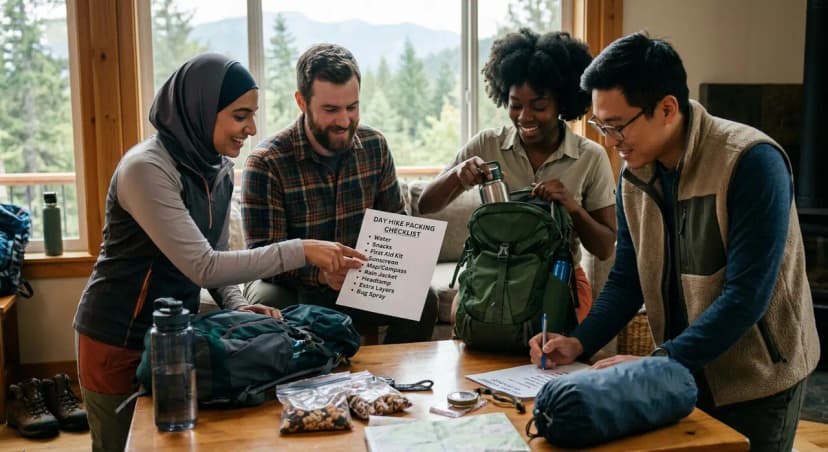
- Trail downloaded offline on AllTrails or Gaia GPS
- Someone knows where you're going and when to expect you back
- At least 2 liters of water
- Snacks for the full duration plus extra
- Rain layer
- First aid basics (blister kit, ibuprofen, bandages)
- Charged phone
- Sunscreen, hat, sunglasses
- Headlamp (even for day hikes, in case you're out longer than planned)
How to Get Into Hiking: A Beginner's Complete Guide FAQs
You don't need to be fit to start, but you should be honest about your current baseline. If you can walk 30 minutes at a moderate pace without stopping, you're ready for a 2-3 mile easy trail. Build from there.
Footwear and water are the two things that make or break a hike. Proper trail shoes with grip and enough water to last the full trip outrank everything else. Everything else is optional on your first few hikes.
Check the elevation gain, not just the distance. Under 500 feet per mile is moderate. Over 1,000 feet per mile is strenuous for most people. Read recent reviews on AllTrails, hikers are usually honest about difficulty.
Solo hiking is fine if you're prepared. Tell someone your plans, download your map offline, bring a charged phone, and stick to popular trails. Avoid remote, unmarked routes until you have more experience.
Not required, but useful. Poles reduce knee stress on descents by about 25% and help on uneven terrain. If you have existing knee issues, borrow or buy a cheap pair before your first major hike.