Mt Rainier Photography: Best Spots, Light and the Wildflower Window
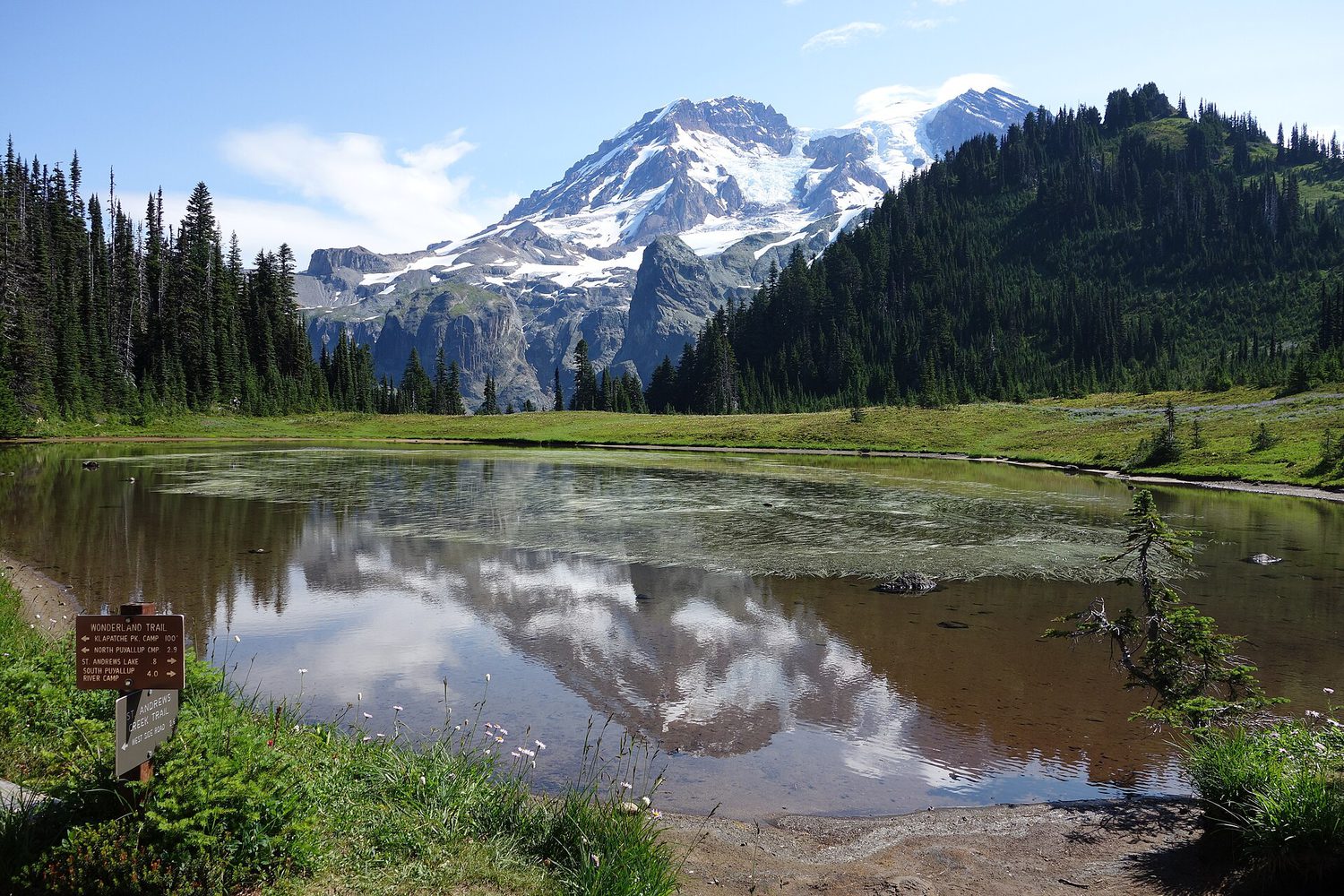
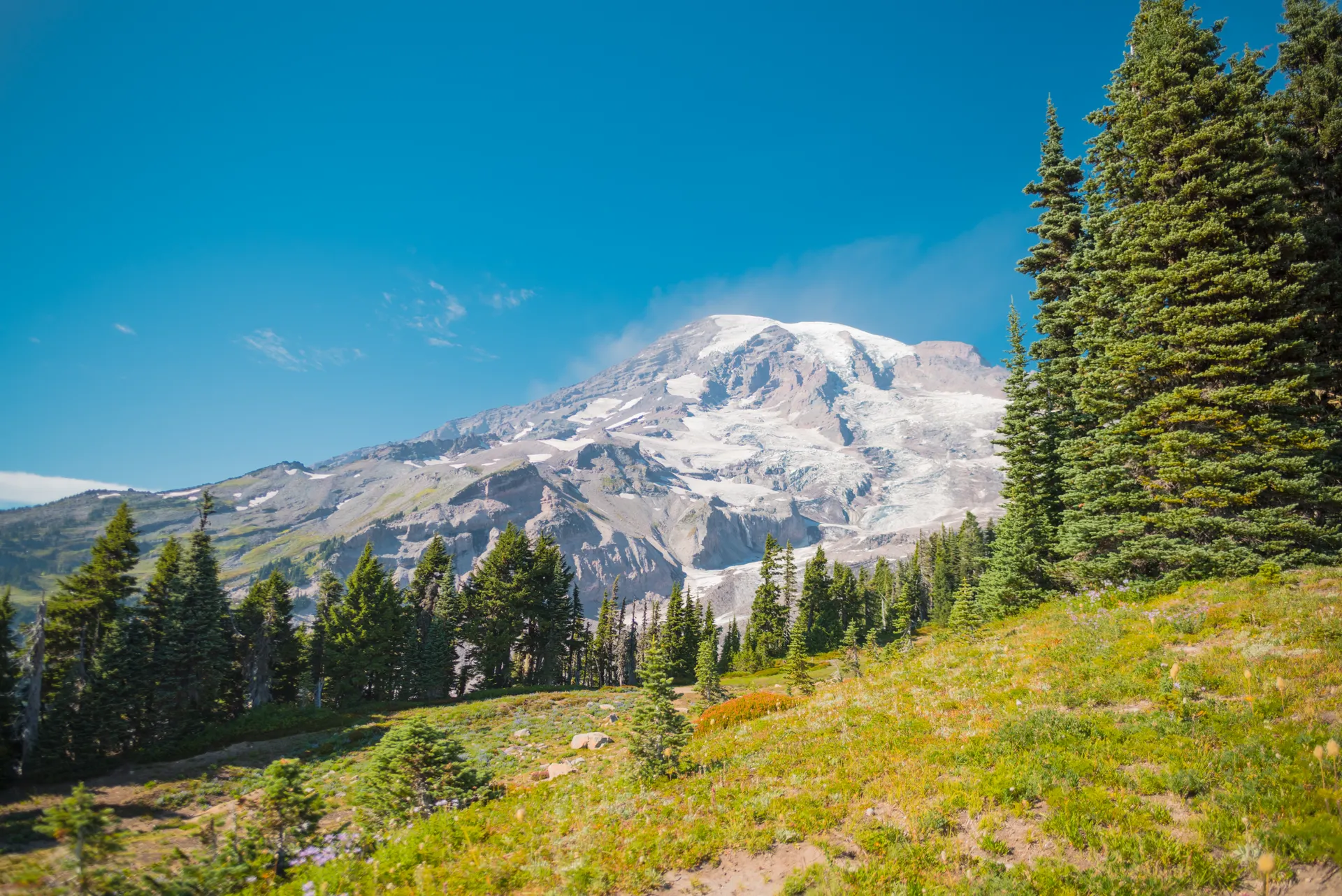
The classic Mount Rainier photograph is a reflection shot, either Reflection Lakes off Stevens Canyon Road near Paradise, or Tipsoo Lake off SR 410 near Chinook Pass. The wildflower meadows at Paradise and Sunrise peak from mid-July through mid-August. Sunrise, at 6,400 feet, is the highest point reachable by car in Washington state and the closest road view of the Emmons Glacier. As of 2026, Mount Rainier has no timed entry reservation system, so you do not need to book ahead to reach any of these spots, though parking still fills early. Our Mount Rainier itinerary works these stops into a full visit.
Reflection Lakes
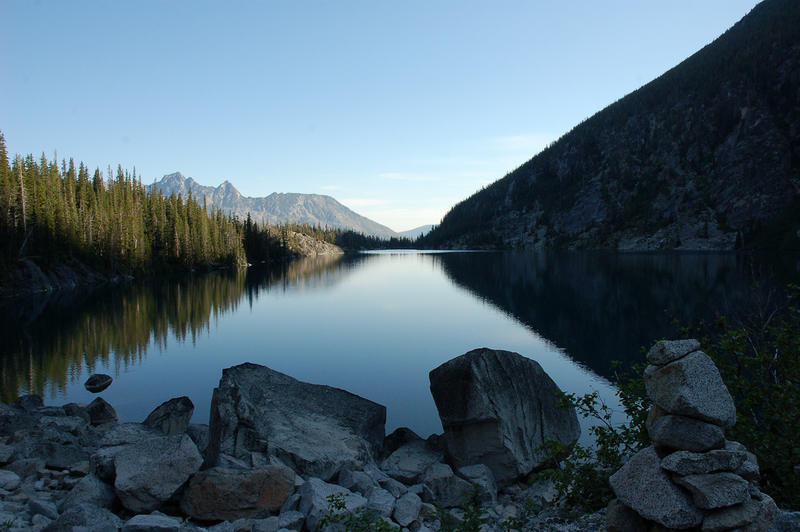
Reflection Lakes sit along Stevens Canyon Road on the south side of the park, a short pullout stop rather than a hike, which is why it is the most photographed spot at Rainier. On a calm morning before the wind picks up, the mountain doubles in the still water. Stevens Canyon Road has a 12 foot 6 inch tunnel height restriction if you are driving anything tall, and it is a seasonal road, closed in winter and opening again as snow clears in late spring. Go early. Wind and passing clouds are what ruin a reflection shot, and both build through the day.
Tipsoo Lake
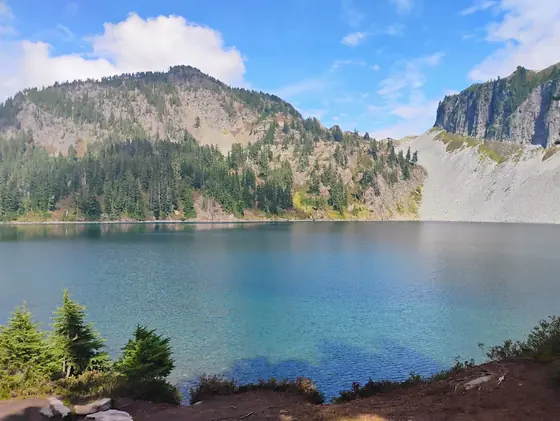
Tipsoo Lake is the northeast counterpart to Reflection Lakes, just off SR 410 near Chinook Pass, which the park's road status lists as open with commercial vehicles prohibited at all times. It gets less traffic than Paradise because it is a bit of a drive from Seattle around the north side, but the payoff is a quieter reflection shot with subalpine meadow in the foreground once the wildflowers are in.
Sunrise: The Closest Road View of a Glacier
At 6,400 feet, Sunrise is the highest point you can drive to in Washington state, and it puts you closer to the mountain's ice than anywhere else accessible by car. The Emmons Glacier, Rainier's largest, is visible directly from the visitor center area, and a short walk onto the Sourdough Ridge or Burroughs Mountain trails opens the view further. Morning light works best here, since the mountain faces roughly southwest from Sunrise and can go flat or hazy by afternoon in summer.
Skyline Trail From Paradise
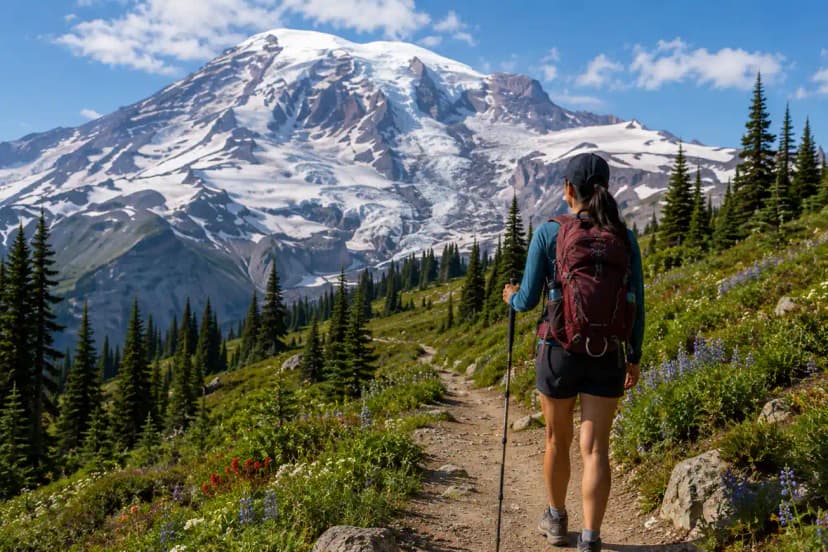
Paradise sits at 5,400 feet on the mountain's south side and holds the park's most concentrated trail network. The Skyline Trail Loop, 5.5 miles with about 1,700 feet of gain, passes Myrtle Falls near the start, a quick and reliable shot with the mountain framed behind the falls, then climbs through meadows to Panorama Point at 6,800 feet and Glacier Vista at 6,336 feet, both with direct views onto the Nisqually Glacier. Snow can linger on the upper trail into late July, so the full loop is most reliably clear by early August.
The Wildflower Window
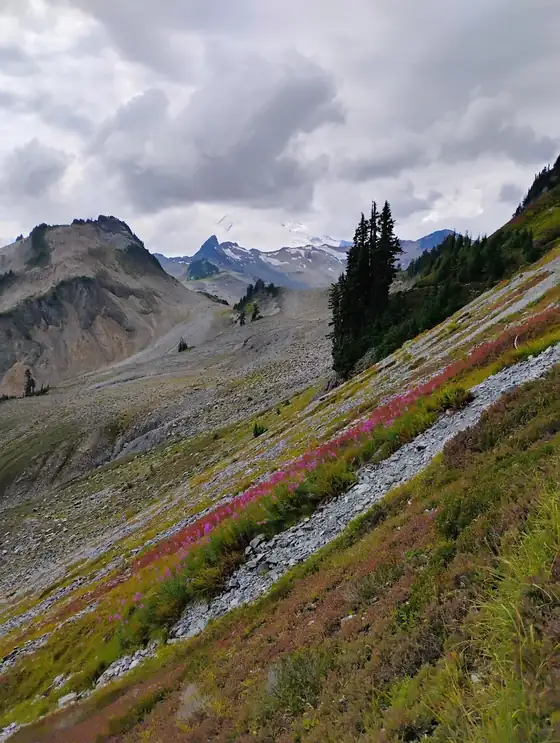
Wildflower timing drives a lot of Rainier photography planning. The park's own wildflower guidance is that blooms are well underway by mid-July, and the meadows are at their most impressive by the start of August, concentrated at Paradise and Sunrise. Exact timing shifts with snowpack and rainfall each year, so treat mid-July to mid-August as the target window rather than a fixed date, and stay on marked trails, since off-trail steps damage the same meadows you came to photograph.
"Is the Mountain Out?" What Locals Mean
In Seattle and Tacoma, "the mountain is out" is shorthand for a clear enough day that Rainier is visible on the horizon, which is not a given, the peak is often lost in cloud or haze even on an otherwise sunny day in the lowlands. If you are trying to catch a Rainier shot from the city rather than from the park itself, check the current conditions before you plan around it, a clear park day and a clear city view of the mountain are not the same thing.
Have Us Plan Your Rainier Trip
Tell us your dates and which side of the mountain you want to shoot from, Paradise or Sunrise, and we will build the drive and light times around it. Planning is free.
Keep planning with Best Day Hikes at Mount Rainier and Mt. Rainier Hiking Guide.
Mt Rainier Photography: Best Spots, Light and the Wildflower Window FAQs
Reflection Lakes off Stevens Canyon Road near Paradise gives the classic reflection shot. Tipsoo Lake near Chinook Pass on SR 410 is the quieter northeast version of the same shot.
No. Mount Rainier has no timed entry reservation system in 2026. Parking at Paradise and Sunrise still fills early on summer weekends, so arrive in the morning.
Blooms are well underway by mid-July and the meadows are typically at their most impressive by early August, mainly at Paradise and Sunrise. Timing shifts with snowpack, so treat it as a window rather than a fixed date.
It is Seattle and Tacoma shorthand for a day clear enough to see Rainier from the city. The peak is often hidden by cloud or haze even when the lowlands are sunny.
Sunrise, at 6,400 feet on the northeast side, is the highest point reachable by car in Washington state and the closest road view of the Emmons Glacier.
Yes. It passes Myrtle Falls near the Paradise trailhead, then climbs to Panorama Point at 6,800 feet and Glacier Vista at 6,336 feet, both with direct views onto the Nisqually Glacier. The full loop is most reliably snow-free by early August.
Yes. The worked day-by-day plan is Mount Rainier National Park Itinerary: 3 Days at Paradise and Sunrise (3 Days), with the permits, the stays and the drive times already sorted. Tell us your dates and we will put it together for you and confirm what is genuinely open on those days. Asking is free: no card, no deposit, and nothing is held until you say yes.