Fishing in Arkansas: Trout Tailwaters and Buffalo River Smallmouth
The best fishing in Arkansas for a visiting angler is trout in the cold tailwaters below three Corps of Engineers dams: the White River below Bull Shoals Dam, the North Fork of the White River below Norfork Dam, and the Little Red River below Greers Ferry Dam. For warm-water fishing, float the Buffalo National River for smallmouth bass. Nonresidents 16 and older need an Arkansas fishing license, and you also need a $20 trout permit to fish those tailwaters for trout or to keep a trout anywhere in the state.
Trout aren't native to Arkansas. The Arkansas Game and Fish Commission (AGFC) says these fisheries exist because the dams release cold water from the bottom of the lakes, which pushed out the warm-water fish that lived there before. The result is cold rivers that hold rainbow and brown trout all year. If you want to fold a fishing day into a longer trip, our Arkansas 10-day outdoor circuit and Buffalo National River weekend lay out the driving and the stops.
The trout tailwaters
White River below Bull Shoals Dam
This is the big one. Bull Shoals Dam was built in 1952, and the AGFC started regular stocking of rainbow and brown trout in 1955. The commission manages the trout fishery on the White River from the dam downstream to the Arkansas Highway 58 bridge at Guion. Cotter sits on this stretch and has long been one of the best-known trout towns in the Ozarks. Bull Shoals-White River State Park sits right below the dam, next to the Bull Shoals Catch-and-Release Area.
Two rules matter for visitors right now. First, the AGFC closes the Bull Shoals Catch-and-Release Area to all fishing from November 1 to January 31 each year to protect spawning brown trout, and the water just downstream becomes catch-and-release for browns during that window. Second, harvest limits were cut in 2026 after fish losses at the Norfork National Fish Hatchery and the Jim Hinkle Spring River State Fish Hatchery. From the dam to the Norfork Access boat ramp, you can keep two rainbow trout under 14 inches, and every other trout goes back. From the Norfork Access down to the Highway 58 bridge, the limit is two trout of any species with only one over 14 inches, and brown, cutthroat and tiger trout must be at least 24 inches to keep. These rules are in place until further notice, so check them before each trip.
Norfork tailwater (North Fork of the White River)
Norfork Dam, finished in 1944, sits on the North Fork of the White River in Baxter County. The AGFC stocked its first rainbow trout fingerlings there in 1948 and brown trout in 1949, and the commission manages trout from the dam down to where the North Fork meets the White River at Norfork. It's a short river, easy to pair with the White on the same trip. The same 2026 limit applies across the whole Norfork tailwater, two rainbow trout under 14 inches and nothing else kept.
Little Red River below Greers Ferry Dam
The Little Red runs about 30 miles of trout water below Greers Ferry Dam near Heber Springs. Rainbows were first stocked in 1966. Brown trout came in 1977 and now reproduce on their own, so the browns you catch here are wild fish. The Little Red produced a 40-pound, 4-ounce brown trout in 1992. The current limit is two trout of any species, and any trout over 14 inches must be released right away.
AGFC biologists point to the sowbug as the main trout food in the Little Red, and they name sowbugs, San Juan worms and egg patterns as go-to flies.
What you'll catch and when
Arkansas trout waters hold rainbow, brown, cutthroat, brook, golden rainbow and tiger trout, according to the state tourism office, though rainbows and browns are what most people catch on these three rivers. The trout streams are open all year apart from a few spawning closures like the one at Bull Shoals.
- Fall: AGFC biologists call it a strong season on the Little Red, with fewer people on the water. Brown trout spawn from late October into mid-January, and rainbows follow them to eat eggs.
- Winter: generally the best shot at a large brown. Watch for redds (clean, lighter-colored oval patches of gravel about 2 to 3 feet across) and don't wade through them.
- Spring and summer: the tailwaters stay cold because the water comes from deep in the lake, so trout keep feeding when the weather is hot. Spring is also when the upper Buffalo usually has enough water to float.
Dam generation and tailwater safety
Water levels on the White, the Norfork and the Little Red depend on how much power the dams are making, and they can rise fast. At full generation, Bull Shoals can release about 26,400 cubic feet per second, Norfork about 7,200 and Greers Ferry about 7,900, according to the Southwestern Power Administration (SWPA), the federal agency that markets the power.
SWPA posts a projected hourly generation schedule for each dam every day on its generation schedules page, and you can hear it by phone at 866-494-1993. Times are in "hour ending" format, so a release listed for hour 1400 runs from 1 pm to 2 pm. SWPA says every posted release can change with power demand, transmission problems, generator outages or inflow to the lake, so treat the schedule as a forecast.
The Corps of Engineers tells people below Norfork Dam to listen for a warning horn or siren that signals a release and to watch for signs of rising water. The state tourism office gives the same advice for all the tailwaters and adds the practical part. If the water starts rising, get to the bank right away, and make sure it's the bank where you parked, since crossing back through fast current isn't an option once generation starts. Wade-fish when the schedule shows little or no generation, and plan a boat day when the water is up.
Buffalo National River smallmouth floats
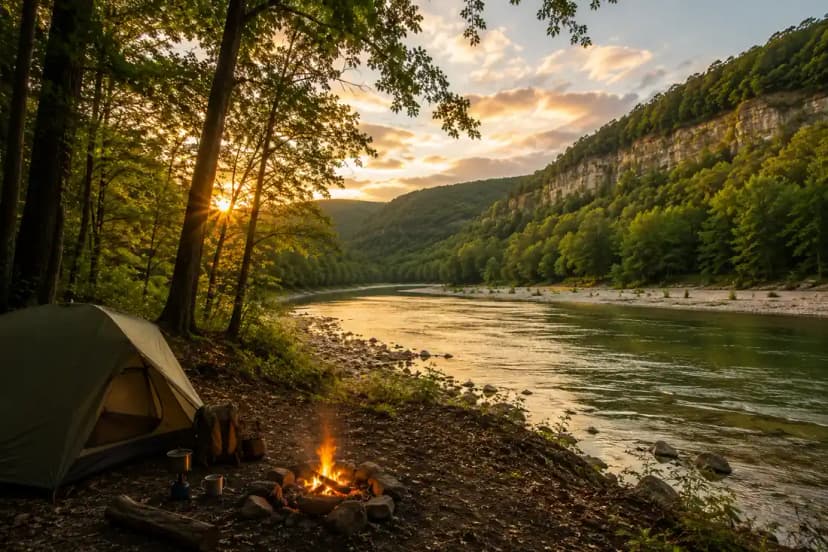
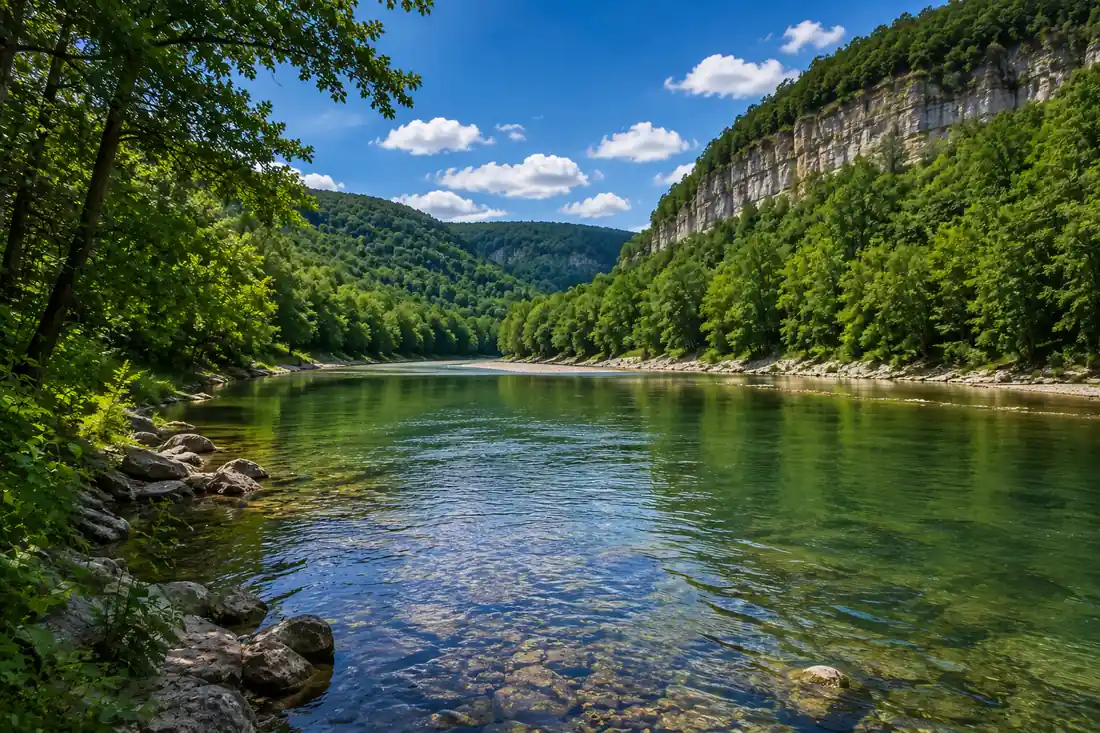
The Buffalo flows freely for 151 miles across the Ozarks. The National Park Service counts 74 fish species in the river, including smallmouth bass, goggle eye and panfish. For fly fishing, the park suggests popper bugs on the surface early in the morning or late in the afternoon, and a bead-head woolly worm or crawfish fly worked near big rocks along the banks for smallmouth.
The Buffalo is one of the AGFC's 10 Blue Ribbon smallmouth streams. Since July 1, 2026, the limit there is one smallmouth a day, and it has to be longer than 15 inches. Park rules allow only hook and line fishing with the rod closely attended. You can't use live or dead minnows or other bait fish unless you caught them in the Buffalo or its tributaries, or you bought them from a licensed dealer.
Float logistics
Floating the Buffalo depends on rain. In an average year, the upper river (around Ponca and Pruitt) is only floatable in spring and early summer, and the NPS says April and May on that stretch are the busiest time on the whole river. The middle river near Tyler Bend gets busiest in June and July. The lower river, from North Maumee down to the White River, is usually floatable all year.
Check the USGS gauges linked from the park's paddling page before you launch. The NPS calls the river unsafe above these levels:
- Ponca gauge: 1,600 cfs
- Pruitt (Highway 7) gauge: 2,000 cfs
- Grinder's Ferry (Highway 65) gauge: 8,000 cfs
- Dillard's Ferry (Highway 14) gauge: 9,370 cfs
Everyone in a boat needs a life jacket, and children 12 and under must wear one the whole time. Food and drinks have to ride in a sealed cooler, foam coolers are banned on the river, and glass is prohibited within 100 feet of the water outside developed areas. You don't need a permit to camp along the river. Cell service is spotty, so leave your plan with someone who can call the park's 24-hour dispatch line (1-888-692-1162) if you're late. Canoe and kayak rentals and shuttles run through park-authorized concessioners, which the NPS lists on its rentals page. For current conditions, call Tyler Bend Visitor Center (870-439-2502) or Buffalo Point Ranger Station (870-449-4311).
Lakes worth a cast
If you're staying near the tailwaters, the lakes above the dams are an easy add. The AGFC stocks striped bass in only four Arkansas lakes, and two of them are Norfork Lake and Lake Ouachita, the largest lake entirely within the state. Greers Ferry Lake is known for walleye, and its minimum length went up to 16 inches in 2026.
Licenses for nonresident anglers
Anyone 16 or older needs an Arkansas fishing license. Current AGFC prices for nonresidents:
- Nonresident Annual Fishing License: $60
- Nonresident 3-Day Trip Fishing License: $30 (good for 72 hours from the start time you pick)
- Nonresident 1-Day Fishing License: $15
- Nonresident Trout Permit: $20, on top of a license
The trout permit is required to keep trout from any Arkansas water and to fish for trout at all in the tailwaters below Bull Shoals, Norfork, Greers Ferry, Beaver and Greeson dams. The AGFC fee page lists the trout permit with the annual and 3-day licenses, so for a trout weekend the 3-day license plus the permit ($50) is the usual buy. Licenses are sold online at agfc.com or by phone at 833-345-0325.
Guided or on your own
You can fish all of this on your own. The tailwaters have public access along the banks, and the Buffalo has NPS launches with rentals nearby. A guide earns the money on the tailwaters when the dams are generating. High water makes wading impossible, and a drift boat with someone who knows the river turns a lost day into a fishing day. ExplorOFF can match you with a local guide and build the rest of the trip around your fishing days.
Where to base yourself
- Cotter and Mountain Home: the base for the White River and the Norfork. You can fish both rivers in a day.
- Heber Springs: the town next to Greers Ferry Dam and the Little Red.
- Jasper and Ponca: the base for the upper Buffalo in spring, close to the Ponca and Pruitt launches and to trails like Lost Valley.
The Buffalo and the White River tailwaters are close enough to combine. Spend a couple of days on the upper Buffalo, then drive east to Cotter for trout. For hikes to fill a non-fishing day, see our best hikes in Arkansas and hiking in the Ozarks guides. If you're heading south toward Lake Ouachita, the Talimena Scenic Drive and our Ouachita Trail week cover the Ouachita Mountains.
Fishing in Arkansas: Trout Tailwaters and Buffalo River Smallmouth FAQs
The best trout fishing in Arkansas is in the cold tailwaters below three Corps of Engineers dams: the White River below Bull Shoals Dam (managed for trout down to the Highway 58 bridge at Guion), the North Fork of the White River below Norfork Dam, and the Little Red River below Greers Ferry Dam near Heber Springs. The Little Red has about 30 miles of trout water and a self-sustaining population of wild brown trout.
The Arkansas Game and Fish Commission charges nonresidents $60 for an annual fishing license, $30 for a 3-day trip license (72 hours) and $15 for a 1-day license. To fish for trout in the major tailwaters, or to keep a trout anywhere in the state, you also need a $20 Nonresident Trout Permit. Anyone 16 or older needs a license.
Yes, if you're fishing for trout. The AGFC requires a trout permit, on top of a fishing license, to fish for trout in the tailwaters below Bull Shoals, Norfork, Greers Ferry, Beaver and Greeson dams, and to keep trout from any Arkansas water. The nonresident trout permit costs $20.
The Southwestern Power Administration posts a projected hourly generation schedule for Bull Shoals, Norfork, Greers Ferry and other dams every day at energy.gov/swpa/generation-schedules, and you can hear it by phone at 866-494-1993. Times are in hour-ending format, so hour 1400 means 1 pm to 2 pm. Schedules can change, so listen for the warning horn and get out of the river as soon as the water starts rising.
Since February 2026, from Bull Shoals Dam to the Norfork Access, and on the whole Norfork tailwater, you can keep two rainbow trout under 14 inches and must release all other trout. From the Norfork Access to the Highway 58 bridge at Guion, the limit is two trout with only one over 14 inches, and browns must be 24 inches to keep. The AGFC set these rules until further notice after hatchery losses, so check agfc.com before you go.
Yes. Smallmouth bass are a main draw on the Buffalo, which the AGFC lists as a Blue Ribbon smallmouth stream. Since July 1, 2026, the limit is one smallmouth a day longer than 15 inches. You need an Arkansas fishing license if you're 16 or older, and park rules limit you to hook and line fishing with an attended rod.
Spring is the season for the upper Buffalo around Ponca and Pruitt, which is usually only floatable in spring and early summer. The middle river is busiest in June and July, and the lower river from North Maumee to the White River is usually floatable all year. Check the USGS gauges first, since the NPS considers the river unsafe above 1,600 cfs at the Ponca gauge.
Yes. The worked day-by-day plan is Arkansas 10-Day Outdoor Circuit: Ozarks to Ouachitas (10 Days), with the permits, the stays and the drive times already sorted. Tell us your dates and we will put it together for you and confirm what is genuinely open on those days. Asking is free: no card, no deposit, and nothing is held until you say yes.