Driving from Los Angeles to Yosemite National Park takes roughly 5.5 to 6.5 hours and covers 280-310 miles, depending on which entrance you use. The most common route is I-5 north to CA-99 north, then CA-41 into the South Entrance near Wawona and Yosemite Valley. Add time for traffic leaving LA and slower mountain driving on CA-41.
What is the fastest route from Los Angeles to Yosemite?
From central LA, the standard route is I-5 North to CA-99 North (near the Grapevine/Wheeler Ridge area) to CA-41 North at Fresno into the South (Wawona) Entrance. CA-41 climbs through Oakhurst and Fish Camp before reaching the park gate, and it is roughly a 45-minute to 1-hour mountain drive from the entrance down into Yosemite Valley.
There are three practical ways in from the south and west:
- CA-41 / South Entrance (via Fresno, Oakhurst, Fish Camp): roughly 290-310 mi, about 5.5-6.5 hrs. Best for first-timers. It puts you near the Mariposa Grove of giant sequoias and leads into Yosemite Valley.
- CA-140 / Arch Rock Entrance (via Merced and Mariposa): roughly 280-290 mi, about 6 hrs. The lowest-elevation, least-curvy approach, and the one to use in winter when CA-41 sees snow. It follows the Merced River canyon.
- CA-120 / Big Oak Flat Entrance (via Manteca/Groveland): roughly 310-320 mi, about 6.5 hrs. Slightly longer from LA, but handy if you are continuing toward Tioga Pass or San Francisco.
How long does it actually take?
A mapping app may show around 5 hours of pure driving, but plan on 6 hours door to gate, and 6.5-7 if you leave during LA rush hour or stop for food. The reliable strategy: leave before 6 a.m. to clear I-5 and the Grapevine (Tejon Pass, about 4,160 ft) before traffic builds. The Grapevine can close briefly in winter storms, so check Caltrans QuickMap before you go.
CA-99 through the Central Valley is flat and fast. That is your fuel-and-coffee stretch. The scenery picks up once you turn onto CA-41 past Fresno.
Where should I stop along the way?
Honest take: most of this drive is functional, not scenic, until the foothills. The best stops cluster near the end.
- Bakersfield / Fresno: last large stores for gas and groceries, and cheaper fuel. Fill up in Fresno, as gas gets pricier in Oakhurst and inside the park.
- Oakhurst (CA-41): last full grocery store and a cluster of restaurants roughly 14-15 miles before the South Entrance. Good lunch stop.
- Fish Camp: tiny, a couple of miles from the gate. Home to the Yosemite Mountain Sugar Pine Railroad if you have kids.
- Mariposa (CA-140): Gold Rush town with the last services before the Arch Rock Entrance.
Do I need a reservation to enter Yosemite in 2026?
No. The National Park Service confirmed that Yosemite is not requiring a day-use or timed-entry reservation in 2026. In several recent years the park ran a timed-entry system on peak summer dates, but it has been dropped for 2026. Rules have changed year to year, so still verify on nps.gov/yose before you drive.
Without the reservation system, expect heavy congestion. Entrance lines and Valley parking can back up significantly between roughly 8 a.m. and 5 p.m. in summer, so arriving early still pays off.
The entrance fee is $35 per vehicle, good for 7 days. If you visit more than one park a year, the $80 America the Beautiful annual pass pays for itself fast. Note: starting in 2026 there is also a separate surcharge for international (non-US-resident) visitors, so check current fees if that applies to you.
What are the road closures and seasonal issues?
This is where LA drivers get caught out. Yosemite Valley is open year-round, but two famous roads are not:
- Tioga Road (CA-120 east, over Tioga Pass): closed by snow roughly November through late May or June. Do not count on driving it in spring or fall without checking; it often does not open until around Memorial Day or later, and opening dates vary widely by snowpack.
- Glacier Point Road: typically opens late spring and closes with the first heavy snow. It leads to one of the best valley overlooks in the park.
- Winter on CA-41: you may be required to carry tire chains in winter months, even with all-wheel drive. Keep a set in the trunk, since rangers can turn cars around without them. CA-140 is the lower, safer winter approach.
Best hikes once you arrive
If you have just driven 6 hours, here is where to start, easiest to hardest:
- Lower Yosemite Fall: about a 1-mile loop, nearly flat and paved. Roaring in spring, often dry by late summer.
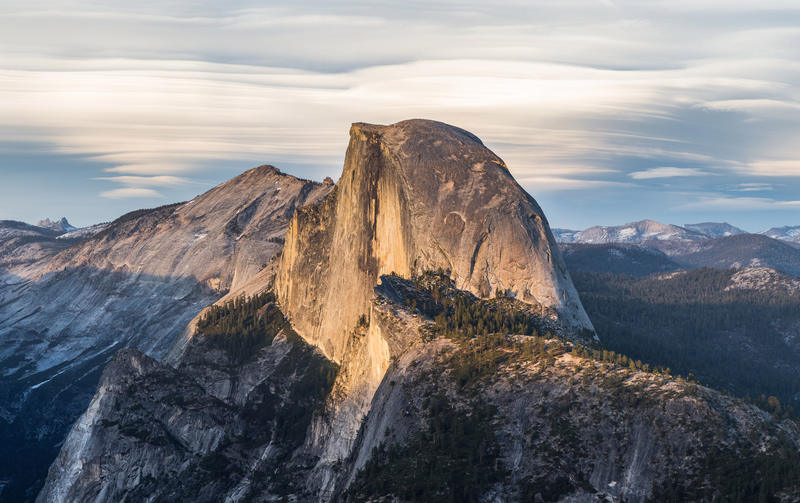
- Mirror Lake: about 2 miles round trip to the lake (around 5 mi for the full loop), minimal gain. Calm reflections of Half Dome in spring.
- Mist Trail to Vernal Fall footbridge: about 1.6 mi round trip, roughly 400 ft gain. Continue to the top of Vernal Fall for about 2.4 mi round trip and around 1,000 ft of granite-step climbing. You will get wet in spring.
- Upper Yosemite Fall: about 7.2 mi round trip, roughly 2,700 ft gain. Steep, all-day, and worth it.
- Half Dome: about 14-16 mi round trip, roughly 4,800 ft gain. The cables section requires a permit via the recreation.gov lottery. Not a casual add-on.
The free Valley shuttle connects most trailheads. Park once at Yosemite Village or Curry Village and ride it. Valley parking fills by mid-morning in summer, so an early arrival pays off twice.
When is the best time to make this drive?
For waterfalls, go May through early June, when snowmelt makes Yosemite Falls and Vernal Fall thunder and the Tioga and Glacier Point roads are usually opening. For fewer crowds and warm hiking, September and October are a favorite: thinner crowds, open high country, and golden light, though the falls are reduced. July and August are gorgeous but the most crowded. Winter is quiet and snow-dusted but means chains and the CA-140 route.
Practical tips from the road
- Download offline maps. Cell service is unreliable from Oakhurst onward and spotty to nonexistent in much of the Valley.
- Top off gas in Fresno or Oakhurst. In-park gas (Wawona, Crane Flat) is limited and expensive.
- Pack a cooler. Sit-down food in the Valley means lines, and a trunk lunch saves time.
- Store food properly. Bear lockers are mandatory at trailheads and campgrounds. Never leave food in your car overnight.
- Build in a buffer day if you can. Driving 6 hours and hiking Half Dome the same day is how people get hurt.
Los Angeles to Yosemite National Park: Drive Guide (2026) FAQs
It is about 280-310 miles depending on your entrance. Via CA-41 to the South Entrance it is roughly 290-310 miles; via CA-140 to the Arch Rock Entrance it is about 280-290 miles.
Plan on 5.5 to 6.5 hours of driving, and realistically 6-7 hours door to gate once you account for LA traffic, fuel stops, and the slower mountain section on CA-41.
For first-timers, take I-5 North to CA-99 North, then CA-41 North at Fresno into the South Entrance. It passes the Mariposa Grove sequoias and leads to Yosemite Valley. In winter, use CA-140 instead to avoid snow on CA-41.
No. The National Park Service confirmed Yosemite is not requiring a day-use or timed-entry reservation in 2026. Rules have changed year to year, so still verify on nps.gov/yose before you drive, and expect heavy congestion since the reservation system is gone.
Not in winter or spring. Tioga Road (CA-120 over Tioga Pass) is typically closed by snow from November into late May or June, with opening dates varying by snowpack. Yosemite Valley itself stays open year-round via CA-41 or CA-140.
The entrance fee is $35 per vehicle, valid for 7 days. If you visit multiple national parks in a year, the $80 America the Beautiful annual pass is the better value. International (non-resident) visitors may owe an additional 2026 surcharge.