Hiking is close to the cheapest holiday there is, right up until you book it badly. The trail is free. The parking, the permit, the bed the night before and the tank of fuel to reach the trailhead are not, and those four are where a cheap week quietly turns into an expensive one. This is what actually moves the number, in the order it moves it.
Where the money really goes
Most budget hiking advice starts with gear, which is the wrong end. On a week-long trip in a US national park, a rough split looks like this:
- Beds, 45 to 60%. Nights near a trailhead in season are the single largest line, and the one with the widest spread between good and bad choices.
- Getting there, 20 to 30%. Flights, fuel, and the rental car that most park trips need.
- Food, 10 to 15%. Almost entirely controlled by whether you cook.
- Permits and entry, 3 to 8%. Small, but the part that can end a trip if you miss a date.
- Gear, 0 to 10%. Last, and for most people it should be zero.
Which means the fastest way to halve a trip is not a cheaper sleeping bag. It is sleeping somewhere different and driving a shorter distance.
Beds: the decision that sets the budget
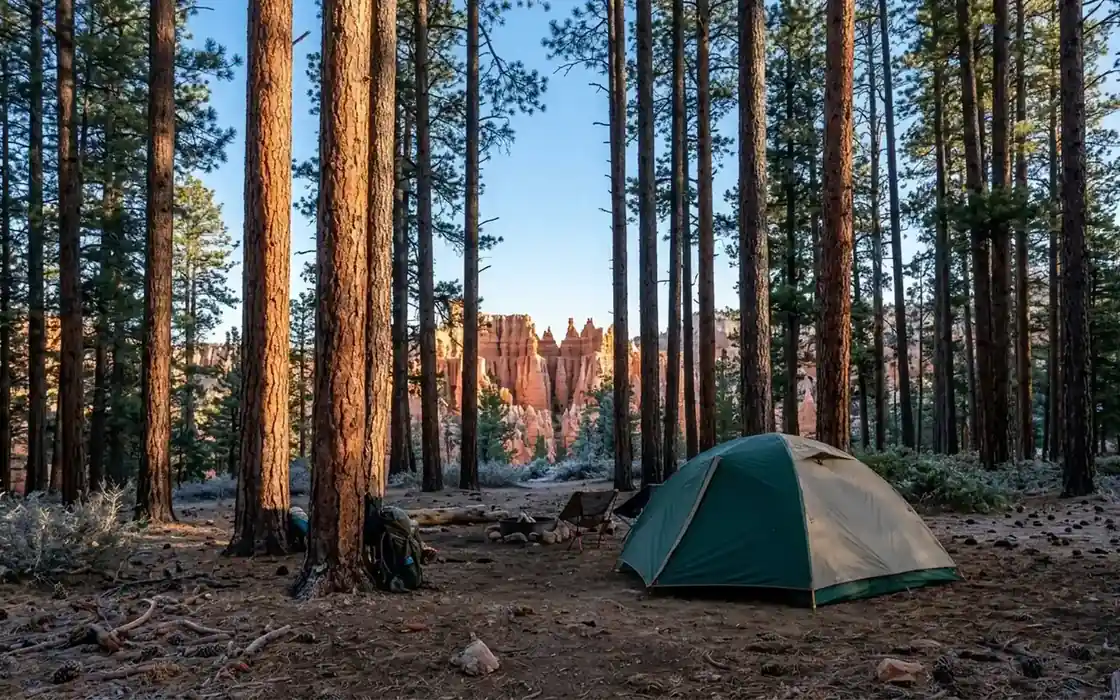
Campgrounds inside the park
Federal campgrounds run roughly $15 to $35 a night, against $180 to $400 for a gateway-town hotel room in season. Over six nights that single choice is the difference between about $150 and about $1,500. Reservations open on recreation.gov on a rolling six-month window for most parks, and popular campgrounds go in minutes at 7am Mountain Time on release day. That is a calendar problem, not a money problem.
National forest land next door
Almost every famous national park is ringed by national forest, and most national forest campgrounds are $10 to $20 with a fraction of the competition. Dispersed camping on forest roads is free, legal in most districts, and usually 20 to 40 minutes from the same trailheads. Check the district's motor vehicle use map before you rely on it.
Shoulder season
The same room in the same town is routinely 40 to 60% cheaper in late September than in mid-July, and the trails are better. Our Utah Five Parks route and Olympic Peninsula loop are both stronger trips in the shoulder than in peak, which is unusual and worth exploiting.
Getting there without the rental car eating the week
Flights get all the attention and the rental car quietly costs more per day. Three things that reliably work:
- Fly into the unglamorous airport. Grand Junction instead of Las Vegas for eastern Utah. Bozeman instead of Jackson for the Tetons. Often shorter driving and cheaper cars.
- One-way rentals are not always punished. A $100 to $200 one-way fee is frequently cheaper than the fuel and the lost day of driving a loop back to where you started.
- Book the car early, cancel and rebook later. Most rentals are free to cancel. Prices move a lot; a booking you can walk away from is a free option on a cheaper one.
Points, which most people leave on the table
This is the part almost nobody does, and it is usually worth more than every other tip on this page combined. If you have miles or hotel points sitting in accounts you have half forgotten, a park trip is one of the best places to spend them, because gateway-town hotels are precisely where cash prices are worst and award rates are fixed.
- Fixed-point hotel programmes shine when cash prices spike. A room that costs $380 in July often costs the same number of points as it does in April.
- Transferable currencies are worth more than the co-brand. Chase Ultimate Rewards, Amex Membership Rewards and Capital One miles can each move to several airline and hotel partners; the right transfer is often two or three times the value of booking through the portal.
- Companion fares are underused. Alaska's Companion Fare and Southwest's Companion Pass are the two best deals in domestic travel for two people going to a trailhead.
- Compare against cash every time. Points are not automatically better. On a cheap off-season flight, cash usually wins and the points are better saved.
Working out which of those applies to a specific trip is genuinely fiddly, which is why we do it for people. Tell us which programmes you are in and we will price the trip both ways and tell you which is cheaper, including when the answer is your points and we earn nothing from it.
Permits: cheap, and the thing that ruins trips
Permit fees are trivial. A backcountry permit is usually $6 to $15 to apply. The cost of missing one is a year. Lotteries open on fixed annual dates and close in minutes, and every trail runs on its own calendar with no reminder.
Two habits save more money than any gear decision: apply the moment a lottery opens, and always have a no-permit backup for the same dates so a failed application does not cost you the flights. Our free permit alerts email you the morning your chosen windows open, which is the whole problem solved.
Food, the easiest 10% to keep
- Cook two meals a day and eat out once. Restaurants in gateway towns are captive-market expensive and rarely good.
- Shop the last real supermarket before the park, not the store at the entrance. The mark-up inside is 30 to 50%.
- Fuel canisters cannot fly. Buy them at the trailhead town and budget $8 to $12.
- Water filters beat bottled water within about three days of use.
Gear: buy last, borrow first
The gear industry sells the idea that you need equipment to start. You need boots that fit and a way to stay dry. Everything else can wait until you know what you actually do.
- Rent the expensive, bulky things. Tents, sleeping bags and packs rent for $10 to $25 a day at REI and most outdoor shops near parks. Under about ten nights a year, renting wins.
- Buy used. REI Re/Supply, Geartrade and local gear swaps sell lightly used equipment at 40 to 60% off. Outdoor gear is built to outlast its first owner's enthusiasm.
- Spend on boots and a rain shell. These two decide whether a day ends early. Everything else is comfort.
- Skip the specialised clothing. Any synthetic athletic top does what a hiking shirt does. Just not cotton.
Trips that are cheap by design
Some routes are simply less expensive than others, because the camping is good, the driving is short, or the park charges nothing to enter:
- Great Smoky Mountains, the most visited park in the country and the only major one with no entry fee.
- Porcupine Mountains and Pictured Rocks, Michigan's Upper Peninsula, where state-park camping is cheap and the drive from Chicago or Minneapolis replaces a flight.
- The Ouachita Trail in Arkansas, free dispersed camping along most of its length.
- The Superior Hiking Trail, free backcountry sites the whole way.
What we would actually do first
If you only change one thing, change where you sleep. If you change two, add shoulder season. Those two together routinely cut a week in a national park close to half, and neither costs you a single day on the trail.
And if you would rather not work through any of it: tell us where you want to go, when, and which loyalty programmes you are in. We will price the whole trip against cash and against your points and send back whichever is cheaper. It is free, and it stays free whether or not you book anything through us.