Mistake 1: Choosing a Trail That's Too Hard
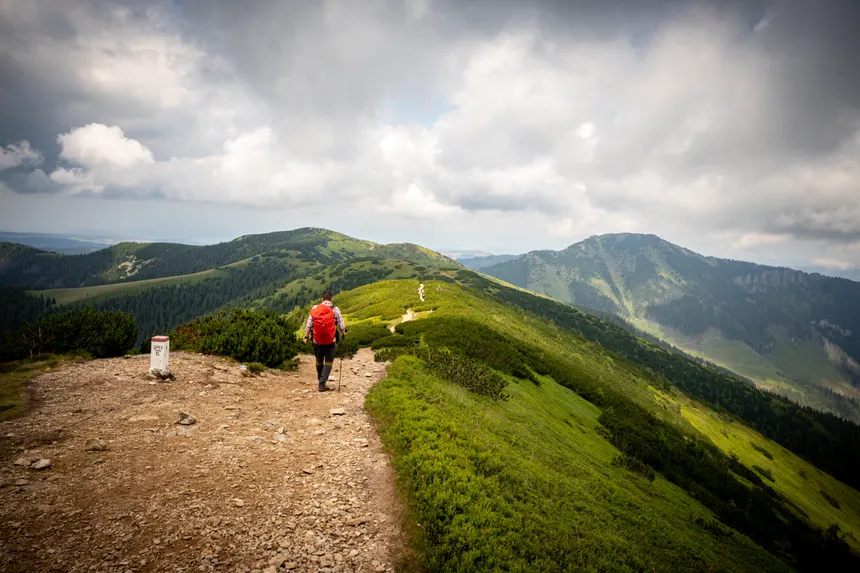
This is the single most common beginner mistake, and it's responsible for the majority of rescue calls, bad experiences, and people who never hike again. The problem isn't that beginners are reckless, it's that trail difficulty ratings are inconsistently applied and most beginners have no baseline for what numbers mean in practice.
A trail listed as "moderate" on AllTrails might have 2,000 feet of elevation gain over 8 miles. For someone who walks 30 minutes on flat ground three times a week, that's a 5–6 hour brutal slog, not a pleasant afternoon hike. The same trail for someone who hikes weekly is an easy day out.
Pick your first few trails based on three numbers: total distance under 5 miles round trip, elevation gain under 800 feet, and a majority of positive reviews that mention the trail being accessible for beginners. Ignore "moderate" and "difficult" labels until you have a feel for your own fitness on trail.
Mistake 2: Wearing the Wrong Footwear
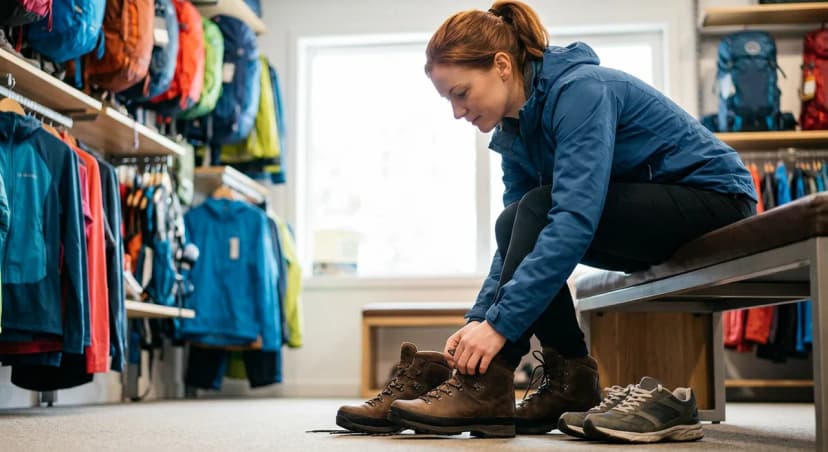
Road running shoes on rocky or rooted terrain are responsible for more twisted ankles than any other gear mistake. The outsoles designed for pavement grip don't bite into dirt, gravel, or wet rock, you'll be working twice as hard to stay stable, and one slip on a descent can end your day badly.
You don't need expensive heavy boots for your first hike. A pair of trail runners, shoes designed for off-road running, give you the grip, toe protection, and ankle stability you need for most beginner trails. Look for outsoles with deep multidirectional lugs. HOKA Speedgoat, Salomon Speedcross, and Merrell Moab Speed are all under $150 and will transform rocky terrain from a hazard into a non-issue.
Avoid hiking in flip flops, sandals, Converse, or any shoe with a flat sole. Even a short, easy trail becomes miserable and dangerous in the wrong footwear.
Mistake 3: Not Bringing Enough Water
Dehydration on trail doesn't announce itself with obvious thirst until you're already significantly behind. By the time your mouth feels dry and your energy drops, you've typically lost 1–2% of body weight in fluid, enough to noticeably impair physical performance and judgment.
The standard guideline is half a liter of water per hour of hiking. On a hot day, at altitude, or with a heavy pack, increase that to three-quarters of a liter per hour. A 4-hour hike means carrying at least 2 liters, ideally 3. Most beginners bring a single 500ml water bottle and run out by the halfway point.
Carry a hydration reservoir (CamelBak or Platypus) or two 1-liter Nalgenes minimum. Don't rely on trail water sources unless you have a filter, giardia is real, takes 1–3 weeks to show symptoms, and is genuinely unpleasant.
Mistake 4: Starting Too Late in the Day
Afternoon thunderstorms are a genuine hazard on exposed terrain in mountain regions, particularly in the American West and Rocky Mountains from June through September. Storms can build from clear skies to lightning in under an hour, and being on an exposed ridge or summit when that happens is dangerous.
Beyond weather, starting late means finishing in the dark on shorter days, encountering the hottest part of the day mid-hike, and dealing with more crowded trailheads. A 7am or earlier start solves all of these problems simultaneously. You'll have the trail largely to yourself, the air is cooler, wildlife is more active, and you're back at the car before afternoon weather builds.
If you're a slow starter, lay out your gear the night before. The mental barrier to an early hike is almost entirely logistical, not motivational, remove the friction and you'll go.
Mistake 5: Underestimating How Long a Hike Takes
Most beginners estimate hiking time using car-trip math: 6 miles sounds like it should take 90 minutes. On trail, even easy terrain, 6 miles takes most beginners 3–4 hours. Add elevation and you add more time. Use Naismith's Rule as your baseline: 30 minutes per mile, plus 30 minutes for every 1,000 feet of elevation gain.
A 6-mile hike with 1,500 feet of gain: 3 hours for the miles + 45 minutes for the gain = roughly 3 hours 45 minutes one way if you're going up first. Most people also need to add 20–30% for breaks, photos, navigation, and the fact that descents, while easier cardiovascularly, require more care on the way down.
Always tell someone where you're going and when to expect you back. If your estimate was 4 hours and you're not back by 6, they should know to start checking.
Mistake 6: Wearing Cotton
The outdoor community has a saying: "cotton kills." This is an exaggeration for most beginner scenarios, but it points to a real problem. Cotton absorbs moisture and stays wet. On a cool morning when you're sweating on a climb, a soaked cotton shirt against your skin pulls heat away from your body. If the temperature drops or wind picks up on a ridge, which happens routinely in mountain environments, hypothermia risk rises significantly even in mild weather.
Synthetic fabrics (polyester, nylon, polypropylene) and merino wool both wick moisture away from your skin and dry quickly. They cost more than cotton T-shirts but the performance difference is immediate and noticeable. For any hike longer than an hour in terrain above treeline or in cooler seasons, this switch matters.
Mistake 7: Not Bringing a Rain Layer
Mountain weather is not predictable from a morning forecast. A clear sky at 7am in the Rockies, Cascades, or Appalachians can become a drenching downpour by noon. Wet and cold is a combination that creates hypothermia risk even at temperatures in the 50s Fahrenheit, especially if you're tired from hiking.
A lightweight packable rain jacket weighs under 14 ounces and compresses to the size of a softball. You might carry it on 10 hikes and never use it. On the 11th, it prevents a genuinely dangerous situation. Marmot PreCip, REI Co-op Rainier, and Outdoor Research Helium are all reliable options under $150 that will last years.
Mistake 8: Not Downloading Maps Offline
Cell service disappears on most trails within the first mile. If you're navigating via your phone and relying on a live connection to AllTrails or Google Maps, you'll be hiking blind the moment you lose signal. This isn't just inconvenient, on trails with multiple junctions or in unfamiliar terrain, it's how people get genuinely lost.
Download your trail to AllTrails (requires a Pro account, $36/year) or use Gaia GPS (free offline maps with subscription) before you leave the parking lot. Better yet, screenshot the trail map with a compass overlay so you have a backup. The 30 seconds this takes at the trailhead has prevented countless wrong turns.
Mistake 9: Not Eating Enough
Bonking, depleting your glycogen stores, feels awful on trail: sudden heavy legs, lightheadedness, difficulty concentrating, and a dramatic drop in motivation. It happens when you've been burning fuel for several hours without eating enough to replace it. Most beginners eat lunch at the summit and nothing else, that's not enough for hikes over 3 hours.
Eat something every 60–90 minutes whether you're hungry or not. Trail mix, energy bars, jerky, fruit, sandwiches, crackers with nut butter, the specific food matters less than the frequency. Aim for a mix of carbohydrates for immediate energy and fat/protein to sustain it. The 200–300 calories you eat every hour keeps your energy consistent and your mood functional.
Mistake 10: Ignoring the Turnaround Time Rule
The most common reason beginner hikers get caught out after dark is pushing past a sensible turnaround time because the summit or destination looks close. Mountains in particular are notorious for this, you can see your goal for miles before you reach it, and the terrain between is almost always harder and longer than it appears.
Set a hard turnaround time before you start based on your estimated hiking speed and how much daylight remains. If you haven't reached your destination by that time, turn around regardless of how close it looks. Summit fever is real and kills more experienced hikers than beginners, don't let proximity override your timeline. The mountain will be there next time.
Mistake 11: Not Breaking In New Boots Before a Long Hike
Wearing brand-new boots on a 10-mile hike is a reliable way to end up with severe blisters on your heels and hot spots on your toes that make the last 4 miles miserable. New boots need to flex and mold to your foot shape before they're comfortable for sustained use.
Break in new footwear with 3–4 shorter walks of 1–2 miles before taking them on anything over 5 miles. Wear the same socks you'll hike in. Pay attention to where the boot rubs, if it's rubbing at the back of the heel, a heel lock lacing technique fixes it before it becomes a blister. Deal with hot spots early; don't wait for a blister to form.
Mistake 12: Leaving No Trace Violations
Most beginner Leave No Trace violations aren't intentional, they're habit. Leaving orange peels at the summit because "they're biodegradable" (they take 2 years to break down and attract wildlife). Cutting switchbacks because the shortcut looks obvious (it causes erosion and destroys the trail). Leaving loud music playing from a speaker on a busy trail (it ruins the experience for everyone within earshot for a quarter mile).
The core rules are simple: pack out everything you pack in, stay on the trail, keep noise low, and camp at least 200 feet from water sources. If you see other people's trash, pick it up. The trails that exist in good condition today exist because enough hikers before you treated them well, that's the system you're joining.
12 Beginner Hiking Mistakes (and How to Avoid Every One) FAQs
Choosing a trail that's too difficult for your current fitness level. Most beginners underestimate how hard hiking is compared to flat-ground walking, and overestimate their ability to read difficulty ratings. Start with trails under 5 miles and under 800 feet of elevation gain until you have a feel for your own pace.
Trail runners or light hiking shoes with grippy soles, synthetic or merino wool base layers (no cotton), and a lightweight rain layer regardless of the forecast. The footwear matters most, road shoes on rocky terrain are a leading cause of ankle rolls and miserable beginner experiences.
Half a liter per hour of hiking as a baseline, more in heat or at altitude. A 3-hour hike means bringing at least 1.5 liters, ideally 2. Most beginners underestimate this significantly and run short by the halfway point.
Aim for 7am or earlier, especially in mountain terrain. Early starts give you cooler temperatures, smaller crowds, better wildlife viewing, and most importantly, you're off exposed ridges before afternoon thunderstorms can build, a genuine safety issue in the Rockies and other ranges from June through September.
Check elevation gain, not just distance. Under 500 feet of gain per mile is manageable for most beginners. Read recent reviews on AllTrails, look for mentions of difficulty from people who describe a similar fitness level to yours. When in doubt, choose the easier option for your first few trips to the area.