Half Dome Guided Backpacking Trip: Permits, Route and Guides
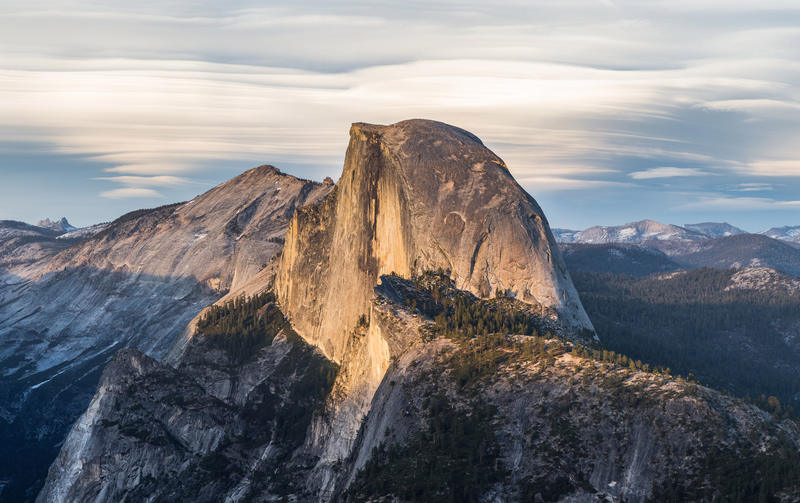
As a day hike, Half Dome is 14 to 16 miles and 4,800 feet from Happy Isles, and most people are on the trail for 10 to 14 hours. As a backpacking trip it becomes two easy days: seven miles up the Mist Trail to Little Yosemite Valley, then four and a half miles to the summit and back the next morning before the cables get busy. Two permits are in play, a wilderness permit for the night and a Half Dome permit for the cables, and applying as a backpacker is usually the better odds. The cables are up from roughly late May to mid October. Our Half Dome trail guide covers the route in detail.
The two day route
- Day 1, Happy Isles to Little Yosemite Valley, about seven miles with 2,000 feet of gain. Go up the Mist Trail past Vernal and Nevada Falls, which is the wetter and steeper way and worth it, or the John Muir Trail, which is longer and gentler and better with a heavy pack. Camp at Little Yosemite Valley, which has a ranger in summer, a toilet and bear boxes.
- Day 2, the summit and out. Leave camp at first light. It is four and a half miles round trip from LYV to the top: up the switchbacks to the subdome, then the cables. Back at camp by mid morning, packed up, and down to the valley by afternoon.
- Three day version: spend two nights at LYV and use the middle day for Half Dome with no pack and no schedule, or add Clouds Rest, which many people think is a better summit than Half Dome and needs no permit at all.
How the permits fit together
This is where most plans fall apart, so it is worth being precise.
- The Half Dome permit covers the cable section above the subdome. A limited number of hikers are allowed each day the cables are up, and permits come from a preseason lottery with applications in March and results in April, plus a daily lottery two days ahead for any that go unused.
- The wilderness permit covers your overnight, tied to a trailhead and a date. Happy Isles to Little Yosemite Valley is a popular quota and releases on a rolling window ahead of your date.
- Backpackers can request Half Dome permits with the wilderness permit, which is why the backpacking route is the pragmatic way in. Rules and quotas change between seasons, so confirm the current process when you apply. Our Half Dome lottery guide and Yosemite backpacking permits guide track the detail.
- Bear canisters are required for all overnights in Yosemite wilderness, and they are rentable at the wilderness centre.
What a guided Half Dome trip is, and is not
Commercial guiding inside Yosemite requires an authorisation from the Park Service, and the number of operators permitted to run overnight trips is limited. A legitimate guided Half Dome trip means an outfitter holding that authorisation, using their own allocation of wilderness permits, and it typically covers the permits, group gear, food, a guide with wilderness medical training and instruction on the cables.
Two things to check before paying anybody. Ask which authorisation they hold and for which trailheads, and ask how the Half Dome permits for your specific date are being obtained. An operator who cannot answer either question clearly is not the one to go with. Some services advertise a Half Dome trip and are in practice a shuttle plus a guide who walks with you on a permit you obtained yourself, which may be fine as long as you know that is what you bought.
The cables, honestly
The last 400 feet climb granite at around 45 degrees between two steel cables with wooden footboards every ten feet. It is not technical climbing and it is genuinely exposed, and people have died on it, generally in wet conditions or by going up when a storm was building. Four rules.
- Never on wet rock. If it has rained or a thunderstorm is forming, turn round. The granite becomes frictionless and the cables conduct.
- Be on the cables early, before 8am, both for the queue and because afternoon storms build from July.
- Wear gloves and shoes with real grip, and leave the poles at the bottom of the subdome.
- A via ferrata style harness with two lanyards is not required and many hikers use one. It does not make the descent easier, and traffic on a busy day is the real hazard.
More on the section itself in our Half Dome cables guide.
Fitness and altitude
The summit is 8,839 feet, which is high enough to matter if you flew in from sea level two days ago. As a backpacking trip, the night at Little Yosemite Valley at around 6,100 feet helps. Train for the descent as much as the climb: 4,800 feet down on stone steps with a pack is what wrecks knees, and most people underestimate it completely.
If you cannot get a permit
- Clouds Rest. Higher than Half Dome at 9,926 feet, a better view including Half Dome itself, and no permit for the day hike. Fourteen miles from Tenaya Lake or reachable from Little Yosemite Valley.
- The subdome, which needs no cable permit to reach the base and gives most of the view.
- Nevada Fall and the Panorama Trail, a strong day on the same ground.
- Try the daily lottery two days out while you are already in the park, which works more often than people expect midweek.
Have us plan the trip
Tell us your dates and we will explain which permit route gives you the best odds, and lay out the two or three day version around it. Planning is free, and we earn only if you book through us.
Half Dome Guided Backpacking Trip: Permits, Route and Guides FAQs
Yes, and it is the easier way to do it. Camp at Little Yosemite Valley about seven miles in, then climb the remaining four and a half miles round trip to the summit at first light the next morning.
Two permits. A wilderness permit for the overnight, tied to your trailhead and date, and a Half Dome permit for the cables. Backpackers can request the Half Dome permits alongside the wilderness permit, which usually gives better odds than the standalone lottery.
Not technical, but steep and exposed: about 400 feet of granite at roughly 45 degrees between steel cables with wooden footboards. Wear gloves and grippy shoes, be on it before 8am, and never climb it on wet rock or with a storm building.
Only from an outfitter holding a Park Service authorisation to guide overnight trips in Yosemite. Ask which authorisation they hold and exactly how your date's Half Dome permits are being obtained, because some services are a shuttle plus a companion on a permit you got yourself.
Roughly from late May to mid October, depending on snow, with exact dates announced by the park each year. Outside that window the cables lie on the rock and the route becomes a technical climb.
Clouds Rest. At 9,926 feet it is higher than Half Dome, the view is better because it includes Half Dome, and the day hike needs no permit. It is 14 miles from Tenaya Lake or a side trip from Little Yosemite Valley.
Yes. The worked day-by-day plan is Yosemite Hiking Trips: Best Trails & Complete Guide (Multi-day), with the permits, the stays and the drive times already sorted. Tell us your dates and we will put it together for you and confirm what is genuinely open on those days. Asking is free: no card, no deposit, and nothing is held until you say yes.