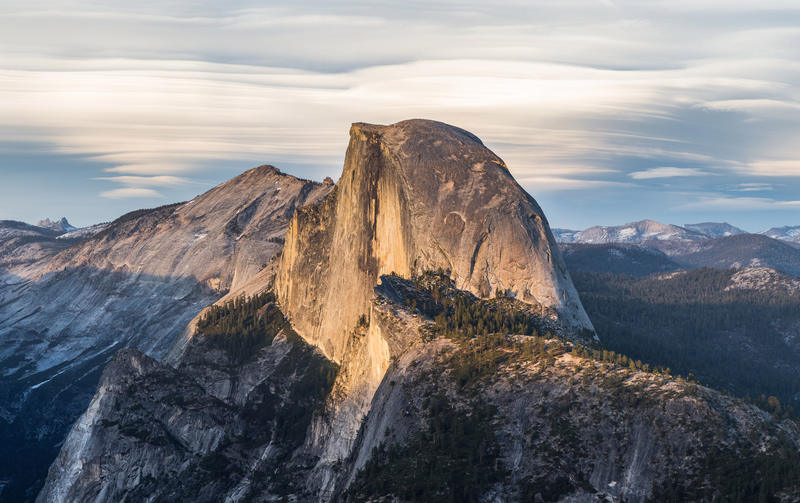
The single most useful thing to know about Half Dome is whether the cables are up or down, because the answer decides whether the hike is a long walk with a permit or a technical climb. For most of the year they are down, and the summit is off limits to hikers.
Here is the schedule, what the cables are actually like, and what people mean when they argue about the angle.
| Detail | |
|---|---|
| Cables up | Usually the Friday before Memorial Day |
| Cables down | Usually the day after Indigenous Peoples’ Day in October |
| Season length | Roughly five months, weather permitting |
| Permit | Required whenever the cables are up |
| Steepest pitch | Close to 45 degrees, and it feels steeper |
| Vertical on cables | About 400 feet over roughly 600 feet of rock |
When the cables go up and come down
The National Park Service puts the cables up in late spring and takes them down in autumn. The usual anchors are the Friday before Memorial Day for going up and the day after Indigenous Peoples’ Day in October for coming down.
Both dates move. A heavy snow year delays the installation, and an early storm can bring them down sooner. The park announces the actual dates each season, so treat the traditional weekends as a planning assumption rather than a promise, and check before you book flights around them.
When the cables are down, the posts and wood planks come off and the steel lies on the rock. People do occasionally go up anyway. It is legal outside the permit season but it turns a hike into a serious friction climb with no protection, and it is where a disproportionate share of the deaths on this route have happened.
What the angle actually is
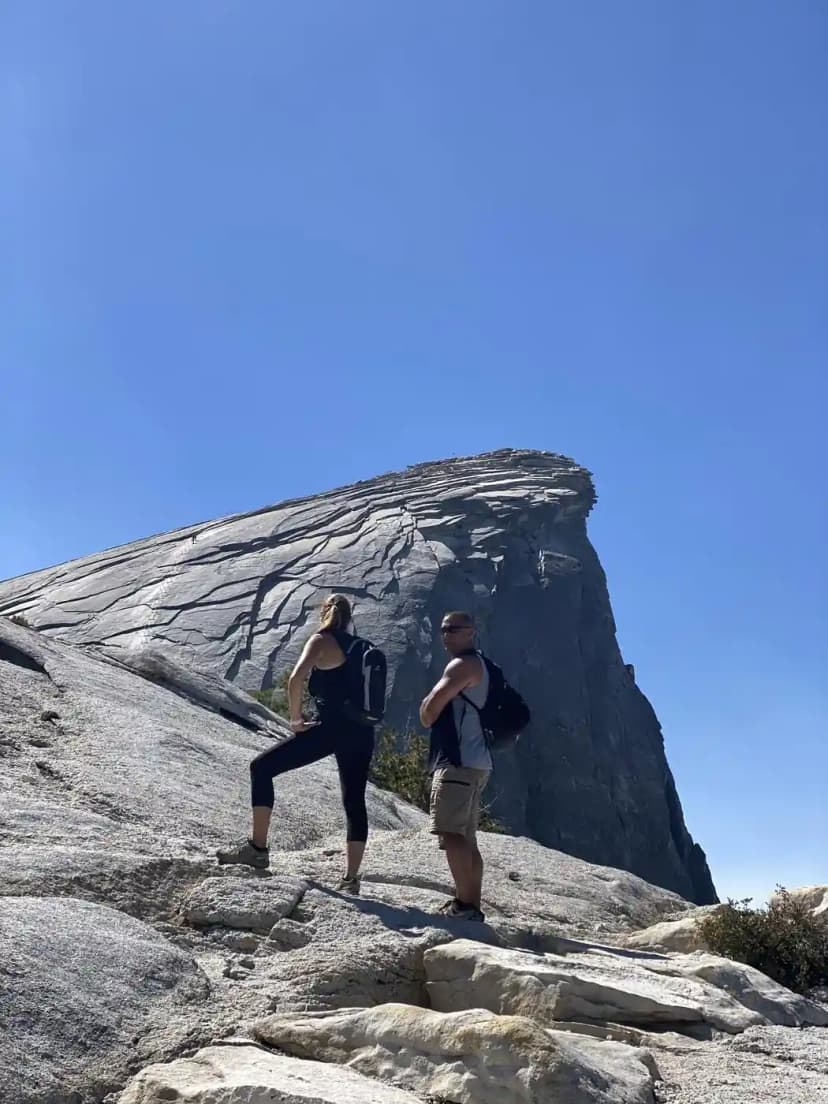
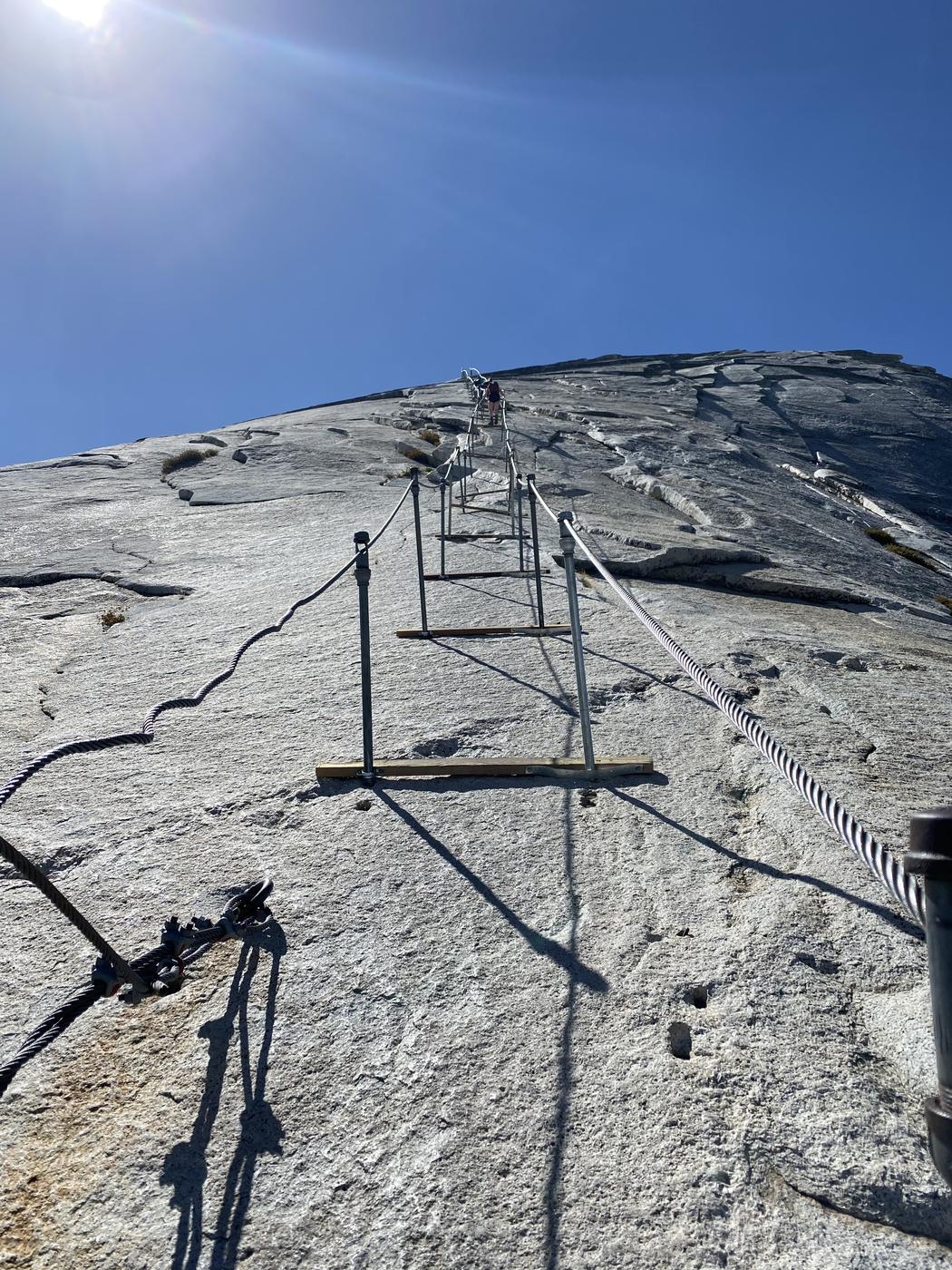
You will see everything from 45 to 60 degrees quoted. The honest answer is that the pitch is not constant. Most of the cable route sits somewhere around 45 degrees, easing near the bottom and steepening through the middle section where the granite bulges.
Forty-five degrees does not sound like much written down. Standing on it, with 400 feet of polished rock below you and nothing but two steel cables to hold, it feels close to vertical. That gap between the number and the sensation is why so many people turn around at the base having read the statistics and felt fine about them.
What it is like to be on them
Two steel cables run up the rock at about shoulder width, held by metal posts. Wooden planks are bolted across at intervals, roughly a body length apart, and those are where you rest. The rock between them is bare granite, polished by more than a century of boots.
You pull yourself up hand over hand between planks, stand on a plank, breathe, and go again. It takes most people 20 to 45 minutes to go up, depending on traffic.
Traffic is the real problem. It is a single lane in both directions, and on a busy Saturday you will be sharing it with people going the other way, which means letting go with one hand and stepping around them. That is when it gets genuinely unpleasant.
Gloves, and the pile at the bottom
Bring gloves. The cables are frayed steel and your hands take your whole weight for half an hour. Any grippy work glove does the job.
There is traditionally a pile of gloves left at the base by previous hikers. Do not count on it. It is picked over, the sizes are random, and it is a pile of wet gloves that strangers have sweated into. Carry your own and take them home rather than adding to it.
When not to get on them
- Any hint of a thunderstorm. This is the one that matters. You are gripping a 400 foot steel conductor on the highest exposed granite around. Afternoon storms build fast in summer. If you hear thunder, you do not go up, and if you are already up you come down.
- Wet rock. Polished granite plus water is a skating rink, and the friction between planks is what keeps your feet.
- If the queue is long and the weather is turning. Twenty minutes of waiting plus half an hour on the cables is a long time to be committed.
- If you are already exhausted. The cables come after seven miles and 4,000 feet. Going up is a decision about whether you have the arms left to come down.
You do not have to go up
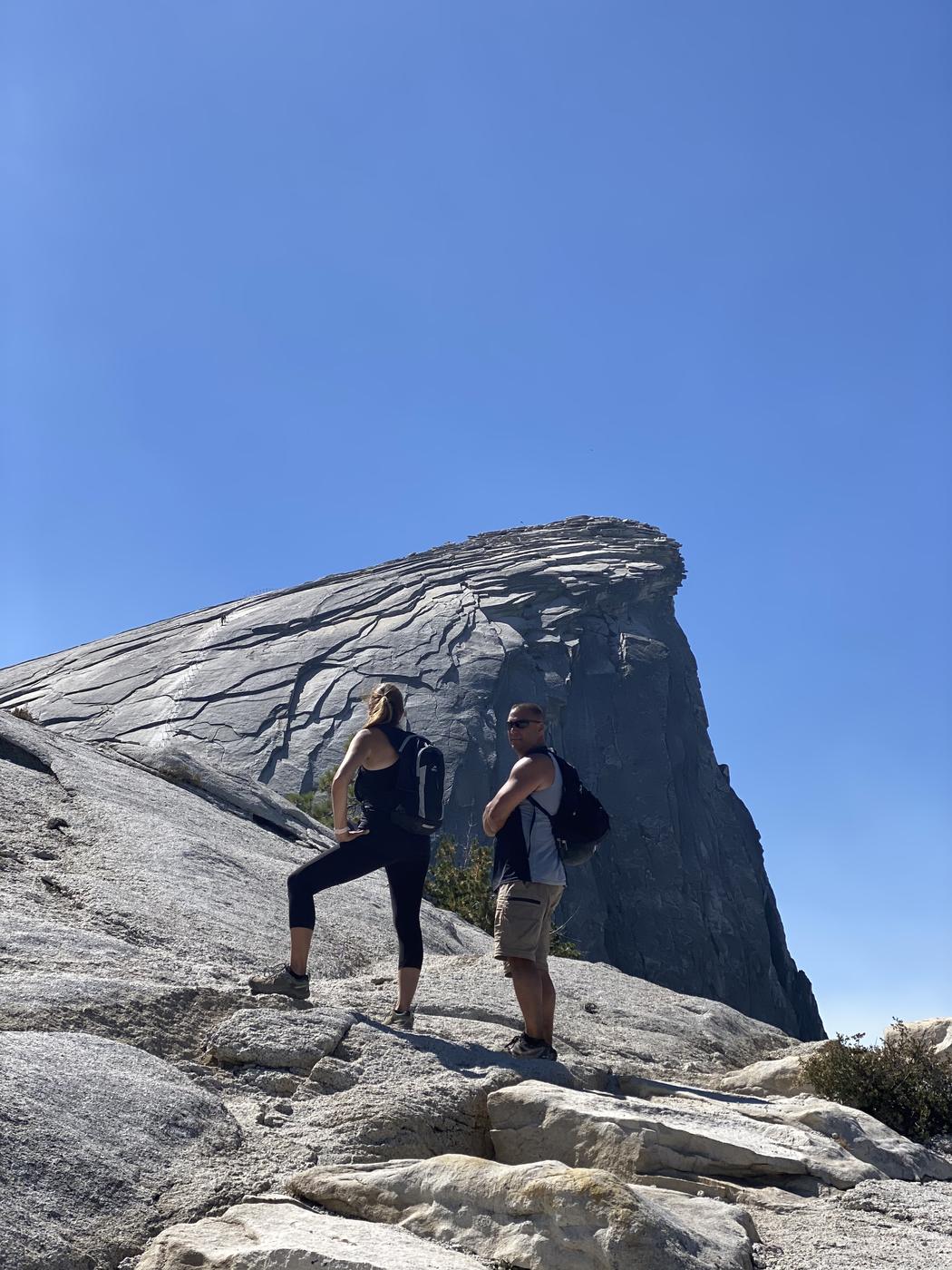
The Sub Dome, the granite staircase immediately below, gives you most of the view and all of the exposure with none of the cables. Plenty of people walk to the base, look at it, and decide that is enough. That is a completely reasonable end to the day and nobody at the bottom will know the difference.
Turning around at the base of the cables is not a failed hike. It is a 14 mile day with 4,000 feet of climbing, which is a serious outing on its own.
The permit, and when to apply
Whenever the cables are up, you need a permit, and they are allocated by lottery. The preseason draw runs in March for the whole season, and there is a daily lottery two days before each date for whatever is left. The card on this page carries the current dates and will email you before the window opens.
Half Dome Cables: When They Are Up, and What They Are Like FAQs
They usually come down the day after Indigenous Peoples’ Day in October and go back up the Friday before Memorial Day, so they are down for roughly seven months of the year. Both dates shift with the weather: a heavy snow year delays the installation and an early storm can bring them down sooner, so check the park’s announcement for the current season.
The pitch is not constant. Most of the route sits around 45 degrees, easing near the bottom and steepening through the middle where the granite bulges. Quoted figures range from 45 to 60 degrees. Forty-five degrees reads as modest on paper and feels close to vertical when you are on it with 400 feet of polished rock below you.
Twenty to forty-five minutes to go up, depending almost entirely on traffic. The cables are a single lane in both directions, so on a busy weekend you spend much of it waiting on a plank while people come down past you.
Bring your own. The cables are frayed steel and your hands carry your weight for half an hour, so any grippy work glove will do. There is traditionally a pile of abandoned gloves at the base, but it is picked over, the sizes are random, and they are wet gloves other people have sweated into.
It is legal outside the permit season, but it turns a hike into a serious unprotected friction climb on polished granite. A disproportionate share of the deaths on this route have happened with the cables down. If you are asking the question, the answer is no.
Do not get on them. You would be gripping a 400 foot steel conductor on the highest exposed granite in the area, and summer storms build quickly in the afternoon. If you hear thunder before you start, turn around. If you are already up, come down.
Yes, the Half Dome Cables is required. Cables-route day-hike lottery for Half Dome.
Application window: the month of March (preseason lottery).
Moderate (~20–30% preseason)
Daily lottery 2 days before your hike, or stop at the sub-dome viewpoint (no permit needed).
Yosemite Valley, CA is the gateway town, flying into Fresno Yosemite (FAT).
Yes. The worked day-by-day plan is Yosemite Hiking Trips: Best Trails & Complete Guide (Multi-day), with the permits, the stays and the drive times already sorted. Tell us your dates and we will put it together for you and confirm what is genuinely open on those days. Asking is free: no card, no deposit, and nothing is held until you say yes.