Glacier National Park Colored Rocks: Where to See Them and Why They Glow
The colored rocks in Glacier National Park are argillite, a sedimentary rock turned red or green by the state of the iron inside it: rusted red where it sat in open air, unoxidized green and blue where it formed underwater. The easiest place to see both colors together is the pebble beach on Lake McDonald, a five minute walk from Apgar Village. Go when the rocks are wet; dry argillite looks flat gray. Our Glacier National Park weekend itinerary puts Lake McDonald on day one.
Why Glacier's Rocks Turn Red and Green
All of it comes down to iron. Roughly 1.5 billion years ago, this part of Montana was the floor of an inland body of water called the Belt Sea, and layer after layer of silt and mud settled into it. Over about 100 million years those layers compressed into rock: quartzite, mudstone, limestone and argillite, together known as the Belt Supergroup. The argillite carries a lot of iron, and iron is what changes color depending on its surroundings.
Where the sediment sat in shallow water and was later exposed to air as the Belt Sea pulled back, the iron oxidized, the same chemistry that rusts an old car bumper, and the rock turned red and purple. Where the sediment stayed underwater on the sea floor, starved of oxygen, the iron bonded with silica instead and formed a mineral called chlorite, which reads as green and blue. Geologists name the two main layers after features in the park: the red layer is the Grinnell Formation, the green layer is the Appekunny Formation. Both are argillite. The only difference is what the iron in each one was doing 1.5 billion years ago.
Where to See the Colored Rocks
- Lake McDonald shoreline, near Apgar Village. The most reliable spot. Walk out onto the beach at the foot of the lake and the pebbles underfoot are a mix of red, green, gray and purple argillite, worn smooth by the lake. This is the location the park's own geology page points to first.
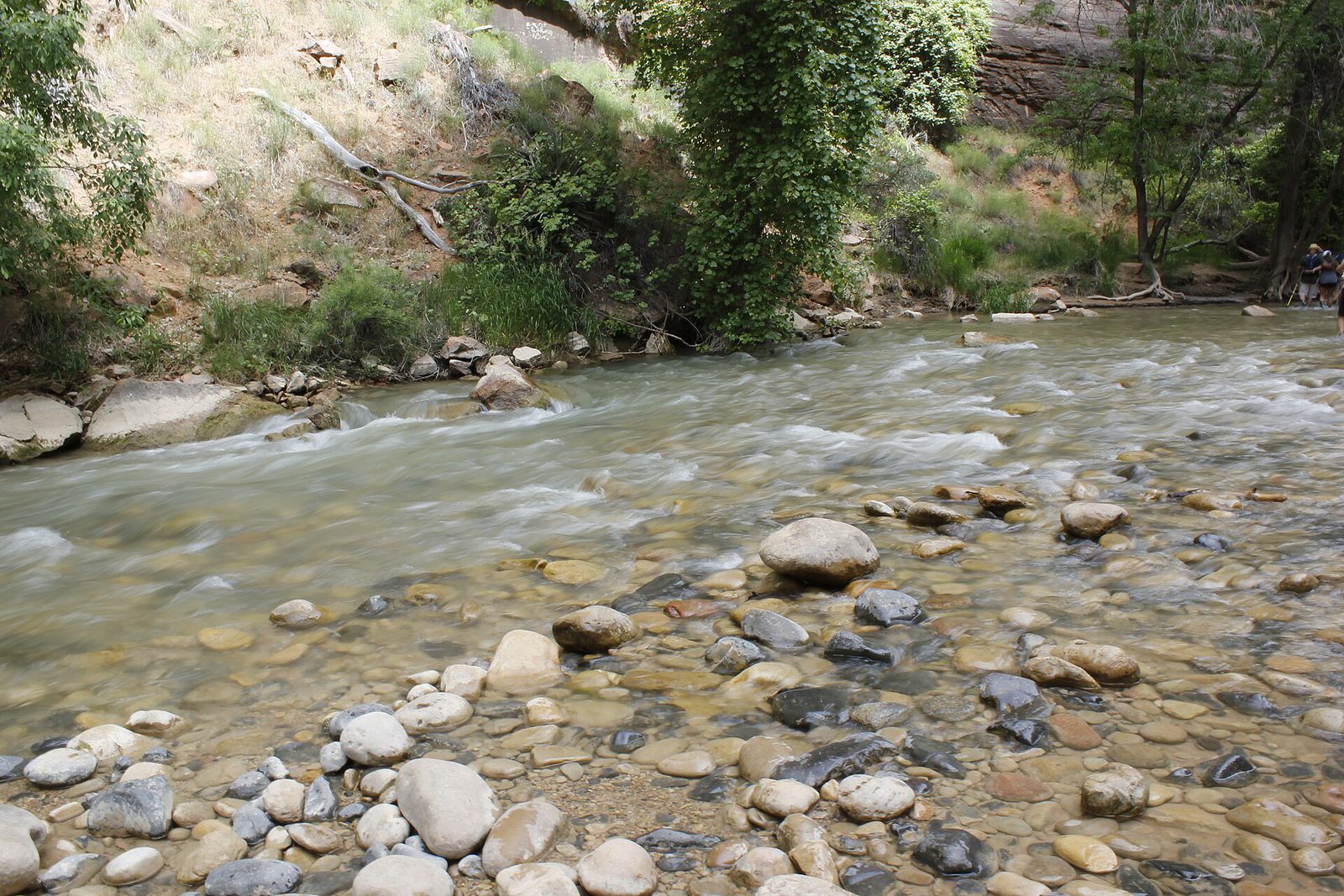
- McDonald Creek. The creek that feeds Lake McDonald carries the same rock. Where it runs shallow and clear along the road between Apgar and Lake McDonald Lodge, you can see the colored stones on the creek bed without leaving the car pullouts.
- Going-to-the-Sun Road roadcuts. The road climbs straight through the Lewis Range, where both the Grinnell and Appekunny formations are exposed in the cliff faces above the pavement. You will not stop and pick through gravel here, but you can see the red and green bands in the rock itself as you drive.
Get the Colors to Show
Dry argillite looks like ordinary gray rock. Wet argillite is where the color comes out, the same reason a wet stone always looks more saturated than a dry one. At Lake McDonald, that means either working right at the waterline where wave splash keeps the pebbles wet, or carrying a water bottle to splash a patch of shore before you shoot it. Overcast light or the hour after sunrise works better than full midday sun, which washes out the color in a photo the way it does on any wet rock.
Leave Them Where They Are
Taking rocks out of a national park is against federal regulations, and Lake McDonald's beach has thinned in places from decades of visitors doing exactly that. Photograph them, and put back anything you pick up to look at closer.
Plan the Rest of the Trip
Lake McDonald works as a stop on its own or as the first afternoon of a longer trip. Our 4 day Glacier National Park itinerary starts on the west side at Lake McDonald before crossing Going-to-the-Sun Road, so the colored rocks and the drive through the rock that made them happen back to back.
Glacier National Park Colored Rocks: Where to See Them and Why They Glow FAQs
Both colors come from iron in the same rock, argillite. Red and purple form where the iron oxidized in open air; green and blue form where it stayed underwater without oxygen and bonded with silica instead. Geologists call the red layer the Grinnell Formation and the green layer the Appekunny Formation.
The Lake McDonald shoreline near Apgar Village is the easiest and best documented spot, a five minute walk from the village to the pebble beach. McDonald Creek and the roadcuts along Going-to-the-Sun Road show the same rock.
Dry rock scatters light and looks dull no matter what color it is underneath. Water fills in the surface texture and lets more light reflect straight back, which is why wet argillite reads red and green and dry argillite looks flat gray.
No. Removing natural rocks from any national park is against federal regulations, and it applies at Lake McDonald too. Photograph what you find and leave it on the beach.
Yes. The pebble beach at the foot of Lake McDonald, near Apgar Village, is the spot most photos of Glacier's colored rocks are taken from.
Yes. The worked day-by-day plan is Best Day Hikes in Glacier National Park: 3-Day Weekend (3 Days), with the permits, the stays and the drive times already sorted. Tell us your dates and we will put it together for you and confirm what is genuinely open on those days. Asking is free: no card, no deposit, and nothing is held until you say yes.