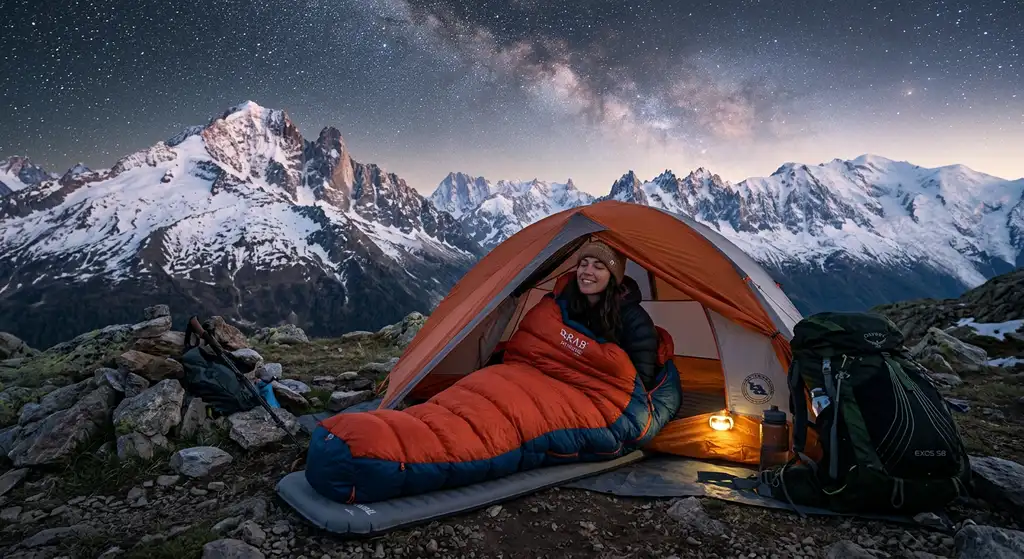
Your sleeping bag determines whether you wake up recovered or exhausted, and whether a cold night is manageable or dangerous. For backpackers, weight and packed size matter almost as much as warmth. Here are the best sleeping bags for backpacking in 2025, plus the buying details that actually change how warm you sleep on trail.
Down vs. Synthetic Fill

- Down insulation -- warmest-to-weight ratio, compresses small, lasts 20+ years with care. Loses most insulating value when wet. Best for dry conditions and serious ultralight hikers. 800+ fill power is the standard; 900+ fill power is premium.
- Synthetic insulation -- retains insulating value when wet, dries faster, often cheaper, vegan-friendly. Heavier and bulkier than equivalent-warmth down. Best for wet climates (Pacific Northwest, East Coast) and casual backpackers.
- Hydrophobic down -- down treated to resist moisture. Best of both worlds for most 3-season use.
How to Read the Spec Sheet
Four numbers decide whether a bag is worth its price, and only one of them is on the front of the box.
Fill weight, not total weight. Total weight tells you what you carry. Fill weight tells you how much down or synthetic is actually in there, and it is the number that predicts warmth. Two 20 degree bags at the same total weight can differ by four ounces of fill, and the lighter-filled one is the colder one.
What the rating means. A 20 degree sleeping bag is rated to survive at 20F, not to sleep well at it. EN and ISO testing publishes a comfort figure and a lower limit, and the number on the label is usually the limit. If you want the best trekking sleeping bag for cold sleepers, buy 10 to 15 degrees below the lowest temperatures you expect.
Zip length. A full length zip lets you vent to a quilt on a warm night and costs a couple of ounces. A three-quarter or half zip saves that weight and takes the option away.
What ships with it. Most bags come with two bags included: a compression stuff sack for the trail and a big cotton or mesh sack for home. Use the second one. Down left compressed in stuff sacks between trips loses loft permanently, which is the most common way a good bag turns into a cold one.
Temperature Ratings and Real-World Use
EN/ISO temperature ratings have three numbers: comfort (casual sleepers), limit (experienced cold sleepers), and extreme (survival temperature). Most recommendations use the limit rating. If you sleep cold, buy a bag rated 5-10 degrees colder than the minimum temperatures you expect. Pad R-value, clothing, and tent condensation all affect how warm you sleep.
How to Choose a Temperature Rating by Season and Region
Match the rating to where and when you actually hike, not to the coldest trip you can imagine. A single 20-degree bag covers the widest range of North American backpacking, but the details matter:
- Summer alpine (Sierra Nevada, Rockies above 9,000 ft): Nights routinely drop into the high 30s even in July. A 20-degree bag is the safe default; a 30-degree bag works only for confirmed warm sleepers.
- Desert shoulder season (Grand Canyon, Big Bend, Saguaro in March or November): Daytime heat hides 30-degree nights. Bring the 20-degree bag and vent the zipper rather than carrying two bags.
- Pacific Northwest and Appalachian Trail in spring/fall: Damp cold feels colder than dry cold. Lean synthetic or hydrophobic down, and rate yourself one notch warmer than the thermometer suggests.
- Deep summer at low elevation (Ozarks, Southeast): A 40- to 45-degree quilt is plenty and saves serious weight.
Top Backpacking Sleeping Bag Picks
- REI Co-op Magma 15 -- 850-fill down, 2 lbs 1 oz, excellent value-to-performance ratio. The benchmark mid-range sleeping bag for 3-season backpacking.
- Western Mountaineering UltraLite 20 -- premium 850-fill down, exceptionally comfortable, 1 lb 13 oz. Outstanding quality for serious hikers who want a 20-year bag.
- Feathered Friends Swallow 20 -- 950-fill Nikwax hydrophobic down, 1 lb 9 oz. One of the lightest 20-degree bags available from a reputable brand.
- Sea to Summit Spark 20 -- ultra-compressible 850-fill down in a unique stretch construction that reduces packed size. Excellent temperature-to-weight ratio.
- Nemo Forte 20 -- synthetic, blanket-style construction allows movement without getting tangled. Best for restless sleepers and wet climates.
Sleeping Bags vs. Quilts: Should You Switch?
Backpacking quilts drop the insulation under your body, where it is crushed flat and does little anyway, and instead clip around your sleeping pad. The result is a lighter, more packable, and often cheaper setup for warm sleepers and side-sleepers who hate feeling confined.
- Choose a quilt if you move a lot in your sleep, want to save 4-8 oz, and mostly camp above freezing. The Enlightened Equipment Revelation 20 and Katabatic Flex 22 are proven choices.
- Stick with a mummy bag if you are a cold sleeper, camp near or below freezing, or want the security of a draft collar and hood. Quilts can let in drafts at the edges if you toss and turn.
Don't Forget the Sleeping Pad
The most common reason backpackers sleep cold is not the bag, it is an under-insulated pad. The ground steals body heat faster than air, and a bag's rating assumes an adequate pad. Match pad R-value to the season:
- R-value 2-3: summer use, above-freezing nights.
- R-value 4-5: true 3-season backpacking, the most versatile range.
- R-value 5+: shoulder season and light winter use.
A 30-degree bag on an R-5 pad will outperform a 15-degree bag on a thin foam pad in the cold.
Budget Strategy: Where to Spend and Save
If your budget is tight, spend on the bag's fill power and temperature rating first, because those are hard to upgrade later. Save by buying last season's colorway, watching REI member sales and the spring/fall clearance cycles, and skipping ultralight premium brands until you know you will keep backpacking. A mid-range 850-fill down bag like the Magma 15 hits the sweet spot for most people: it is light enough to never regret, warm enough to last for years, and priced well below boutique cottage brands.
Dialing In Fit, Length, and Width
A bag that is too long or too wide wastes warmth heating empty air, while one that is too tight crushes loft against your shoulders and feet. Measure before you buy:
- Length: regular fits up to about 6 ft; long up to 6 ft 6 in. Between sizes, size down to avoid cold dead space at your feet.
- Girth: standard mummy bags run 58-62 in at the shoulders. Broad-shouldered or side-sleeping hikers should look at wide or relaxed-mummy cuts.
Boost Warmth Without Buying a Warmer Bag
You can stretch a 3-season bag 10-15 degrees colder with a few cheap field tricks:
- Sleep in clean, dry base layers and a warm hat; never get into the bag in sweaty hiking clothes.
- Add a silk or fleece liner for 5-15 degrees of extra warmth and to keep body oils off the down.
- Fill a bottle with hot water and tuck it near your core or feet. Cinch the hood and draft collar so only your nose is exposed.
Caring for Your Sleeping Bag
Store your sleeping bag uncompressed (hanging or in a large cotton sack) to preserve loft. Wash it every 20-30 nights of use with a technical down wash like Nikwax Down Wash Direct. Tumble dry on low with two tennis balls until completely dry -- residual moisture causes mildew and reduces loft permanently.
Best Backpacking Sleeping Bag: Budget and Ultralight Picks FAQs
A 30-45 degree bag works for most summer backpacking in the western US. At elevation (above 8,000 ft), temperatures can drop to 30 degrees F even in July and August. A 30-degree bag gives you margin; a 20-degree bag is overkill and unnecessary weight for most summer trips.
A quality down sleeping bag lasts 15-25 years with proper care. Synthetic bags lose loft faster and typically last 3-7 years with regular use. The key care factors: always store uncompressed, keep clean (washing restores loft), and never store damp.