Why Tent Weight Matters More Than Any Other Gear Choice

Your tent is typically the heaviest single item in your pack, which makes choosing the right lightweight shelter one of the most impactful gear decisions you can make. The best lightweight backpacking tents in 2025 cut weight without cutting weather protection -- a tradeoff that older ultralight options could not always manage.
What Makes a Backpacking Tent "Lightweight"
- Solo tent: under 2 lbs (1 lb for ultralight)
- Two-person tent: under 3 lbs (2 lbs for ultralight)
- Double-wall construction (separate inner and fly) for condensation management
- Silnylon or silpoly fabrics for weatherproof coverage at minimal weight
Top Lightweight Backpacking Tents for 2025
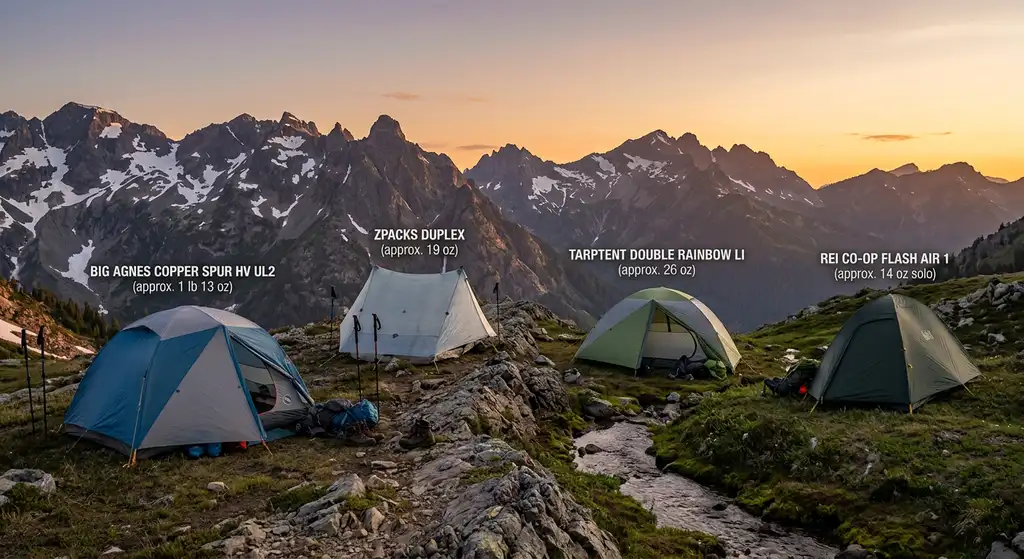
Big Agnes Copper Spur HV UL2 (2 lbs 6 oz)
The benchmark two-person ultralight tent. Excellent livability, storm-worthy construction, and packs to the size of a water bottle. The "HV" (high volume) design gives you more headroom than competing tents at the same weight. Two doors and vestibules mean no one has to climb over the other person at 2 a.m. Costs around $550 but lasts 5+ years with proper care.
Nemo Hornet OSMO 2P (2 lbs 1 oz)
Exceptionally light with excellent ventilation. OSMO fabric regulates temperature better than traditional silnylon -- it absorbs less moisture, so it dries faster and stays lighter when wet. Two-door design, roomy enough for most hikers. One of the best ultralight two-person options at around $500.
MSR Hubba Hubba NX 2 (3 lbs 8 oz)
Slightly heavier but notably more wind-resistant than the ultralight options above. If you frequently camp in exposed alpine terrain or shoulder-season conditions with real weather, the Hubba Hubba's structural integrity is worth the extra weight. Around $450, widely available, and backed by strong dealer support for repairs.
Six Moon Designs Lunar Solo (1 lb 9 oz)
Ultralight trekking-pole-supported solo shelter with a huge floor space for its weight class. Takes practice to pitch correctly, and you need trekking poles (which most backpackers already carry). At $260, it's the most affordable ultralight solo option from a reputable brand. Very popular on the PCT and AT.
Zpacks Duplex (1 lb)
DCF (Dyneema Composite Fabric) construction, two-person capacity, under one pound. The pinnacle of ultralight shelter. Expensive at $700+, but genuinely changes how you think about shelter weight. Not for beginners -- the minimalist design and trekking-pole setup require experience to pitch confidently in bad weather.
Freestanding vs. Non-Freestanding
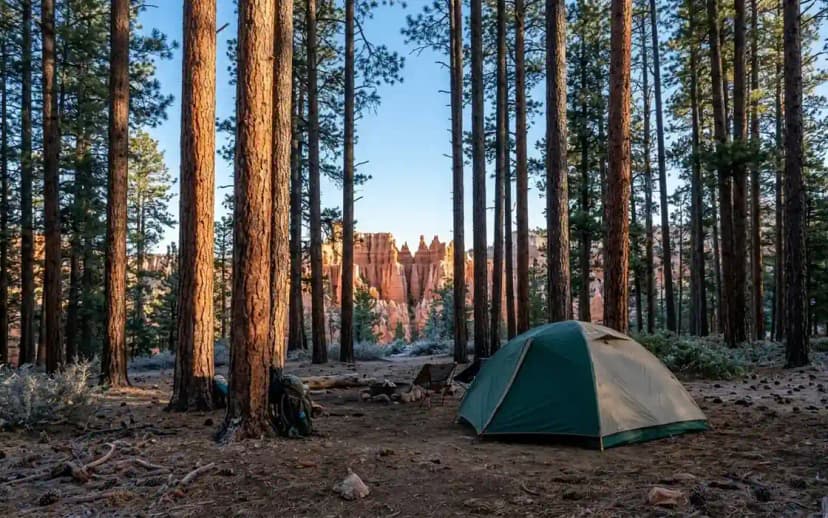
Freestanding tents (Big Agnes, Nemo, MSR) pitch without stakes and can be picked up and moved. This makes site selection easier -- you can place the tent exactly where you want before staking out. Non-freestanding tents (Six Moon Designs, Zpacks) require stakes and often trekking poles, but save significant weight. For experienced backpackers in open terrain, non-freestanding is fine. For anyone camping in rocky ground where staking is difficult, freestanding is worth the weight penalty.
Double-Wall vs. Single-Wall
Most tents above are double-wall: a breathable inner tent plus a separate waterproof fly. This prevents condensation buildup inside the tent because moisture can escape through the inner wall before hitting the fly. Single-wall tents (like the Zpacks Hexamid) are lighter but collect more condensation. In humid environments or shoulder-season camping, double-wall wins. In dry Western climates in summer, single-wall is more acceptable.
Choosing by Trip Type
- Weekend backpacker, mixed conditions: Big Agnes Copper Spur HV UL2 or MSR Hubba Hubba NX 2
- Ultralight thru-hiker, solo: Six Moon Designs Lunar Solo or Zpacks Hexamid Solo Plus
- Ultralight thru-hiker, pair: Zpacks Duplex or Nemo Hornet OSMO 2P
- Alpine and shoulder-season camping: MSR Hubba Hubba NX 2 or Black Diamond Firstlight 2
- Budget-conscious lightweight camping: REI Co-op Half Dome SL 2 (3 lbs, ~$230)
Best Lightweight Tent for Backpacking FAQs
The Zpacks Duplex weighs under 1 lb for a two-person tent using DCF fabric. For solo use, the Gossamer Gear The One and Six Moon Designs Lunar Solo are among the lightest trekking-pole shelters at 1 lb to 1.5 lbs.
Yes, for most three-season conditions. DCF fabric is more tear-resistant than its thin profile suggests. Silnylon and silpoly tents from brands like Big Agnes and Nemo handle significant rain and moderate wind. The tradeoff is that ultralight tents abrade faster if dragged over rocks -- use a footprint and handle gear carefully.
Freestanding tents are easier to pitch, especially in rocky terrain where staking is difficult. Non-freestanding tents are lighter but require trekking poles and good staking conditions. For most backpackers, freestanding is the safer choice; experienced hikers in open terrain often prefer non-freestanding to save weight.
Look for a four-season or three-season plus tent with strong pole geometry and a full fly that reaches the ground. The MSR Access 2, Black Diamond Firstlight 2, and Hilleberg Akto handle sustained wind and snow load far better than standard ultralight tents.