Why Plant ID Matters on the Trail
You don't need to be a botanist to hike safely, but you do need to recognize a handful of plants that can ruin your trip or send you to the emergency room. Poison ivy alone affects 50 million Americans every year, and it grows in every state except Alaska and Hawaii. The good news: the plants most likely to harm you are also among the easiest to identify once you know what to look for.
This guide covers the plants you're most likely to encounter on North American hiking trails, what they look like in different seasons, how to respond if you've had contact, and how to avoid accidental exposure when you're not sure what you're touching.
Poison Ivy: The Most Important Plant to Recognize
Poison ivy (Toxicodendron radicans) is the most widespread hazardous plant in North America. It contains urushiol, an oily resin that causes a blistering allergic rash in roughly 85% of people who touch it. The rash isn't dangerous in most cases, but it's intensely itchy and can last 2–3 weeks. Breathing smoke from burning poison ivy causes severe lung inflammation, never burn it.
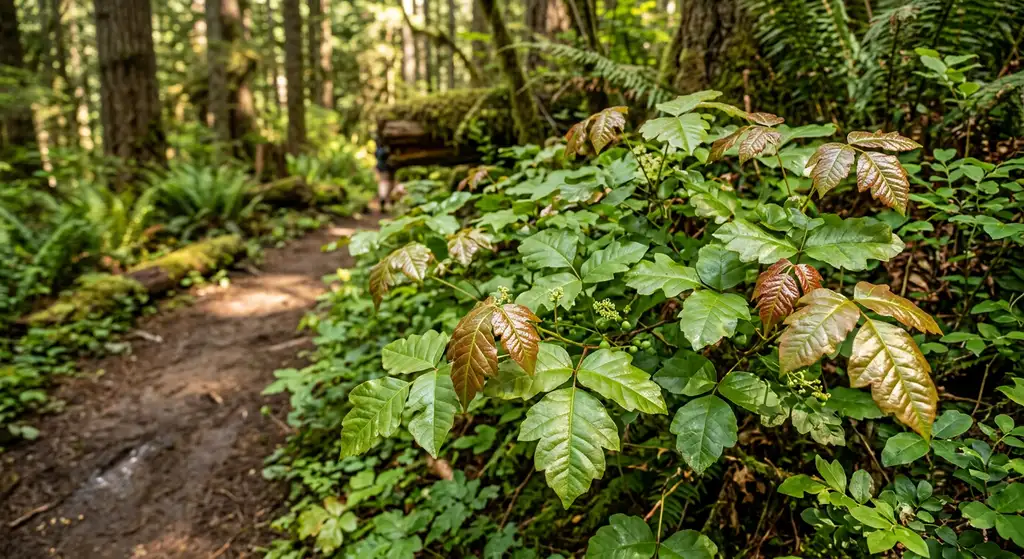
The rule: "Leaves of three, let it be." Poison ivy always grows in clusters of three leaflets. Each cluster has one leaflet at the tip and two opposite leaflets on either side, all attached to a single stem. The leaflets have slightly irregular, pointed edges, not smooth and not deeply toothed, but wavy and sometimes with a few irregular notches.
What changes by season: In spring, the new leaves are shiny, reddish, or bronze. By summer, they're green and matte or slightly glossy. In fall, they turn brilliant red, orange, or yellow, and are still just as toxic. In winter, the bare woody stems remain toxic, and some plants produce small white or yellowish berries that persist through cold months. The saying "berries of white, a poisonous sight" applies here.
Poison ivy grows as a ground plant (in open woods and roadsides), a shrub (in disturbed areas and forest edges), and a vine (climbing trees using distinctive hairy aerial rootlets that give the vine a "hairy rope" appearance). Recognize the hairy vine on tree trunks, that's a reliable ID even without seeing the leaves.
Poison Oak: West Coast and Southeast Variant
Western poison oak (Toxicodendron diversilobum) is the dominant urushiol-containing plant on the Pacific Coast from Baja California to British Columbia. Eastern or Atlantic poison oak (Toxicodendron pubescens) is common in the Southeast. Like poison ivy, it causes the same urushiol reaction.
Poison oak leaves have a more rounded, lobed shape resembling actual oak leaves, hence the name. The clusters still come in threes (sometimes fives), and the lobed shape is distinctive. In California, you'll encounter it on virtually every trail below 5,000 feet elevation, especially in chaparral, oak woodland, and forest edge habitats. It grows as a dense shrub 2–10 feet tall, sometimes taller.
The seasonal color change rule applies: shiny green in spring, matte green in summer, red and orange in fall. The berries are white to cream-colored, clustered, and persistent. If you're hiking on the Pacific Coast and step off trail to answer nature's call, you have a high probability of encountering poison oak, this is the main way people unknowingly get it on their legs and backside.
Poison Sumac: The Severe Rash Risk
Poison sumac (Toxicodendron vernix) is less commonly encountered than poison ivy or oak because it's restricted to wetlands, swamps, bogs, and marshy areas in the eastern US. But it causes the most severe urushiol reaction of the three. If you're hiking in wet lowland terrain in the Southeast or Great Lakes region, know what it looks like.
Unlike poison ivy, poison sumac grows as a shrub or small tree (6–20 feet) with compound leaves containing 7–13 leaflets arranged along a central stem. The leaflets are smooth-edged (not toothed), oblong, and glossy. The stems often have a distinctive reddish color. The berries are cream or pale yellow, drooping in loose clusters. Harmless sumac species (staghorn sumac, smooth sumac) have red or dark berries in upright clusters, white or yellow berries in a wet location should raise immediate flags.
Stinging Nettles: Immediate but Temporary
Stinging nettles (Urtica dioica) won't cause a lasting rash, but brushing against them bare-armed feels exactly like touching a hot stove. The plant's surface is covered in tiny hollow needles (trichomes) that break off on contact and inject formic acid, histamine, and other irritants into your skin. The burning, stinging sensation peaks within minutes and usually fades completely within 30–60 minutes, though some people get welts that last a few hours.
Nettles are 2–7 feet tall with opposite, heart-shaped leaves that have deeply toothed edges and a dull, slightly rough surface. The stem and leaf undersides are covered in visible hair-like needles. They grow in dense patches in moist, nitrogen-rich areas, along streams, in forest clearings, and on trail edges where horses have grazed. In the Pacific Northwest, they're abundant along lowland creek trails in spring and early summer.
Wearing long pants and keeping to the center of the trail prevents most nettle encounters. If you brush against them, don't rub the area, rubbing breaks more needles and drives them deeper. Use tape or a credit card to remove visible needles. The juice from crushed nettle leaves (wearing gloves) or a paste of water and baking soda neutralizes some of the sting.
Water Hemlock and Poison Hemlock: Lethal Plants
These deserve mention not because you'll touch them on the trail, but because they're occasionally confused with edible plants. Water hemlock (Cicuta species) and poison hemlock (Conium maculatum) are among the most violently toxic plants in North America. Hemlock ingestion can cause seizures and death within hours. Do not eat any plant you've foraged on the trail unless you are certain of its identity.
Both plants are in the carrot/parsley family (Apiaceae) and have white, umbrella-shaped flower clusters. Water hemlock grows in wet areas and marshes; poison hemlock grows in disturbed areas, roadsides, and meadows. Poison hemlock has distinctive purple-blotched stems. Both have hollow stems and a musty, unpleasant smell when crushed.
The rule for foraging: if you're not 100% certain, don't eat it. Wild carrot, wild parsnip, and other edible Apiaceae members look similar enough to hemlock to be regularly confused. Avoid foraging from this plant family unless you have expert-level identification skills and can confirm multiple distinguishing characteristics.
What to Do After Poison Ivy or Oak Contact
The urushiol in poison ivy and oak absorbs through your skin within 15–30 minutes of contact. If you know you've touched it, immediately wash the affected area with soap and cool water. Use lots of water to flush the oil away, don't scrub hard, as this can help urushiol penetrate. Clean under your fingernails carefully. Wash your clothing, pack straps, and any gear that may have touched the plant, since urushiol on fabric or gear remains active for years.
If you're on the trail and don't have soap, pour water liberally over the area and rub gently with a clean cloth. Some hikers carry Tecnu skin cleanser specifically for urushiol removal. The faster you act, the less severe the reaction will be.
The rash typically appears 12–72 hours after contact. It's not contagious, you can't spread it by scratching or through blister fluid. The rash seems to "spread" because areas with lighter contact react later. Calamine lotion, hydrocortisone cream, and antihistamines manage most cases. See a doctor if the rash covers large areas, involves your face or genitals, or if you're having trouble breathing (which can indicate a severe systemic reaction).
General Rules for Trail Safety Around Plants
- Stay on the trail: The most effective avoidance strategy. Most hazardous plant encounters happen when hikers step off trail to bushwhack, answer nature's call, or find a shortcut.
- Wear long pants in brushy terrain: Particularly important in coastal California (poison oak) and the eastern US below 4,000 feet (poison ivy).
- Don't touch plants you can't identify: Especially plants with white berries, hollow stems, or a musty smell. If your child picks up an interesting plant, have them wash their hands before touching their face.
- Know your local flora: Download iNaturalist before your hike. The app identifies plants from a photo with surprising accuracy, useful for quick checks when you see something unfamiliar.
- Check gear after brushy hikes: Urushiol transfers from gear to skin hours or days later. Wipe down trekking poles and wash your pack hip belt if you've been off-trail in poison ivy or oak country.
How to Identify Poisonous Plants on the Trail FAQs
Poison ivy always has leaves in clusters of three, one leaflet at the tip and two opposite leaflets, on a single stem. The leaflets have slightly irregular, wavy edges. In spring the new leaves are shiny and reddish; summer leaves are green; fall leaves turn brilliant red or orange. The vine form has a distinctively hairy surface that clings to tree trunks.
They're different species but cause identical reactions, both contain urushiol oil and produce the same blistering rash. Poison oak has rounded, lobed leaflets resembling actual oak leaves, always in clusters of three or five. It's the dominant hazardous plant on the Pacific Coast from Baja to British Columbia and is common in California chaparral below 5,000 feet.
The rash typically appears 12–72 hours after contact, sometimes up to a week later if the exposure was minor. Immediate washing with soap and water reduces or prevents the rash if done within 15–30 minutes of contact. The reaction is an allergic response that takes time to develop, you won't feel anything immediately after contact.
Yes. Dogs can carry urushiol on their fur without reacting to it themselves, then transfer it to you when you pet them. If your dog has been running through brushy areas in poison ivy or oak country, wash them with dish soap before handling them. This is a common source of unexpected rash.
Harmless sumac species (staghorn, smooth, fragrant sumac) have red or dark red berries in upright, cone-shaped clusters. Poison sumac has white or cream-colored berries in loose, drooping clusters. Poison sumac also grows exclusively in wetlands and swamps, not on dry hillsides where harmless sumac is common.