Heat Is the Most Underestimated Hazard in Hiking
Rattlesnakes kill roughly 5–6 people in the US per year. Lightning kills around 20. Heat kills hundreds, and many of those deaths happen on trails people consider easy or moderate. The Grand Canyon alone sees multiple heat fatalities every summer, typically on the Bright Angel Trail, one of the most traveled paths in the national park system. Victims are often experienced hikers who started too late, carried too little water, or ignored early warning signs.
Heat danger is non-linear. When air temperature exceeds 95°F, your body can no longer cool itself efficiently through sweating, evaporative cooling requires a temperature differential between your skin and the air. Above 104°F air temperature in high humidity, cooling becomes nearly impossible regardless of how much water you drink. Understanding this changes your entire approach to desert hiking.
Timing Is Everything: The Desert Hiking Window
In extreme heat, anything above 90°F air temperature, your hiking window is roughly 5am to 10am and optionally 5pm to dusk. Outside that window, the risk profile changes dramatically.
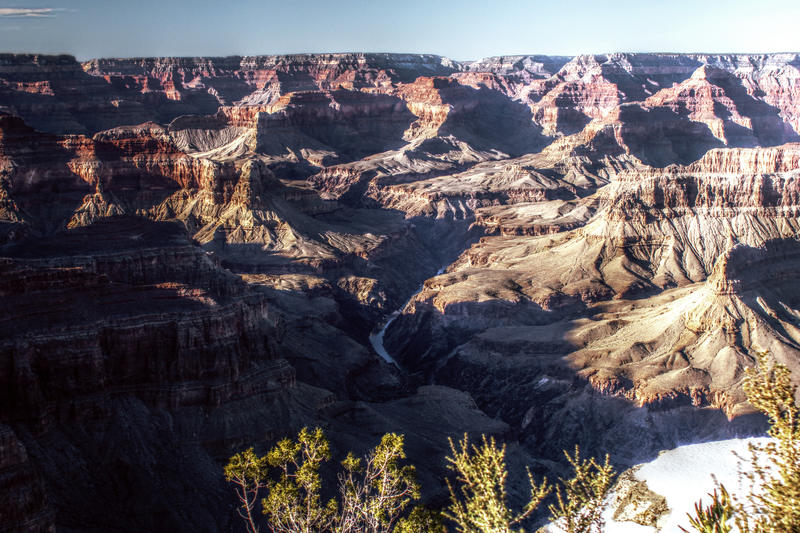
On canyon trails (Grand Canyon, Zion Narrows in summer, Antelope Canyon approaches), temperatures at the canyon floor regularly exceed the air temperature at the rim by 15–20°F. An 85°F day at the South Rim becomes 100°F at the Colorado River. Start your descent at or before sunrise. The NPS explicitly recommends against hiking below the canyon rim between 10am and 4pm from May through September, this isn't a suggestion.
Practical morning start strategy:
- Set your alarm for 4:30am for canyon hikes in summer.
- Drive to the trailhead the night before if the drive is over 30 minutes.
- Begin hiking by 5am, you have roughly 4–5 hours of comfortable temperature before canyon heat builds.
- Plan your turnaround time based on when you'll be back in shade, not when you summit.
Water: How Much You Actually Need
The standard recommendation of "drink plenty of water" is useless. Here are specific numbers:
In temperatures above 90°F on moderate terrain, most hikers need 1 liter of water per hour of hiking. In extreme heat (above 100°F) or on steep terrain, that increases to 1.5 liters per hour. A 4-hour desert hike in summer requires 4–6 liters of water minimum. Most people carry 2 liters and wonder why they feel awful by mile 3.
Water weight is not optional. A liter of water weighs 2.2 pounds. Six liters weigh over 13 pounds. Yes, you're carrying that weight in addition to your pack. Yes, it's worth it.
Key water strategies:
- Pre-hydrate. Drink 16–20 oz of water before you start hiking. Begin already-hydrated, not hoping to catch up on trail.
- Drink on a schedule. Set a timer for every 20 minutes and drink 6–8 oz whether you're thirsty or not. The thirst mechanism lags behind actual dehydration, by the time you feel thirsty in heat, you're already 1–2% dehydrated (performance impairment level).
- Know where water refills are. On longer desert hikes with established water sources (seasonal streams, cached water tanks at NPS), plan refills explicitly. Don't rely on seasonal water in summer, sources that show on maps may be dry.
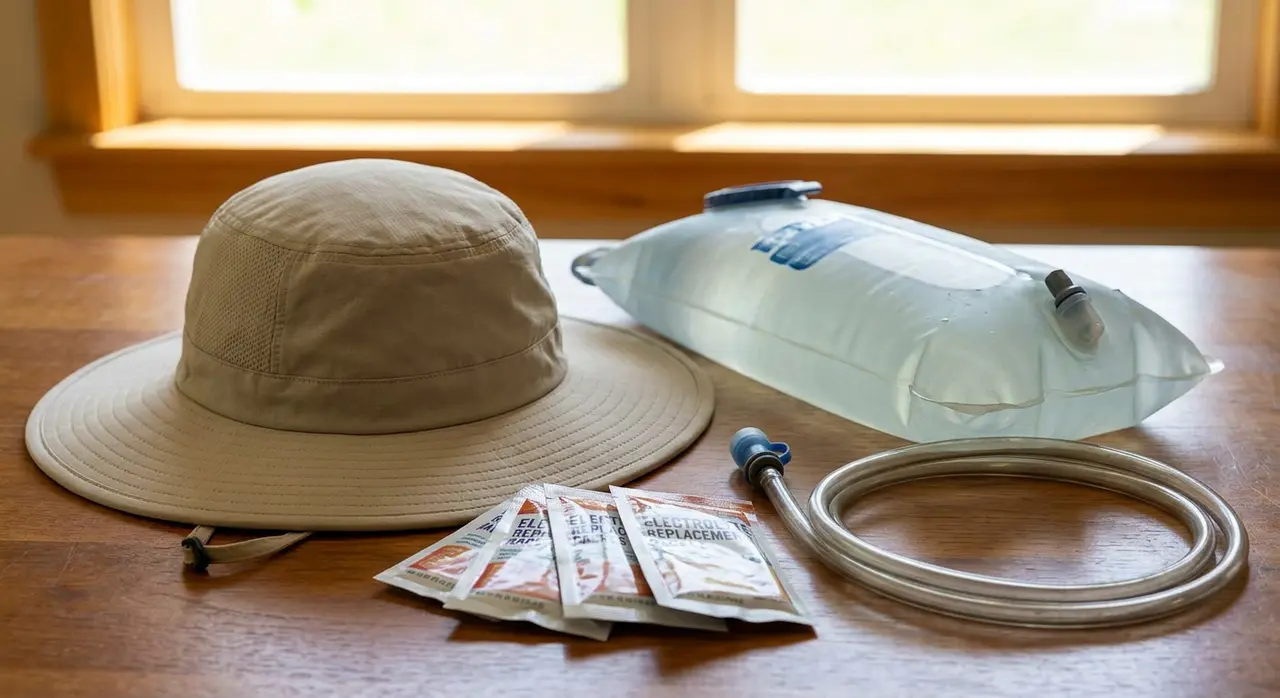
- Electrolytes matter. Drinking only water in heat causes hyponatremia (low sodium), a serious condition where diluted blood sodium levels cause confusion, nausea, and in severe cases, seizures. Include electrolytes: Nuun tablets, Liquid IV, or salty snacks alongside water intake.
Clothing for Extreme Heat
Counterintuitive fact: covering up is often cooler than stripping down in the desert. Bare skin in direct sun absorbs solar radiation. Light-colored, loose-fitting, breathable fabric reflects solar radiation and creates a microclimate between the fabric and your skin that can be significantly cooler than direct exposure.
What to wear:
- Sun shirt (UPF 30+): A lightweight nylon or polyester sun shirt with UPF rating (Outdoor Research Echo, Patagonia Capilene Cool, Columbia PFG) protects from UV and keeps you cooler than a sunburned forearm. Light colors (white, light grey, light blue) reflect more radiation than dark colors.
- Wide-brim hat: Shade your face, neck, and ears. A 3-inch brim shades significantly more than a baseball cap. Tilley hats, Sunday Afternoons Adventure Hat, and Outdoor Research Sombriolet are popular options. In the desert, this is not optional.
- Bandana or neck gaiter: Soak in water and wear around the neck. Evaporative cooling from a wet bandana at the neck (close to the carotid artery) measurably reduces perceived temperature.
- Sunglasses: UV protection for eyes is a comfort and health requirement in desert sun.
- Lightweight pants vs. shorts: In genuine desert sun (no overhead tree cover), lightweight pants protect your legs from UV and keep you cooler than shorts in very high temperatures. Quick-dry convertible pants or UPF-rated trail pants work well.
Recognizing and Responding to Heat-Related Illness
Heat illness exists on a spectrum. Knowing where someone is on that spectrum determines whether you treat in place or evacuate.
Heat Cramps
Muscle cramps during or after exercise in heat. Caused by electrolyte depletion, not dehydration alone. Treatment: stop, rest in shade, drink electrolyte solution, stretch the affected muscle. Not dangerous if caught early, but a warning sign that heat exhaustion may follow.
Heat Exhaustion
More serious. Symptoms: heavy sweating, cold/pale/clammy skin, fast weak pulse, nausea or vomiting, muscle cramps, dizziness or fainting. The person is still sweating, that's the key distinction from heat stroke. Treatment: move to shade immediately, have them lie down with feet elevated, cool with wet cloths on neck, armpits, and groin, have them drink cool water or electrolyte solution if conscious. If symptoms don't improve within 30 minutes, or worsen, evacuate.
Heat Stroke: Emergency
Heat stroke is life-threatening. Symptoms: confusion or altered mental state, hot and red skin (may or may not be sweating), strong rapid pulse, loss of consciousness. The body's cooling system has failed. Call 911 immediately. While waiting: move to shade, cool aggressively with ice or cold water to the neck, armpits, groin, fan them actively, do not give fluids if unconscious. This is an emergency, not a situation to hike out from without calling for evacuation first.
Desert-Specific Hazards Beyond Heat
- Flash floods: Desert thunderstorms can produce wall-to-wall flooding in canyon slots with no rain at your location. Check weather forecasts for the entire watershed, not just where you're hiking. A storm 20 miles away fills slot canyons in minutes.
- Sunburn: At elevation in the desert (above 5,000 feet), UV intensity increases 4–5% per 1,000 feet. Apply SPF 30+ sunscreen to all exposed skin before hiking, and reapply every 90 minutes. Include the back of your neck, tops of hands, and any exposed scalp.
- Wildlife: Rattlesnakes are more active in early morning and at dusk, the same windows when you're hiking in summer. Watch where you step and where you put your hands. Stay on the trail where ground visibility is clear.
Turn Around: The Most Important Rule
Half the distance on a desert canyon trail is the descent, for trails that go up before going down, you're not halfway done when you reach the top. You're halfway done when you're back at the trailhead. Many hikers reach a summit or destination at 10am, feel fine, and don't account for the return trip into full afternoon heat. Set a firm turnaround time based on when you'll be back at the trailhead in shade, not based on how you feel at the high point.
How to Hike in Extreme Heat: Desert Safety and Staying Cool FAQs
At minimum 1 liter per hour of hiking in temperatures above 90°F. For a 4-hour hike, carry 4–6 liters. Err on the high side, running out of water in the desert is genuinely dangerous. Know your water source locations before you start and don't rely on seasonal sources in summer.
It can be, with the right approach: start before sunrise, carry adequate water (1+ liter per hour), wear sun protection, know heat illness signs, and have a firm turnaround time. Many desert trails are hiked safely in 100°F+ by people who prepare correctly. The risk comes from starting too late, carrying too little water, or ignoring early warning signs.
Salty foods help replace electrolytes lost through sweat, crackers, pretzels, hard cheese, nuts with salt. Avoid heavy protein or fat-heavy meals that require more metabolic work to digest (generating additional body heat). Eat small amounts frequently rather than large meals. Electrolyte-containing drinks or tablets (Nuun, LMNT) matter as much as food in sustained heat.
Heavy sweating, headache, cold or clammy skin, dizziness, nausea, muscle cramps, and feeling weak or fatigued disproportionate to the effort level. If you experience any of these: stop hiking, find shade, sit or lie down, drink electrolyte solution, and cool down before continuing. Don't push through heat exhaustion symptoms.
Yes, for intense sun exposure. A UPF-rated sun shirt in a light color keeps you cooler than a sunburned, heat-absorbing bare arm in high-radiation desert sun. It feels counterintuitive, but the shade the fabric provides to your skin is measurably cooler than direct sun exposure, especially above 90°F air temperature.