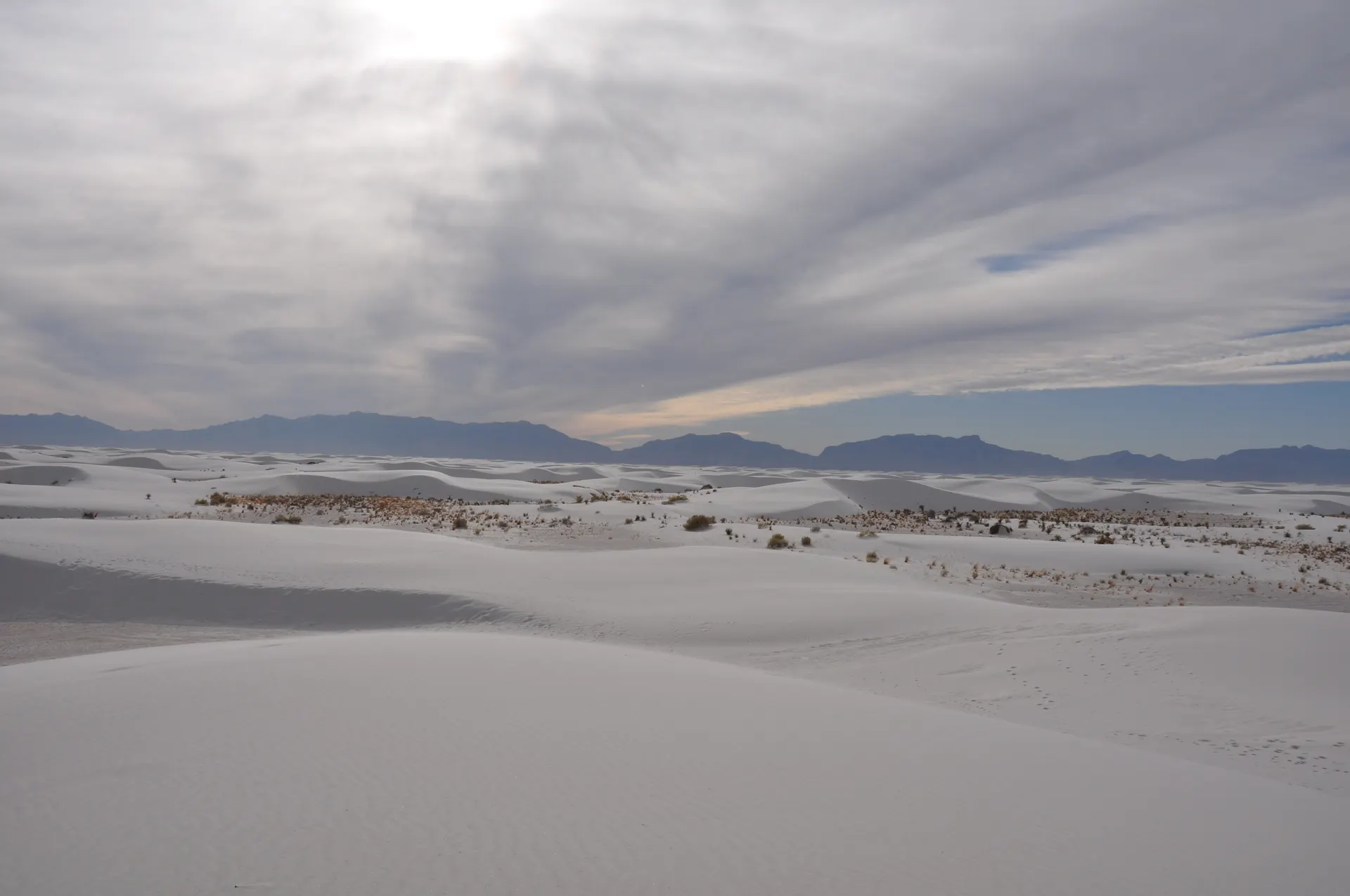
White Sands National Park, in the Tularosa Basin near Alamogordo, protects the largest gypsum dunefield on Earth: 275 square miles of blinding white sand that feels cool to the touch even on a hot afternoon. Because gypsum is water-soluble rather than the quartz sand of most deserts, the dunes are bright white, shockingly soft, and unlike anywhere else you will hike. But the same featureless beauty that makes it magical also makes it easy to get lost, so this guide covers the trails, the gear, and the timing that keep a White Sands hike fun instead of frightening.
The Trails, Easiest to Hardest
There are five marked trails, all leaving from the eight-mile Dunes Drive loop:
- Interdune Boardwalk (0.4 mile): A flat, accessible boardwalk with interpretive signs, perfect for a first taste or for kids.
- Playa Trail (0.5 mile): A short walk to a seasonal playa that fills with water after rain.
- Dune Life Nature Trail (1 mile): A loop marked with blue posts that climbs onto the dunes and explains the animals that survive here.
- Backcountry Camping Trail (2 miles): A loop into the heart of the dunes marked with orange posts; the camping itself is currently suspended, but it is a great longer day loop.
- Alkali Flat Trail (5 miles): The marquee hike, an out-and-back across the dunefield to the edge of an ancient lakebed, marked only by red posts you must follow carefully.
The Alkali Flat Trail
The Alkali Flat Trail is the reason serious hikers come. Despite the name, it is not flat; you climb and descend dune after dune, and the soft sand makes five miles feel like eight. The route is marked solely by numbered red posts, and from each post you should be able to see the next one. If you cannot, stop and do not wander. People get genuinely lost here every year. Carry at least one gallon of water per person, start early, and turn around if clouds or heat haze reduce visibility between posts.
Dune Sledding and Sunset
The most joyful thing to do at White Sands is sled the dunes. Buy a waxed plastic saucer at the visitor center gift shop (and a bar of wax), hike to a steep, tall dune away from the road, and slide. The far loop of Dunes Drive has the biggest unbroken faces. Time your visit for the last two hours before sunset, when the heat breaks, the crowds thin, and the low sun turns the dunes pink and gold with long blue shadows. Sunset programs and full-moon nights, when the park stays open late, are unforgettable. This stop pairs naturally with the Gila Wilderness and Carlsbad Caverns on our New Mexico 10-day wilderness itinerary, which sequences the drives so you arrive at White Sands for golden hour.
Heat, Closures, and Safety
White Sands shares its boundary with the White Sands Missile Range, and both the park and Highway 70 between Las Cruces and Alamogordo close periodically for testing, sometimes for an hour, sometimes longer. Check the park and missile-range schedules before you drive out. Summer surface temperatures soar even though the sand stays cool, so most heat illness here comes from the sun and dry air, not the ground. Plan around it:
- Hike early morning or evening from May through September.
- Bring more water than you think you need, plus electrolytes.
- Wear sunglasses and a hat; the glare off white gypsum is intense and can cause snow-blindness-like strain.
- Never rely on phone GPS to find your way back; follow the colored posts.
Logistics
The nearest base is Alamogordo, about 16 miles east, with full services and chain hotels; Las Cruces is an hour southwest. Entrance fees are per vehicle and valid for several days. There is no food, gas, or water for sale inside the park beyond the visitor center, so stock up in town. With smart timing, White Sands is one of the most surreal and rewarding short hikes in the entire Southwest.
Hiking White Sands National Park FAQs
About 5 miles round trip across the dunefield. It is not flat despite the name, and it is marked only by red posts you must follow carefully to avoid getting lost.
Yes. Buy a waxed plastic saucer and wax at the visitor center, then hike to a tall, steep dune away from the road. The far end of Dunes Drive has the best slopes.
The park sits next to the White Sands Missile Range. Both the park and Highway 70 close periodically for missile testing, so always check the schedule before driving out.