Why Trail Etiquette Matters
Trails are shared spaces. When 200 people use the same 5-mile loop on a Saturday, the experience everyone has depends directly on how each person behaves. Good trail etiquette isn't about formality or gatekeeping, it's about the practical behaviors that prevent conflict, protect the trail, and make hiking pleasant for everyone from the first-timer to the ultramarathoner.
Most bad trail interactions are accidental. People blast music because they genuinely don't realize how far it carries. Dogs run up to strangers because owners assume everyone loves dogs. Hikers cut switchbacks because they look like shortcuts rather than engineered erosion prevention. Understanding why the conventions exist makes them easy to follow.
Right of Way: Who Yields to Whom
The right-of-way system on trails has a logic to it that makes the convention easy to remember once you understand the reasoning.
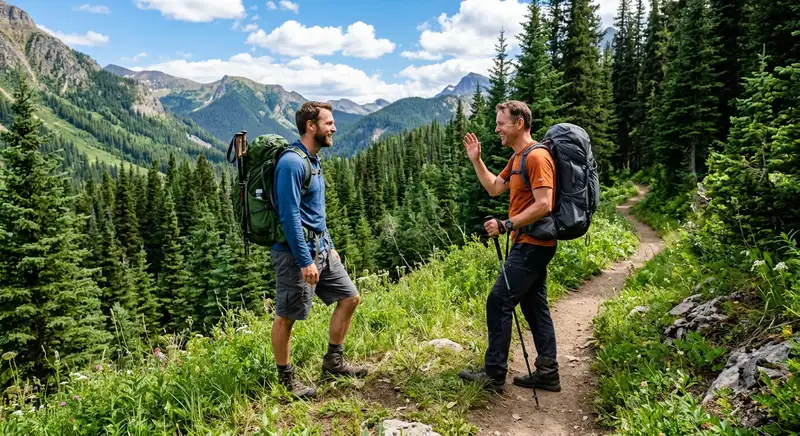
Uphill hikers have right of way over downhill hikers. This is the most misunderstood convention. The reason is effort and momentum, not seniority. Hikers going uphill are working harder and maintaining a rhythm that's difficult to restart. Stopping, stepping aside, and starting again costs them significantly more energy than it costs someone on the descent. In practice, on steep terrain, uphill hikers appreciate the right of way. On gentler grades, the uphill hiker often waves the downhill hiker past anyway, that's fine, it's their call to make.
Hikers have right of way over mountain bikers. Mountain bikers move faster, can brake quickly, and can more easily unclip and step off the trail. On multi-use trails, bikers should yield to foot traffic. In practice, a fast-moving biker who doesn't see you around a corner can startle you badly, if you hear bikes coming, step to the side early and make yourself visible. Trails designated bike-only or hike-only are clearly marked; respect those designations.
Everyone yields to horses. Horses are large, prey animals that can spook at unexpected stimuli and injure riders and bystanders. When horses are approaching, step well off the trail on the downhill side (horses are less alarmed by things below them than things above), speak calmly so the horse knows you're human, and wait until the whole party has passed before moving. Ask the rider which side to stand on if you're unsure, they know their animal.
Groups yield to solo hikers or smaller groups. A party of 8 stepping aside is faster and easier than a solo hiker navigating around them. Large groups should also move to the side proactively at rest stops so passing hikers don't have to navigate around stationary people.
Noise on Trail
The most frequent etiquette violation on busy trails is noise, specifically, music played through external speakers. Sound carries further outdoors than most people expect, particularly in canyon terrain or across open water. A speaker at moderate volume is audible for a quarter mile or more. The dozens of people within that radius didn't choose to listen to your playlist.
Headphones are the right solution for music on trail. Many hikers prefer one earbud in, one out for safety, you can hear trail hazards, other hikers' calls, and wildlife while still having music if you want it. On remote trails with no one around for miles, a speaker at low volume bothers no one. On a crowded trail, it bothers everyone.
The same logic applies to phone calls. Taking a call on trail isn't rude; continuing it loudly through a crowded section is. Step off the trail, keep your voice at conversational level, and wrap it up before continuing.
Children on trails are loud, that's fine, it's part of the experience. The etiquette for families is the same as everyone else: be aware of how your noise affects others, especially in rest areas and at scenic viewpoints where people are trying to experience a place quietly.
Dogs on Trail
Dogs on trails are welcome on most public land, but dog etiquette is where the most conflicts happen because dog owners often underestimate how other people, or wildlife, experience their dog.
Leash requirements exist for reasons. If a trail requires leashes, they're required because wildlife is sensitive in that area, or because previous off-leash incidents required the rule. "My dog is friendly" doesn't make an off-leash dog okay on a leash-required trail. It also doesn't address the fact that not everyone wants a dog running up to them, some people are afraid of dogs, some are allergic, some simply prefer that their hiking companion not be a stranger's pet.
Even on leash-optional trails, keep your dog close when other hikers approach. Give people the choice to interact or not by keeping your dog at your side until you've confirmed the approaching person is comfortable with contact. Ask "Is it okay if my dog says hi?" rather than assuming.
Pack out dog waste or bury it. Leaving waste bags on the trail to "pick up on the way back" is a common rationalization that rarely results in actual pickup, and bright blue bags sitting next to a trail are jarring for the dozens of hikers who pass before you return. Carry it out. If you're on a long hike, bury waste in a cat hole 6 inches deep and 200 feet from the trail and water sources.
Leave No Trace Basics
Leave No Trace is the formal framework for minimizing impact, but most of it translates into common-sense behavior when you understand what the trail looks like over time.
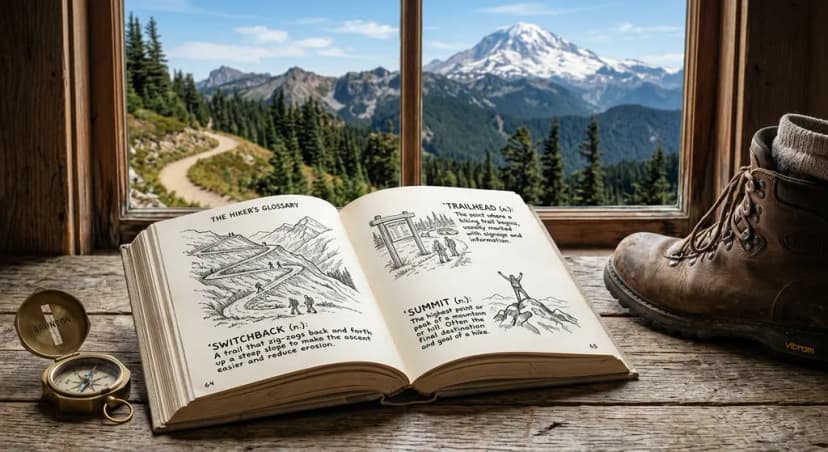
Stay on the trail. Cutting switchbacks is the most damaging trail behavior. Switchbacks aren't scenic detours, they're engineered to channel water off the trail and prevent erosion. When hikers cut across them, they create new erosion channels, compact vegetation, and eventually destroy the switchback itself, making the trail steeper and less sustainable for everyone after you. Even if you can see a shortcut is there, use the trail.
Pack out everything you pack in. This includes orange peels, apple cores, and banana peels, they take months to break down and attract wildlife to high-traffic areas, which habituates animals to human food and creates dangerous situations. If you brought it, it goes back in your pack.
Don't feed wildlife. This applies especially to small mammals, ground squirrels, marmots, and chipmunks at popular trailheads have learned to approach hikers for food. Feeding them trains them to associate humans with food, makes them bolder and more dependent, and ultimately results in them being euthanized when they become aggressive. A well-meaning handful of nuts can end an animal's life months later.
Camp 200 feet from water, trails, and other campers. For day hikers, this means your lunch spot and rest breaks shouldn't be right at the water's edge or immediately next to the trail. Give wildlife access to water sources, and let passing hikers enjoy the trail without navigating around your group.
Passing and Being Passed
When faster hikers approach from behind, the polite move is to step to one side and let them pass without making it awkward. Most experienced hikers will say "on your left" or "excuse me" as they approach, if you hear that, move to the right and let them by. Don't speed up to maintain your position; it's not a race.
If you're the faster hiker passing someone, announce yourself before you're immediately behind them. On a trail where your footsteps are muffled by leaves or wind, appearing suddenly behind someone can genuinely startle them. "Passing on your left when you're ready" is all you need.
At crowded trail sections, bottlenecks, and steep exposed stretches with limited room, the right-of-way system matters more. Take your turn, wait patiently, and remember that every person on the trail had to choose to be outside today, everyone is there for the same reason you are.
At Viewpoints and Summits
Popular summits and overlooks get crowded on weekends. A few practices keep these moments enjoyable for everyone. Don't monopolize a specific spot for extended photos if others are waiting, take your shots and rotate. Keep your voice and activity level appropriate for the setting; some people have worked very hard to be there and want to experience it with some quiet. If you're taking a long break, move slightly off the primary overlook point so others can access the view.
Photography at busy viewpoints deserves its own note. It's fine to ask someone to take your photo. It's courteous to offer to take photos for others. It's not okay to spend 20 minutes on a camera setup that blocks the overlook for everyone else.
Trail Etiquette: The Unwritten Rules Every Hiker Should Know FAQs
Uphill hikers have right of way over downhill hikers. Hikers have right of way over mountain bikers. Everyone yields to horses. In practice, the conventions are often relaxed on quiet trails, but on busy or steep terrain, following these rules prevents dangerous situations and frustrating bottlenecks.
Technically yes on most public land, but trail etiquette strongly favors headphones over external speakers. Sound carries further outdoors than most people expect, and music from a speaker is audible for a quarter mile or more. One earbud in, one out is a good compromise, you can hear the trail while still having your music.
Yes, either pack it out in a bag or bury it in a cat hole 6 inches deep and at least 200 feet from the trail and water sources. Leaving waste bags on the trail to pick up on the way back is a common practice that often doesn't happen, and full bags alongside the trail are a significant Leave No Trace violation.
Not at all, passing is normal. Announce yourself before you're immediately behind someone ("passing on your left"), wait for a safe spot where the person can step aside, and move past quickly. The person being passed should step to one side without making it a production.
Leave No Trace is a set of principles for minimizing your impact on natural environments. The core practices relevant to day hikers: stay on the trail (don't cut switchbacks), pack out all trash including food scraps, don't feed wildlife, and keep noise at a level appropriate for the setting.