A dedicated hiking watch does what your phone cannot: works in any weather, lasts days on a charge, and gives you elevation and navigation without draining the battery you need for photos and emergency calls. Here are the best hiking watches for 2025 and how to pick one.
What to Look for in a Hiking Watch
- GPS accuracy -- multi-band GPS (L1/L5) improves accuracy under tree cover and canyon walls
- Topographic maps -- onboard maps mean navigation without a phone signal
- Battery life -- 24+ hours in GPS mode, 10+ days in smartwatch mode
- Barometric altimeter -- real elevation changes, more accurate than GPS altitude
- Durability -- MIL-STD-810 rating or sapphire glass
Top Hiking Watch Picks
- Garmin Fenix 7 Pro -- the definitive hiking watch. Multi-band GPS, preloaded topo maps, 22-day battery, solar. For serious multi-day backpackers.
- Garmin Instinct 2 Solar -- rugged, affordable, exceptional battery. No topo maps but excellent GPS and barometer. Best budget-to-performance ratio.
- Suunto Vertical -- excellent topo maps, clean interface, 60-day expedition battery. A strong Garmin rival for map-focused hikers.
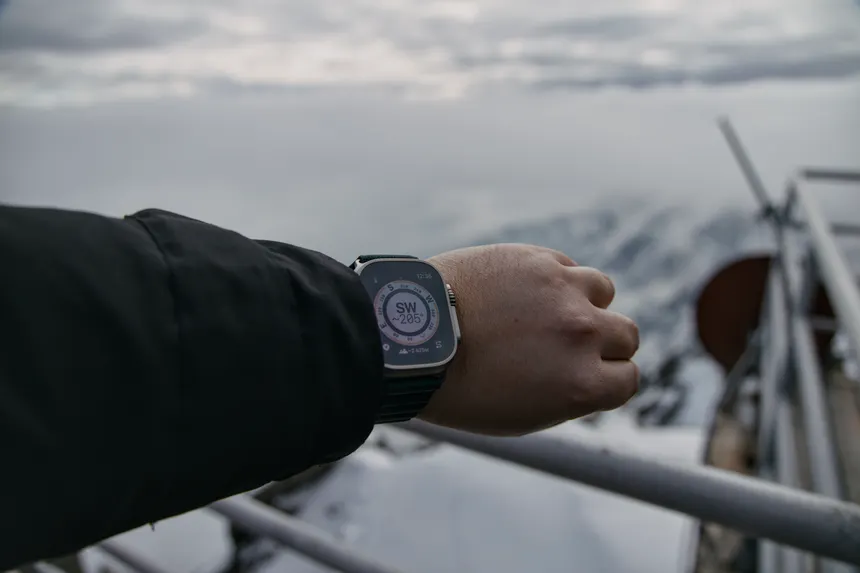
- Apple Watch Ultra 2 -- best for iPhone users wanting smart features plus decent hiking. Good GPS and crash detection; battery (18-36 hours active GPS) is the limit.
- Coros Vertix 2S -- huge battery (122 hours GPS), topo maps, fast satellite lock. Popular with ultramarathon and backpacking crowds.
GPS Accuracy Matters Most in These Conditions
Under dense forest canopy, in narrow canyons, and at northern latitudes, multi-band GPS makes a real difference. L1-only watches can drift 50-100 meters in heavy canopy, so if you hike forest or canyon terrain, prioritize multi-band GPS.
Best Budget Hiking Watch Under $300
You do not need to spend $800 for reliable navigation. The sweet spot for most weekend hikers is $150 to $300, where you get a real barometric altimeter, dependable GPS, and battery measured in days.
- Garmin Instinct 2 (non-Solar) -- around $230. Same rugged body and GPS as the Solar model, shorter battery. The best all-around value.
- Coros Pace 3 -- about $230, dual-frequency GPS, just 39 grams, roughly 38 hours of full GPS tracking.
- Amazfit T-Rex 2 -- often under $200, with a barometric altimeter, five satellite systems, and offline route import.
- Garmin Forerunner 55 -- under $200 on sale. No maps and a plastic body, but accurate GPS and two-week battery.
The trade-off at this price: you give up onboard topographic maps. For marked trails that is rarely a problem; save the map upgrade for off-trail or alpine routes.
Topo Maps vs. Breadcrumb Navigation
Two very different things get called navigation, and confusing them leads to bad buying decisions.
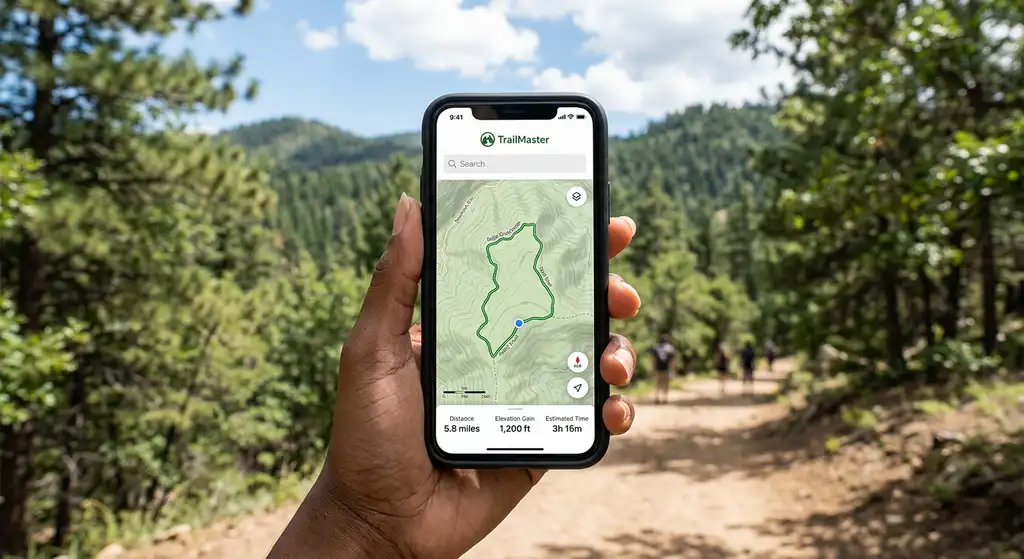
- Full topo maps render contour lines, named trails, and water sources on the watch. You see where the trail goes before you walk it. The Fenix 7 Pro, Suunto Vertical, and Coros Vertix do this.
- Breadcrumb navigation shows only a thin line of your route on a blank background. It tells you if you are on the line, but nothing about surrounding terrain. The Instinct series and most budget watches work this way.
For an out-and-back on one marked trail, a breadcrumb is plenty. For loops, junction-heavy networks, or off-trail travel, real topo maps are worth the cost.
Setting Up Your Watch Before a Hike
A great watch still lets you down if you skip the prep. Run through this checklist the night before:
- Charge to 100 percent and pack a small battery bank for trips over a day.
- Calibrate the barometric altimeter at a known elevation so climb data stays accurate.
- Pre-load your route as a GPX or course instead of relying on trailhead cell signal.
- Switch to a battery-saving GPS mode for multi-day hikes; single-band can double runtime.
- Enable safety features like incident detection and emergency contact share.
How Long Should the Battery Really Last?
Marketing battery numbers assume one perfect mode. Real hikes mix tracking, wake-ups, music, and cold. Match the watch to your typical trip:
- Day hikes (under 12 hours) -- almost any modern hiking watch handles this.
- Weekend overnights -- look for 30+ hours of full-GPS tracking, like the Coros Pace 3 or Instinct 2.
- Thru-hikes and expeditions -- you want 100+ GPS hours or solar: the Vertix 2S, Fenix 7 Pro Solar, or Suunto Vertical.
Cold weather can cut battery life 20 to 40 percent, so in winter or at altitude, buy more capacity than you think you need.
Multi-Day Trails Where a Hiking Watch Earns Its Keep
The longer and more remote the route, the more a GPS watch pays off. On the John Muir Trail in the Sierra Nevada, 211 miles days from any road, onboard topo maps and 100-hour battery are genuine safety gear. The same goes for the Wonderland Trail around Mount Rainier, where fog rolls in fast. For shorter testing grounds, Angels Landing in Zion or the Highline Trail in Glacier are good places to learn your watch first.
Best Seasons to Test a New Watch
- Spring (April to June) -- variable weather tests the altimeter and storm alerts.
- Summer (July to August) -- long, hot days stress-test full-GPS battery.
- Fall (September to October) -- short days reward backlight and return-to-start navigation.
- Winter -- cold-weather drain and glove-friendly buttons decide it.
Watch Care and Common Mistakes
- Rinse the sensors after sweaty hikes; salt degrades the heart-rate and barometer ports.
- Re-calibrate the compass after flights or long drives.
- Update firmware before a big trip, since GPS and battery fixes ship in updates.
- Avoid charging in extreme cold, which permanently reduces battery capacity.
The most common mistake is trusting GPS altitude alone. Let the barometric altimeter auto-calibrate at a known elevation so total climb stays honest.
Quick Buying Decision
If you still cannot choose, narrow by how you hike. Pick the Garmin Instinct 2 for durability and value on marked trails. Choose the Suunto Vertical or Coros Vertix 2S if onboard topo maps and multi-day battery matter most. Go with the Apple Watch Ultra 2 only if you live in the iPhone ecosystem.
Best Budget Hiking Watch Picks (GPS, Maps and Durability) FAQs
For day hikes on marked trails, your phone is sufficient. A hiking watch adds value when you need longer battery life than your phone provides, want your navigation on your wrist without taking the phone out, hike in conditions that are harsh on phones (extreme cold, rain, drops), or want continuous elevation and heart rate data without draining your phone battery.
The Garmin Instinct 2 or 2S (around $250-350) gives you GPS, barometric altimeter, 3-week battery, and excellent durability without topographic maps. For topo maps under $300, the Garmin Forerunner 265 and older Garmin Fenix 6 models appear used/refurbished in that range.