Why Standard Hiking Shoes Fail Wide Feet

The best wide toe box hiking shoes solve a problem most footwear ignores: real room at the widest part of your foot. Most hiking footwear is built on a standard D-width last. If your foot is naturally wider, particularly in the toe box, you end up with your toes crammed into a tapered point, which causes blisters, black toenails on descents, and hot spots under the ball of the foot. The fix isn't buying a larger shoe; it's buying a wider one.
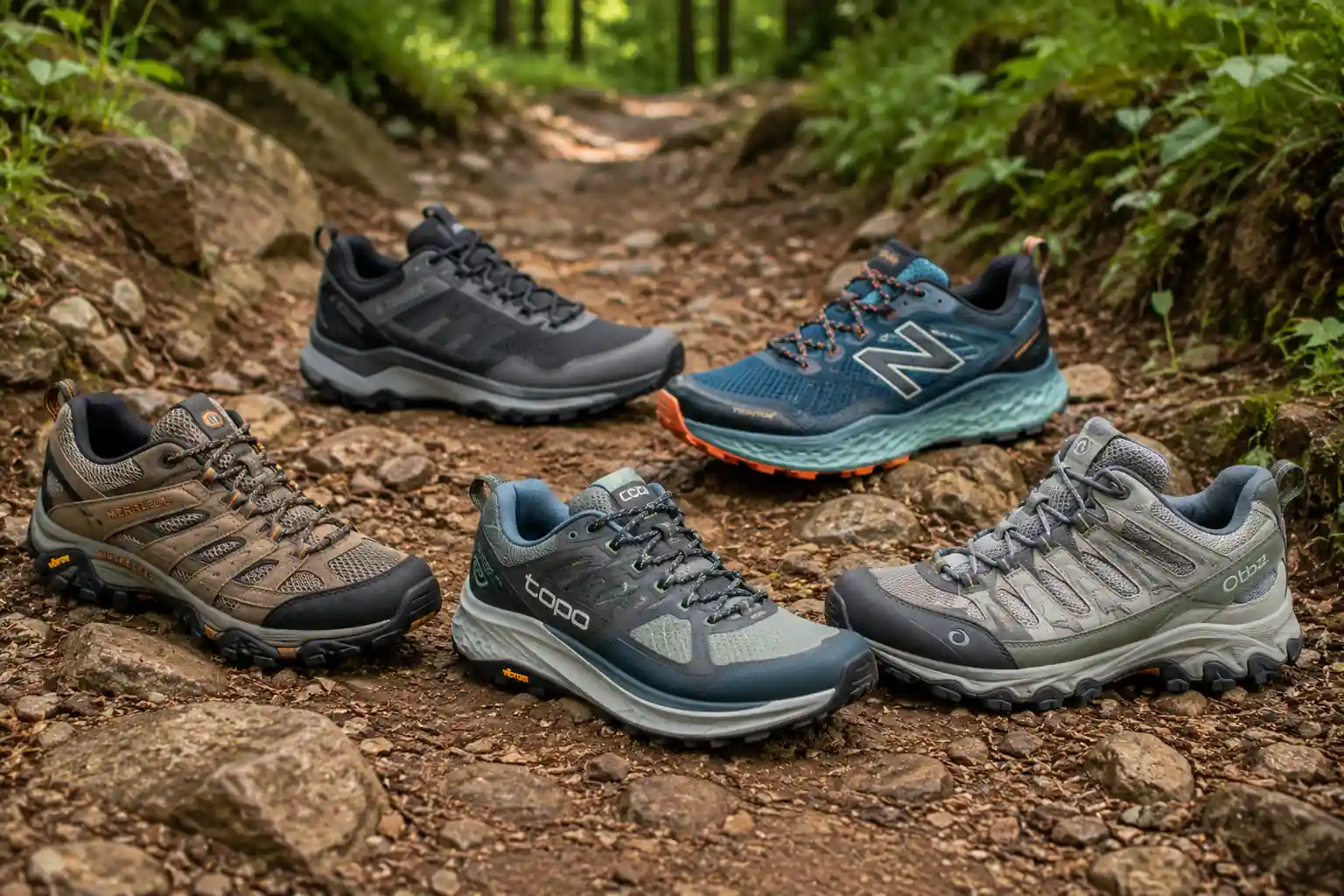
The good news: the trail running and hiking market has shifted significantly toward foot-shaped lasts over the past five years. Brands like Altra, Topo Athletic, and New Balance now offer genuinely roomy options that don't compromise on trail performance.
What to Look for in Wide Toe Box Hiking Shoes
Toe Box Shape
The toe box should be wide enough at the widest part of your foot, not just at the toes. A shoe that flares out at the very tip but stays narrow through the metatarsals doesn't solve anything. Look for brands that publish their last width or explicitly mention metatarsal room.
Volume, Not Just Width
Width (side to side) and volume (height of the toe box) are different things. If you have a high-volume foot, thick toes, pronounced metatarsal arch, you need both. Hoka and Altra both offer extra volume. Brooks Cascadia runs on the lower-volume side even in wide widths.
Heel Fit
A wide shoe should still lock your heel in place. If your heel is slipping with the laces cinched down, the shoe is too wide overall, not just wide in the toe box. You want the foot to be held securely through the midfoot while the toe box allows natural splay.
Top Picks: Best Wide Toe Box Hiking Shoes at a Glance
| Category | Shoe | Fit / widths | Best for |
|---|---|---|---|
| Best overall | Altra Lone Peak 8 | FootShape wide, zero-drop | Wide or flat feet, non-technical trails |
| Technical terrain | Topo Athletic Trailventure 2 | Wide last, snugger midfoot | Scrambles, wet rock, scree |
| Best cushion | New Balance Hierro v8 | True 2E and 4E | Foot pain, long rocky days |
| High mileage | Hoka Speedgoat 5 (Wide) | Wide, max cushion | Ultra-distance, knee issues |
| Mixed-width feet | Brooks Cascadia 17 (Wide) | True 2E forefoot | Wide forefoot, standard heel |
Altra Lone Peak 8, Best Overall
The Lone Peak is the benchmark for wide-toe-box trail footwear. Altra's FootShape last puts the widest point of the shoe at the widest point of your foot, which sounds obvious but is rare. The zero-drop platform (heel and toe at equal height) does require an adjustment period, give yourself 2–3 weeks of easy hiking before going long. Stack height is 25mm, which provides enough cushion for rocky terrain without feeling disconnected.
The outsole is MaxTrac rubber with a lug pattern that handles packed dirt and moderate rock well. Wet rock is where it struggles, if you're hiking in the Pacific Northwest or anywhere with regular rain, plan accordingly. Weight is around 10 oz per shoe for a men's size 9, which is reasonable for a hiking shoe.
Best for: Hikers with naturally wide or flat feet doing day hikes to multi-day trips on non-technical terrain.
Topo Athletic Trailventure 2, Best for Technical Terrain
Topo's Trailventure uses a wider-than-standard last with a 5mm drop (lower than most hiking shoes, higher than Altra). The midsole is firmer and more protective than the Lone Peak, and Topo uses a sticky Vibram Megagrip outsole that outperforms MaxTrac on wet rock. If you're doing anything involving scrambling, river crossings, or loose scree, the Trailventure is the better call.
The fit through the midfoot is snugger than Altra, some wide-foot hikers find it pinches unless they go up half a size. Try before you buy if possible.
Best for: Technical day hikes, scrambles, wet conditions.
New Balance Fresh Foam X Hierro v8, Best Cushion
New Balance offers genuine 2E and 4E width options across most of their trail line, which matters if you need extra-wide rather than just wide. The Hierro v8 runs on a Fresh Foam midsole that's noticeably softer than Altra or Topo, making it excellent for long days on hard-packed or rocky trails. The trade-off is it's heavier (around 12 oz) and the outsole isn't as grippy on slick surfaces.
Best for: Hikers who prioritize cushion, those with foot pain or plantar fasciitis.
Hoka Speedgoat 5 (Wide), Best for High Mileage
Hoka's maximum-cushion trail shoe is available in wide widths and delivers the cushion you'd expect. The Speedgoat 5 uses a Vibram Megagrip outsole with aggressive lugs. It's heavy for a trail runner at around 11 oz, but the cushioning holds up on 20+ mile days in a way that lighter shoes don't. The wide version has noticeably more room than standard, though it's not as roomy as Altra's FootShape last.
Best for: Ultra-distance hikers, those with knee issues who benefit from cushioning.
Brooks Cascadia 17 (Wide), Best for Mixed-Width Feet
Brooks offers a true 2E wide option on the Cascadia that works well for people whose heel is standard but whose forefoot is wide. The lacing system allows you to lock down the midfoot independently of the toe area. Cascadia outsoles are aggressive and grip well in mud. The midsole is firmer than Hoka, more cushioned than Topo.
Best for: Hikers with wide forefoot but standard heel, muddy trail conditions.
What Doesn't Work
Avoid stretchy mesh shoes marketed as "wide fit" unless you've tried them, the uppers stretch enough that they sometimes feel wide at rest but compress under load, particularly on descents. Also avoid ordering online without checking the return policy; wide-foot fit is highly individual and what works for one person won't work for another.
How to Measure Before You Buy
Most people with wide feet are not actually a wide size. They are a normal length in a shoe whose toe box tapers, which is a different problem and needs a different fix.
Do this once, at the end of the day when your feet are at their largest. Stand on a sheet of paper with your weight on the foot and trace it, then measure the widest point across the forefoot and the length from heel to longest toe. Now pull the insole out of the pair of hiking shoes you already own and stand on it. If your forefoot spills over the sides, no amount of sizing up in that model will fix it, because going up a half size adds length, not width, and leaves your heel swimming.
That measurement is what makes the difference between brands here. A foot-shaped last, the Altra and Topo approach, gives you room where your toes actually splay. A wide size in a tapered last, which is what most of the big brands sell as a 2E, gives you a bigger version of the same shape. Buy the first if your forefoot is wide and your heel is normal, which is the common case.
Breaking In Wide Hiking Shoes
Even well-fitting hiking shoes need break-in time. Start with shorter hikes (3–5 miles) before attempting anything longer. Pay attention to where hotspots develop, they usually indicate a spot where the shoe is still stiff, not necessarily a bad fit. Wool hiking socks (Darn Tough, Smartwool) reduce friction significantly during break-in compared to synthetic socks.
Lacing helps too. Parallel (straight bar) lacing spreads pressure across a wide forefoot instead of pulling both sides of the upper toward the middle, and it is the standard fix for bunion pressure. The step-by-step is in our guide to how to lace hiking shoes.
Best Wide Toe Box Hiking Shoes for Wide Feet FAQs
The Altra Lone Peak 8 is the widest-toe-box pick overall thanks to Altra's FootShape last. For technical terrain the Topo Athletic Trailventure 2 grips wet rock better, and New Balance's Hierro v8 comes in true 2E and 4E widths for extra-wide feet.
Altra models (Lone Peak, Timp, Olympus) have the widest anatomical toe box because the last is shaped like a human foot. If you need a graded wide sizing instead, New Balance offers true 2E and 4E widths across its trail line.
A wide toe box that lets your toes splay naturally, a secure midfoot fit, and enough volume that your foot doesn't slosh side-to-side. Altra and Topo are the most consistent brands for this.
Yes, especially the Lone Peak. The FootShape toe box is genuinely wide, the stack height is good for rocky terrain, and they're light enough for day hikes. The zero-drop takes some break-in time if you're used to traditional shoes.
Most brands offer 2E (wide) or 4E (extra wide). Altra runs wide in standard sizing. New Balance and Brooks offer proper width options. Avoid brands that only offer a "wide" fit through a stretchy upper, that's not the same thing.
Absolutely. Trail runners like the Altra Lone Peak or Topo Ultraventure are lighter and dry faster. The trade-off is less ankle support and less aggressive lugs on loose terrain.
Yes, wide-last shoes have more volume for orthotics. Remove the factory insole first and check that your heel doesn't slip. Altra and Topo both have removable insoles designed for this.