Death Valley National Park is the largest national park in the lower 48 states, but you do not need to be an ultramarathoner to enjoy its strangest landscapes. Many of the park's most famous sights sit at the end of short, flat, well-marked trails. The trick is timing: from November through March the desert floor is cool enough to walk comfortably, while summer temperatures regularly climb past 120F and make even short walks dangerous. This guide covers the best easy hikes in Death Valley, the ones a first-time visitor can complete in a morning without technical gear.
Badwater Basin Salt Flats

At 282 feet below sea level, Badwater Basin is the lowest point in North America, and the walk out onto the salt flats is the single most iconic short hike in the park. A wooden boardwalk leads from the parking lot to the edge of the salt, and from there you can follow a flat, hard-packed path out onto the polygon-shaped salt crust. Most visitors walk about a mile round trip, though the white expanse stretches for miles. Look up at the cliff behind the lot to spot the small sea level sign painted on the rock face, a reminder of just how far below the ocean you are standing.
Golden Canyon to Red Cathedral
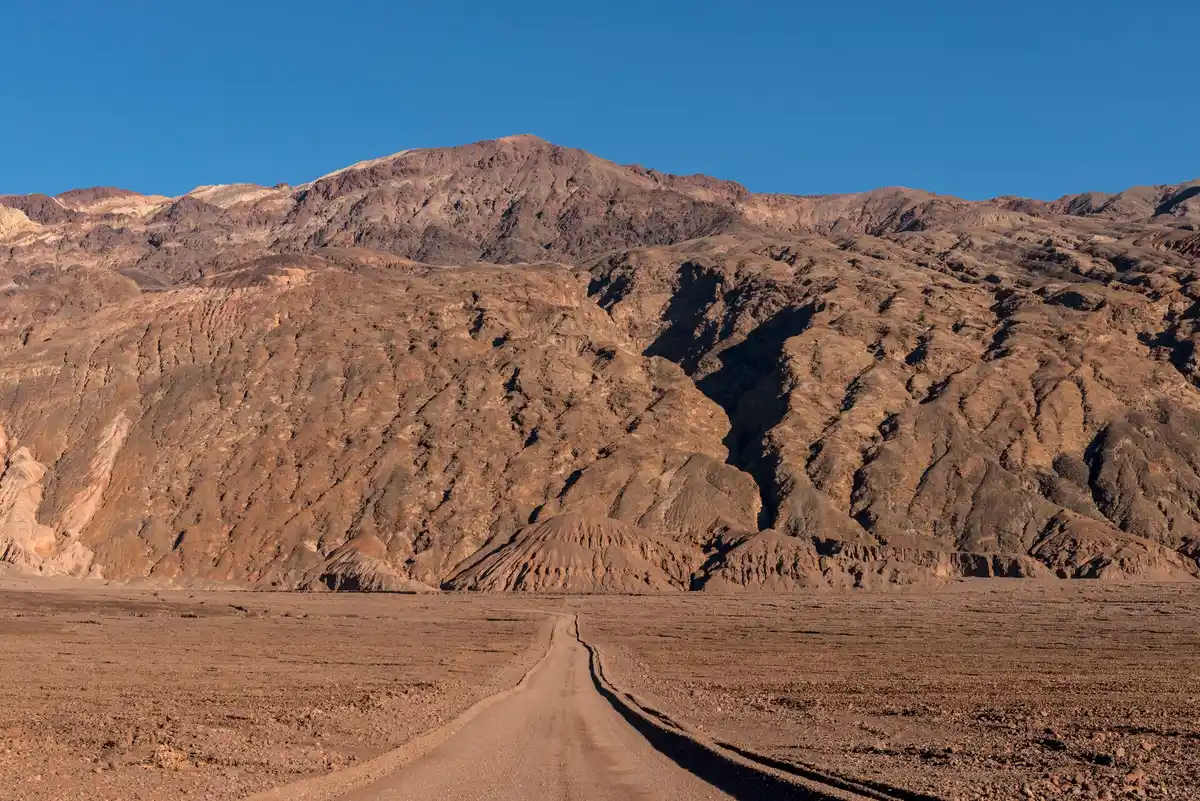
If you want one hike that captures the park's drama, make it Golden Canyon. The trailhead sits just off Badwater Road, and the wide gravel wash climbs gently between glowing golden badlands. After about a mile you reach a junction where a spur leads to Red Cathedral, a wall of rust-red rock that towers above the canyon. The full out-and-back to Red Cathedral runs roughly 3 miles with modest elevation gain. Ambitious hikers can extend the route into a loop through Gower Gulch and past Zabriskie Point, a classic combination featured in our Death Valley winter hiking itinerary.
Mesquite Flat Sand Dunes
Near Stovepipe Wells, the Mesquite Flat Sand Dunes rise out of the desert floor in smooth, rippling waves. There is no official trail here, so you simply walk out across the sand toward the tallest dune, which stands about 100 feet high. Early morning and late afternoon are best, when the low sun rakes across the ridges and casts long shadows. It is also the coolest part of the day and the time when you are most likely to spot animal tracks pressed into the overnight sand. Plan on 2 miles round trip if you go to the high dune and back.
Natural Bridge Canyon
A short, steep gravel road off Badwater Road leads to the Natural Bridge trailhead. From there a half-mile walk up the canyon brings you to a large natural rock arch spanning the gorge. Continue past the bridge to see dry waterfall chutes polished smooth by flash floods. The full hike is about 1.5 miles round trip and offers welcome canyon shade in the afternoon.
Salt Creek Interpretive Trail
For something completely different, the Salt Creek boardwalk loops about a mile through a marshy creek that holds water in winter and spring. This is the only home of the Salt Creek pupfish, a tiny endangered fish that survives in water several times saltier than the ocean. The boardwalk is flat and accessible, making it one of the easiest walks in the park and a favorite with families.
What to Bring on Any Death Valley Hike
Even on short trails the desert demands respect. Pack the following before you set out:
- Water: at least one gallon per person per day, more if hiking midday
- Sun protection: a wide-brimmed hat, sunglasses, and sunscreen, since shade is rare
- Sturdy shoes: the salt crust and gravel washes are hard on thin sneakers
- A paper map: cell service is almost nonexistent across most of the park
- Layers: winter mornings can dip near freezing before warming into the 60s and 70s
Stick to the cooler months, start early, and these easy hikes will show you the best of Death Valley without ever pushing into dangerous heat.
The Best Easy Hikes in Death Valley for First-Time Visitors FAQs
The Badwater Basin salt flats walk and the Salt Creek boardwalk are the two easiest. Both are flat, short, and require no climbing, and Salt Creek is fully accessible by boardwalk.
November through March is the best window. Daytime temperatures are usually comfortable in the 60s and 70s, while summer heat above 120F makes hiking on the valley floor dangerous.
No special hiking permit is required for day hikes like Golden Canyon or Mesquite Flat Dunes, but every vehicle must pay the park entrance fee or display a valid national park pass.