West Coast Road Trip Itinerary: 10 to 14 Days
The classic West Coast road trip itinerary runs 10 to 14 days from Southern California or San Francisco north to Washington's Olympic Peninsula. Split it into three legs: the California coast and redwoods, the Oregon coast plus an inland detour to Crater Lake, and Washington's Olympic Peninsula and North Cascades. Ten days is the practical minimum, and 14 gives each state room to breathe. Go in summer for the northern mountains and coast, and in spring or fall for the best weather in California. You can run the route in reverse if your flights favor a Washington start.
A West Coast road trip is the great American drive: nearly 1,500 miles of Pacific coastline, three states, and a run of national parks that goes from redwood forest to alpine glacier. This West Coast road trip itinerary links California, Oregon, and Washington into one continuous 10 to 14 day drive, from the Big Sur coast and San Francisco north through the Oregon coast and Crater Lake to Washington's Olympic Peninsula and North Cascades. Below we break the route into three legs, spell out how many days you need, flag the best time to go, and point you to day by day itineraries for each stretch. When you are ready to link it all together, our leg guides for Big Sur hiking, the Oregon Coast Trail, the Crater Lake Rim Trail, and the Olympic Peninsula loop map out the trailheads and where to sleep.
How many days do you need for a West Coast road trip
Plan on 10 to 14 days to drive the West Coast well. Ten days is the honest minimum if you start in San Francisco and finish on the Olympic Peninsula, roughly two to three days per state. Fourteen days lets you begin further south around Big Sur, slow down on the Oregon coast, add the inland detour to Crater Lake, and fold in the North Cascades at the end. If you only have a week, do not try to drive the whole thing. Pick one region, either the California coast or Oregon plus Washington, and save the rest for a second trip. This itinerary assumes a one way drive, so book a one way rental and fly home from the opposite end.
Which direction to drive: south to north
The classic West Coast road trip itinerary runs south to north, and there are good reasons for it. Driving north keeps the ocean on your left, which puts you in the lane closest to the coastal pullouts on Highway 1 and Highway 101. It also saves the cooler, greener, more dramatic Pacific Northwest for the finish, so the trip builds toward a strong ending on the Olympic Peninsula rather than trailing off. That said, the route works just as well in reverse if your flights make a Washington start and a California finish cheaper. The legs below read south to north, but every one of them reverses cleanly.
Leg 1: The California coast and parks
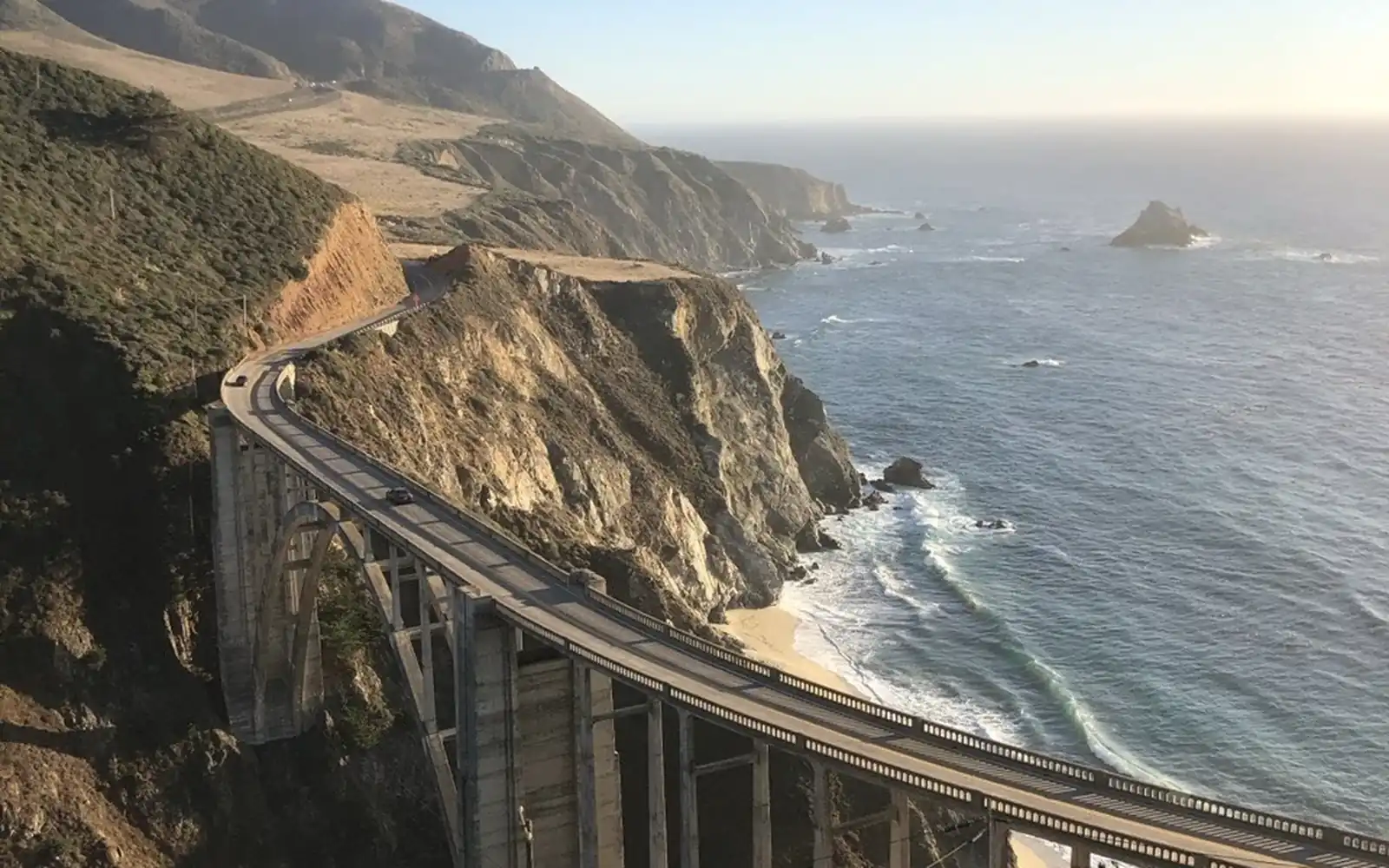
California is where most West Coast road trips begin, and it holds two of the drive's signature landscapes: the Big Sur coast and the Northern California redwoods. Start on the Central Coast, where Highway 1 threads between the Santa Lucia Mountains and the sea past Bixby Bridge, McWay Falls, and a string of coastal state parks. This is the most photographed stretch of the entire trip, so give it a full day of slow driving and short hikes. Our Big Sur hiking itinerary picks the best coastal bluff walks and redwood trails for a one to two day stop.
From Big Sur, roll north through San Francisco, then continue up Highway 101 into redwood country, where Avenue of the Giants and the coastal parks protect the tallest trees on Earth. Budget three to four days for the California leg: a day on the Big Sur coast, a day around San Francisco, and a day or two in the redwoods before you cross into Oregon. Spring and fall are the sweet spots here, with mild temperatures and thinner crowds than the summer peak.
Leg 2: The Oregon coast and Crater Lake
Oregon gives the trip its wildest coastline and its most surprising inland detour. The Oregon coast runs about 360 miles from the California border up to the Columbia River, and every mile of it is public land, dotted with sea stacks, headlands, tide pools, and dune fields. Drive Highway 101 north through Brookings, Bandon, and Cannon Beach, stopping for short headland hikes and beach walks along the way. Our Oregon Coast Trail 5 day itinerary breaks the best coastal segments into day hikes you can drop straight into the drive.
Partway up, peel inland for the trip's big alpine centerpiece: Crater Lake, the deepest lake in the United States, cradled in the caldera of a collapsed volcano. The rim road and the Crater Lake Rim Trail deliver jaw dropping views of impossibly blue water ringed by cliffs. The catch is timing: the rim road is typically only fully open from July into October, so a Crater Lake stop makes this a summer trip. Our Crater Lake Rim Trail itinerary lays out the best rim hikes and viewpoints. Give Oregon three to four days: two on the coast and one to two for the Crater Lake detour.
Leg 3: Washington's Olympic Peninsula and North Cascades
Washington is the strong finish this West Coast road trip itinerary is built around. The Olympic Peninsula packs three ecosystems into one loop drive: wild Pacific beaches, the temperate rainforests of the Hoh and Quinault valleys, and the alpine meadows of Hurricane Ridge, all inside Olympic National Park. Circle the peninsula on Highway 101 and stop for a rainforest walk, a beach at low tide, and a high viewpoint. Our Olympic Peninsula loop itinerary sequences the loop so you catch each of those three worlds without backtracking.
If you have the full 14 days, add the North Cascades, the most rugged mountains on the West Coast, where glacier hung peaks rise straight out of forested valleys along the North Cascades Highway. It is the least crowded national park in the lower 48 and a fitting, remote end to the drive. Our North Cascades backpacking itinerary covers the best trails and backcountry routes. Plan three to four days for Washington: two to three on the Olympic Peninsula and one to two in the North Cascades.
Best time to go
The best time for a full West Coast road trip is summer, roughly late June through September, because that is when the northern half is at its best. The Oregon coast, the Olympic Peninsula, and the North Cascades are warmest and driest then, and the mountain roads are clear of snow. Crater Lake's rim road and the North Cascades Highway both depend on that summer window, so a whole route trip almost has to be a summer trip. If you are focused only on California, aim for spring or fall, when the Big Sur coast and the redwoods have mild weather and lighter crowds. Winter closes the northern passes and Crater Lake's rim road under snow, so save the mountains for the warm months.
How to pace the drive
- California, 3 to 4 days: Big Sur coast, San Francisco, and the Northern California redwoods.
- Oregon, 3 to 4 days: the Oregon coast on Highway 101 plus an inland detour to Crater Lake.
- Washington, 3 to 4 days: the Olympic Peninsula loop, with the North Cascades as a 14 day add on.
- Buffer, 1 day: weather, a favorite trail you want to repeat, or a slow morning. Something always runs long.
Plan your West Coast road trip
Ready to turn this West Coast road trip itinerary into a real drive? Build it leg by leg. Start with the Big Sur hiking itinerary for the California coast, add the Oregon Coast Trail and the Crater Lake Rim Trail for the Oregon leg, then finish with the Olympic Peninsula loop and, if you have the days, the North Cascades. Each one gives you the trailheads, the mileage, and where to sleep, so you can chain them into a single 10 to 14 day route.
Plan the full trip
Pacific Coast · Oregon, California & back through the Sierra
Central California Coast · Highway 1
Southern Oregon · Cascade Range
Pacific Northwest · Washington
West Coast Road Trip Itinerary: 10 to 14 Days FAQs
Plan 10 to 14 days for a West Coast road trip that covers California, Oregon, and Washington end to end. Ten days is the practical minimum if you start in San Francisco and drive north to the Olympic Peninsula, giving you two to three days per state without feeling rushed. Fourteen days lets you begin further south around Big Sur, linger on the Oregon coast, add Crater Lake, and fold in the North Cascades. If you only have a week, shorten the route to a single region, such as the California coast or Oregon plus Washington, rather than trying to drive the whole thing.
The classic West Coast road trip itinerary runs south to north: start on the Big Sur coast or in San Francisco, follow Highway 1 and Highway 101 up through the redwoods, cross into Oregon for the Oregon coast and a detour inland to Crater Lake, then continue into Washington for the Olympic Peninsula loop and, if you have time, the North Cascades. Driving south to north keeps the ocean on your left for the best pullouts and saves the cooler, greener north for the end. You can run it in reverse just as easily if your flights favor a Washington start and a California finish.
Summer, roughly late June through September, is the best window for a full West Coast road trip because the Oregon coast, the Olympic Peninsula, and the North Cascades are warmest, driest, and fully open then, with mountain roads and passes clear of snow. Crater Lake's rim road is typically only fully open from July into October. If you are focused on California, spring and fall are ideal on the Big Sur coast and in the redwoods, with mild temperatures and thinner crowds. Avoid the northern mountains in winter, when North Cascades passes and Crater Lake's rim road close under snow.
Most travelers start a West Coast road trip in California, either around Big Sur and the Central Coast or in San Francisco, and end in Washington on the Olympic Peninsula. This south to north direction works well because it saves the lush temperate rainforest and alpine scenery of the Pacific Northwest for a strong finish. Book a one way rental car and fly out of a northern airport, or reverse the route and finish in California if that is cheaper. Pick the start that matches the region you most want to see fresh, while your energy is highest.
The must see legs of a West Coast road trip are the Big Sur coast and the Northern California redwoods in California, the Oregon coast between Brookings and Astoria plus an inland detour to Crater Lake in Oregon, and the Olympic Peninsula loop with an optional add on to the North Cascades in Washington. Along the way, plan for tide pools, old growth forest, at least one big waterfall, and a rainforest walk. Our itineraries for Big Sur, the Oregon coast, Crater Lake, the Olympic Peninsula, and the North Cascades break each of these legs into day by day plans you can drop straight into the drive.
Yes. A West Coast road trip is one of the best hiking road trips in the country because every leg pairs scenic driving with world class trails. In California you can walk coastal bluffs at Big Sur and stand among the tallest trees on Earth in the redwoods. Oregon adds beach headland hikes and the Crater Lake rim, and Washington delivers rainforest, coast, and alpine peaks on the Olympic Peninsula and glacier country in the North Cascades. Keep day hikes short between long drives, and save the bigger backpacking routes for the region where you plan to spend the most nights.
Yes. The worked day-by-day plan is West Coast Road Trip: The Ultimate 14-Day Pacific Coast Itinerary (14 Days), with the permits, the stays and the drive times already sorted. Tell us your dates and we will put it together for you and confirm what is genuinely open on those days. Asking is free: no card, no deposit, and nothing is held until you say yes.