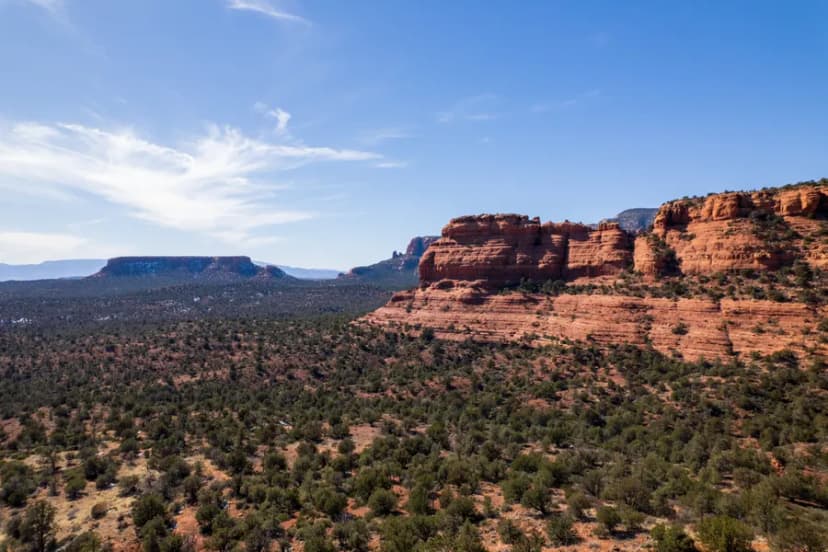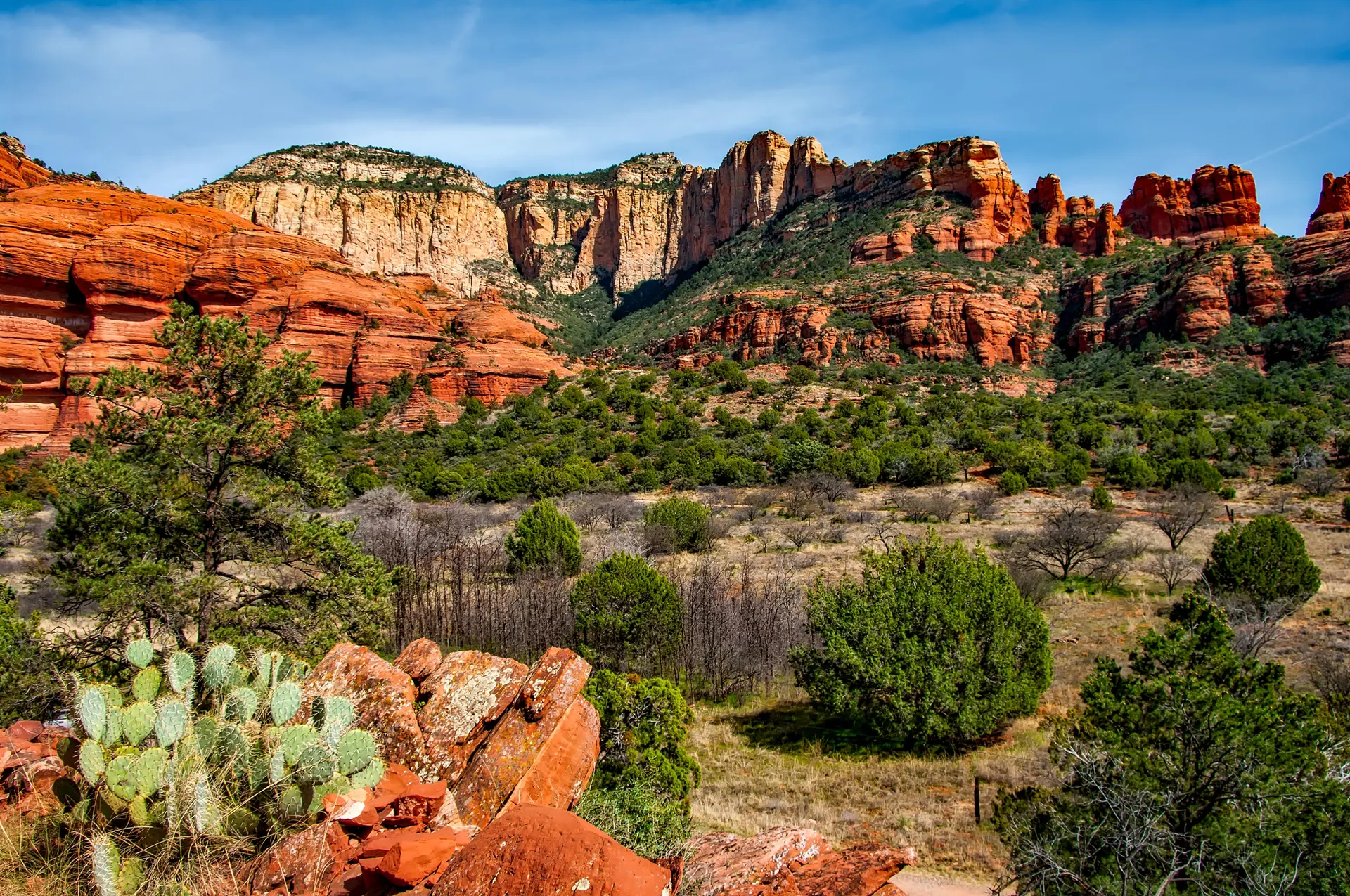
Sedona is famous for its vortexes, spots in the red rocks where many visitors say they feel a swirling, grounding energy. Whether you come for the geology, the spirituality, or simply the views, the four classic vortex sites all sit at the end of excellent short hikes. This guide covers the trails that reach each one, what to expect, and how to plan your day in Red Rock Country.
What Is a Sedona Vortex?
A vortex is described locally as a place where the earth's energy is concentrated and felt as a sense of calm, focus, or upliftment. The concept took hold in Sedona in the 1980s and has anchored the town's reputation as a spiritual destination ever since. Geologists, meanwhile, point to the area's iron-rich Schnebly Hill sandstone and the dramatic uplift of the Mogollon Rim, which give the rocks their fiery color and towering forms. You do not need to believe in the metaphysics to enjoy these sites. Each one happens to sit on a knockout viewpoint, so the hikes are worth it regardless. A common tip from local guides: twisted, corkscrewing juniper trees near vortex sites are said to mark the strongest energy, and you will spot plenty of them. Whatever you make of the energy, plan to sit quietly at each site for a few minutes rather than just snapping a photo and leaving.
Airport Mesa Vortex (Easiest Access)
The Airport Mesa vortex is the most accessible of the four and a great place to start. Park at the small lot on Airport Road (it fills fast, so arrive before 8 a.m.) and take the short, rocky scramble up to the saddle between two knolls. It is roughly half a mile round trip with a steep finish, gaining maybe 100 feet. This is also the best sunset spot in town, with a 360-degree panorama over the whole Verde Valley and out toward Capitol Butte and Coffee Pot Rock. Locals say Airport Mesa carries masculine, energizing energy that boosts focus, so it is a popular spot for morning meditation. If the saddle is crowded, the slightly higher Airport Loop Trail offers quieter perches with the same views.
Cathedral Rock Vortex (Most Iconic)
Cathedral Rock is the postcard image of Sedona and one of its strongest reputed vortexes, said to balance masculine and feminine energy. The trail from the Back O' Beyond lot is only 1.2 miles round trip but climbs roughly 600 feet steeply, with a slickrock chute near the top that requires scrambling on all fours. Wear shoes with real grip, because the sandstone is slick when dusty. The reward is the saddle between the spires, glowing orange at sunset over the Verde Valley. Note that the Back O' Beyond lot is tiny and fills before dawn in spring; the overflow option is to park at the Yavapai Vista trailhead and hike in via the Templeton Trail, which adds distance but is far easier to find a spot. This is one of the marquee hikes covered in our Sedona hiking itinerary, which strings together Cathedral Rock with Devil's Bridge over three days.
Bell Rock Vortex (Best for Families)
Bell Rock, just north of the Village of Oak Creek, is the gentlest vortex hike and reputedly carries strong masculine, action-oriented energy. The wide, well-graded Bell Rock Pathway loops the base on easy terrain (about 3.6 miles for the full loop, but you can turn around anytime), and confident hikers can scramble partway up the bell-shaped butte for big views of Courthouse Butte next door. Because the grade is forgiving and the parking at the Courthouse Vista lot is ample, this is the best choice for families, first-timers, or anyone short on time. The trail connects directly to the Bell Rock Climb route, so you can dial the difficulty up or down as you go.
Boynton Canyon Vortex (Most Scenic Hike)
For the longest and most rewarding outing, hike to the Boynton Canyon vortex via the short Vista Trail spur off the main Boynton Canyon Trail. The spur is under a mile round trip and leads to a red sandstone knob between two formations the Yavapai-Apache people consider sacred. If you have energy left, continue up the full Boynton Canyon Trail (about 6 miles round trip) into a shaded box canyon, a cool retreat on hot afternoons.
Planning Your Vortex Day
- Permits and parking: Most lots require a Red Rock Pass (about $5 per day), available at trailhead kiosks or Sedona visitor centers.
- Timing: Hike early. Lots at Cathedral Rock and Airport Mesa overflow by mid-morning from March through May.
- What to bring: At least two liters of water per person, grippy trail shoes for slickrock, sun protection, and layers in winter.
- Best seasons: March to May and September to November offer mild temperatures. Summer afternoons routinely top 95 degrees.
You can realistically link two or three vortex sites in a single day if you start at sunrise. Pair Airport Mesa for sunrise, Bell Rock midday, and Cathedral Rock for sunset to bookend your day with the best light.
Sedona Vortex Hikes FAQs
There are four classic Sedona vortex sites: Airport Mesa, Cathedral Rock, Bell Rock, and Boynton Canyon. Each sits at the end of a short hike, ranging from an easy half-mile scramble at Airport Mesa to a steep climb at Cathedral Rock.
Bell Rock is the easiest and most family-friendly. The Bell Rock Pathway loops the base on gentle, wide terrain, and you can scramble partway up for views. Airport Mesa is also short at about half a mile round trip but has a steep, rocky finish.
Most vortex trailheads require a Red Rock Pass, which costs about $5 per day and can be bought at trailhead kiosks or Sedona visitor centers. Boynton Canyon and Cathedral Rock parking lots both require it.