Four Days in the American Alps: North Cascades
The American Alps: glaciers, granite & turquoise lakes, all in Washington.
Four days backpacking the North Cascades: Cascade Pass and the Sahale Arm to a glacier camp, the Maple Pass Loop, and the turquoise Diablo and Ross Lakes along Highway 20.
“I’ve requested to book a Chain Lakes Loop guide on ExplorOFF, and it was the best idea ever! I highly recommend going with their guided option since you get a real human connection on the trail and don’t have to worry about a thing. Yulia was great to talk to!”
 13 stops on a real mapEvery stop pinned in order→
North Cascades: every stop pinned in order.
Cascade Pass, Sahale Arm, Maple Pass & Diablo Lake · Washington
Every stop on this trip, in order, opens as one driving route in the Google Maps app. No copying addresses across one at a time.
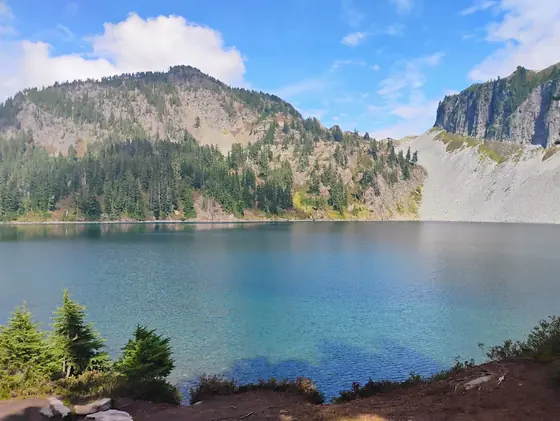
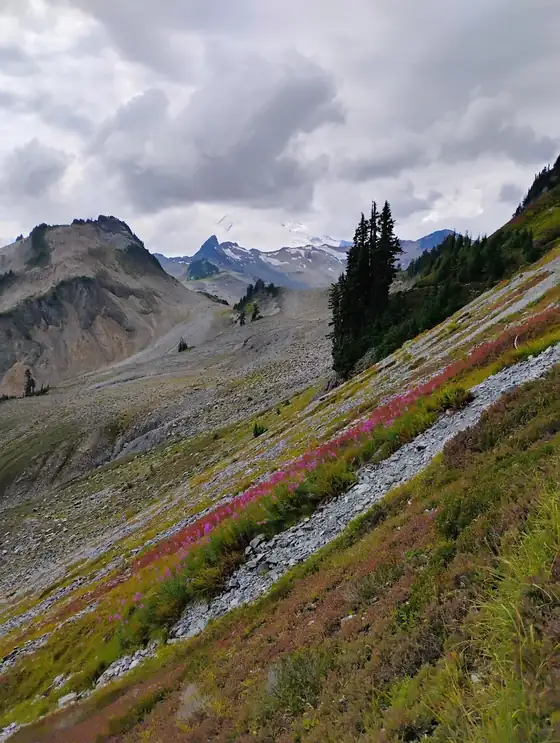
North Cascades in photos: 5 of the stops.
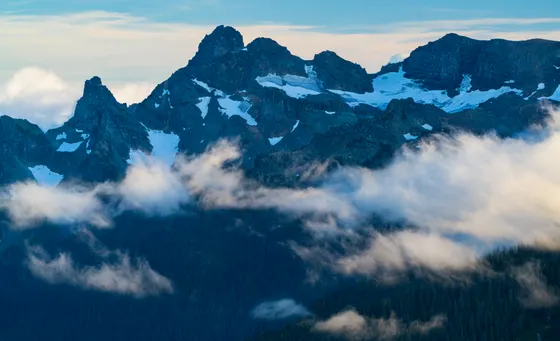
Plan and book your 4 days in North Cascades, one step at a time
- Sahale Arm (NPS report 9/12): the first water source two miles up is only a trickle, but water flows at Sahale Glacier Camp from the glacier; the upper arm is very eroded with loose rock, and bear activity around Cascade Pass is high. No camping anywhere on the trail outside designated camps. Source
- Triad River Tours showed no bookable Skagit rafting dates for the rest of 2026 or summer 2027 when checked, so the day 3 float is summer only and not bookable yet. Source
How 4 days in North Cascades split up
Plan 4 days for North Cascades. Total distance: ~120 mi. Difficulty: Strenuous. Permit: Required. North Cascades National Park is the wildest and least-crowded of Washington's big parks, a rugged, glaciated range so jagged it earned the nickname the American Alps. It holds more glaciers than anywhere else in the lower 48, and yet it sees a fraction of the visitors of Rainier or Olympic, so the high passes and granite cirques can feel like they are yours alone.
Day 1: Drive Highway 20 in · Diablo Lake & permits in Marblemount
4 stops · Day one
Day 2: Cascade Pass & the Sahale Arm · camp at the glacier
3 stops · Day two
Day 3: Down to the lakes · a Skagit River raft trip
3 stops · Day three
Day 4: The Maple Pass Loop · larches, lookouts & the drive home
3 stops · Day four
Drive Highway 20 in · Diablo Lake & permits in Marblemount
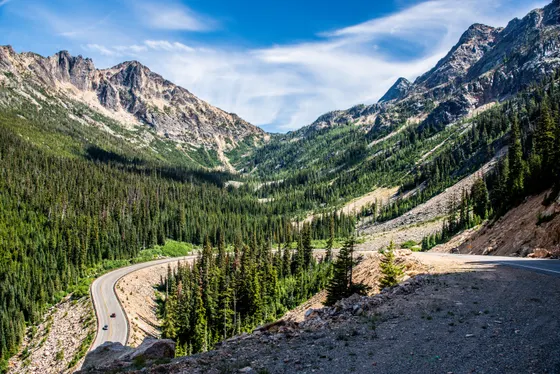
The North Cascades are surprisingly close to a major airport yet feel a world away. Plan on about 2.5 to 3 hours from Seattle (SEA) up the North Cascades Highway (State Route 20), the only road through the park. Stop at the Wilderness Information Center in Marblemount to pick up or confirm your overnight permit and check trail conditions, and fuel up here, because services thin out fast as you climb east.
Not the order you want? Drag a stop, or use the arrows beside it. Stops move between days too.
 Drive from
~2.5 to 3 hr · Highway 20 · fuel up first · DrivePlan on about 2.5 to 3 hours from Seattle (SEA) up the North Cascades Highway (State Route 20), the only road through the park. It is a stunning drive, but services thin out fast east of Marblemount, so download offline maps and fuel up before you climb into the mountains.
- Wilderness permits in Marblemount
Confirm your overnight permit · customStop at the Wilderness Information Center in Marblemount to pick up or confirm your overnight wilderness permit and check trail and snow conditions. The most popular sites, including Sahale Glacier Camp, go fast when reservations open on recreation.gov, so have yours booked ahead.
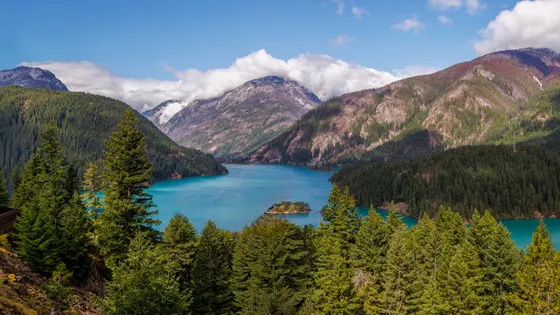
- Diablo Lake Overlook
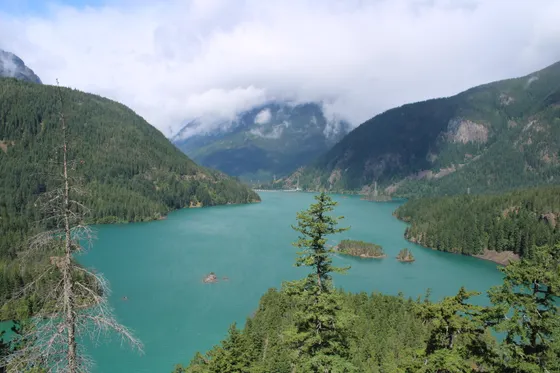
Turquoise glacier-fed reservoir · ViewpointPull off at the Diablo Lake Overlook, where the reservoir glows an unreal turquoise from glacial rock flour suspended in the water. It is one of the most photographed spots in the park and a quick, no-effort stop right off Highway 20.
 Stay in Marblemount
Near the west entrance · lodgeBase near the west entrance in Marblemount or Newhalem so you are positioned for an early start at the Cascade Pass trailhead tomorrow. Lodging is scarce out here, so reserve early, especially on summer weekends.
Cascade Pass & the Sahale Arm · camp at the glacier
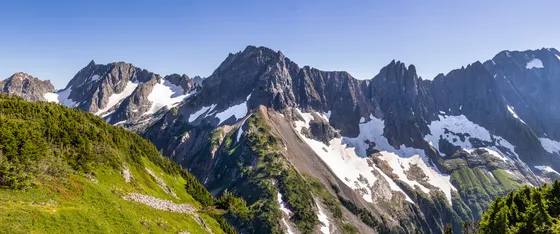
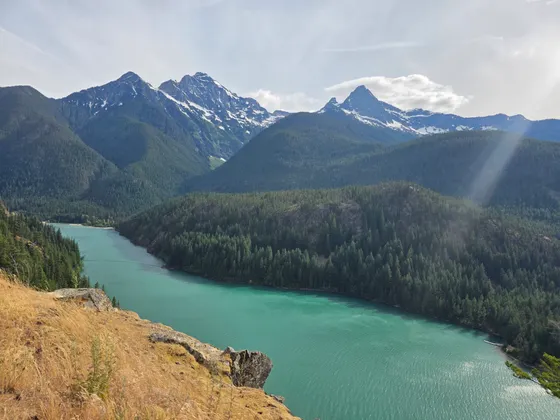
This is the centerpiece of the trip and one of the great backpacks in the lower 48. From the Cascade Pass trailhead, climb the famous switchbacks up to Cascade Pass (about 3.7 miles), where the whole jagged spine of the park unfolds around you. Then turn up the Sahale Arm, a ridgeline that keeps climbing through heather meadows toward the glaciers, roughly 12 miles round trip to the top.
Not the order you want? Drag a stop, or use the arrows beside it. Stops move between days too.
- Cascade Pass & the Sahale Arm
~12 mi RT · strenuous · the signature climb · HikeFrom the Cascade Pass trailhead, climb the famous switchbacks to Cascade Pass at about 3.7 miles, where the whole jagged spine of the park unfolds, then turn up the Sahale Arm, a ridgeline that keeps climbing through heather meadows toward the glaciers, roughly 12 miles round trip to the top.
 Sahale Glacier Camp
Rock-walled sites at the glacier · permit required · lodgeSahale Glacier Camp is a cluster of rock-walled tent sites perched at the foot of the Sahale Glacier with a jaw-dropping panorama over the peaks and valleys below. It is one of the most spectacular places you can pitch a tent anywhere, and it requires a wilderness permit booked ahead.
 Bear canister or food hang
Required food storage · customStore all food and scented items in an approved bear canister or hang them properly. Black bears are active across the range, and the weather at the glacier edge can change fast, so pack warm layers, rain gear, and a stove, and watch the sky on the exposed arm.
Down to the lakes · a Skagit River raft trip
Pack up camp and descend the Sahale Arm and Cascade Pass back to the trailhead, savoring the views you climbed past in the other direction. Trade boots for a paddle and head down to the river for a guided Skagit River rafting trip with Triad River Tours, a scenic float through the forested valley below the peaks, a perfect rest-day reward for tired legs.
Not the order you want? Drag a stop, or use the arrows beside it. Stops move between days too.
- Descend Sahale Arm & Cascade Pass
Hike out to the trailhead · HikePack up camp and descend the Sahale Arm and Cascade Pass back to the trailhead, savoring the views you climbed past on the way up. It is all downhill, but the upper arm is steep, so take it slow and protect tired knees.
 Skagit River raft trip · Triad River Tours
Summer only · 2027 dates not open yet · activityTrade boots for a paddle with a guided Skagit River rafting trip with Triad River Tours, a scenic float through the forested valley below the peaks. It is a perfect low-effort reward after the Sahale climb, so reserve ahead, especially on summer weekends.
Book this →- Back to Marblemount for the night
Rest, resupply & recharge · lodgeSpend the night back in Marblemount to rest your legs, dry out wet gear, and recharge before tomorrow's drive over the high passes. Resupply and do laundry here, because services are limited east of Marblemount.
The Maple Pass Loop · larches, lookouts & the drive home
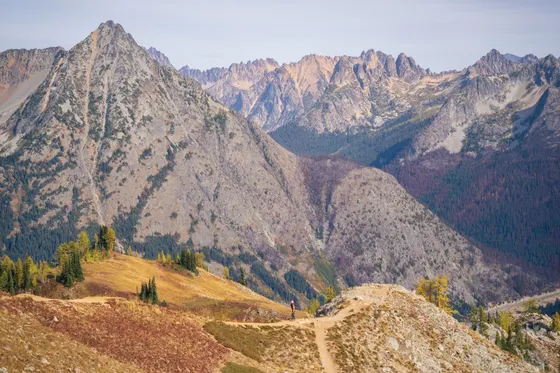
Finish with one of the best day hikes in the range, the Maple Pass Loop (about 7.2 miles, strenuous), which technically sits just outside the park boundary near Rainy Pass. It climbs through subalpine meadows past Lake Ann to a high pass with a sweeping ridgeline panorama, and in late September the slopes blaze gold as the larches turn, one of the great fall spectacles in Washington. If you have the legs and want fewer crowds, the steep Hidden Lake Lookout is a stunning alternative back near Marblemount.
Not the order you want? Drag a stop, or use the arrows beside it. Stops move between days too.
- Maple Pass Loop
~7.2 mi loop · strenuous · larches · HikeFinish with the Maple Pass Loop (about 7.2 miles, strenuous), which technically sits just outside the park boundary near Rainy Pass. It climbs through subalpine meadows past Lake Ann to a high pass with a sweeping ridgeline panorama, and in late September the slopes blaze gold as the larches turn.
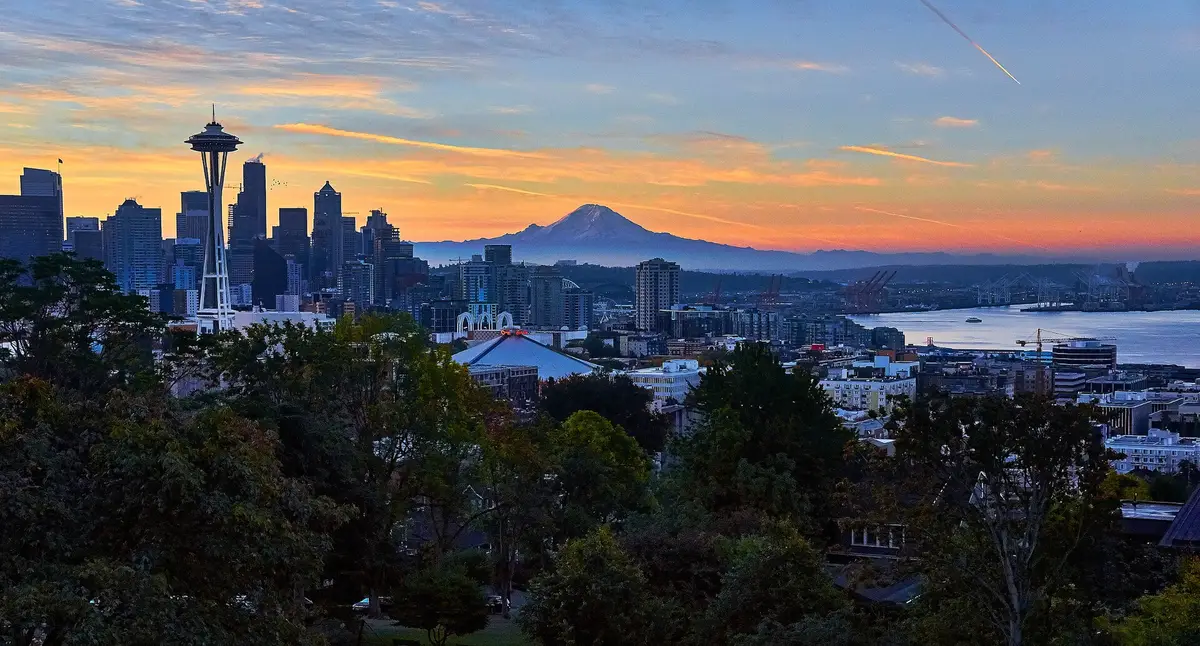
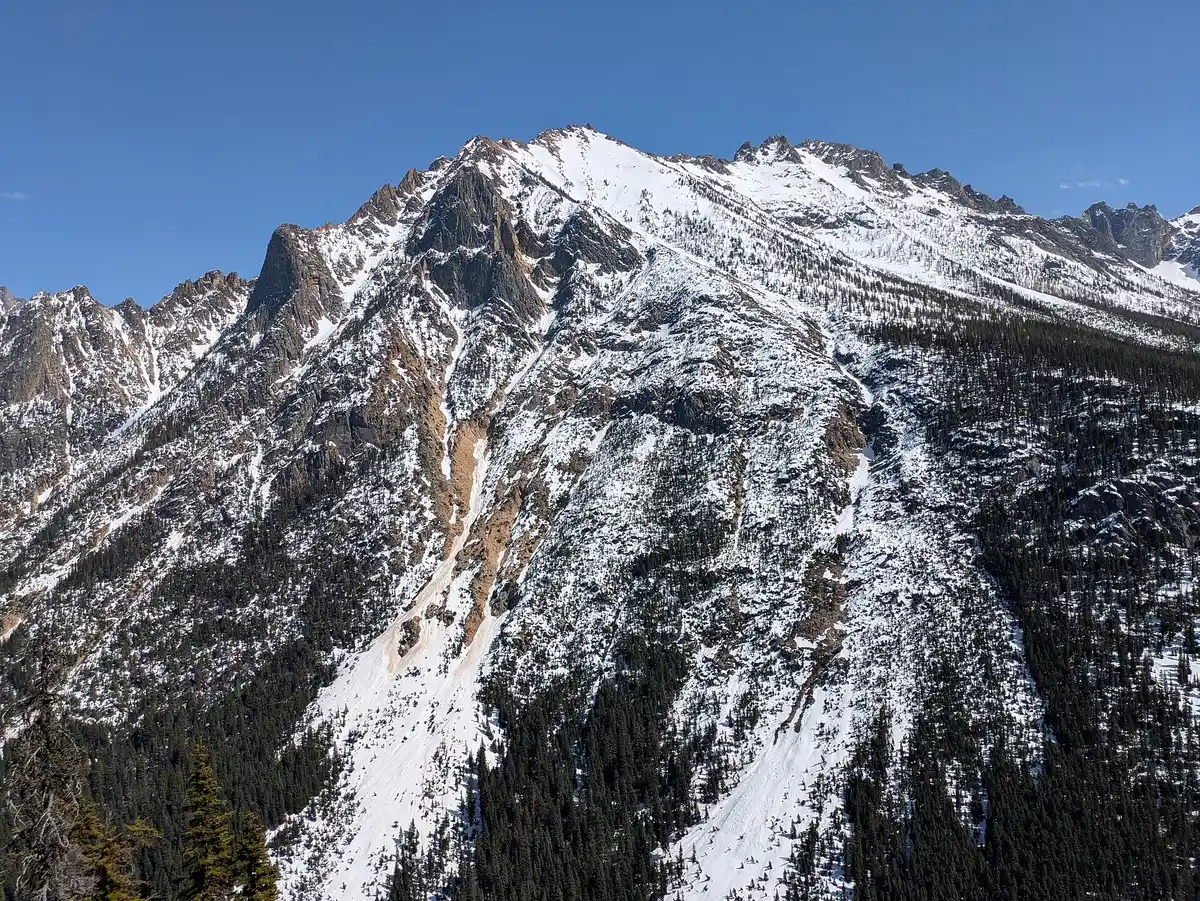 Buidhe / CC BY-SA 4.0Washington Pass Overlook
View over the Highway 20 hairpin · ViewpointContinue up to Washington Pass for the dramatic overlook above the highway hairpin, with Liberty Bell and the Early Winters Spires rising over the road. It is a short walk from the parking lot and one of the most photographed views on Highway 20.
 Getting home: Seattle or Winthrop
SEA ~3 to 3.5 hr · DriveFrom the Maple Pass and Rainy Pass area it is roughly 3 to 3.5 hours back to Seattle (SEA) the way you came, or you can drop east to Winthrop for the night and loop back another day. Top off your gas and start the drive with daylight, because Highway 20 is long, winding, and short on services.
Book the 3 nights
Beds near the trailheads are the one thing on this trip that genuinely runs out. Everything else can be decided later.
Tell us your dates and we will do the checking. We find what is still open near each trailhead and email you this plan back with a booking link for each night. Nothing is charged and you decide at the end.
Request to bookNorth Cascades Backcountry Permit opens on its own calendar
$6 non-refundable permit fee plus a $10 recreation fee per adult; 15 and under are free. Card only, no cash.
| Permit | Required: North Cascades Backcountry Permit Official page |
|---|---|
| Application window | an early-access lottery in spring, then a general on-sale. About 60% of backcountry sites go in advance; the other 40% are held back for walk-ups. |
| Odds of drawing | Sahale, Copper Ridge and Ross Lake are the three worth entering the lottery for. Most other zones are gettable on the general on-sale. |
| If your application is denied | The 40% held back for walk-ups. Collect one in person at the Wilderness Information Center in Marblemount up to 24 hours before you start, or self-register when it is closed. |
| Trip starts from | Marblemount, WA, flying into Seattle-Tacoma (SEA) |
What to pack for North Cascades
Built from this route, not a generic list. Every line says why it is here.
On every day of this trip
On your feet
Because you are sleeping out 1 night
For the 2 nights under a roof
For the driving days
Specific to North Cascades
What we actually learned in the American Alps.
Get your wilderness permit early
Any overnight backcountry camping in North Cascades National Park requires a wilderness permit. The most popular sites, including Sahale Glacier Camp, sell out fast when reservations open on recreation.gov, so book the moment your dates are available and confirm at the Marblemount Wilderness Information Center.
Carry a bear canister or hang your food
You must store all food and scented items in an approved bear canister or hang it properly. Black bears are active across the range, and proper food storage protects both you and them. Rangers in Marblemount can advise on the requirements for your route.
Go late July through September
Snow lingers on the high passes into July, biting bugs peak in midsummer, and the famous golden larches turn in late September. Late summer into early fall is the sweet spot for the Sahale Arm, Maple Pass, and the high lookouts.
Highway 20 closes in winter
The North Cascades Highway (State Route 20) is the only road through the park and closes in winter for heavy snow, usually reopening by late spring. Check the road status before you go, fuel up early, and expect long stretches with no services east of Marblemount.
Expect little to no cell service
Cell coverage is spotty to nonexistent across most of the park. Download offline maps, screenshot your trailheads and permit details, and tell someone your plan and expected return before you head into the backcountry.
Respect the alpine weather
This is a high, glaciated range and conditions change fast. Even in summer, carry warm layers, rain gear, and traction if snow lingers. Start climbs early, watch the sky, and turn around if a storm builds on an exposed ridge like the Sahale Arm.
Check the access roads for washouts
The trailheads sit at the end of remote logging roads that can wash out after storms or stay blocked by lingering snowpack. Before you commit to the long drive up, verify current road and trail conditions with the rangers in Marblemount so you do not arrive at a closed gate or an impassable washout.
North Cascades: questions before you go
North Cascades backpacking: the questions people ask most.
Yes. Any overnight backcountry camping in North Cascades National Park requires a wilderness permit. The most popular sites, especially Sahale Glacier Camp, are in high demand and reservations open on recreation.gov, so book as early as you can. Confirm your permit and check trail and snow conditions at the Marblemount Wilderness Information Center before you head up.
The classic is Cascade Pass and the Sahale Arm, roughly 12 miles round trip to Sahale Glacier Camp, a cluster of rock-walled tent sites perched at the edge of the Sahale Glacier with a jaw-dropping panorama. Other favorites include the Copper Ridge and Chilliwack loop, Thornton Lakes, the Maple Pass Loop day hike near Rainy Pass, and the steep Hidden Lake Lookout.
Late July through September is the prime window. Snow lingers on the high passes into July, biting bugs peak in midsummer, and the famous golden larches turn in late September. Highway 20, the only road through the park, closes in winter for snow, so this is a summer and early-fall trip.
No. The North Cascades Highway (State Route 20) is the only road through the park and closes in winter when heavy snow arrives, typically reopening by late spring. Always check the current road status before you travel, and plan your trip for the late-summer-to-early-fall window when the high passes are clear.
Fly into Seattle (SEA) and drive about 2.5 to 3 hours north and east on the North Cascades Highway (State Route 20). Marblemount and Newhalem sit near the west entrance, while Winthrop is the gateway on the drier east side. Fuel up before you head into the park, since services are scarce along Highway 20.
You must store all food and scented items in an approved bear canister or hang them properly in the backcountry. Black bears are active across the range, and proper food storage is both required and the right thing to do. Rangers at the Marblemount Wilderness Information Center can confirm the storage rules for your specific route.
Lodging is scarce out here. Base in Marblemount or Newhalem near the west entrance to be close to the Cascade Pass trailhead, or in Winthrop on the drier east side if you want to explore Washington Pass and the larch country. Backcountry camping requires a wilderness permit reserved through recreation.gov.
It is strenuous. The trail climbs steep switchbacks to Cascade Pass at about 3.7 miles, then keeps gaining elevation up the exposed Sahale Arm to roughly 12 miles round trip at the glacier camp. The terrain is high, exposed, and can hold snow into July, so carry warm layers, rain gear, plenty of water, and start early.
Train seriously before you go. Many trails here average over 1,000 feet of climb per mile, so build up your legs and lungs with a weighted pack for several weeks beforehand and get comfortable with long, exposed days under load. Snowpack can also linger on the high passes into summer, so be ready for slow, careful travel over old snow on climbs like the Sahale Arm, and confirm trail and road conditions with the rangers in Marblemount before you head up.
Application window: an early-access lottery in spring, then a general on-sale. About 60% of backcountry sites go in advance; the other 40% are held back for walk-ups..
Sahale, Copper Ridge and Ross Lake are the three worth entering the lottery for. Most other zones are gettable on the general on-sale.
The 40% held back for walk-ups. Collect one in person at the Wilderness Information Center in Marblemount up to 24 hours before you start, or self-register when it is closed.
Marblemount, WA is the gateway town, flying into Seattle-Tacoma (SEA).
Yes. Tell us your dates and we check what is still open for the plan on this page, then send it back with a booking link for each night and the total. Nothing is charged and nothing is held, and you pay the normal rate.
Pick how you want to go.
Same 4-day route. Same 8 stops.
- 3 nights, sites along the route
- $66
- Skagit River raft trip · Triad River Tours
- Priced when you book
- Rental car, 4 days
- $240
- Gas, about 243 miles
- $45
- 2 nights, a room at each trailhead
- from $300
- 1 night, campsites on the nights the route camps
- $22
- Skagit River raft trip · Triad River Tours
- Priced when you book
- Rental car, 4 days
- $240
- Gas, about 243 miles
- $45
- A private local guide, rooms and campsites booked
- Included
- Airport pickup and every drive
- Included
- Park, permit and campsite fees paid
- Included
- All the gear and the trail meals
- Included
Written and walked by Yulia Vasilyeva · Co-founder · Lead planner and guide
Three years leading guided hikes in the Pacific Northwest, rated 5.0 by 20+ verified guests, and she builds every custom itinerary herself. Based in Seattle.
Last checked September 2026
You might also love these
Other itineraries near this one.
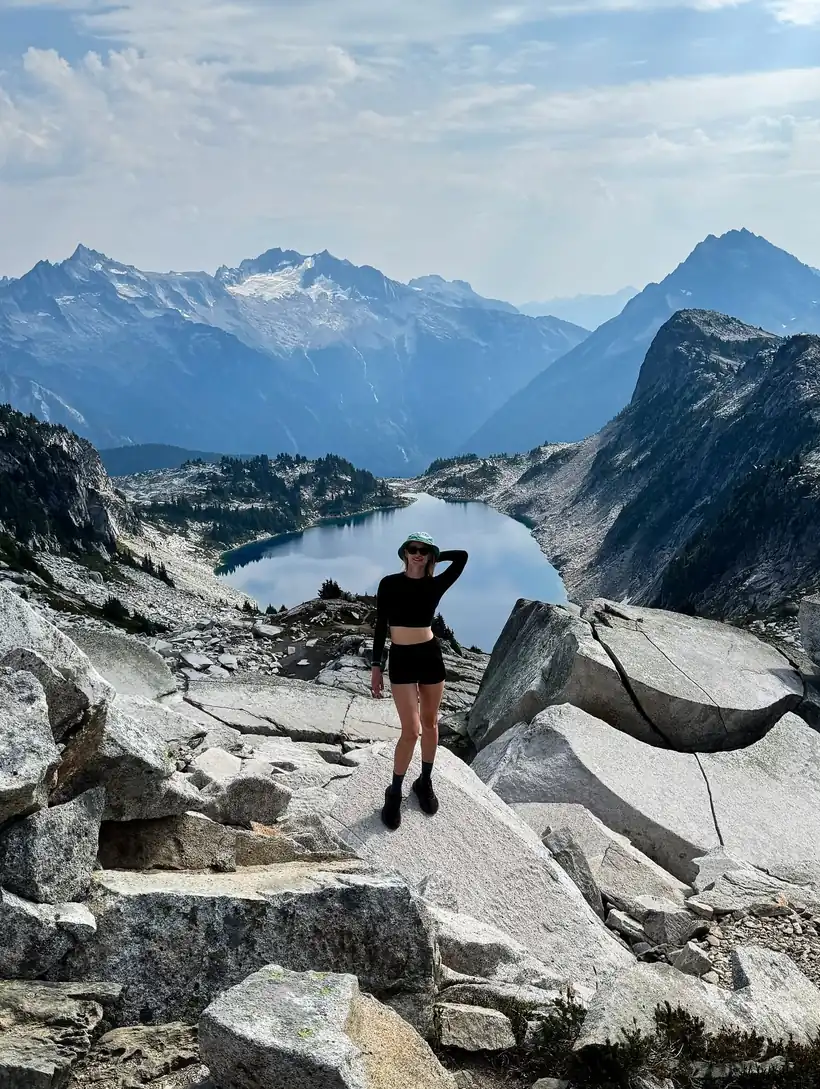
Hidden Lake Lookout Backpacking: The Overnight, Start to Finish
Hidden Lake Lookout in one night: 8 miles and 3,800 feet to a free, unreservable lookout above an ink-blue lake, plus the walk-up permit…

Chain Lakes Loop: A Mount Baker Hiking Weekend
A 2-day weekend on the Chain Lakes Loop at Mount Baker: a ~6.5-mile loop past Bagley, Mazama, Iceberg, Hayes, and Arbuthnot lakes, with…

Stehekin Washington: A 3-Day Itinerary
Three days in one of the most remote communities in the US: ride the Lady of the Lake ferry up a 50-mile fjord, see Rainbow Falls, eat…
Guides for this tripBest Time to Visit North Cascades National ParkNorth Cascades Backcountry PermitsBest Day Hikes in North Cascades National ParkWonderland Trail Permits
What adventurers say about us.
All reviews are from verified guests. ★★★★★ 5.0 average from 20+ bookings.
"Felt like going out with a really knowledgeable friend who just happens to know everything about the area. No awkward tour-guide energy, just a magnificent day."
"Yulia is an incredible guide. She knew every trail, every viewpoint, and exactly how to pace the day for our group. The photos she took of us were stunning. 100% booking again."
"I was visiting Seattle solo and this was the best decision I made on the trip. Yulia picked me up, had snacks, and took us to a trail I never would have found on my own. Absolute must-do."
"We did this as a couple's trip and it was perfect. Yulia adapted everything to us, our pace, our interests, our photo obsession. The mountain views were unreal."
"Phenomenal experience. Yulia has deep local knowledge and a real passion for the outdoors. She went out of her way to show us the hidden gems tourists never see. Will remember this forever."
"I've done a few guided hikes and this was by far the best. Yulia is warm, funny, and genuinely expert. The trail she chose had the most insane wildflower bloom, we got so lucky."
Fees, reservation windows, shuttle dates and trail closures are planning estimates. Confirm hours, road status and any reservations with the land manager before you go.
What other travelers are saying
Be the first to leave a tip or question for the next traveler.
Was this helpful?
One tap. It goes straight to Yulia and Margarita.
You can't hike it if you can't get the permit.
The best hikes in America run on lotteries that open once a year and sell out in minutes. Every trail runs on its own calendar. Pick the ones you want and we do the watching.
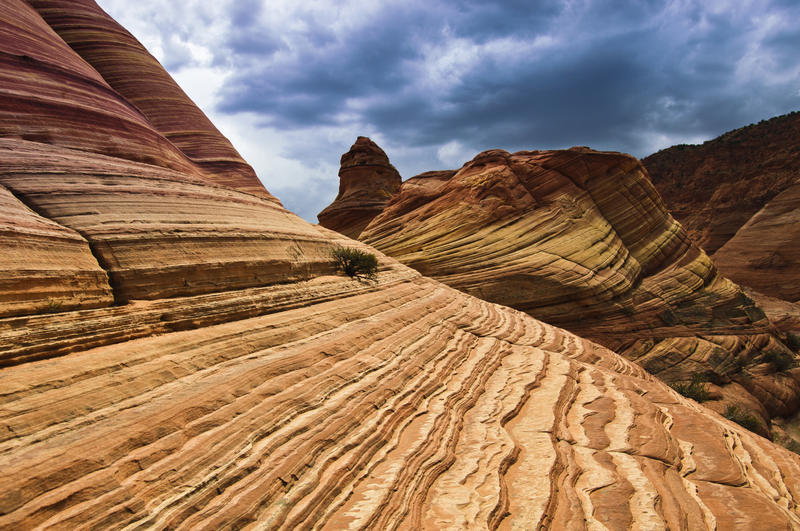 The WaveCoyote Buttes North · Arizona / UtahPermitLotterybrutal odds
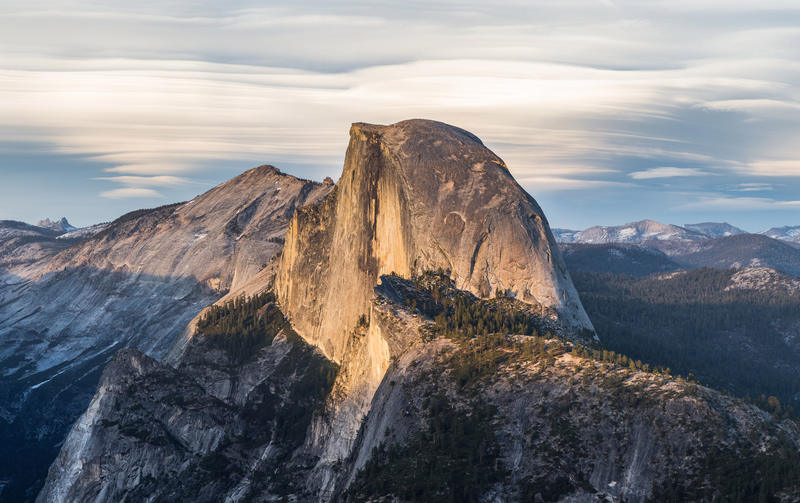 Half Dome CablesYosemite NP · CaliforniaPermitOpens Mar 1fair odds
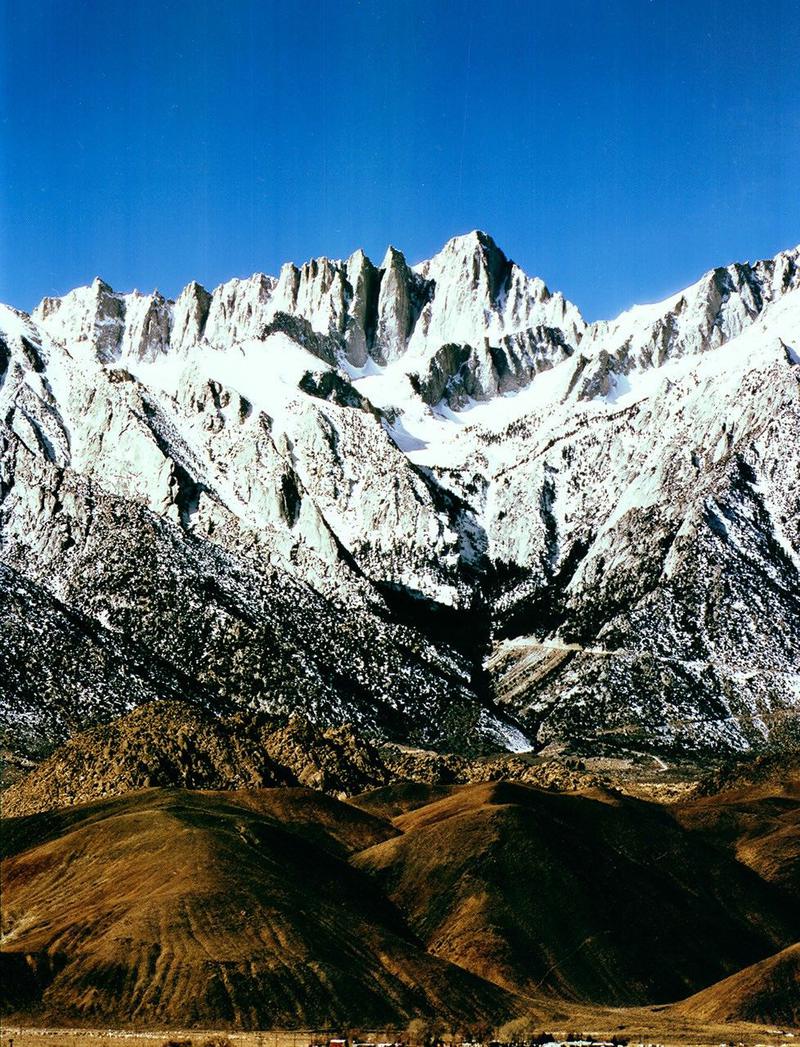 Mt. WhitneyInyo NF · CaliforniaPermitOpens Feb 1tough odds
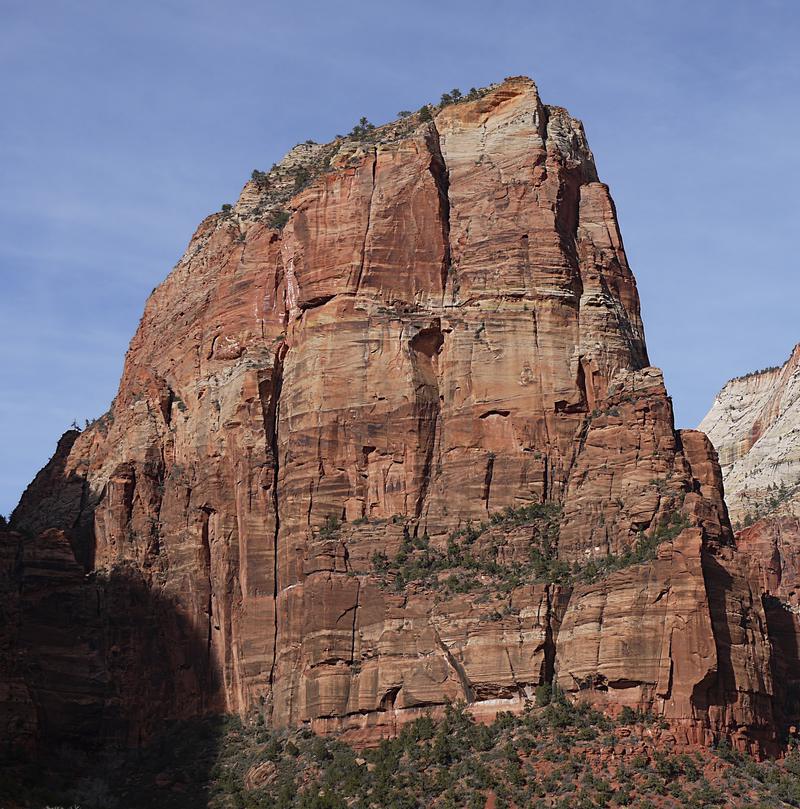 Angels LandingZion NP · UtahPermitLotterytough odds
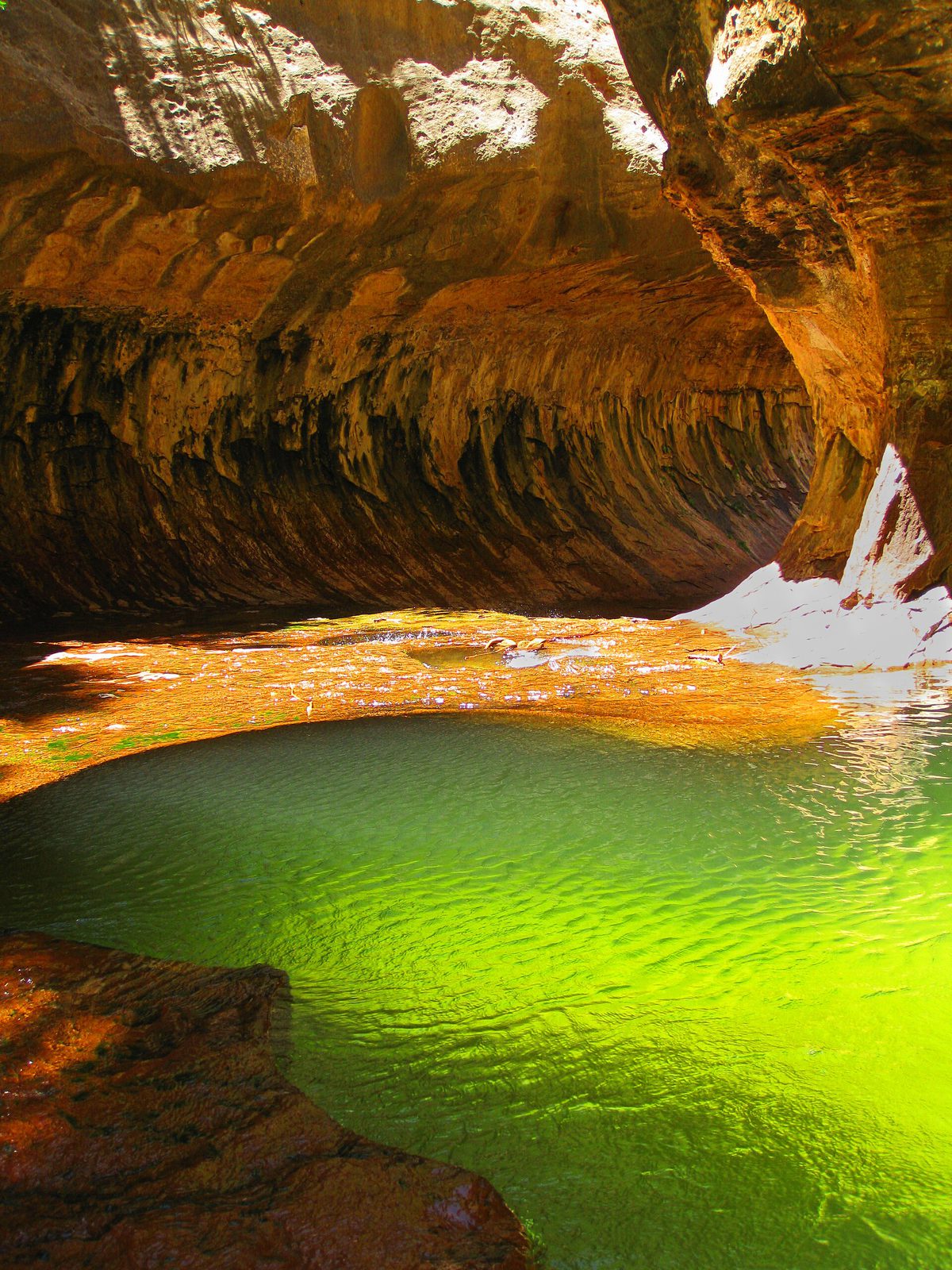 The SubwayZion NP · UtahPermitLotterytough odds
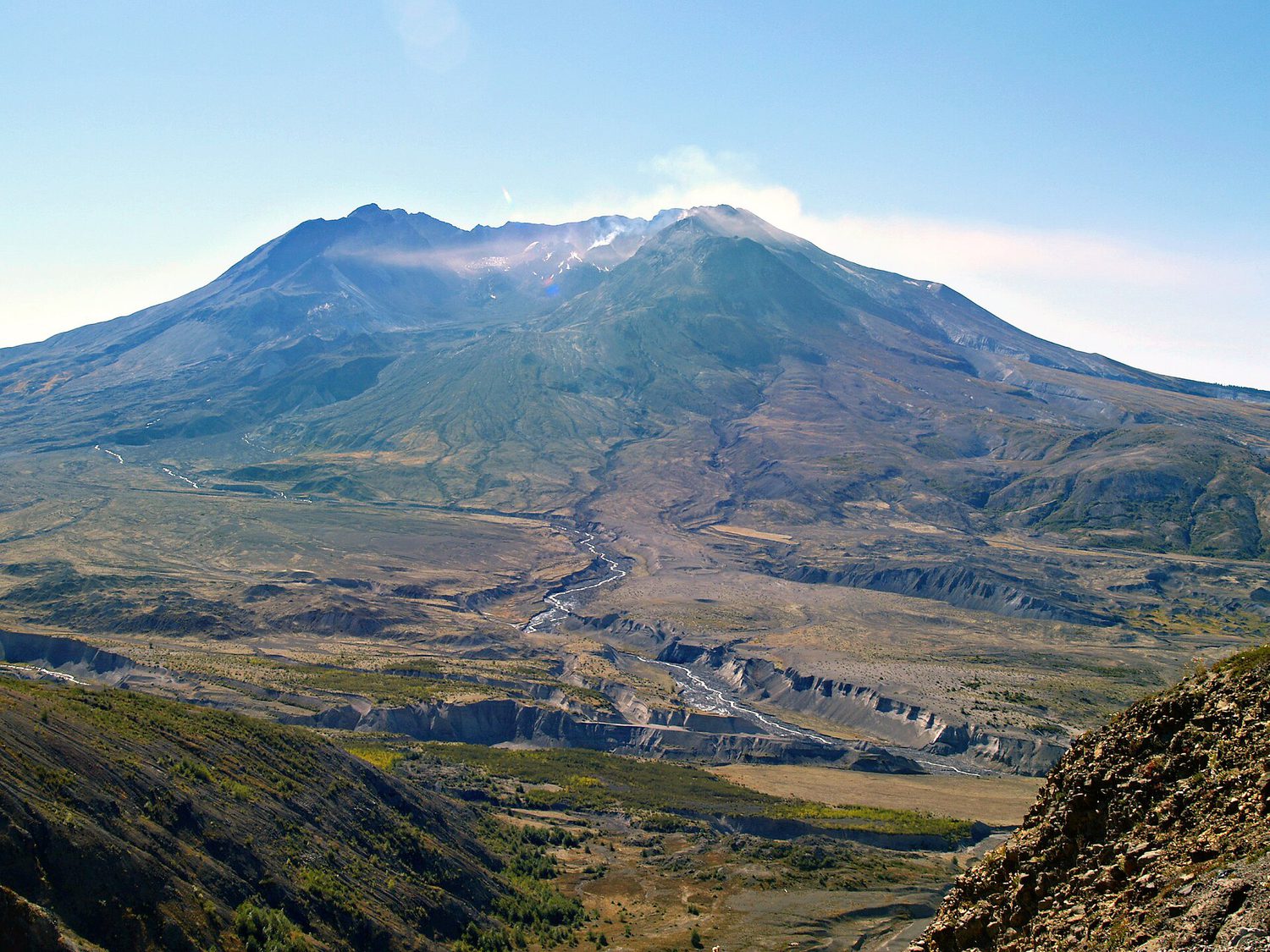 Mount St. Helens Summit ClimbGifford Pinchot NF · WashingtonPermitReservationtough odds
How it works
- An email the morning each window opens, never the day after.
- A 14-day heads-up so you can line up your group and dates.
- Win odds and a ranked backup plan for every trail you pick.
Didn't win? We keep watching. We check recreation.gov every day for The Enchantments, Half Dome and Angels Landing, and email you the moment a sold-out date frees up. Cancellations are the second chance most people never hear about.