Mount Whitney Trail: A Summit Hiking Itinerary
One trail, the highest summit in the lower 48.
A 2 to 3 day plan for hiking Mount Whitney on the Mount Whitney Trail: acclimatize near Lone Pine, then climb the ~22-mile round trip past the 99 switchbacks and Trail Crest to the 14,505-foot summit.
“I’ve requested to book a Chain Lakes Loop guide on ExplorOFF, and it was the best idea ever! I highly recommend going with their guided option since you get a real human connection on the trail and don’t have to worry about a thing. Yulia was great to talk to!”
 12 stops on a real mapEvery stop pinned in order→
Mount Whitney: every stop pinned in order.
Lone Pine, Whitney Portal & the Sierra crest · Eastern California
Every stop on this trip, in order, opens as one driving route in the Google Maps app. No copying addresses across one at a time.
Mount Whitney in photos: 4 of the stops.
Plan and book your 3 days in Mount Whitney, one step at a time
How 3 days in Mount Whitney split up
Plan 3 days for Mount Whitney. Round trip: ~22 mi. Elevation gain: ~6,100 ft. Permit: Required. Mount Whitney rises to 14,505 feet, the highest peak in the contiguous United States, on the crest of the Eastern Sierra above the town of Lone Pine, California. The Mount Whitney Trail from Whitney Portal is the standard, non-technical route in summer: roughly 22 miles round trip with about 6,100 feet of gain, the famous 99 switchbacks, and Trail Crest before the final push to the summit.
Day 1: Arrive in Lone Pine & acclimatize
4 stops · Day one
Day 2: The climb · Whitney Portal, the 99 switchbacks & the summit
5 stops · Day two
Day 3: Overnight option, recovery & getting home
3 stops · Day three
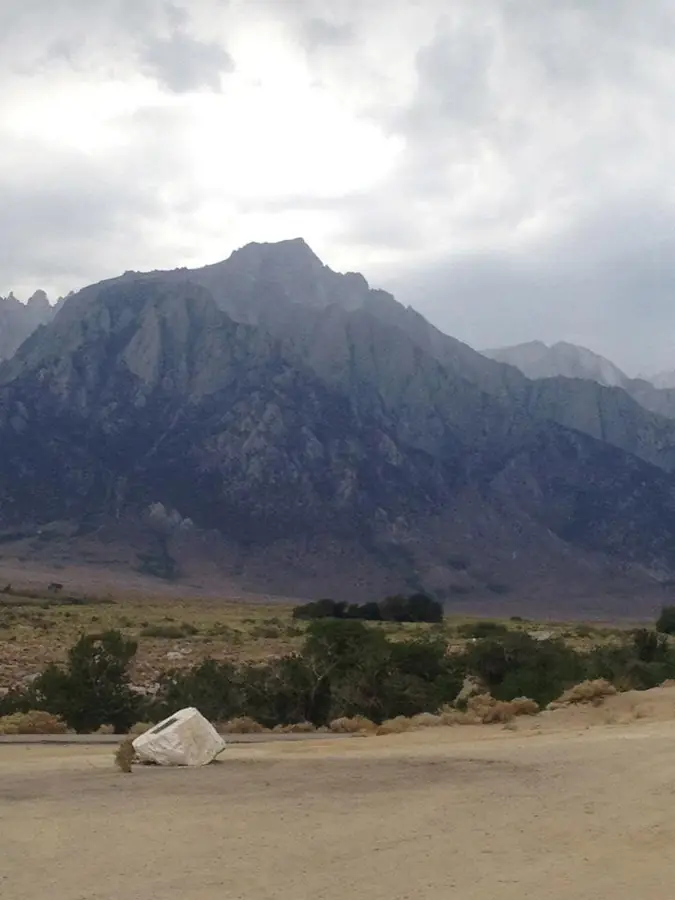
Arrive in Lone Pine & acclimatize
Get to the Eastern Sierra and give your body time at altitude before you climb. Lone Pine, California sits at about 3,700 feet, and it is the classic base for the Mount Whitney Trail. From here it is roughly 3.5 to 4 hours from Reno (RNO) or Las Vegas (LAS), or a shorter drive from Mammoth Yosemite (MMH). Pick up your permit details, top off food and fuel, and rent or buy a bear canister if you do not have one.
Not the order you want? Drag a stop, or use the arrows beside it. Stops move between days too.
- Drive from
~3.5 to 4 hr · base town · fuel up · DriveLone Pine, California, at about 3,700 feet, is the classic base for the Mount Whitney Trail. It is roughly 3.5 to 4 hours from Reno (RNO) or Las Vegas (LAS), or a shorter drive from Mammoth Yosemite (MMH). Top off food and fuel, sort out your permit, and rent or buy a bear canister if you need one.
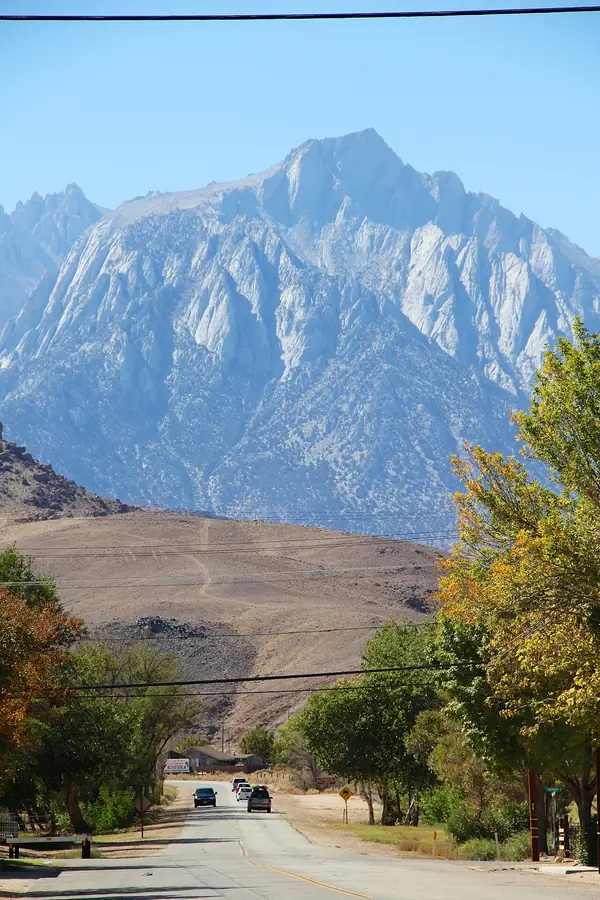 daveynin from United S / CC BY 2.0Whitney Portal trailhead
8,360 ft · trailhead · scout it · ViewpointDrive up the winding road to Whitney Portal at 8,360 feet, the Mount Whitney Trail trailhead. Scout the start, check the message board for conditions, and note where you will park for an early-morning alpine start. Gaining elevation here also helps you acclimatize before the big climb.
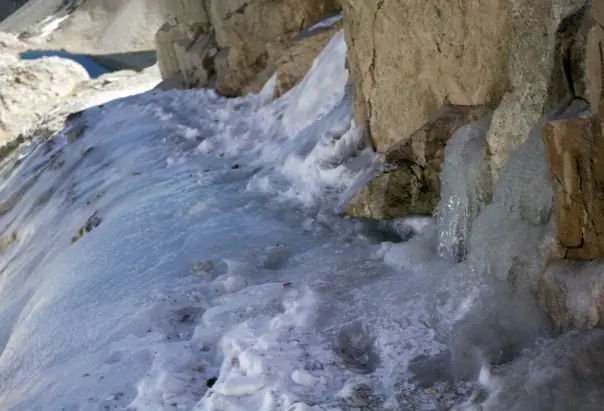 Gcnak / CC BY-SA 3.0Acclimatization hike to Lone Pine Lake
Easy leg · gain elevation gently · HikeWalk the lower Mount Whitney Trail toward Lone Pine Lake as an easy acclimatization leg, or head north to Bishop for higher trailheads. The goal is to gain elevation gently and sleep as high as you comfortably can the night before summit day. Hydrate hard and eat well.
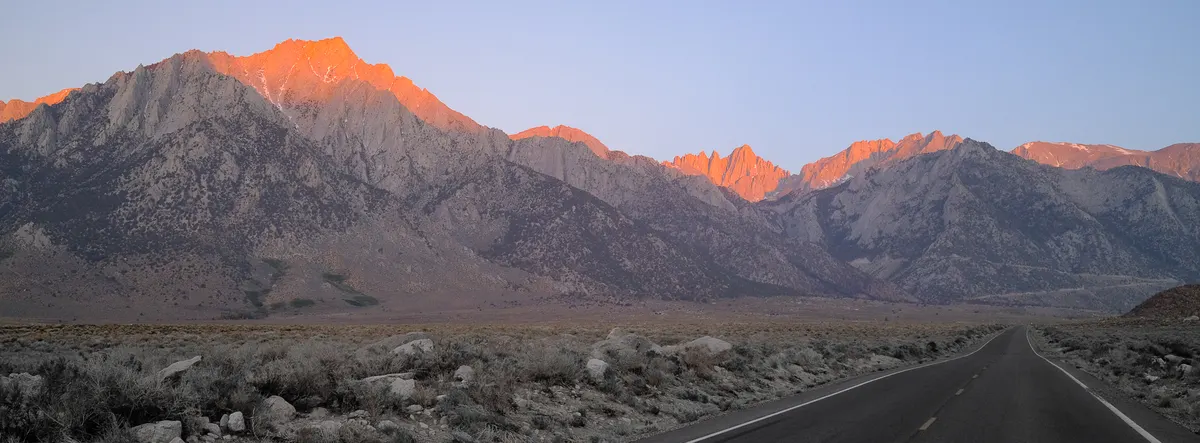 Stay in Lone Pine
Classic Whitney base · book ahead · lodgeBase in Lone Pine, the classic gateway at the foot of the road up to Whitney Portal. Rooms fill fast in summer once permits are awarded, so book ahead. Bishop, about an hour north, is a larger alternative with more lodging and higher acclimatization trailheads nearby.
The climb · Whitney Portal, the 99 switchbacks & the summit
This is summit day. Begin with an alpine start well before dawn from Whitney Portal (8,360 ft) to put time in the bank and be off the high ridges before afternoon thunderstorms build. The trail climbs steadily past Lone Pine Lake, Mirror Lake, and Trailside Meadow up to Trail Camp (about 6 miles, ~12,000 ft), the last reliable water and the staging point for the big climb.
Not the order you want? Drag a stop, or use the arrows beside it. Stops move between days too.
- Alpine start from Whitney Portal
8,360 ft · before dawn · HikeBegin your alpine start well before dawn from Whitney Portal at 8,360 feet to put time in the bank and be off the high ridges before afternoon thunderstorms build. The trail climbs steadily past Lone Pine Lake and Mirror Lake toward the high country.
- Mark and Jan Rice / CC BY-SA 3.0Mirror Lake & Trail Camp
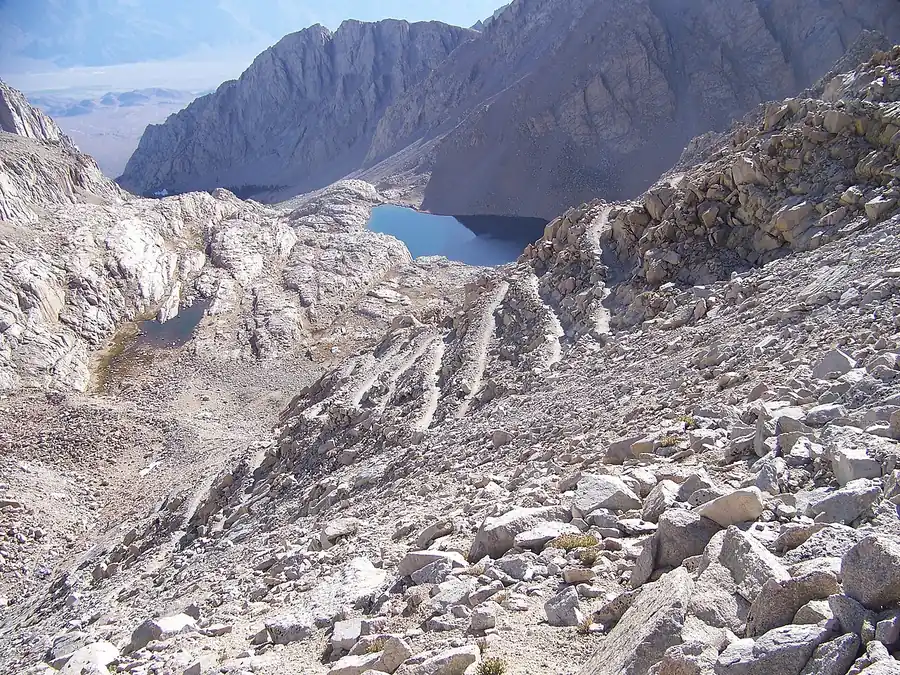
~6 mi · ~12,000 ft · last water · ViewpointClimb past Mirror Lake and Trailside Meadow up to Trail Camp at about 6 miles and roughly 12,000 feet, the last reliable water on the route and the staging point for the big climb. Filter and carry everything you need here, because there is no water above on the switchbacks.
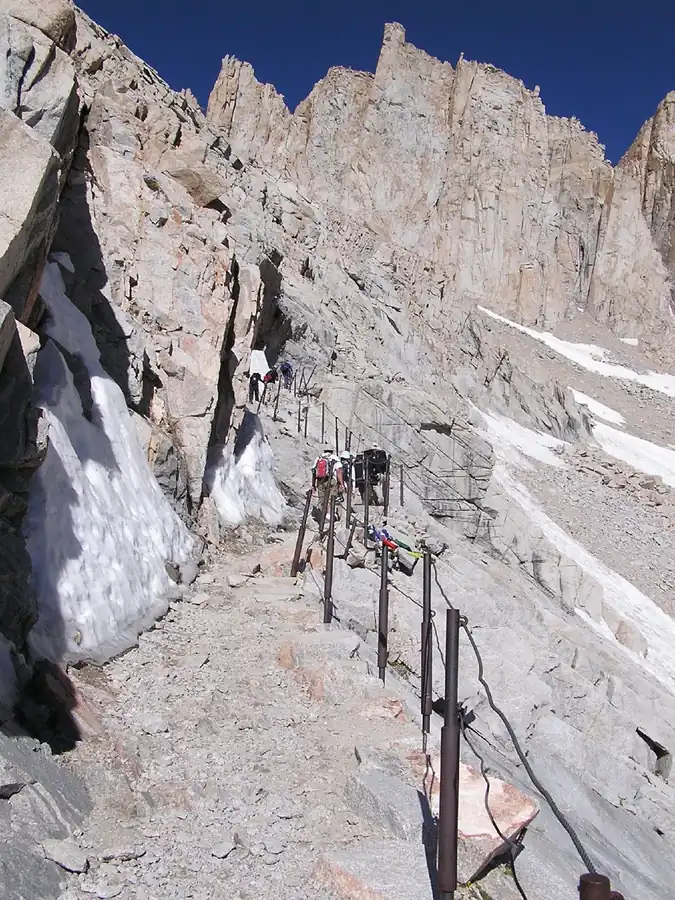
- The 99 switchbacks to Trail Crest
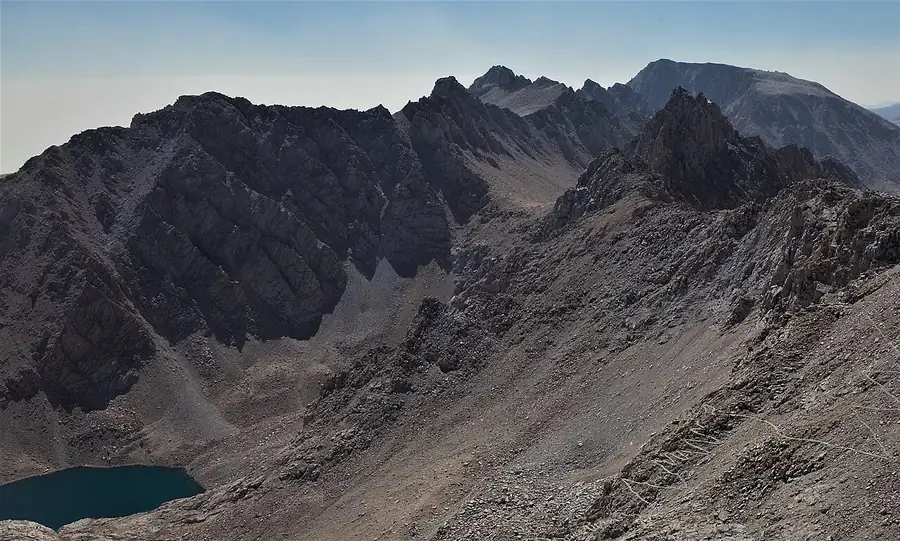
~13,600 ft · into Sequoia NP · HikeAbove Trail Camp come the legendary 99 switchbacks, a relentless set of turns climbing to Trail Crest at about 13,600 feet, where you cross into Sequoia National Park near the John Muir Trail junction. This is the crux of the climb and where the altitude is felt most, so pace yourself and drink steadily.
- Peretz Partensky from / CC BY-SA 2.0Mount Whitney summit
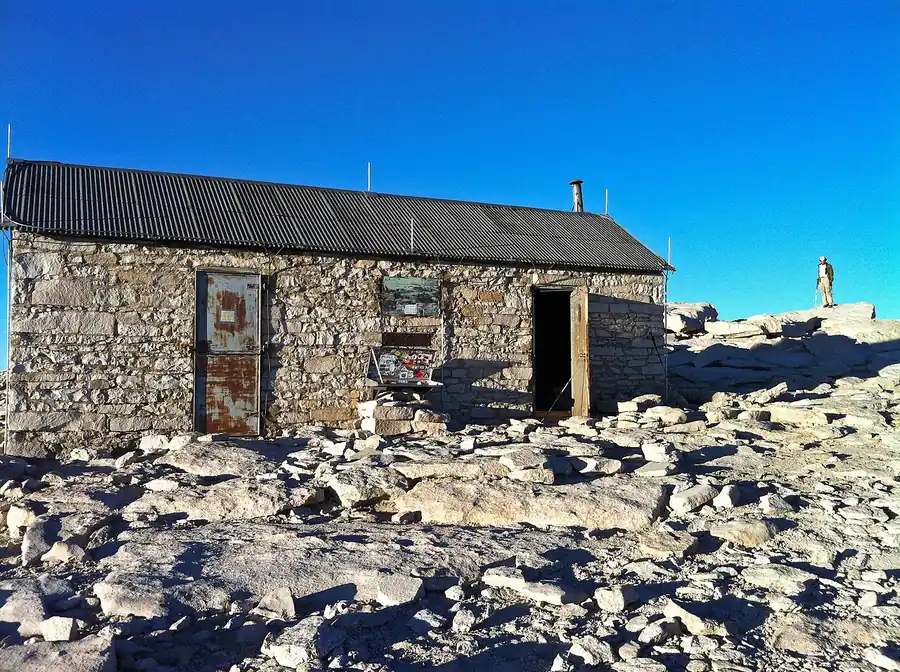
14,505 ft · highest in the lower 48 · ViewpointFrom Trail Crest a rocky traverse leads to the 14,505-foot summit of Mount Whitney, the highest peak in the contiguous US, with its stone shelter hut. Soak it in, then turn around with plenty of daylight: the descent of the full ~22-mile round trip is long, and most of the day's risk is on the way down when you are tired.
- Second night in Lone Pine
Back down the Portal Road · same base · lodgeAfter a car-to-car summit day you drive the 12 miles back down the Whitney Portal Road to the same room in Lone Pine. Book both nights together so you are not packing up the morning of the climb.
Overnight option, recovery & getting home
If you split the climb into a 2-day overnight rather than one big day, this is where it pays off. With an overnight permit you camp partway up, most commonly at Outpost Camp (about 3.8 miles in) or Trail Camp (about 6 miles in), summit on a fresh pair of legs the next morning, and walk the rest of the way out. Splitting the elevation also gives your body more time to adjust, which helps with altitude on the highest peak in the lower 48.
Not the order you want? Drag a stop, or use the arrows beside it. Stops move between days too.
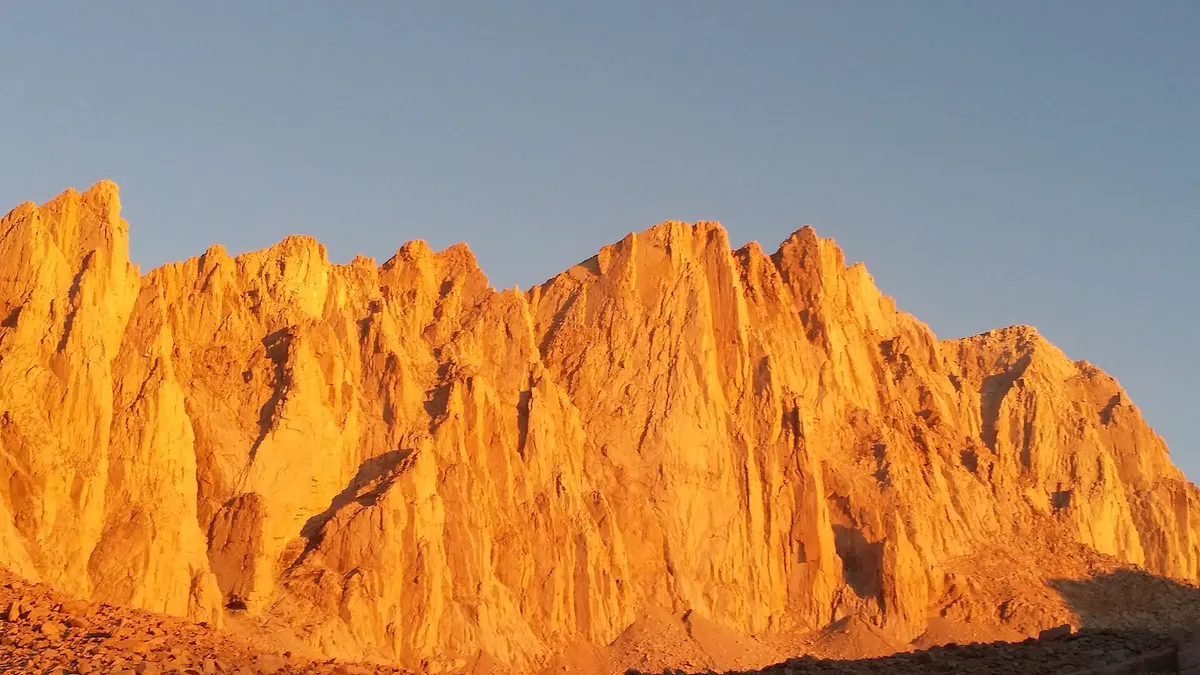 Overnight camp option · Outpost or Trail Camp
~3.8 mi or ~6 mi · overnight permit · lodgeIf you split the climb into a 2-day overnight, camp partway up with an overnight permit, most commonly at Outpost Camp (about 3.8 miles in) or Trail Camp (about 6 miles in). You summit fresh the next morning and the extra night high helps your body acclimatize. A bear canister is required and campfires are not allowed.
 Justin.Johnsen / CC BY-SA 3.0Recover in Lone Pine & the Alabama Hills
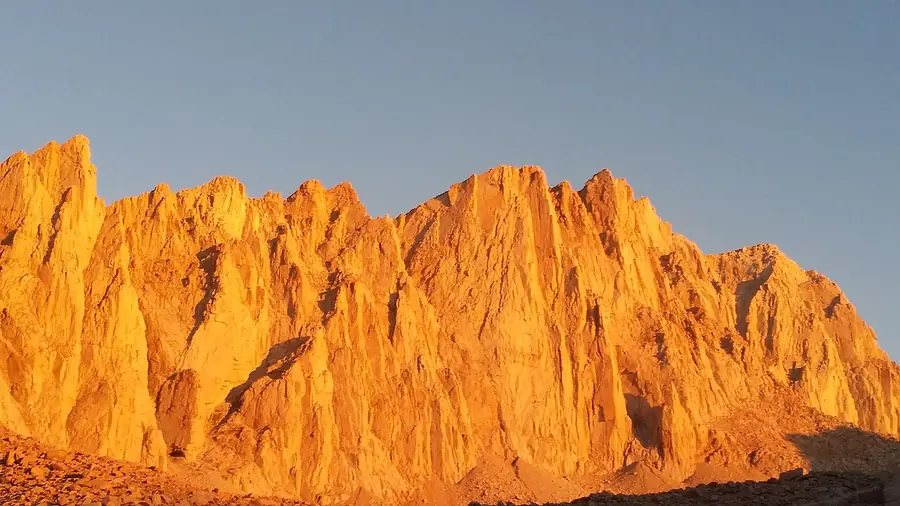
Rest, refuel & take in the crest · ViewpointWhether you went car-to-car or camped high, plan a recovery morning before the long drive home. Refuel in Lone Pine, soak in the views of the Sierra crest you just stood on, and consider a relaxed Eastern Sierra detour like the Alabama Hills with their granite arches and Whitney backdrop.
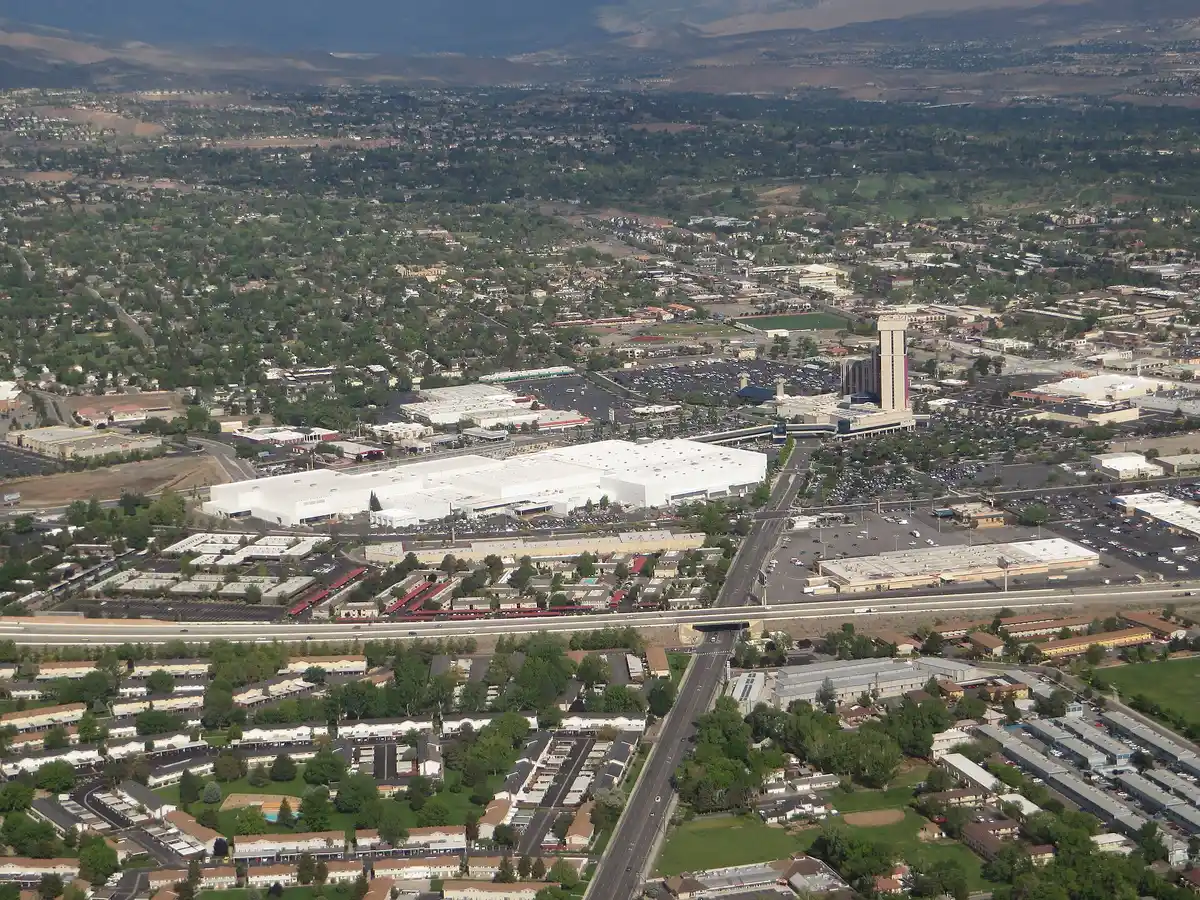 Getting home: Reno, Las Vegas or Mammoth
RNO or LAS ~3.5 to 4 hr · MMH closer · DriveFrom Lone Pine it is roughly 3.5 to 4 hours back to Reno (RNO) or Las Vegas (LAS), with Mammoth Yosemite (MMH) being a closer regional option. Fuel up and start the long high-desert drive out with daylight to spare. Cell service is patchy in stretches, so keep your route downloaded offline.
Book the 2 nights
Beds near the trailheads are the one thing on this trip that genuinely runs out. Everything else can be decided later.
Tell us your dates and we will do the checking. We find what is still open near each trailhead and email you this plan back with a booking link for each night. Nothing is charged and you decide at the end.
Request to bookMt. Whitney opens on its own calendar
Day and overnight Mt. Whitney lottery.
| Permit | Required: Mt. Whitney Official page |
|---|---|
| Application window | February 1 to March 1 lottery, results March 15 |
| Odds of drawing | Hard on weekends, easier midweek |
| If your application is denied | Apply for weekday dates, or grab unclaimed walk-up permits at the Lone Pine ranger station. |
| Trip starts from | Lone Pine, CA, flying into Las Vegas (LAS) |
What to pack for Mount Whitney
Built from this route, not a generic list. Every line says why it is here.
On every day of this trip
On your feet
Because you are sleeping out 1 night
For the 1 night under a roof
For the driving days
Specific to Mount Whitney
What we actually learned on the mountain.
You need a permit, and it is competitive
A permit is required for the Mount Whitney Trail, day hike or overnight. It is awarded through the Mount Whitney Lottery on recreation.gov, with the main application window from February to mid-March. Demand far exceeds supply, so be flexible on dates and apply for weekdays and shoulder-season entries to improve your odds.
Acclimatize before you climb
Altitude sickness is the number one reason hikers fail or get hurt on Whitney. Spend a night or two in Lone Pine or Bishop and do a high acclimatization hike beforehand. Ascend gradually, hydrate, and know the warning signs of altitude illness so you can turn around if needed.
Start before dawn, finish before storms
Make an alpine start hours before sunrise so you summit by midday and descend before afternoon thunderstorms build over the crest. Lightning on the exposed summit ridge and Trail Crest is a real danger in summer. Turn around by a set time even if the summit is close.
Carry water and filter at Trail Camp
Trail Camp at about 12,000 feet is the last reliable water on the route. Filter and carry everything you need before the 99 switchbacks. Drink steadily all day, because dehydration at altitude makes altitude sickness worse.
Bear canister required, no campfires
A bear canister is required to store all food and scented items on the Mount Whitney Trail, and campfires are not allowed anywhere on the route. Pack out all trash and use the provided WAG bags for human waste. Rent or buy a canister in Lone Pine or Bishop.
Go July through September
Summer is the only window the trail is a non-technical hike. Outside roughly July to September it holds snow and ice and becomes a mountaineering route requiring an ice axe, crampons, and the skills to use them. Check current conditions with the Inyo National Forest before you go.
Mount Whitney: questions before you go
Mount Whitney trail: the questions people ask most.
The Mount Whitney Trail from Whitney Portal is roughly 22 miles round trip with about 6,100 feet of elevation gain, climbing from the 8,360-foot trailhead to the 14,505-foot summit. It passes Lone Pine Lake, Mirror Lake, Trail Camp, the famous 99 switchbacks, and Trail Crest before the final summit traverse.
Yes. A permit is required for both day hikes and overnight trips on the Mount Whitney Trail. Permits are awarded through the Mount Whitney Lottery on recreation.gov, with the main application window from February to mid-March. The lottery is very competitive, so be flexible on your dates and apply early.
Yes, many people summit Mount Whitney as a single very long day hike, starting well before dawn and covering the full ~22-mile round trip with about 6,100 feet of gain. Others split it into a 2-day overnight, camping at Outpost Camp or Trail Camp to summit fresh and acclimatize. Either way you still need a permit through the lottery.
July through September is the best window, when the Mount Whitney Trail is typically a non-technical hike. Outside that window the trail holds snow and ice and becomes a mountaineering route that requires an ice axe, crampons, and the skills to use them. Always check current conditions with the Inyo National Forest before your trip.
It is strenuous. The combination of ~22 miles round trip, about 6,100 feet of gain, the 99 switchbacks, and thin air above 14,000 feet makes Mount Whitney a serious effort even for fit hikers. Altitude is the main difficulty, so acclimatizing beforehand and pacing yourself are far more important than raw speed.
The 99 switchbacks are a relentless set of turns on the Mount Whitney Trail above Trail Camp, climbing from about 12,000 feet up to Trail Crest at roughly 13,600 feet. They are the crux of the climb and where many hikers feel the altitude most, so pace yourself, drink, and take it one switchback at a time.
Lone Pine, California is the classic base for the Mount Whitney Trail, at the foot of the road up to Whitney Portal. Bishop, about an hour north, is a larger town with more lodging and higher acclimatization trailheads nearby. Book early, because rooms fill fast in summer once permits are awarded.
The trailhead is at Whitney Portal above Lone Pine, California, in the Inyo National Forest. The nearest major airports are Reno (RNO) and Las Vegas (LAS), each about 3.5 to 4 hours away by car, with Mammoth Yosemite (MMH) being a closer regional option. Most hikers base in Lone Pine and drive up to the portal.
Plan on carrying at least 4 liters, plus electrolytes to replace what you lose sweating at altitude. The climb gains roughly 6,100 feet to 14,505 feet with long exposed stretches, and the 99 switchbacks and summit ridge have no water, so hikers who under-pack run dry right where it hurts most. Trail Camp at about 12,000 feet is the last reliable source, so filter and top off there, and drink steadily all day, because dehydration makes altitude sickness worse.
Application window: February 1 to March 1 lottery, results March 15.
Hard on weekends, easier midweek.
Apply for weekday dates, or grab unclaimed walk-up permits at the Lone Pine ranger station.
Lone Pine, CA is the gateway town, flying into Las Vegas (LAS).
Yes. Tell us your dates and we check what is still open for the plan on this page, then send it back with a booking link for each night and the total. Nothing is charged and nothing is held, and you pay the normal rate.
Pick how you want to go.
Same 3-day route. Same 7 stops.
- 2 nights, Whitney Portal Campground, at the trailhead
- $68
- Rental car, 3 days
- $195
- Gas, about 291 miles
- $60
- 2 nights, a room in Lone Pine
- from $290
- Rental car, 3 days
- $195
- Gas, about 291 miles
- $60
- A private local guide, rooms and campsites booked
- Included
- Airport pickup and every drive
- Included
- Park, permit and campsite fees paid
- Included
- All the gear and the trail meals
- Included
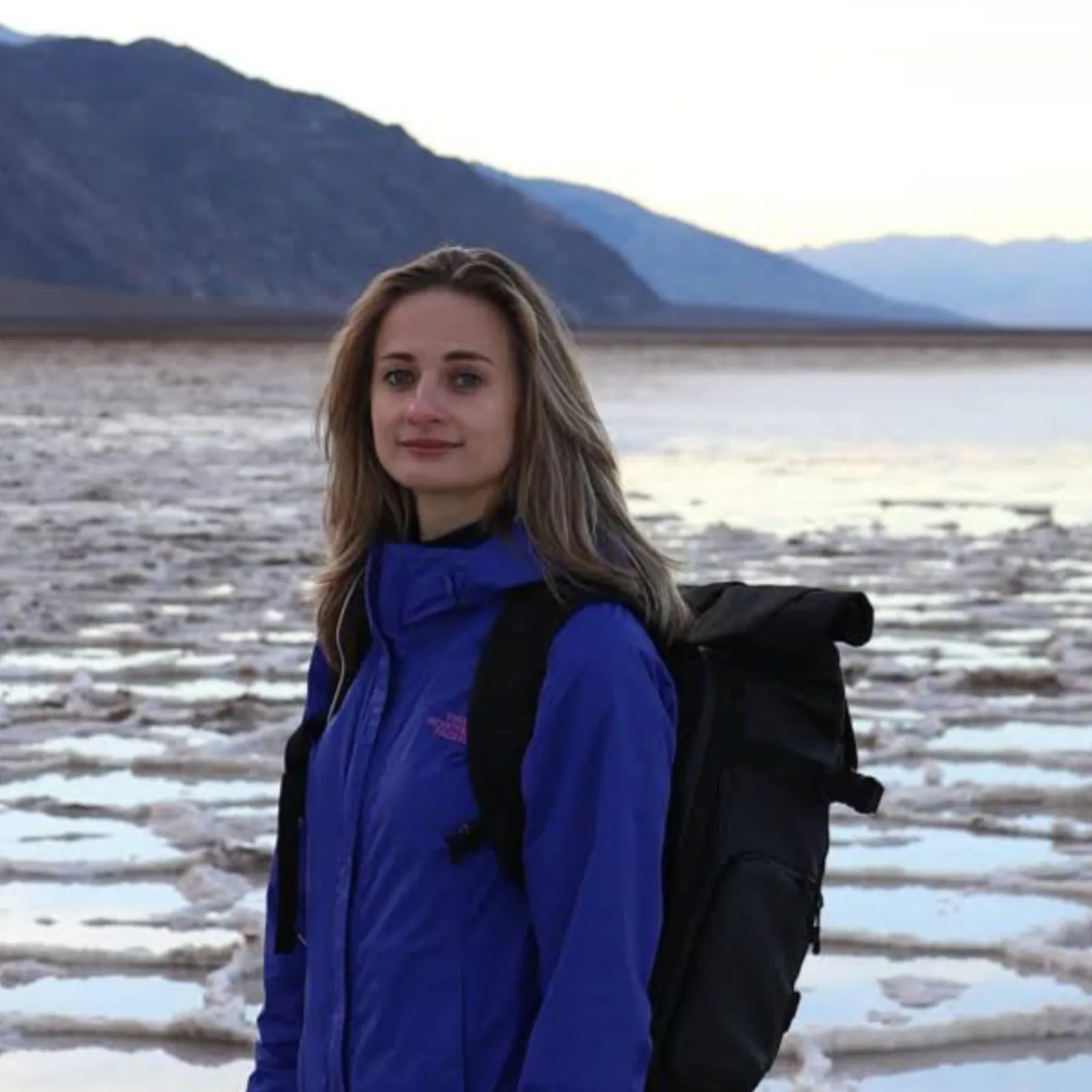
Written and walked by Yulia Vasilyeva · Co-founder · Lead planner and guide
Three years leading guided hikes in the Pacific Northwest, rated 5.0 by 20+ verified guests, and she builds every custom itinerary herself. Based in Seattle.
Last checked September 2026
You might also love these
Other itineraries near this one.
Kings Canyon Backpacking: A 4-Day Sierra Itinerary
Four days backpacking the classic Rae Lakes Loop in Kings Canyon National Park: ~41 miles from Roads End over Glen Pass at 11,978 feet,…
Sequoia National Park Itinerary: 2 or 3 Days, Kings Canyon Included
The Giant Forest and Moro Rock, the Kings Canyon Scenic Byway to Roads End, and Mineral King as an optional third day, all from one base…
Eastern Sierra 10-Day Loop: Mammoth Lakes Backpacking Trip
A 10-day Eastern Sierra itinerary from Mammoth Lakes: a 3-day Minaret Lake backpacking trip, plus Devils Postpile, Mono Lake tufa, the…
Guides for this tripBest Time to Hike Mount WhitneyLone Pine Camping Near Mount WhitneyMount Whitney Permit LotterySequoia National Park Day Trip
What adventurers say about us.
All reviews are from verified guests. ★★★★★ 5.0 average from 20+ bookings.
"Felt like going out with a really knowledgeable friend who just happens to know everything about the area. No awkward tour-guide energy, just a magnificent day."
"Yulia is an incredible guide. She knew every trail, every viewpoint, and exactly how to pace the day for our group. The photos she took of us were stunning. 100% booking again."
"I was visiting Seattle solo and this was the best decision I made on the trip. Yulia picked me up, had snacks, and took us to a trail I never would have found on my own. Absolute must-do."
"We did this as a couple's trip and it was perfect. Yulia adapted everything to us, our pace, our interests, our photo obsession. The mountain views were unreal."
"Phenomenal experience. Yulia has deep local knowledge and a real passion for the outdoors. She went out of her way to show us the hidden gems tourists never see. Will remember this forever."
"I've done a few guided hikes and this was by far the best. Yulia is warm, funny, and genuinely expert. The trail she chose had the most insane wildflower bloom, we got so lucky."
Fees, reservation windows, shuttle dates and trail closures are planning estimates. Confirm hours, road status and any reservations with the land manager before you go.
What other travelers are saying
Be the first to leave a tip or question for the next traveler.
Was this helpful?
One tap. It goes straight to Yulia and Margarita.
You can't hike it if you can't get the permit.
The best hikes in America run on lotteries that open once a year and sell out in minutes. Every trail runs on its own calendar. Pick the ones you want and we do the watching.
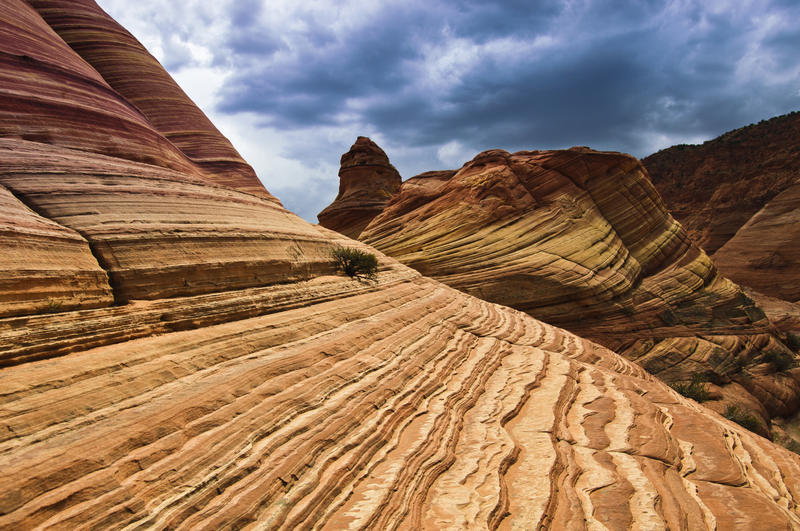 The WaveCoyote Buttes North · Arizona / UtahPermitLotterybrutal odds
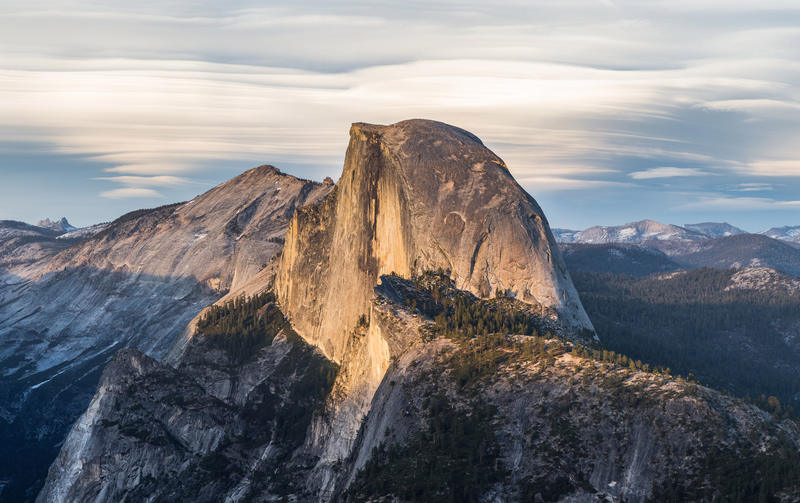 Half Dome CablesYosemite NP · CaliforniaPermitOpens Mar 1fair odds
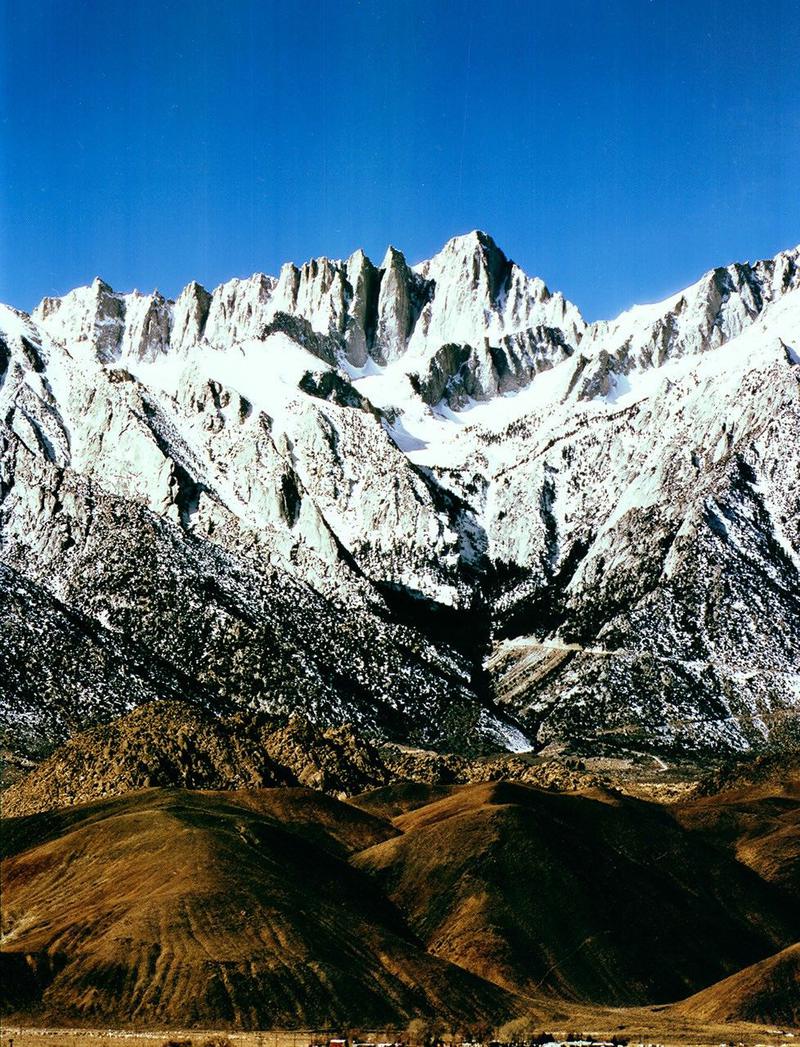 Mt. WhitneyInyo NF · CaliforniaPermitOpens Feb 1tough odds
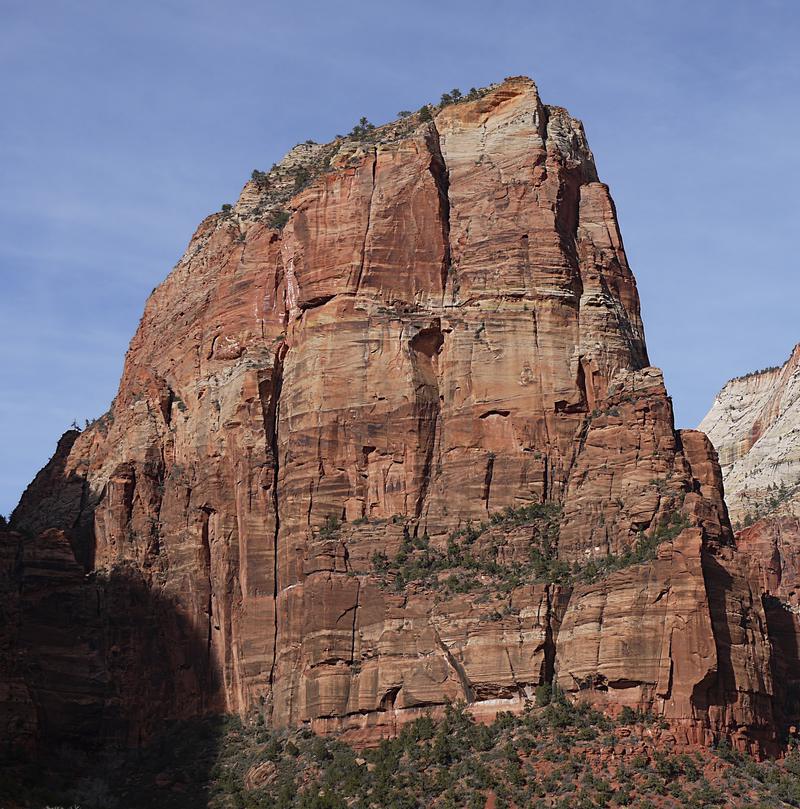 Angels LandingZion NP · UtahPermitLotterytough odds
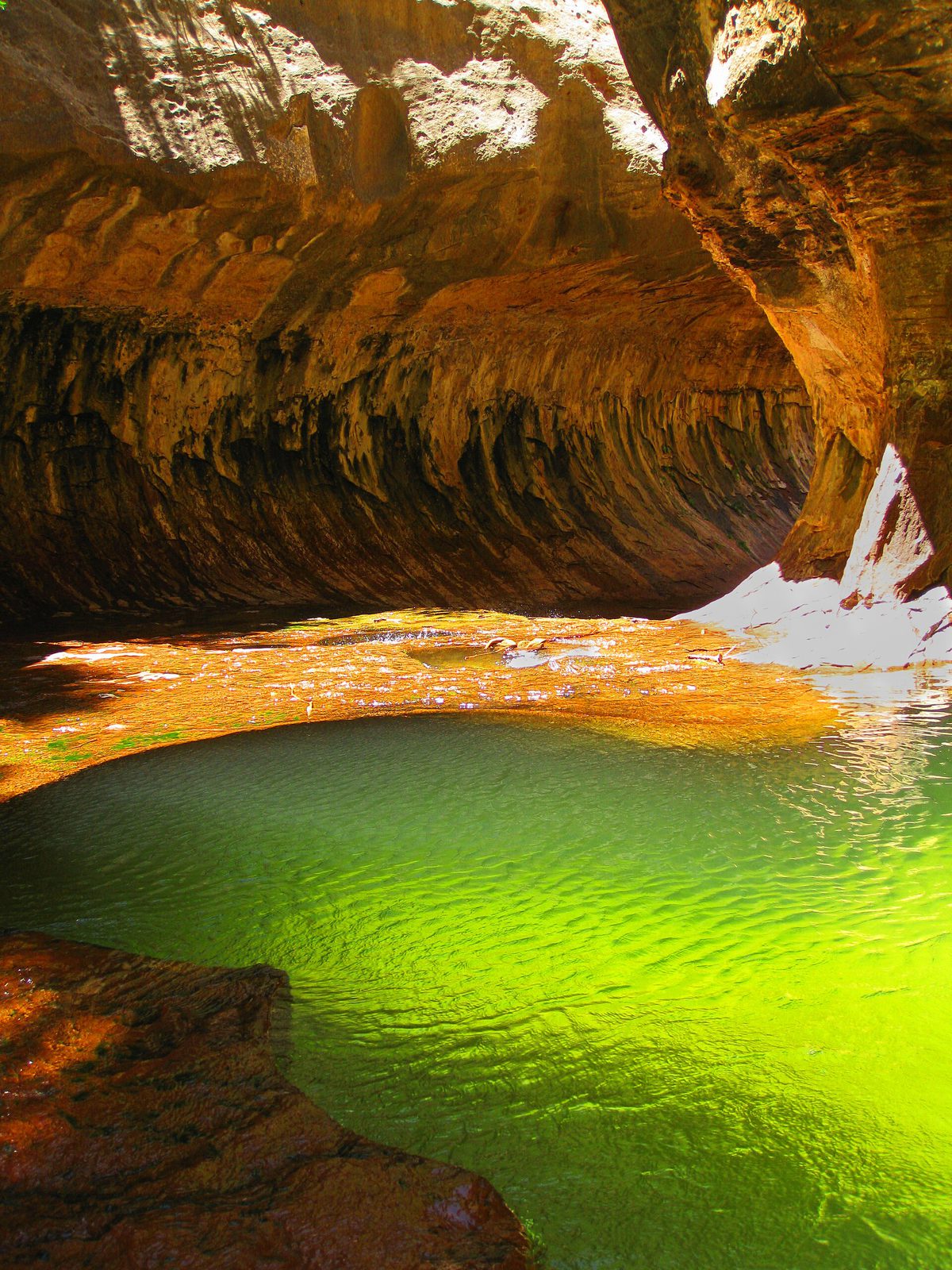 The SubwayZion NP · UtahPermitLotterytough odds
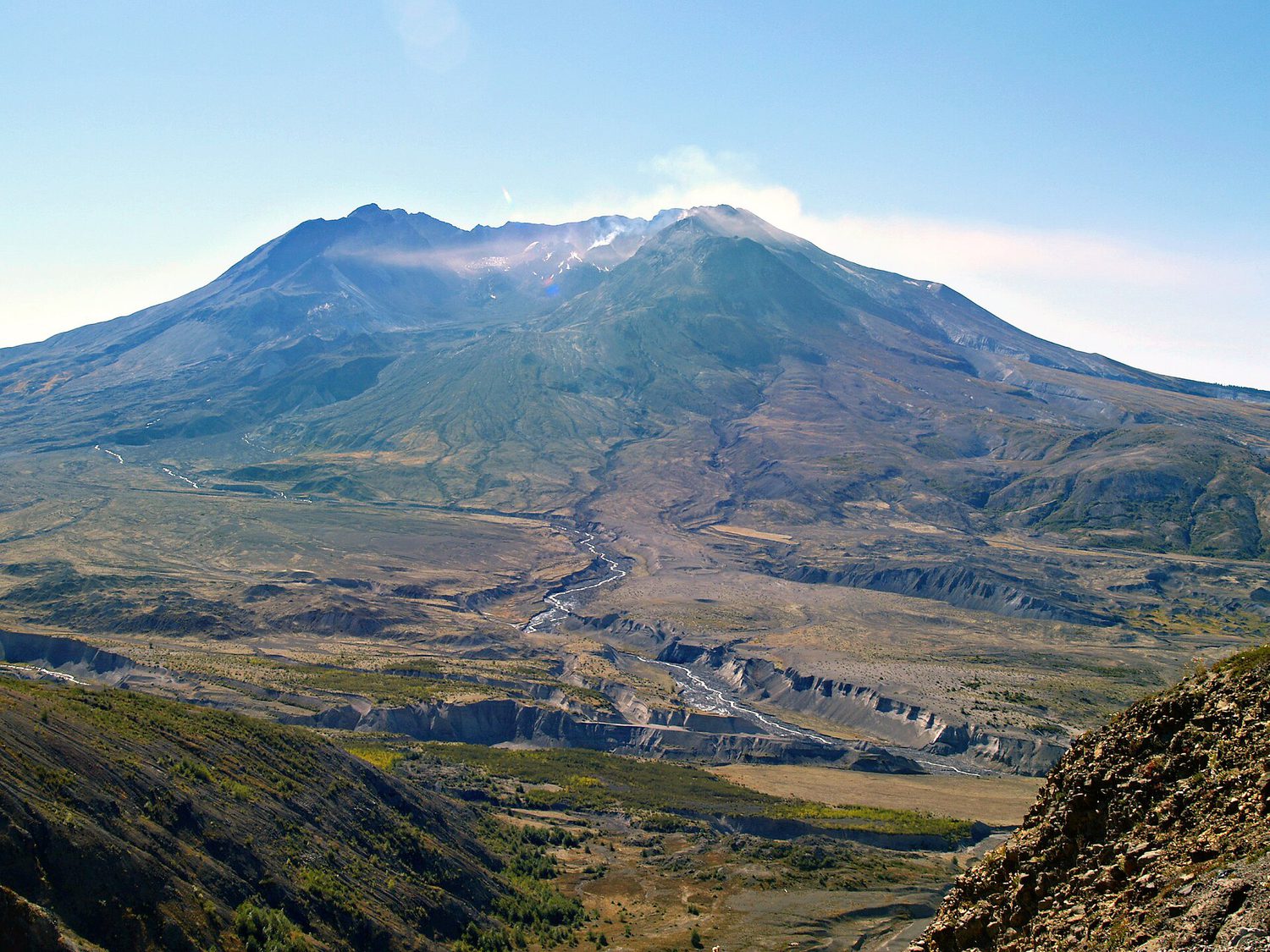 Mount St. Helens Summit ClimbGifford Pinchot NF · WashingtonPermitReservationtough odds
How it works
- An email the morning each window opens, never the day after.
- A 14-day heads-up so you can line up your group and dates.
- Win odds and a ranked backup plan for every trail you pick.
Didn't win? We keep watching. We check recreation.gov every day for The Enchantments, Half Dome and Angels Landing, and email you the moment a sold-out date frees up. Cancellations are the second chance most people never hear about.