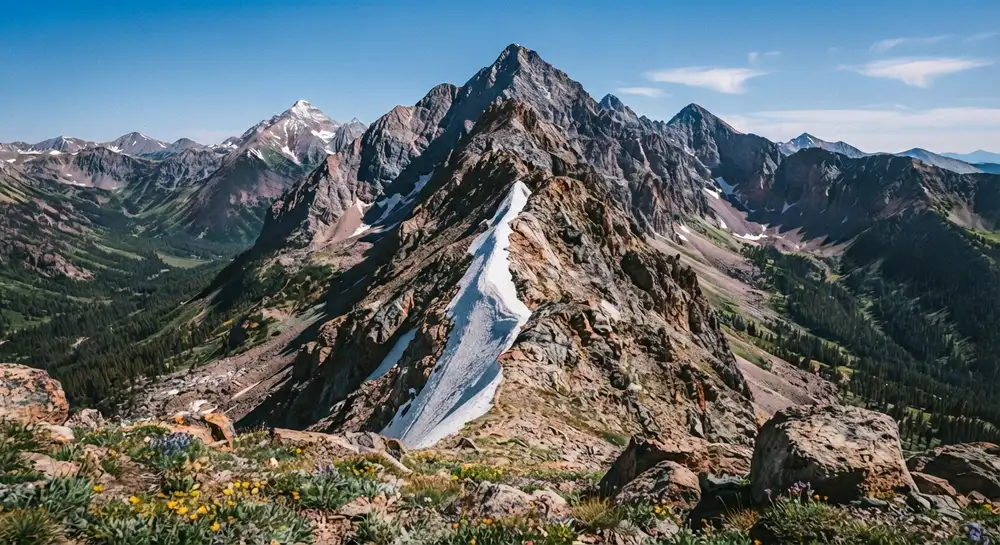
Where It Is
Near the top of the Lavender Col, the long scree gully that forms the standard route on Mount Sneffels, the gully narrows and a distinct V-shaped notch appears in the rock on your left. That notch is the crux of the mountain and the point at which the day changes character.
What You Actually Do
You climb up to the notch, pass through it and exit west, then scramble a short rock step onto the upper slopes and the summit ridge. It is Class 3: you are using your hands, there is exposure beneath you, and it is over in a few moves.
That brevity is precisely why it catches people out. It does not look like enough to deserve respect, and it is behind you quickly, so the guard drops on the way back through it.
Judging Whether It Is For You
Class 3 means hands-on climbing where a fall would be serious. If you have scrambled before and are comfortable moving over rock with air below you, the V-Notch is short and manageable. If you have not, this is not the mountain to find out on, and a guide out of Ouray costs very little set against the alternative.
An honest test: stand at the bottom of the col and watch a party go through the notch. If what you see looks reasonable, carry on. If it looks alarming, turning around is a perfectly good outcome and the mountain will still be here.
Coming Back Down Through It
Downclimbing the notch is harder than climbing it, as downclimbing almost always is. You cannot see your feet as well and you are tired. Face into the rock rather than out, take it slowly, and do not let anyone in the party rush this section because the summit is already in the bag.
The Rock Is Not All Solid
Test holds before you weight them. This is a mountain built of loose rock, and while the notch is more solid than the gully below it, it is not uniformly trustworthy. Wear a helmet, both for what you might dislodge and for what parties above you will.
How You Get There
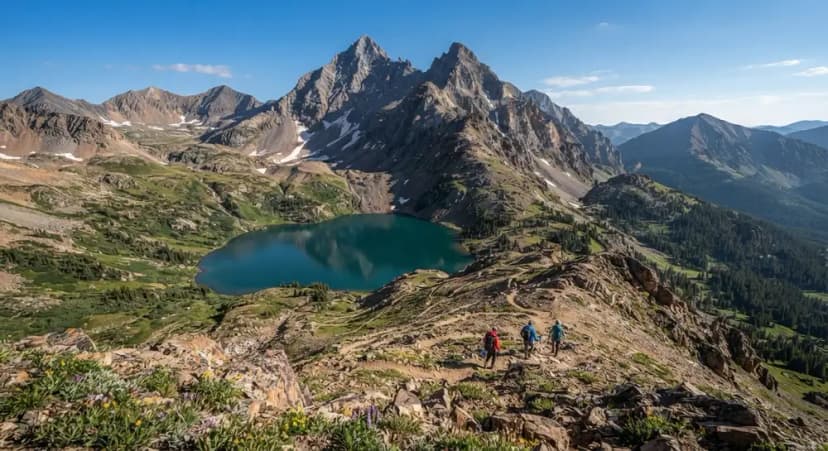
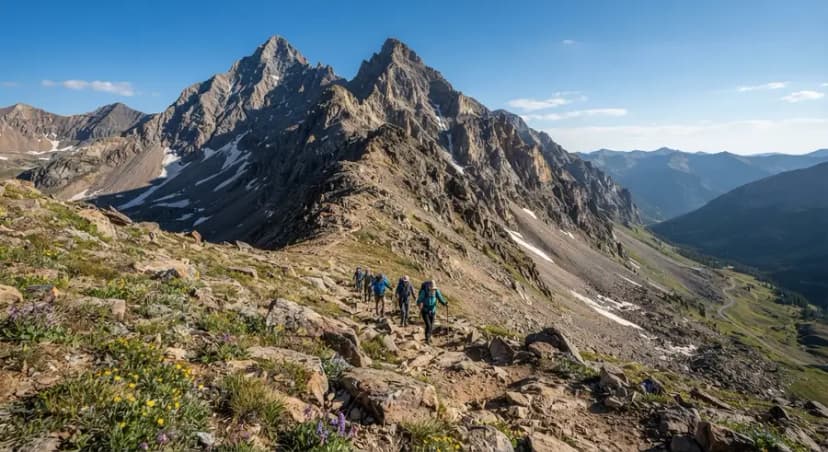
From the upper trailhead the route climbs a broad gully of loose rock and scree to Lavender Col, the saddle on the east ridge between Mount Sneffels and Kismet Peak. At the col you turn left, to the west, and climb a couloir. The V-Notch sits at the top of that couloir, and it is the crux of the whole mountain.
It is a short section. That is worth saying, because the reputation can make people expect a pitch of climbing. It is a Class 3 scramble, and the difficulty is concentrated into a few moves.
The Mistake People Make
The single most common error on Sneffels is exiting the notch in the wrong direction. Go left, to the west, through the notch. Parties that push straight up or drift the other way end up on steeper, looser, more exposed ground with no good way to protect themselves, and that is where an ordinary day turns into a serious one.
If the ground you are on suddenly feels harder than Class 3, you are off route. The correct line does not require you to commit to anything desperate. Downclimb and look again.
Coming Back Down Through It
Downclimbing the notch is harder than climbing it. The holds are beneath you where you cannot see them, and you are doing it with the fatigue of the summit in your legs.
The fix is free and takes ten seconds: on the way up, turn around at the top of the notch and look back down at what you just climbed. Note where your feet went. That memory is worth more than any amount of reading about it afterwards.
Gear and Etiquette
Wear a helmet. The couloir below the notch funnels anything that gets knocked loose straight onto whoever is beneath, and on a summer weekend somebody usually is.
Most parties climb this without a rope. If a rope makes your group comfortable, bring it, but be honest about whether you can build an anchor in rock this loose. The more useful precaution for nearly everyone is spacing: do not stack your party vertically in the couloir, and let the group above clear the notch before you start up it.
The V-Notch on Mount Sneffels: The Class 3 Crux FAQs
It is the Class 3 crux of the standard route, a distinct V-shaped gap in the rock near the top of the Lavender Col. You climb up to it, pass through and exit west, then scramble a short rock step to reach the upper slopes and the summit ridge.
Class 3, meaning hands-on scrambling with exposure where a fall would be serious. It is only a few moves and it is over quickly, which is exactly why it catches people out. Comfortable scramblers find it short and manageable; anyone who has never scrambled should not be learning here.
Yes. Downclimbing is harder than climbing almost anywhere, and here you also cannot see your feet as well and you are tired from the summit. Face into the rock, go slowly, and do not let the group rush it because the summit is already done.
Not on the standard route, it is the way through to the summit. The alternative is the Southwest Ridge, which offers better rock but is longer, more exposed and more sustained, so it is a harder day rather than an easier way round.
Left, to the west. This is the most common route-finding error on the mountain. Going the wrong way puts you on steeper, looser, more exposed ground. If the climbing suddenly feels harder than Class 3, you are off route.
Most parties climb it without one. Building a reliable anchor in rock this loose is difficult, so for most people the more useful precaution is a helmet and good party spacing rather than a rope.
Yes. The worked day-by-day plan is Mt Sneffels Hike: A 3-Day Colorado 14er Itinerary (3 Days), with the permits, the stays and the drive times already sorted. Tell us your dates and we will put it together for you and confirm what is genuinely open on those days. Asking is free: no card, no deposit, and nothing is held until you say yes.