Why Lightning Is Hiking's Most Underestimated Hazard
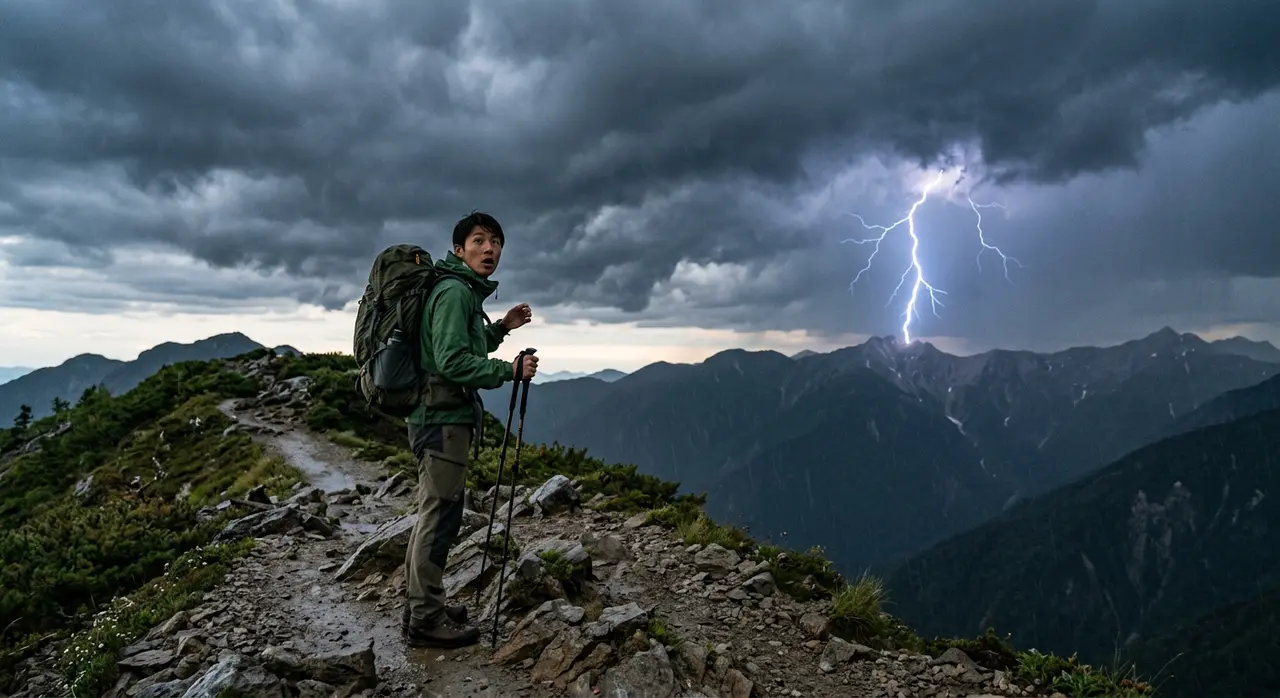
Lightning kills roughly 20 people and injures 300 in the United States every year, and hikers, particularly those on exposed ridgelines and above treeline, account for a disproportionate share of those casualties. The Rocky Mountains see afternoon thunderstorms so reliably in July and August that experienced guides simply don't allow clients above 13,000 feet after noon. The Appalachians, the Cascades, and the Sierra Nevada all have their own storm patterns.
Most lightning deaths are preventable. They happen because hikers don't check forecasts, start too late, ignore building cumulus clouds, or don't know what position to take when a storm overtakes them. The protocol isn't complicated, but it requires learning it before you're standing on an exposed ridge with a 90-minute drive back to the trailhead.
Understand When and Where Storms Develop
In the mountain West, the pattern is nearly clockwork in summer: clear mornings, cumulus clouds building by 10–11am, thunderstorms firing by early afternoon (12–3pm), often clearing by late afternoon. This is driven by solar heating of the terrain and moisture from the Gulf of Mexico and Pacific. On many high routes, the rule is simple: be below treeline or off the summit by noon.
In the Southeast, storm patterns are less predictable but follow a similar diurnal cycle, afternoon heating generates pop-up thunderstorms that can develop rapidly. Unlike the Rockies, where you can often see a storm building for an hour before it reaches you, southeastern storms can appear and intensify in 20–30 minutes. The Smoky Mountains get over 80 inches of rain per year, much of it in afternoon convective storms.
The Pacific Northwest is different again, the primary risk is frontal systems (large storms that move through from the Pacific), which can last days and aren't tied to a time of day. Check multi-day forecasts before backcountry trips in the Cascades, not just the morning weather app.
Check the Forecast and Plan Your Timing
Before any hike where you'll be exposed, above treeline, on a ridgeline, or on a summit, check the afternoon thunderstorm probability. Weather.gov, the Mountain Forecast (mountain-forecast.com), and Windy.com all provide reliable forecasts with elevation-specific data.
Anything above a 30% thunderstorm probability is worth planning around. A 50%+ probability on a route that puts you above treeline at 2pm is a no-go. Check the forecast the evening before and again the morning of, mountain weather changes faster than coastal forecasts.
Plan your timing around the storm window. If storms typically fire at 1pm, you need to be below treeline or off exposed terrain by 11:30am to have a margin. Start early: a 5am trailhead start is normal for serious alpine routes in Colorado. Turnaround time is non-negotiable, if you haven't reached your objective by your planned turnaround, turn around anyway.
How to Read the Sky
Learning to read cumulus development is the most valuable weather skill a hiker can have. Start watching the clouds from the moment you begin hiking:
Flat-bottomed cumulus (fair weather cumulus): Puffy white clouds with defined edges and flat bases. Normal morning clouds that usually burn off or stay small on stable days. Watch whether they're growing.
Growing cumulus: When cumulus clouds start building vertically, getting taller faster than they spread, convective activity is increasing. The tops become more cauliflower-like and the bases get darker. This is your warning sign. You have roughly 30–60 minutes before lightning is possible.
Cumulonimbus (thunderhead): The massive anvil-shaped cloud with a flat, anvil-shaped top that indicates a mature thunderstorm with lightning. When you see this shape, lightning is already occurring in the storm and could strike miles from the visible rain shaft.
Count the seconds between a lightning flash and the thunder that follows. Divide by five to get the distance in miles. At three miles (15 seconds), you should already be seeking shelter. At one mile (5 seconds), lightning is imminent. Don't wait for close lightning before you move.
The Safest Places to Take Cover
Understanding what's safe (and not safe) to shelter near is critical.
Avoid: High ground, exposed ridges, summits, lone trees or the tallest tree in an open area, shallow caves and rock overhangs (ground current travels into these), standing in or near water, open meadows where you're the tallest object, metal objects like trekking poles and external frame packs (though metal doesn't attract lightning, it conducts it better if you're struck).
Seek: A low-lying area with uniformly low vegetation, you want to be shorter than your surroundings without being in a depression that will collect ground current. A grove of similarly-height trees on low ground is better than the edge of a forest. A substantial building or hardtop vehicle is ideal (lightning flows through the metal frame and into the ground, not through the passengers).
On above-treeline terrain with no good shelter available, move off ridgelines and summits and descend into a drainage or valley. Put significant distance (hundreds of feet) between yourself and any high point. Avoid cliff bases where rockfall can be triggered by a strike and where ground current concentrates.
The Lightning Position of Last Resort
If you're caught in the open during an active electrical storm with no possibility of reaching shelter, use the lightning crouch. This is a position of last resort, it reduces your profile and minimizes ground contact, which matters because a substantial percentage of lightning casualties are from ground current, not direct strikes.
Crouch on the balls of your feet with your feet together. Wrap your arms around your knees and lower your head. Keep your heels together. Do not lie flat, lying flat maximizes your ground contact area and increases ground current risk. The crouch keeps most of your body off the ground while minimizing your height.
Put 50–100 feet between yourself and other hikers in your group. If lightning strikes one person, you don't want the whole group incapacitated. A cluster of people also creates a larger conductive target.
Put metal objects, trekking poles, external frame packs, ice axes, on the ground and move 50 feet away from them. The lightning won't specifically seek metal, but you don't want to be holding a conductor if a strike occurs nearby.
If Someone Is Struck by Lightning
Lightning strike victims are safe to touch, they carry no electrical charge after the strike. This is a common misconception that has cost lives because bystanders hesitated to provide first aid.
Check for breathing and pulse immediately. Lightning strike cardiac and respiratory arrest are the primary causes of death, and bystander CPR significantly improves survival rates. Call 911 (or activate your satellite SOS device) while someone starts CPR. Continue CPR until help arrives, lightning strike victims have been resuscitated after extended CPR efforts.
Move the victim only if they're in immediate danger of another strike or from secondary hazards (rockfall, rising water). Otherwise, treat any wounds, keep them warm, and wait for evacuation.
Real Risk by Location
Colorado's Front Range and San Juan Mountains are the highest lightning-density locations in the country for hikers. Fourteener climbers face a genuine risk on every summer ascent, which is why the entire Colorado mountain guiding community enforces a "no summit after noon" rule without exception.
The Smoky Mountains, Shenandoah, and the southern Appalachian ridges are exposed above treeline on open balds. Afternoon thunderstorms are frequent from May through September. Check forecasts before exposed ridge walks like Max Patch or Gregory Bald.
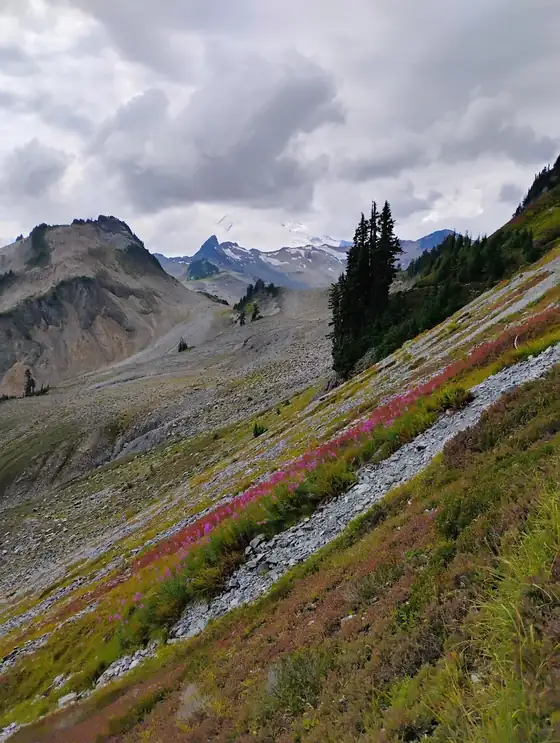
The Cascades have both alpine routes and long exposed ridgeline trails. The Pacific Crest Trail above treeline in Washington State can see rapid frontal storms in addition to afternoon convection. Know the difference between frontal storm approaches (building clouds from the west, dropping pressure, increasing wind) and local convection (building cumulus from heating above).
Lightning Safety for Hikers FAQs
The standard safety guidance is: if you can hear thunder, you're within range of lightning and should seek shelter immediately. Count seconds between flash and thunder, divide by 5 for miles. At three miles (15 seconds), begin moving to shelter. At one mile (5 seconds), lightning is very close and you should be in your safest available position.
No, especially not under the tallest tree in an area or a lone tree in the open. A direct strike on a tree sends current through the roots and into the ground, ground current can travel 50+ feet from the base. Shelter in a grove of similarly-sized trees that puts you lower than the canopy, not at the edge where you're most exposed.
Yes, put metal objects (trekking poles, ice axes, external frame packs) on the ground and move 50 feet away. Metal doesn't 'attract' lightning, but it conducts current better than your body, and you don't want to be holding a good conductor if a strike occurs nearby.
In the Colorado Rockies and similar ranges, thunderstorms typically fire between 12pm and 3pm in summer, driven by solar heating. Experienced alpine guides plan routes so clients are below treeline or off exposed terrain by 11:30am–noon. The pattern is reliable enough that the 'down by noon' rule is an industry standard in Colorado.
Yes, completely safe. Lightning strike victims carry no residual charge. Check for breathing and pulse immediately, lightning strike cardiac arrest is treatable with CPR. Call for help and start CPR if needed. Don't hesitate to touch the victim out of fear of electrical shock; that fear has cost lives.