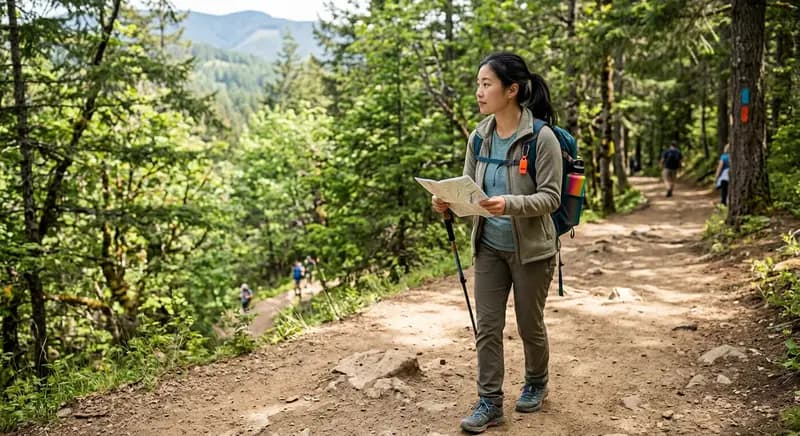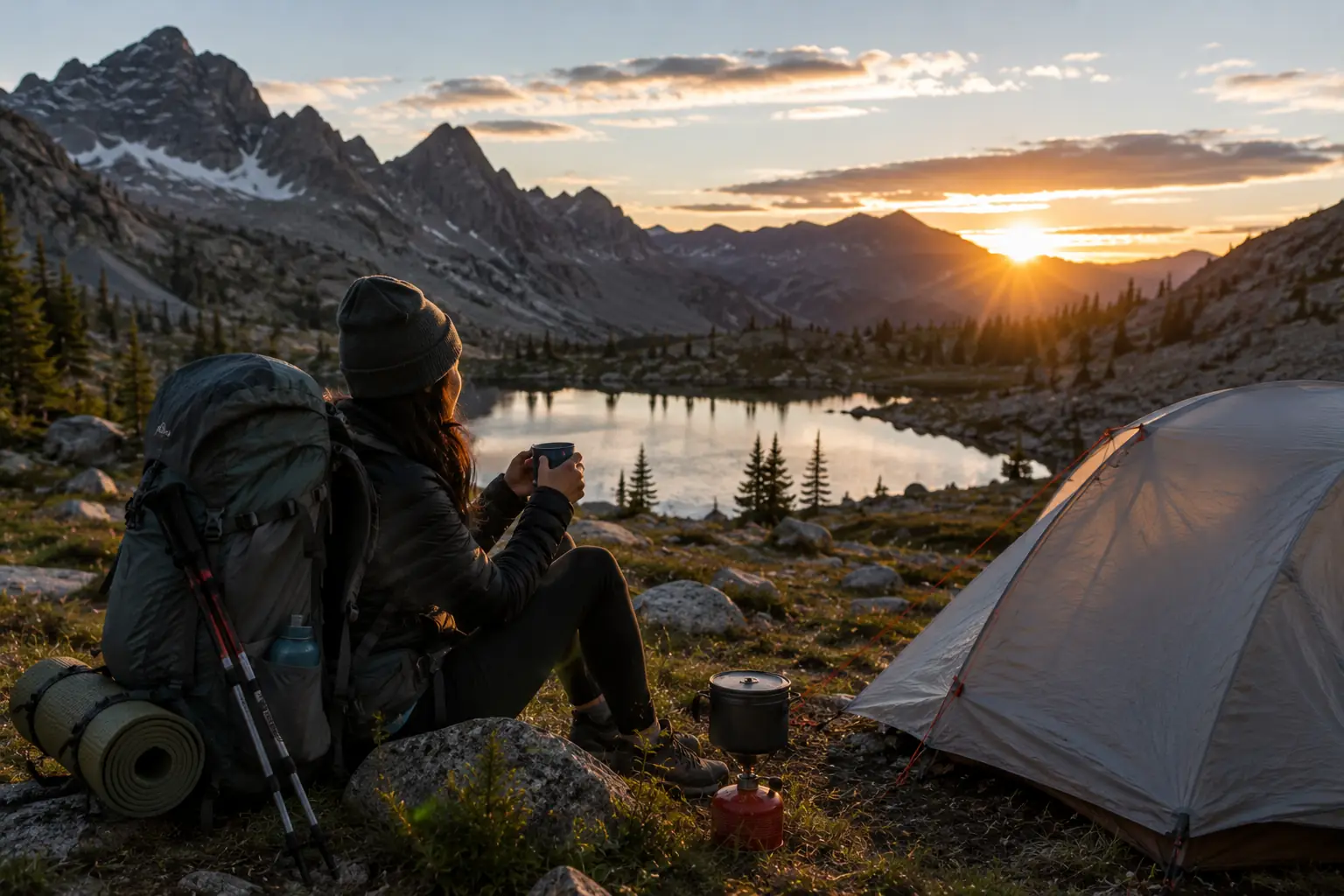
Hiking alone is a completely different experience from hiking with a group -- quieter, more flexible, and often more personal. Solo hiking is also safe when approached thoughtfully. Millions of people hike alone every week without incident, and these tips are why. The key is shifting your margin for error: when there is no partner to spot a wrong turn or run for help, your planning has to do that job for you.
Tell Someone Your Plan
This is the single most important solo hiking safety rule. Before every solo hike, share: trailhead location, planned route, and expected return time with a trusted person. If you are not back by that window, they call search and rescue. Simple, free, potentially life-saving.
Make the plan specific enough to act on. A useful message reads something like: "Parking at the Cascade Pass trailhead, hiking to Sahale Arm, turning around no later than 2pm, home by 7pm. If you do not hear from me by 9pm, call 911 and reference North Cascades National Park." Include the make and color of your car and your trailhead parking spot, because that is the first thing rescuers look for.
Carry an Emergency Communication Device
A cell phone works on many trails, but in remote areas consider a personal locator beacon (PLB) or a two-way satellite communicator like a Garmin inReach. These devices let you send SOS and two-way messages from anywhere on earth. The peace of mind they provide is worth every dollar.
Stay on Marked Trails
Solo hikers should be more conservative with off-trail exploration, not less. Stay on established paths, note trail junctions carefully, and turn back if weather deteriorates or you feel uncertain about your route. No summit is worth a night in the wilderness unprepared.
Trust Your Gut
The trail will present situations that feel off -- a sketchy person at the trailhead, weather building faster than forecast, a stream crossing that looks much harder than the description suggested. Trust your instincts and be willing to change plans. Adaptability is the most underrated solo hiking skill.
- Start with well-trafficked trails for your first few solo hikes
- Carry a first aid kit and know how to use it
- Register at the trailhead when a register is available
Pack the Ten Essentials Every Time
When you hike solo, the Ten Essentials stop being a checklist and become your only safety net. A twisted ankle two miles in is an inconvenience with a partner and a genuine emergency alone. Build a small kit you never unpack and keep it in your bag for every hike, no matter how short.
- Navigation: a paper map and compass plus a phone app like Gaia GPS or AllTrails with the route downloaded for offline use
- Insulation: a packable puffy and a rain shell, because temperatures on exposed ridges can drop 20 to 30 degrees fast
- Light: a headlamp with fresh batteries, even on a planned daytime hike
- Fire and shelter: a lighter, fire starter, and an emergency bivy or space blanket weighing only a few ounces
- Water and food: more than you think you need, plus a filter or purification tablets if the route has reliable water sources
- First aid and a knife or multitool rounded out with sun protection
Check Weather and Daylight Before You Go
Solo, there is no one to share decision-making when conditions turn, so do that thinking at home. Check a mountain-specific forecast such as the National Weather Service point forecast for your exact trailhead, not the nearest town, because elevation changes everything. In the western mountains, summer thunderstorms commonly build by early afternoon, so plan to be off exposed summits and ridgelines by noon.
Work backwards from sunset. Note the time it gets dark, subtract the round-trip time the trail description gives, and add a buffer of at least an hour for photos, snack breaks, and a slower-than-expected pace. If the math is tight, pick a shorter route or start earlier rather than gambling on a headlamp descent.
Pace Yourself and Manage Energy
With no group to set the rhythm, solo hikers tend to either rush or under-fuel. Both end days early. Aim for a sustainable pace where you can still hold a conversation, eat something small every hour, and drink before you feel thirsty. A good rule is to take a real break at the halfway point to honestly assess how you feel, how much daylight is left, and whether the return leg will be uphill.
Build Confidence on Beginner-Friendly Trails
You do not need remote wilderness to enjoy solo hiking, and starting small builds the judgment that keeps you safe later. Choose popular, well-signed trails where other hikers pass regularly and cell coverage is decent. Good starter options across the country include the loops around Bear Mountain in New York, the foothills trails near Boulder, Colorado, and shorter sections of the Billy Goat Trail outside Washington, DC.
As you log solo miles on these routes, you will develop the route-finding instincts, gear habits, and self-trust that make bigger objectives feel natural. Every confident solo hiker started on an easy trail close to home. Progress deliberately, keep telling someone your plan, and the wilderness opens up to you on your own terms.
How to Hike Alone Safely: Essential Solo Hiking Tips FAQs
Yes. Millions of women hike solo safely every year. Standard safety practices apply: tell someone your plan, stay on marked trails, trust your gut about other people on the trail, and carry a personal locator beacon for remote areas. See our dedicated guide on solo hiking tips for women.
Stop moving. The moment you realize you are unsure of your location, stop. Panic leads to poor decisions and more distance from where people expect you to be. Use your map and compass or offline GPS to orient yourself. If truly lost, activate your PLB or call emergency services. Your earlier trip plan means people know where to look.