The Cold Truth About Hypothermia
Most people imagine hypothermia as a hazard of extreme cold, blizzards, arctic expeditions, sub-zero nights. In reality, the majority of hypothermia cases in North America happen at temperatures between 30°F and 50°F, often in wet and windy conditions. A wet hiker in a 45°F wind loses body heat fifteen times faster than a dry hiker in still air. You don't need frigid temperatures to get into serious trouble.
What makes hypothermia especially dangerous on the trail is that one of its early effects is impaired judgment. The person becoming hypothermic often doesn't recognize what's happening to them. They feel fine, or just "a little tired." They don't want to stop and add a layer. They're confused about where they are. This is the insidious nature of the condition, it's self-concealing.
How Hypothermia Develops
Your core body temperature normally sits at 98.6°F. Hypothermia begins when core temperature drops below 95°F. At 90°F, it's life-threatening. At 86°F, most people lose consciousness.
Your body defends its core temperature through shivering (involuntary muscle contractions that generate heat), vasoconstriction (reducing blood flow to the extremities to keep warmth in the core), and behavioral responses (finding shelter, adding clothing). When these defenses are overwhelmed by ongoing heat loss, through conduction (contact with cold surfaces), convection (wind), evaporation (wet clothing), and radiation, core temperature begins to drop.
The rate of drop depends on how wet you are, how cold and windy it is, how much you're moving, how much you've eaten recently (food is fuel for heat production), and your body composition (people with more body fat retain heat longer). A thin, wet, exhausted hiker who skipped lunch can become hypothermic in conditions that a well-fed, well-insulated hiker handles easily.
Recognizing the Signs in Yourself and Others
The challenge with hypothermia is that symptoms progress gradually and the early signs are easy to dismiss or explain away. Know the progression so you can catch it early in yourself and others:
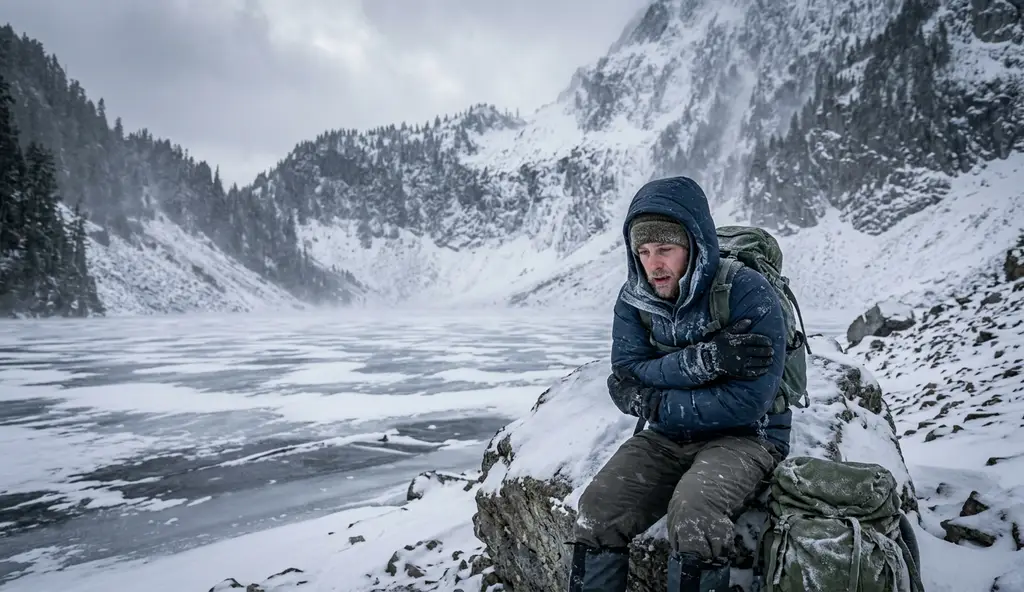
Mild hypothermia (core temp 90–95°F): Intense shivering, loss of fine motor control (fumbling with buckles and zippers, difficulty tying knots), slurred or slow speech, lack of coordination, pale or blue-tinged skin, confusion and impaired judgment. The person may insist they're fine and resist help. Shivering is a good sign at this stage, it means the body is still fighting.
Moderate hypothermia (core temp 82–90°F): Shivering stops (the body can no longer sustain it, this is dangerous, not a sign of improvement), muscle rigidity, increasingly incoherent thinking and speech, extreme fatigue, a paradoxical feeling of warmth (people begin removing clothing, a documented phenomenon called "paradoxical undressing"), drowsiness, fixed and dilated pupils.
Severe hypothermia (core temp below 82°F): Unconsciousness, very slow and weak pulse, very slow breathing (as few as 2–3 breaths per minute), cardiac arrhythmias, and cardiac arrest. Severe hypothermia requires immediate evacuation and hospital rewarming, you cannot treat this in the field.
A quick field assessment: have the person say their name and where they are. If they can't tell you clearly, assume moderate hypothermia and act accordingly. If they've stopped shivering and you're in cold wet conditions, assume the situation is serious.
Field Treatment: What to Do on the Trail
For mild hypothermia, the treatment is straightforward if you act quickly:
- Stop the heat loss first: Get the person out of the wind and rain. Remove wet clothing and replace with dry layers. In a pinch, wrap them in a space blanket, the reflective interior bounces radiated body heat back toward the person.
- Insulate from the ground: Cold ground conducts heat away from the body faster than cold air. Get the person off the ground using a pack, extra clothing, or anything available.
- Add calories and warm fluids: If the person is conscious and can swallow safely, warm (not hot) liquids and high-calorie food provide both warmth and fuel. Avoid alcohol, it dilates blood vessels and accelerates heat loss despite the feeling of warmth.
- Get them moving gently: If the person can walk, gentle movement generates internal heat. Don't encourage vigorous exercise, it shunts warm blood to the extremities and can trigger "afterdrop" (a sudden drop in core temperature when cold blood from the extremities reaches the core).
- Wrap them with a warm companion: Skin-to-skin contact inside a sleeping bag or under a space blanket transfers body heat directly. This is one of the most effective field rewarming strategies available.
For moderate hypothermia, field treatment buys time but the person needs evacuation. Keep them insulated, horizontal (to prevent blood pressure drops when moving), and handle them gently, in moderate and severe hypothermia, the heart is extremely sensitive to physical agitation and can go into ventricular fibrillation from rough movement. Call for rescue immediately.
For severe hypothermia: do not assume the person is dead. Severe hypothermia can mimic death, the pulse may be too slow or weak to detect, breathing barely perceptible. Gentle CPR may be warranted if there are no signs of life. The medical adage: "a patient is not dead until they are warm and dead." Evacuation and hospital rewarming have revived people who appeared clinically dead in the field.
The Wind Chill Factor
Wind removes the thin layer of warm air your body generates around itself. Wind chill is the temperature your body effectively experiences, accounting for that convective heat loss. At 40°F with a 25-mph wind, the effective wind chill is 18°F. At 32°F with 30-mph winds, it's 15°F.
Wind chill tables are worth knowing: any wind chill below 32°F has the potential to cause frostbite in exposed skin with prolonged exposure, and hypothermia risk increases significantly. Below 0°F wind chill, frostbite can occur in 15–30 minutes in exposed skin. When planning routes above treeline where you'll be exposed to sustained wind, factor in wind chill when assessing risk.
Layering for Cold Weather: Prevention at the Source
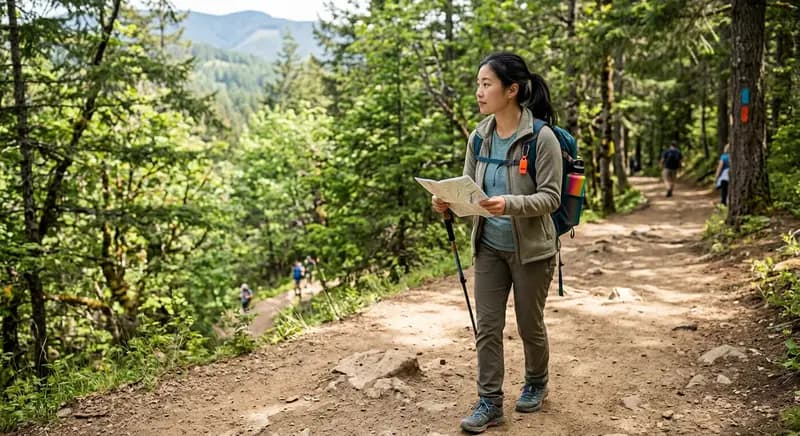
The most effective hypothermia prevention is proper layering. The layering system works on three principles: wick moisture away from your skin, insulate with trapped air, and block wind and precipitation from the outside.
Base layer: Merino wool or synthetic (polyester), never cotton. Cotton absorbs moisture and takes forever to dry, sitting against your skin as a cold, wet sponge. Merino wool regulates temperature exceptionally well, it's warm when wet, odor-resistant, and comfortable. Synthetic is faster-drying and cheaper. Thickness should match expected temperature: lightweight base layers for mild conditions, midweight for cold.
Mid layer: Fleece or down/synthetic insulation. Fleece retains some insulating ability when wet; down loses most of its loft when wet (though water-resistant down treatments improve this). For wet-climate hiking (Pacific Northwest, Appalachians), a fleece mid layer is safer than down. For dry alpine conditions with light precipitation risk, down is warmer and more packable.
Outer layer: A waterproof-breathable shell that blocks wind and rain. Goretex, eVent, and Pertex are common technologies. The breathability matters, a completely impermeable shell causes you to soak from sweat instead of rain, which has the same hypothermia risk as getting soaked from the outside. Look for shells with pit zips for ventilation on climbs.
The "add a layer before you're cold" rule matters more than most hikers realize. Adding a layer while you're still generating movement heat is much faster than trying to rewarm after you're already chilled. Stop and add your insulation layer as soon as you slow down, stop, or feel a wind increase.
Calories, Hydration, and Their Role in Warmth
Shivering is an enormous calorie burn, your body can burn 400–600 additional calories per hour maintaining core temperature in cold conditions. If you're not eating, you run out of fuel for heat production. Eat consistently throughout the day in cold conditions: every 60–90 minutes, something calorie-dense. Nuts, cheese, chocolate, jerky, high-fat and high-calorie foods provide the most heat-generating fuel.
Dehydration impairs circulation, which impairs your body's ability to move heat from the core to the extremities and back. Cold air is dry, and you exhale moisture with every breath, so you dehydrate faster in cold conditions than you might expect. Drink before you're thirsty.
Know When to Turn Back
The decision to turn around is hardest when you're close to your objective. But the conditions that cause hypothermia, wet, cold, windy, tired, underfueled, often worsen as the day progresses. If you're getting wet and the temperature is dropping, turning back while you still have energy reserves is a far better decision than pushing to a summit in deteriorating conditions. Most serious hypothermia cases involve the combination of wet clothing, wind, exhaustion, and poor judgment that comes from not recognizing the early signs.
Hypothermia Prevention for Hikers FAQs
Hypothermia can occur at temperatures as high as 50°F under wet and windy conditions. Most hypothermia cases in North America happen between 30°F and 50°F, not in extreme cold. Wind dramatically increases heat loss, at 40°F with a 25-mph wind, your body experiences effective temperatures equivalent to 18°F.
Intense shivering, clumsiness (fumbling with gear, difficulty with fine motor tasks), slow or slurred speech, and mild confusion are the early signs. Impaired judgment is a key early symptom, the person often insists they're fine while exhibiting these signs. Pale, cold skin and slowing movement also indicate early hypothermia.
No. Alcohol causes vasodilation, widening of blood vessels near the skin, which actually accelerates heat loss and drops core temperature faster despite the temporary feeling of warmth. Give warm (not hot) beverages like tea, broth, or hot chocolate, and high-calorie solid food instead.
Stopping shivering is not a sign of improvement, it usually means the body is too cold to maintain shivering and has progressed to moderate hypothermia. This is a dangerous development. Act immediately: insulate the person fully, get them horizontal, protect from wind and moisture, and call for rescue.
Cotton absorbs moisture (from sweat or rain) and holds it against your skin, dramatically accelerating heat loss. A wet cotton shirt in cold conditions behaves like a cold compress pressed against your core. Wool and synthetic fabrics maintain insulating ability when wet and dry much faster. 'Cotton kills' is a genuine backcountry maxim.