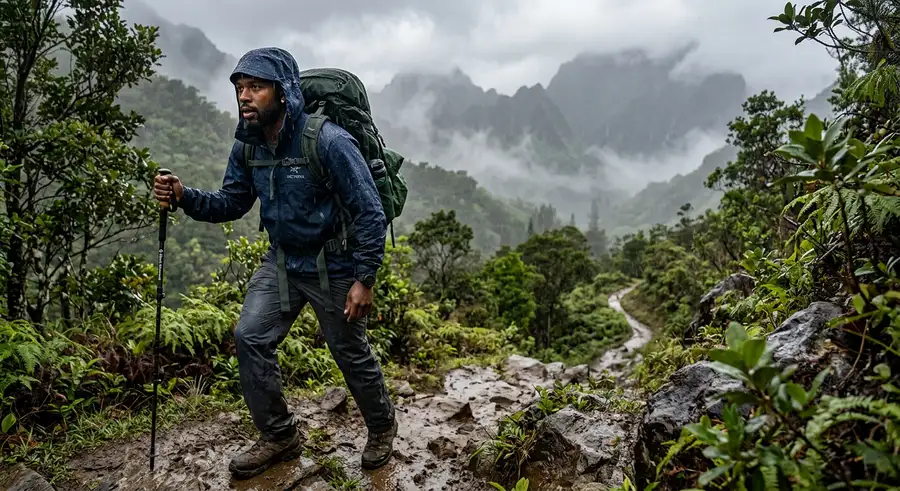
Rain Is Not a Reason to Stay Home
The Pacific Northwest has some of the best hiking in the world, and it rains there roughly 150 days a year. Olympic National Park receives 14 feet of rain annually in some areas. The people who hike in Washington, Oregon, and coastal British Columbia, some of the most committed hikers in the country, have figured something out: rain is not an obstacle, it's a condition you dress for.
Rainy days on trail have genuine advantages. Crowds disappear. Waterfalls peak. Light is dramatic and diffuse. Mud smells good. Wildlife moves more freely. If you've been waiting for a dry day and your hiking has dropped off from April through June, you've been waiting for a window that might not open. Here's how to get comfortable going out anyway.
The Waterproof Shell: Your Most Important Piece of Rain Gear
A good waterproof-breathable shell jacket is the foundation of comfortable rain hiking. The key word is breathable, cheap ponchos and non-breathable rain jackets trap the moisture you generate while hiking, leaving you just as wet from sweat as from rain, and without the insulating benefit of dry layers underneath.
Look for shells made with Gore-Tex, eVent, or comparable membranes. These materials block incoming water while allowing water vapor (sweat) to escape. The result is that you stay dry from both outside and inside.
What to look for in a rain shell:
- Waterproof rating: Measured in millimeters of hydrostatic head. Anything above 20,000mm is genuinely waterproof in sustained rain. Below 10,000mm is shower-proof at best.
- Breathability rating: Measured in grams of moisture vapor transmission per square meter per 24 hours (g/m²/24h). Over 20,000 is good for high-exertion hiking.
- Seam sealing: All seams should be taped or welded. Un-taped seams leak at the stitch holes even if the fabric is waterproof.
- Hood: A good hood is helmet-compatible, adjustable, and big enough to work with a hat underneath. Test the hood in the store, a poorly designed hood that blows off in wind is useless.
- Pit zips or underarm vents: These let you dump heat without removing the jacket. Worth having for sustained climbs.
Recommended shells for most budgets: Marmot PreCip Eco ($100) for budget, REI Co-op Rainier ($230) for mid-range, Arc'teryx Beta LT ($650) for performance. All three have been proven on wet trails for years.
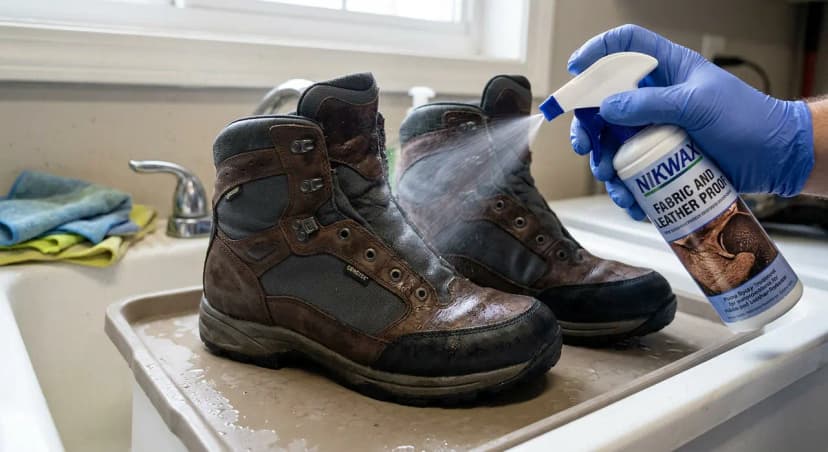
A note on DWR (durable water repellent): the outer face fabric of your shell has a DWR finish that makes water bead up and roll off. Over time this wears off and the fabric starts to wet out (absorb water). Restore it with Nikwax TX.Direct or Grangers Performance Repel, wash-in or spray-on products that revive the DWR. Do this every 10–15 wets.
Rain Pants and Lower-Body Protection
Most day hikers underinvest in rain pants. Your legs generate a lot of heat hiking, so they stay warm even when wet, but a soaked pair of hiking pants is heavy, cold on descents, and chafes. Lightweight waterproof rain pants that pull on over your hiking pants are the solution.
For day hikes, packable rain pants like Marmot PreCip ($80) or REI Co-op Rainier Pants ($100) work well. They pack to about the size of a water bottle and weigh under 10oz. Full-zip legs let you pull them on without removing your boots.
Gaiters, fabric sleeves that cover the gap between boot and pant leg, keep mud and water out of your boots on wet trails and are worth the $30–50 investment if you hike frequently in rain.
Keeping Your Feet Dry
Waterproof boots help on wet trails, but no boot stays dry in sustained heavy rain, water eventually finds its way in over the top of the collar. Wool socks (Darn Tough, Smartwool) stay warm even when wet, which is their advantage over cotton or synthetic athletic socks that go cold fast.
If you're hiking in truly soaked conditions, accept that your feet will get wet and manage accordingly: carry a dry pair of socks in a waterproof bag, change mid-hike if you're doing a long day, and let your boots dry fully between outings (stuff them with newspaper overnight, let them air-dry rather than using direct heat which degrades the glue).
Sealskinz and other waterproof socks are an option for stream crossings or extremely wet conditions. They're warm and fully waterproof but less breathable, so your feet sweat more in dry sections.
Protecting Your Gear
Rain affects more than your clothing. Electronics, maps, food wrappers, and down insulation all suffer from moisture. Pack organization in rain is different from fair-weather hiking:
- Pack cover: Most packs come with a built-in rain cover. Use it. Alternatively, line your pack with a heavy-duty garbage bag, cheaper and more reliable for serious rain.
- Dry bags or stuff sacks: Put your electronics, spare clothing, and anything that can't get wet inside dry bags inside your pack. Sea to Summit and SealLine make reliable, affordable dry bags.
- Map protection: A waterproof phone case or Ziploc bag keeps your phone usable. Paper maps go in a map case or stay dry inside a bag.
- Down insulation: Down loses all its loft when wet. Keep your down jacket in a dry bag or stuff sack inside your pack. If it gets wet, it won't insulate until it fully dries. Synthetic insulation performs much better when damp, Primaloft and Polartec Alpha are worth choosing over down for wet climates.
Adjusting Your Pace and Turnaround Criteria
Rain hiking requires more conservative decision-making. Trails are more slippery, roots, rocks, and wet leaves all become hazards. Descent speed slows significantly on wet trail. If you're planning a six-hour hike, add an hour buffer in rain.
Know your turnaround triggers before you start. Lightning is a hard stop, get below treeline immediately and wait. A rising stream crossing that was ankle-deep when you started might be thigh-deep and dangerous by the time you turn around. Heavy rain on steep exposed ridgelines creates genuine slip-and-fall hazards. Mountain weather is notorious for moving faster than forecast, check radar before you go and carry a plan for early exit.
That said, light steady rain on a forested trail is almost always safe and comfortable with the right gear. The risk level depends on terrain, temperature, and rain intensity, not simply whether it's raining.
The Mindset Shift
The biggest adjustment for rain hiking is mental. The first ten minutes in the rain feel unpleasant almost universally. Then something shifts, you settle into the rhythm, you stop caring about staying technically dry, and the trail opens up in ways it doesn't on a sunny Saturday with forty other hikers around.
The hikers you'll see on rainy days are almost always more experienced and more serious. Rain self-selects for the people who actually love being outside rather than those who like the Instagram version of it. That's good company to keep.
The practical mindset tip: lower your expectations for the first 15 minutes and reserve judgment until you're moving and warm. Almost every rain hike that feels uncomfortable at the trailhead turns enjoyable once you're into it.
How to Hike in the Rain FAQs
No. Lightning is the one condition that requires immediate action. If you hear thunder, count the seconds to lightning. Under 30 seconds means get off ridgelines and exposed terrain immediately. Move into forest at lower elevation, avoid lone trees, and spread your group out. Do not shelter under overhangs or in caves.
The Marmot PreCip Eco ($100) has been the benchmark budget waterproof shell for years. It uses a Gore-Tex-equivalent membrane, has seam-taped construction, and packs to a small stuff sack. It's not as breathable as higher-end shells but it keeps you genuinely dry in sustained rain.
In light to moderate rain and wet trail conditions, yes. In sustained heavy rain, water eventually tops the collar and your feet get wet anyway. Waterproof boots delay the inevitable and keep your feet dry from trail moisture and puddles. Wool socks mitigate the wet-foot problem by staying warm even when soaked.
Hang shells and rain pants inside to air-dry, heat degrades waterproof membranes, so avoid radiators and direct sun. Stuff boots with newspaper overnight and let them air-dry. Re-apply DWR to your shell once a season or when water stops beading off the face fabric.
Depends on the terrain and intensity. Light to moderate rain on forested trails is fine with proper gear. Heavy rain on exposed ridgelines or above treeline warrants more caution. Lightning in the forecast is a reason to postpone. Check radar the morning of your hike rather than relying on multi-day forecasts, which are unreliable.