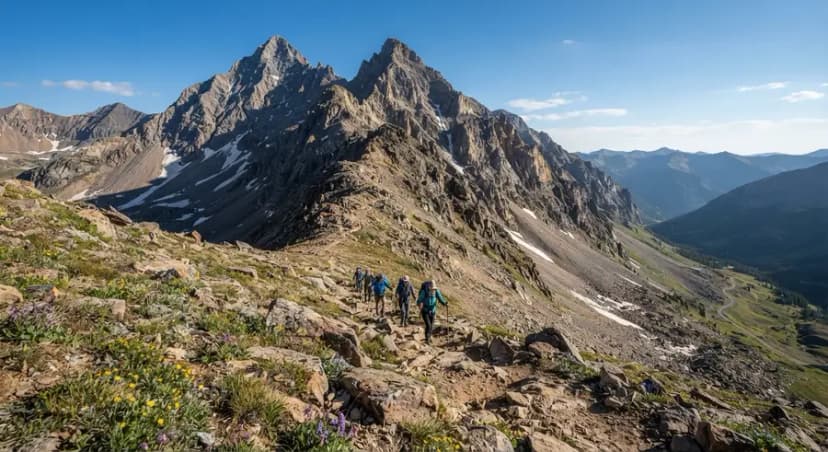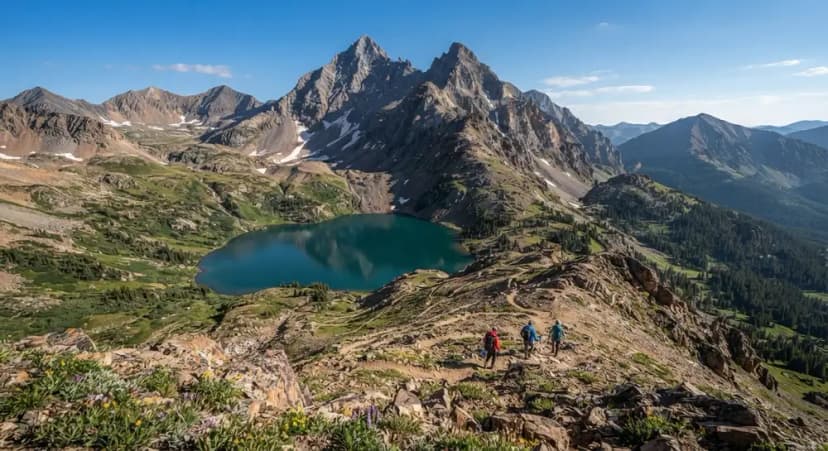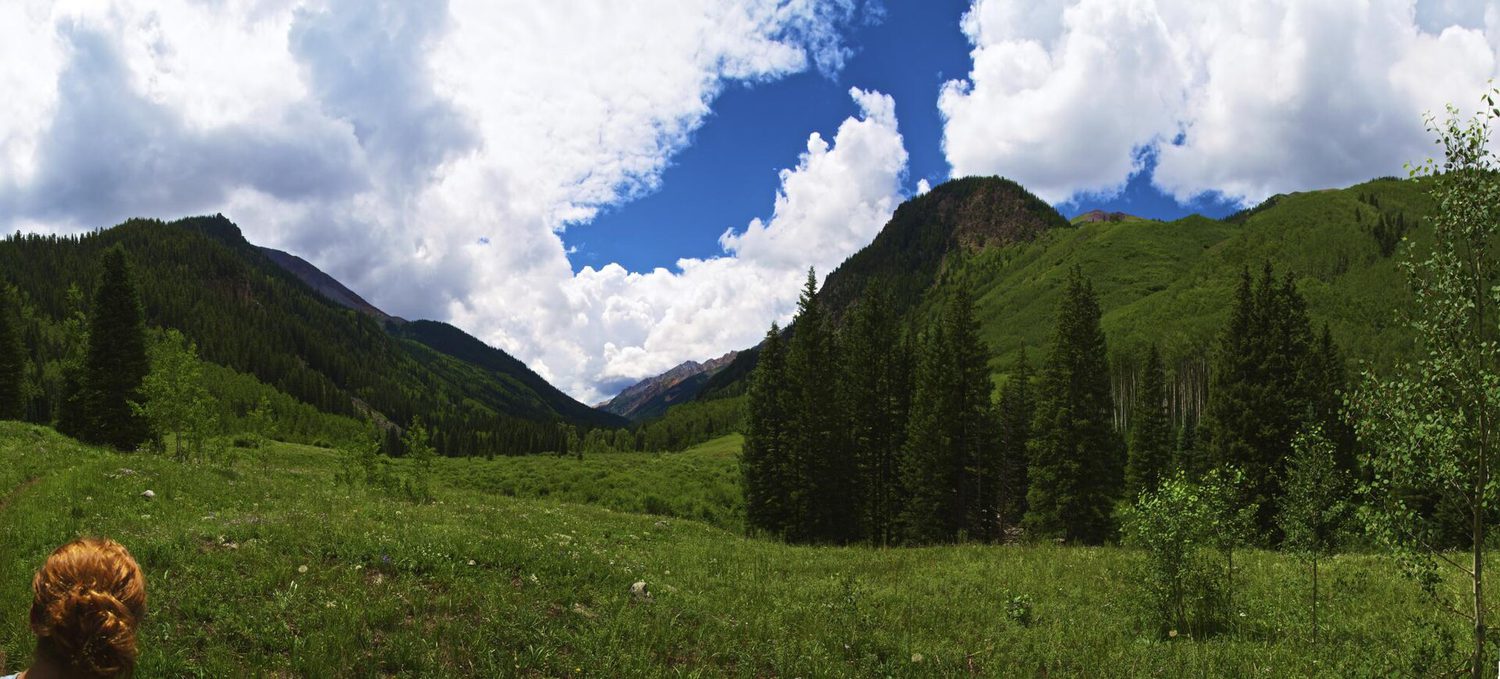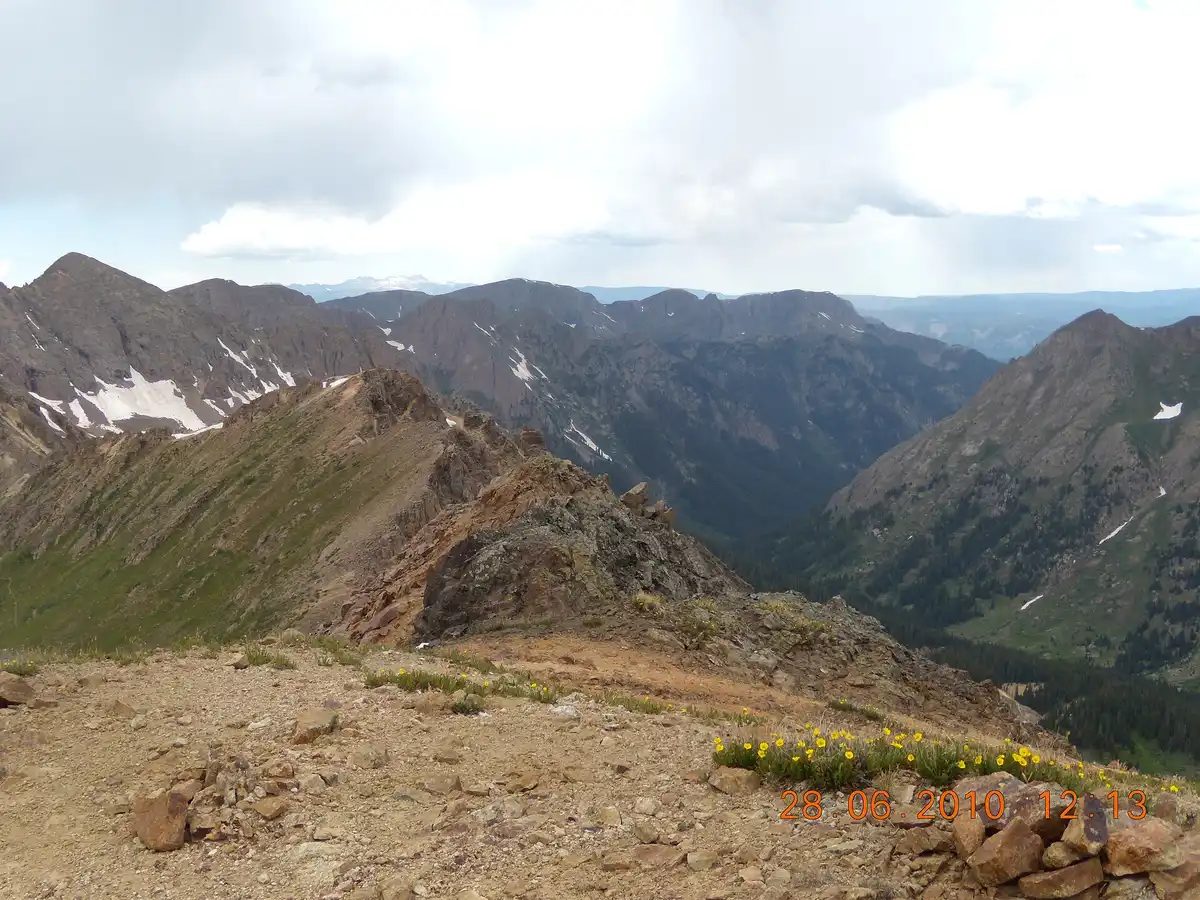
Tucked into the heart of the Weminuche Wilderness in southwest Colorado, Chicago Basin is the launch pad for three of the most remote 14,000-foot peaks in the state: Mount Eolus, Sunlight Peak, and Windom Peak. There are no roads here. Most climbers ride the Durango and Silverton Narrow Gauge Railroad to the Needleton flag stop, then hike about 6.5 miles up the Needle Creek Trail to a high alpine basin around 11,200 feet. From there, all three summits are within reach over one or two days.
Why Chicago Basin Is Different
These are not drive-up 14ers. The combination of train access, a long approach, and a high backcountry camp makes Chicago Basin feel genuinely expedition-like. The payoff is jagged granite, marmots and mountain goats that have grown bold around camp, and three distinct summits clustered close together. If you want a fully planned version of this trip, see our Weminuche Wilderness Chicago Basin backpacking itinerary, which maps out the rail logistics, camp, and summit days.
The Three Peaks at a Glance
- Windom Peak (14,082 ft) is the most straightforward, a Class 2 plus scramble up the west ridge from Twin Lakes. Most parties climb this first to acclimatize.
- Sunlight Peak (14,059 ft) is the technical crux. The route is Class 4, and the true summit requires an exposed move onto a detached summit block that stops many climbers cold.
- Mount Eolus (14,083 ft) features the famous Catwalk, a narrow rock rib leading to a Class 3 finish with serious exposure on both sides.
The Summit Day Plan
From a basin camp, climb early to Twin Lakes at roughly 12,500 feet, the staging point for all three peaks. A common strategy is to combine Windom and Sunlight in one big morning since they share the eastern side of the basin, then tackle Eolus and its sister summit North Eolus on a second day. Strong, acclimatized parties sometimes link all three in a single push, but that makes for a long, demanding day above 13,000 feet. Start by headlamp to clear the summits before afternoon thunderstorms build, which they do almost daily in summer.
Difficulty and Skills You Need
Do not underestimate these mountains. Sunlight's summit block involves committing, exposed moves that feel harder than the Class 4 rating suggests, and many experienced hikers turn around there. Eolus demands comfort with sustained Class 3 scrambling and route-finding on broken rock. Helmets are strongly recommended on all three because of loose rock and other parties above you. If you have never done exposed scrambling, build that skill on easier terrain before committing to a multi-day trip this far from help.
When to Go
The prime window is mid-July through mid-September, after most of the steep snow has melted from the gullies and before early autumn storms arrive. Early July can still hold consolidated snow on the approaches to Twin Lakes, which may call for an ice axe and traction. September brings cooler nights, fewer crowds, and golden tundra, but daylight shrinks fast. Whenever you go, plan your summits for early morning and be off the high ridges by noon.
Permits, Camping, and Logistics
The Weminuche is managed by the San Juan National Forest, and no permit is required for general backpacking, though you must follow Leave No Trace rules and store food properly. Mountain goats here are aggressive about salt, so hang or secure anything sweaty or salty. Camp on durable surfaces in the lower basin and use established sites to protect the fragile alpine meadows. If you take the train, buy the Needleton drop-off and pickup in advance, and build in buffer days for weather. Acclimatize before you arrive, since you will be sleeping above 11,000 feet and climbing past 14,000.
Final Tips for a Successful Trip
Carry more layers than you think you need, treat or filter all water, and bring a topo map and compass or GPS since the scrambling routes are easy to lose. Above all, set a hard turnaround time and honor it. Chicago Basin rewards patience and good judgment, and these summits will still be there next season if today is not the day.
Chicago Basin 14ers FAQs
Windom is a Class 2 plus scramble, Eolus is Class 3 with exposure on the Catwalk, and Sunlight is Class 4 with a notoriously exposed summit block. They are among the more committing standard 14ers in Colorado.
No, but most climbers ride the Durango and Silverton Narrow Gauge Railroad to the Needleton stop. You can also hike in from the Purgatory or Vallecito trailheads, which adds significant mileage and elevation gain.
Mid-July through mid-September offers the most reliable conditions, with melted snow gullies and stable trails. Always summit early to avoid the frequent afternoon thunderstorms in the San Juan Mountains.