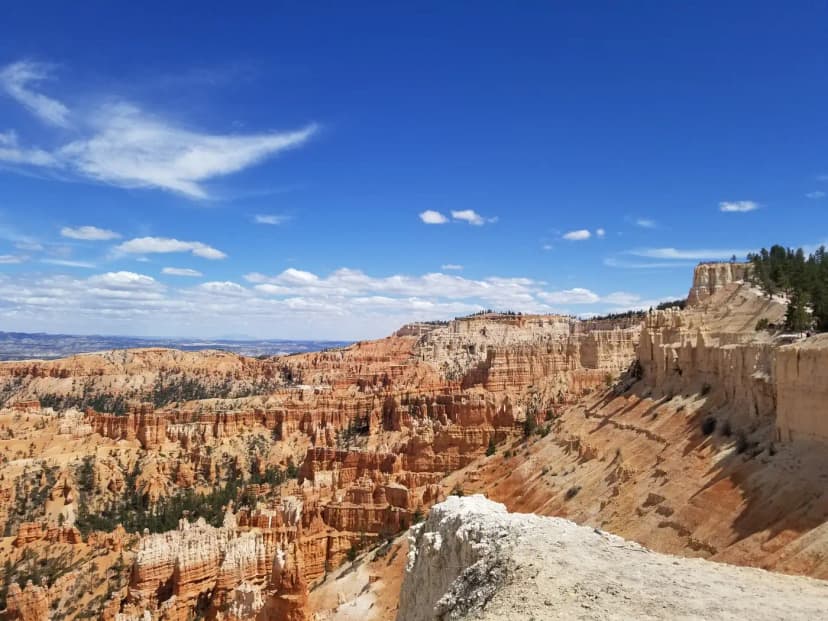
Bryce Canyon is not actually a canyon at all but a series of natural amphitheaters carved into the edge of the Paunsaugunt Plateau. That geology matters when you pick a trail: nearly every hike that drops below the rim means a climb back out at 8,000 to 9,000 feet of elevation. Below is a ranking of the park's best routes by difficulty so you can match a hike to your group's fitness and the time of year. If you want these stitched into a day-by-day plan, see our full Bryce Canyon itinerary.
Easy: Rim Trail and Mossy Cave
The Rim Trail runs 5.5 miles one way from Fairyland Point to Bristlecone Loop, but you can walk any short segment. The half-mile stretch between Sunrise Point and Sunset Point is paved, nearly flat, and delivers the postcard view of the Silent City packed with hoodoos. It is the single best option for families, anyone short on time, or visitors still acclimating to the altitude.
Mossy Cave Trail, just off Highway 12 near Tropic, is a flat 0.8-mile round trip to a dripping grotto and a small waterfall fed by an old irrigation ditch. Because it sits at lower elevation it is one of the few comfortable Bryce hikes during a hot July afternoon.
Moderate: Queens Garden and Navajo Loop
The classic Bryce day hike combines the Queens Garden Trail with the Navajo Loop Trail. Descend from Sunrise Point through Queens Garden, the gentlest way to reach the canyon floor, then climb back out via Navajo Loop. Done as a 2.9-mile combination loop it is the most popular hike in the park for good reason: you pass Queen Victoria hoodoo, Thor's Hammer, and the towering switchbacks of Wall Street.
- Distance: about 2.9 miles as a combined loop
- Elevation change: roughly 600 feet
- Direction: go down Queens Garden, up Navajo, to make the steep parts shorter
- Note: the Wall Street side of Navajo Loop closes in winter and after rockfall, so check the visitor center board
Moderate to Strenuous: Peekaboo Loop
The Peekaboo Loop is a 5.5-mile circuit that drops deep into the Bryce Amphitheater and winds past the Wall of Windows and the Cathedral. You can reach it from Bryce Point or chain it with Navajo and Queens Garden to form the 6.4-mile Figure 8, which many hikers consider the best single hike in the park. Peekaboo is also the only loop shared with horseback tours, so watch your footing on the manure-dusted trail and yield to riders.
Strenuous: Fairyland Loop and Riggs Spring
For solitude, the Fairyland Loop is an 8-mile route from Fairyland Point past Tower Bridge and the China Wall. It sees a fraction of the crowds because it starts outside the main fee booth, but it involves significant up and down and little shade. Carry at least two liters of water per person.
The most demanding option is the Riggs Spring Loop near Rainbow Point at the far south end of the scenic drive. At 8.5 miles with serious elevation loss and gain through ponderosa and bristlecone forest, it is a backpacking-grade day hike and one of the only places in the park to camp below the rim with a permit.
How to Pick the Right Trail for Your Season
Elevation drives everything here. In summer, start any below-rim hike before 9 a.m. to beat both the heat and the tour buses. From roughly November through March, the upper plateau holds snow and ice; bring traction devices like microspikes for the Navajo switchbacks, which turn slick and sometimes close entirely. Spring and fall offer the best balance of open trails and mild temperatures, though afternoon thunderstorms are common in late summer monsoon season.
Whatever you choose, give yourself extra time and water for the climb out. The combination of thin air and steep grades makes Bryce hikes feel harder than their mileage suggests.
Best Bryce Canyon Hikes Ranked by Difficulty FAQs
The combined Queens Garden and Navajo Loop is the best first hike. At about 2.9 miles with roughly 600 feet of elevation change, it passes the most famous hoodoos including Thor's Hammer and Wall Street while staying manageable for most fitness levels.
Yes. The rim sits between 8,000 and 9,000 feet, so even short climbs back out of the amphitheater feel strenuous until you acclimate. Drink extra water, pace yourself, and consider spending a night at altitude before tackling longer loops.
The Rim Trail and the Queens Garden side usually stay open with traction devices, but the Wall Street section of Navajo Loop typically closes from late fall through spring due to ice and rockfall. Always check current closures at the visitor center.