The best hiking socks do more for your comfort on the trail than almost any other piece of gear. Good socks manage moisture, cut friction, and cushion the pressure points that turn into blisters, and they will make even a broken-in boot feel better mile after mile. Pair a great boot with a cheap cotton sock and you will still finish the day with hot spots. Below are the best hiking socks in 2026 across every category, from merino wool all-rounders to lightweight liners, plus the materials, fit, and care details that actually keep your feet happy.
How we chose the best hiking socks
We judged hiking socks on four things that matter on real trails: moisture management, cushioning where you need it, durability over hundreds of miles, and fit that stays put without bunching. Every pick below is merino wool or a wool blend, because that is what keeps your feet dry, warm when wet, and odor-free on multi-day trips. None of them are cotton, and neither should yours be.
The best hiking socks at a glance
| Category | Our pick | Material | Best for |
|---|---|---|---|
| Best overall | Darn Tough Hiker Micro Crew Midweight | Merino blend | Three-season day hikes |
| Best merino wool | Smartwool Hike Classic Edition | Merino wool | All-around comfort |
| Best cushioned | Darn Tough Mountaineering | Heavy merino | Heavy loads, cold |
| Best lightweight | Darn Tough Light Hiker | Light merino | Hot weather, fast hiking |
| Best for blisters | Injinji Trail Midweight toe socks | Coolmax blend | Toe rub, hot spots |
| Best budget | REI Co-op Merino Wool Hiking | Merino blend | Value multipacks |
1. Best overall: Darn Tough Hiker Micro Crew Midweight
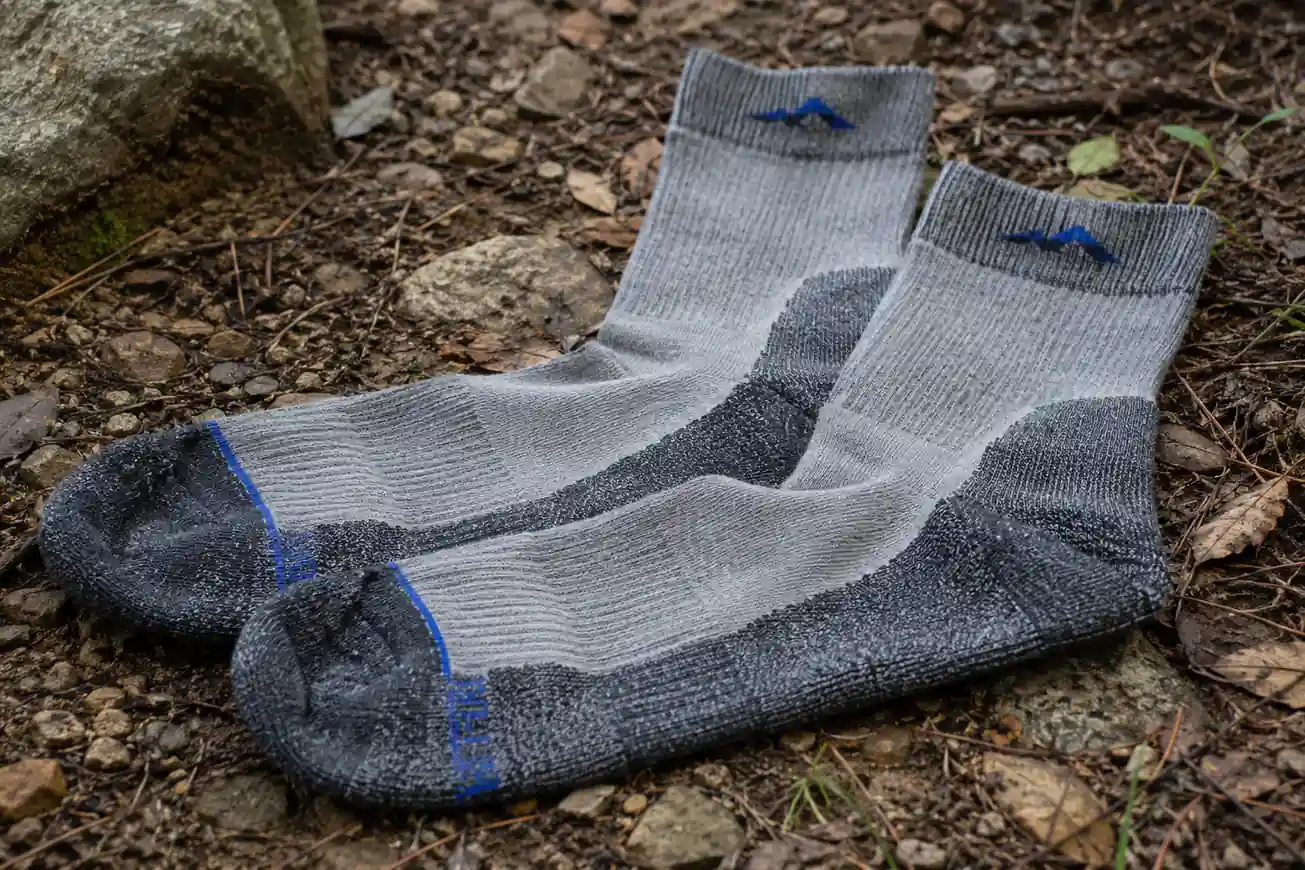
For most hikers, this is the best hiking sock you can buy. The midweight cushion handles everything from a spring day hike to a fall backpacking trip, the fine-gauge merino knit almost never bunches, and Darn Tough backs every pair with an unconditional lifetime guarantee. If a pair ever wears through, they replace it, which makes the higher price the best value on this list over time.
2. Best merino wool: Smartwool Hike Classic Edition
Smartwool's Hike Classic line is the benchmark merino hiking sock, with a slightly plusher feel than Darn Tough and a shaped fit that hugs the arch. Merino wicks sweat, regulates temperature in heat and cold, and resists odor so you can wear the same pair for days. It is the sock to reach for if you want all-day comfort out of the box.
3. Best cushioned for heavy loads: Darn Tough Mountaineering
When you are carrying a heavy pack or hiking in cold weather, a full-cushion sock protects the ball and heel of your foot from pressure. The Mountaineering weight is the thickest option here, tall enough to clear high boot cuffs, and it pairs best with boots you have sized with thick socks in mind.
4. Best lightweight for hot weather: Darn Tough Light Hiker
In summer heat or for fast-and-light miles, a thinner sock breathes better and dries faster. The Light Hiker keeps a touch of cushion under the foot while staying cool, which makes it a great match for trail runners and low-cut hiking shoes.
5. Best for preventing blisters: Injinji Trail Midweight toe socks
Blisters between and under the toes come from skin rubbing on skin. Injinji's toe socks wrap each toe individually to stop that friction, and many hikers swear by them for long distances. Worn alone or as a liner under a wool sock, they are the most effective sock-based blister fix. For the full playbook, see our guide on how to prevent blisters when hiking.
6. Best budget: REI Co-op Merino Wool Hiking socks
You do not have to spend a lot to get a solid merino hiking sock. REI's house-brand merino socks deliver most of the moisture management and comfort of the premium brands at a lower price, and they come in value multipacks so you can rotate a fresh pair every day on the trail.
Merino wool vs synthetic hiking socks
Merino wool is the top choice for hiking. It wicks moisture, stays warm even when damp, resists odor, and feels soft against the skin. Synthetic socks, usually nylon and polyester blends, dry faster and cost less, but they hold odor and offer less temperature range. Most quality hiking socks blend merino with a little nylon and spandex for durability and stretch. The one rule that never changes: never hike in cotton socks, which soak up sweat, stay wet, and are the fastest route to blisters.
What height of hiking sock should you get?
Match the sock cuff to your footwear. A crew or micro-crew height clears the ankle cuff of most hiking boots and is the safe default. A quarter or ankle height works with low trail shoes. Whatever you choose, the cuff should sit above the top of the shoe so the collar never rubs your skin.
How to prevent blisters with the right socks
- Skip cotton entirely. Wet cotton is the number one cause of hiking blisters.
- Try a liner sock. A thin liner under your main sock lets the two layers slide against each other instead of against your skin.
- Size your socks correctly. A sock that is too big bunches, and one that is too small pulls thin over the toes. Buy your shoe size.
- Carry a spare pair. Swapping to dry socks at lunch resets moisture and is the simplest blister insurance there is.
How to care for hiking socks
Wash merino socks in cold water and skip the fabric softener, which coats the fibers and kills their wicking. Air dry or tumble on low. Treated well, a good pair of hiking socks lasts hundreds of miles, and brands like Darn Tough will replace them for free if they ever wear through.
Great socks are step one. Pair them with the right footwear, especially if you need a wide toe box, and pack them using our hiking trip preparation guide so your feet are ready for the miles ahead.
Socks solve friction, lacing solves movement. If you still get hot spots in a good sock, the fix is usually a heel lock at the top eyelet, covered in how to lace hiking shoes.
The Best Hiking Socks of 2026 (Blister-Free, Tested) FAQs
The best hiking socks are merino wool or merino-blend socks with the right cushioning for your trip. Darn Tough Hiker Micro Crew and Smartwool Hike Classic are the top all-around picks, while Injinji toe socks are the best choice for hikers prone to blisters.
Yes. Merino wool is the best material for hiking socks because it wicks moisture, keeps your feet warm even when damp, resists odor over multi-day trips, and feels soft against the skin. Almost every top hiking sock is merino or a merino blend.
It depends on the conditions. Choose midweight cushion for most three-season hiking, full cushion for heavy packs and cold weather, and lightweight socks for hot weather or fast, low-cut trail shoes.
Wear merino wool socks instead of cotton, add a thin liner sock so the two layers rub against each other rather than your skin, size your socks correctly, and change into a dry pair partway through a long day.
For a day hike, one good pair plus a spare is plenty. For backpacking, plan on one pair per two days of hiking, plus a dedicated dry pair to sleep in, since dry feet at night recover faster.
Yes. Premium merino hiking socks last far longer, manage moisture better, and prevent blisters more reliably than cheap socks. Brands like Darn Tough include a lifetime guarantee, which makes the higher price the best long-term value.