Why Your Snack Choice Actually Matters
Most hikers undereat on the trail. They pack a single granola bar for a six-mile hike and wonder why their legs feel hollow by mile four. Hiking burns 300–600 calories per hour depending on terrain, pack weight, and your body size. A moderately fit person doing a 5-mile day hike with 1,500 feet of gain burns roughly 1,800–2,200 calories total. Your normal breakfast gets you through the first two hours. After that, what you eat on the trail determines whether you finish strong or suffer.
Good trail snacks share three qualities: they're calorie-dense (at least 100 calories per ounce), they don't require refrigeration, and they're easy to eat while moving. That third point matters more than people expect, if eating requires stopping, setting down your pack, and digging through a bag, you won't do it often enough.
The Best Day Hike Snacks
For hikes under 8 miles, you want easy-to-carry, familiar foods with a good mix of carbs and fat. Here's what consistently works:
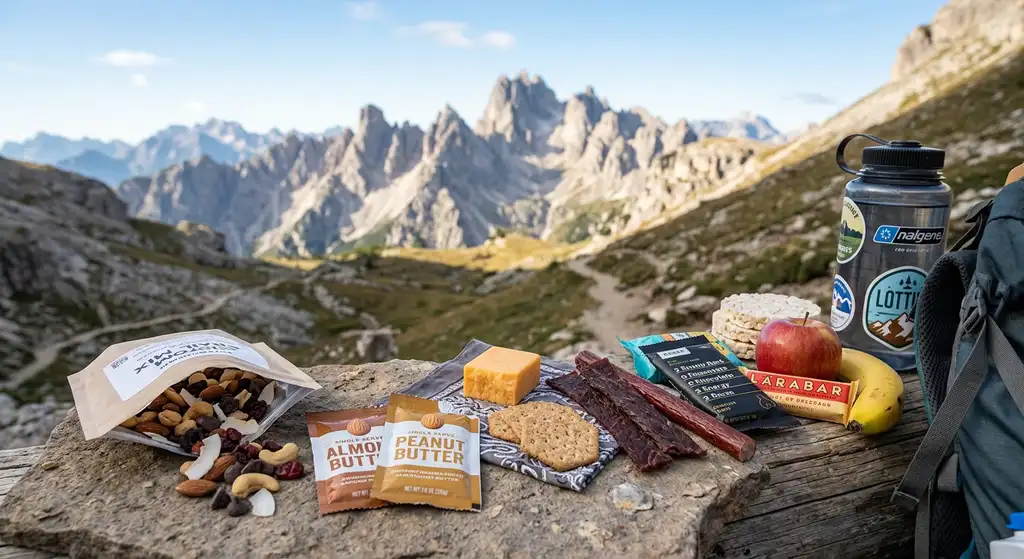
- Trail mix: The classic for a reason. A good mix of nuts, dried fruit, and some chocolate hits all the macros. Make your own with almonds, cashews, dried mango, and dark chocolate chips. Store-bought options like KIND Nut Clusters or REI Co-op Trail Mix work fine, but the markup is significant. Cost-per-calorie favors bulk buying from Costco or Trader Joe's.
- Energy bars: Clif Bars (250 calories, mostly carbs, good for sustained effort), RXBARs (210 calories, whole food ingredients, no coating so they don't melt), and Larabars (220 calories, date-based, good for heat since they don't have chocolate coatings). Avoid bars with yogurt coatings on hot days, they turn into paste.
- Peanut butter packets: Justin's single-serve almond butter and peanut butter packets are 190 calories each, about 1.1 oz, and pair with anything, crackers, apple slices, a spoon. One of the highest calorie-per-ounce ratios available in a packaged food.
- Crackers: Triscuits hold up better than most crackers on trail. Flatbreads and rice cakes also survive pack compression reasonably well. Pair with nut butter or cheese for a real midday break.
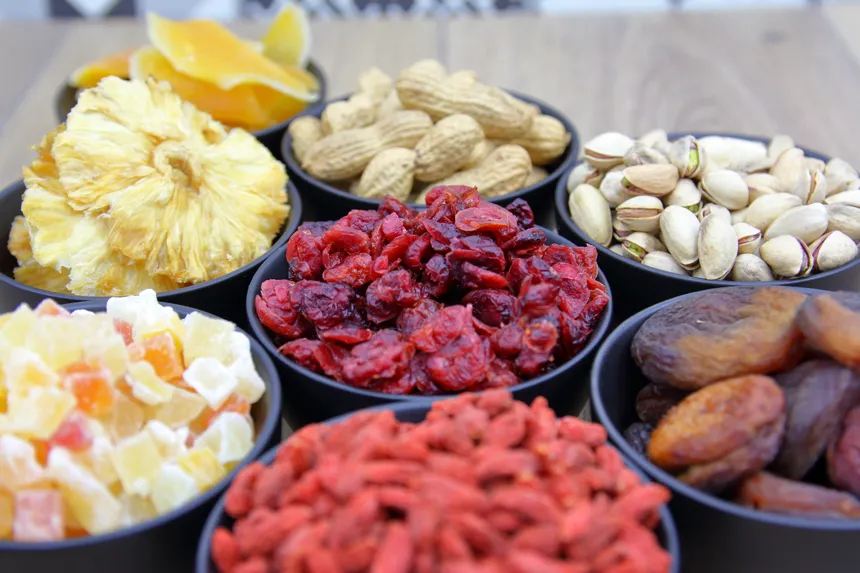
- Dried fruit: Medjool dates are exceptional, naturally high in sugar, surprisingly filling, and they don't taste like diet food. Dried mango and apricots are excellent too. Avoid raisins if you hate raisins (you know who you are).
- Cheese: Hard cheeses like cheddar, parmesan, and aged gouda hold up for 4–6 hours without refrigeration in moderate temperatures. String cheese works for cool days. Babybel wax-sealed cheese rounds are reliable up to 75°F.
- Jerky and meat sticks: High protein, zero carbs, good for pairing with something starchy. Epic bars and Chomps sticks are higher quality than most gas station jerky. Sausage sticks from Trader Joe's hit the same nutrition profile at lower cost.
Calorie Density: The Number That Matters Most
When weight matters, even on day hikes, think in calories per ounce. Here's a quick reference:
- Nut butter packets: 170 cal/oz
- Macadamia nuts: 200 cal/oz
- Almonds: 165 cal/oz
- Dark chocolate: 155 cal/oz
- Gummy bears: 100 cal/oz
- Dried mango: 90 cal/oz
- Clif Bar: 105 cal/oz
- Jerky: 70–80 cal/oz
- Fresh apple: 15 cal/oz
Fresh fruit and vegetables are heavy and low in calories relative to their weight. Fine for a short hike near the trailhead, but poor choices for carrying 5+ miles. Nuts and oils pack the most energy per ounce of any trail food.
Best Snacks for Hot Weather
Heat kills chocolate, softens gummies, and turns granola bars into crumbles. In summer or desert hiking, you need heat-stable options:
- Larabars (date-based, no coating)
- RXBARs (matte wrapper, no chocolate layer)
- Nuts, any variety, they don't melt
- Dried fruit, same
- Seed-based crackers (Mary's Gone Crackers hold up remarkably well)
- Pretzels in a hard container, not a soft bag
- Beef jerky and meat sticks
Things to avoid in heat: Clif Bars with chocolate chips (the chips melt into the bar and it becomes a mess), anything with a yogurt coating, gummy vitamins or chews, and any bar that contains coconut oil as a primary fat, it liquefies above 76°F.
Snacks for Long Hikes and Backpacking
Multi-day hiking changes the equation. You need to carry all your food, so weight matters far more. Target 1.5–2 lbs of food per day for backpacking (roughly 2,500–3,500 calories). The mix should be roughly 50–60% carbohydrate, 30% fat, 15% protein.
- Instant oatmeal packets: Lightweight breakfast or snack. Add a packet of almond butter for fat and protein. Quaker packets weigh 1.4 oz each.
- Tortillas: The backpacker's bread. Mission extra-thin tortillas last 4–5 days without refrigeration if sealed. Fill with peanut butter and honey, or tuna packets.
- Tuna and salmon pouches: Starkist and Wild Planet both make 2.6 oz pouches. 80–100 calories per ounce, no water needed, easy to eat straight from the pouch. Pair with crackers for a proper meal-style snack.
- Instant mashed potatoes: Idahoan packets weigh 3.7 oz and make 3 servings. High carb, easy prep (just add boiling water), and surprisingly satisfying at elevation.
- Olive oil packets: 240 calories per tablespoon packet. Add to any food to boost calories without adding weight. Backpacker's Pantry sells them; so does Amazon.
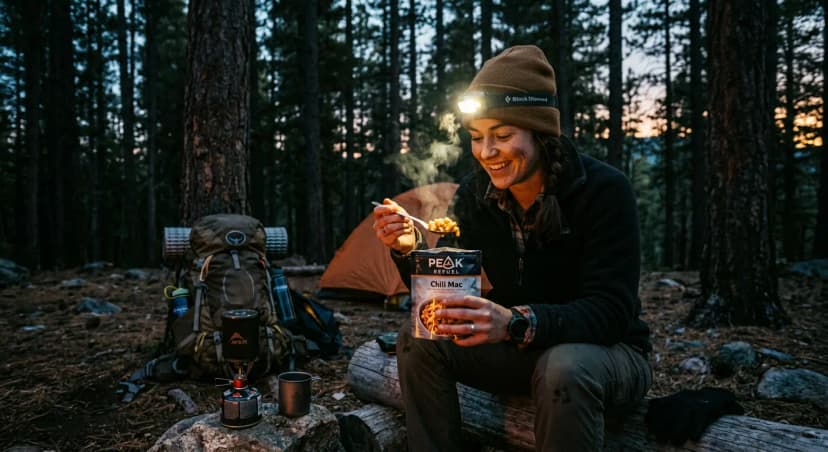
- Ramen: Heavy on sodium but light on weight, fast to cook, and calorie-dense. Top with olive oil and a tuna pouch for a complete camp meal.
Electrolytes: The Missing Piece
Snacks alone won't keep you energized on a hot, sweaty day. If you're sweating heavily, you need sodium, potassium, and magnesium, not just water. Hyponatremia (low blood sodium from drinking too much water without enough salt) is a real risk on long summer hikes.
Good electrolyte options: LMNT packets (1,000mg sodium, no sugar), Nuun Sport tablets (low sugar, good flavor variety), Liquid IV (higher sugar but fast absorption), and plain salty pretzels or chips. If you're sweating visibly and drinking lots of water, add electrolytes every 1–2 hours.
How to Actually Eat on the Trail
The technique matters as much as what you bring. Eat before you're hungry, by the time you notice you're hungry, your blood sugar is already dropping. A good rhythm is something small every 45–60 minutes rather than one big snack after two hours. Keep your snacks in an accessible side pocket or hip belt pocket so eating doesn't require a full stop.
On strenuous climbs, eat at natural rest points, viewpoints, water sources, ridge crossings. These breaks serve double duty: food and scenery. Don't eat and walk on technical terrain, but on smooth trail, eating while moving is perfectly safe and keeps your pace up.
Pack your snacks in the order you'll eat them. What you want at mile two goes on top. What you're saving for the summit goes at the bottom. It sounds obvious but most people dig through everything to find what they want at every stop.
Best Hiking Snacks FAQs
Plan for 100–200 calories per mile as a baseline, adjusted for elevation gain and your body weight. A fit 160-lb person doing a moderate 6-mile hike needs roughly 800–1,200 trail calories on top of whatever they ate for breakfast.
Stick to nuts, seeds, dried fruit, jerky, and bars without chocolate coatings. Larabars and RXBARs hold up well in heat. Avoid anything with yogurt coatings, melting chocolate chips, or coconut oil as a primary fat.
Yes, but know the tradeoff: fresh fruit is mostly water weight with low calories per ounce. Apples and oranges are fine for short hikes near the car but poor choices for carrying 5+ miles. Dried fruit is far more efficient.
Something with fast-digesting carbs: a few dates, gummies, sports chews, or a small piece of chocolate. Eat it 15–20 minutes before the climb starts so your blood sugar peaks when you need it.
They're fine but not optimal for sustained energy, protein digests slowly and doesn't convert to quick fuel. Better to get protein from nuts and jerky paired with carb-heavy snacks. Save high-protein bars for recovery after the hike.