The Night Before Is More Important Than the Morning Of
Most hikers obsess over breakfast and ignore dinner. That's backwards. Your muscles store glycogen, the primary fuel for sustained effort, in the 12–18 hours before you need it. What you eat the evening before a long hike determines how full those glycogen tanks are when you hit the trail. A light dinner of salad and chicken the night before a 15-mile ridge hike sets you up for the wall at mile eight, no matter how good your breakfast was.
The night before a long hike, eat a dinner that's heavier in carbohydrates than your normal meals. This doesn't mean eating until you're stuffed, it means tilting the proportions. Pasta, rice, potatoes, bread, oats, these are your friends the evening before a big day. Pair them with moderate protein (chicken, fish, eggs, beans) and keep the fat content reasonable so digestion doesn't disrupt your sleep.
Pre-Hike Dinner: What to Eat
Good pre-hike dinners are carb-forward, easy to digest, and not so heavy that you wake up sluggish:
- Pasta with olive oil and vegetables: Classic carb-loading meal. The olive oil adds fat for satiety without loading the GI tract. Add grilled chicken or salmon for protein. Eat 2–3 hours before bed so it's mostly digested.
- Rice bowls: White rice digests faster than brown rice (counterintuitive but useful the night before a hard effort). Add whatever protein you like, teriyaki chicken, black beans, or ground beef, with roasted vegetables.
- Sweet potato and protein: A large sweet potato with Greek yogurt or cottage cheese and some greens. Sweet potatoes are high glycemic and fill glycogen efficiently. This is one of the best pre-event meals in endurance sports.
- Oatmeal with fruit and nut butter: Underrated dinner option for early-start hikers. Easy to digest, hits the carb target, and the nut butter adds enough fat to keep you from waking up hungry at 4am.
- Pizza: Genuinely fine. The carbs in the crust serve the same purpose as pasta. Limit heavy toppings that slow digestion (sausage, extra cheese), but a standard pizza dinner the night before a big hike is no problem.
What to avoid the night before: high-fat heavy meals (prime rib, fried food, creamy pasta sauces) that take 6–8 hours to fully digest, anything that triggers your GI system (spicy food if you're sensitive, raw vegetables in large quantities if they cause bloating, alcohol beyond a single drink), and new foods you haven't eaten before a workout before.
Breakfast on Hike Day: Timing Is Everything
The ideal pre-hike breakfast is eaten 90 minutes to 2 hours before you start moving. This gives your body time to digest the food and convert carbohydrates to available blood sugar. Eating immediately before a strenuous effort, within 30 minutes, can actually cause a blood sugar crash called reactive hypoglycemia, which leaves you feeling worse than if you hadn't eaten at all.
If you have an early start (4–5am), you have two options: eat a small snack immediately before you go (100–200 calories, simple carbs like a banana or toast), then eat a proper breakfast at the trailhead when you've had time to wake up. Or eat a real breakfast when you wake up and start hiking 90+ minutes later.
What to Eat for Breakfast Before a Long Hike
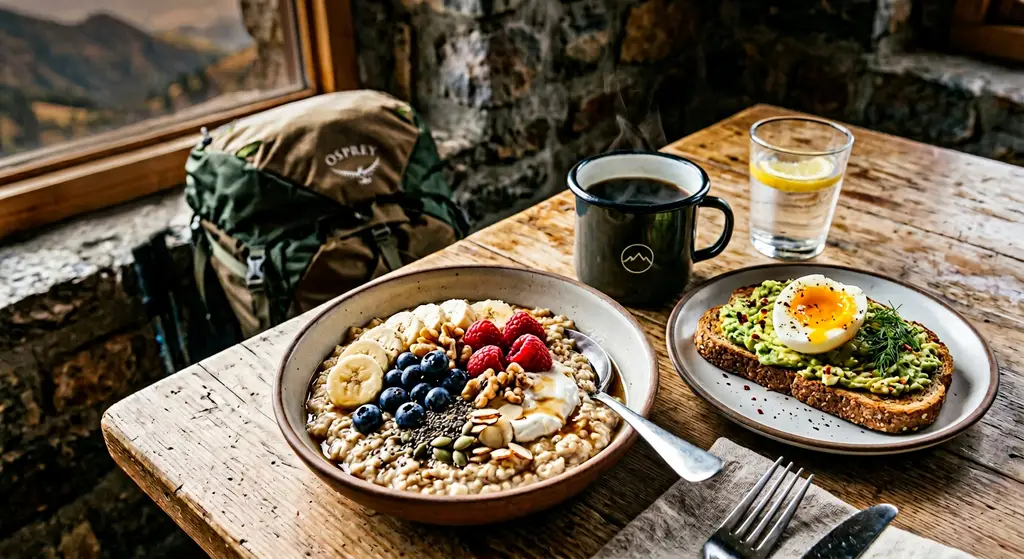
- Oatmeal: The most consistently recommended pre-hike breakfast by endurance athletes. It digests slowly and steadily, providing sustained energy without a blood sugar spike. Add a tablespoon of peanut butter for fat and protein. Rolled oats take 5 minutes to cook; overnight oats require no cooking at all, mix them the night before.
- Eggs and toast: Protein from the eggs, carbs from the bread. Works well for hikes starting 2+ hours after breakfast. Scrambled, fried, or poached, preparation doesn't matter nutritionally.
- Greek yogurt with granola and berries: Fast, easy, good protein. The granola provides carbs and the yogurt provides protein. The berries add micronutrients. This works well for hikes starting 90 minutes after eating.
- Bagel with peanut butter or cream cheese: A classic for endurance athletes. Bagels are dense, high-carb, and very digestible. A full bagel with 2 tablespoons of peanut butter is about 450 calories, appropriate for a half-day or longer hike.
- Smoothie: Useful when your appetite is low in the early morning. Blend oats, banana, protein powder or Greek yogurt, and almond milk. Liquid form digests faster, so give yourself only 60–75 minutes before starting.
- Waffles or pancakes: High glycemic, fast-digesting carbs. Good for early starts where you need quick energy. Add syrup freely, the simple sugars process fast. Pair with eggs for protein.
What Not to Eat Before a Long Hike
Some foods reliably cause problems on the trail:
- High-fat, high-protein breakfast only: Eggs and bacon with no carbs leaves your glycogen tanks low. You'll fade by mile three.
- Nothing: Fasted hiking works for short, easy walks but not for 8+ mile hikes with significant elevation. Your liver glycogen runs out in 60–90 minutes of moderate exercise and blood sugar drops. This is called bonking and it feels awful.
- Dairy-heavy meals if you're sensitive: A large glass of milk or a bowl of ice cream before a hard effort can cause GI distress mid-hike. Greek yogurt in moderate amounts is usually fine; a full glass of milk is riskier.
- High-fiber vegetables in large quantities: Broccoli, cabbage, raw kale, and beans before a long hike can cause significant bloating and gas. Fine in small amounts as part of a meal, problematic as the centerpiece.
- Alcohol the night before or morning of: Even a single beer the morning of a big hike impairs thermoregulation and increases dehydration. The night-before limit is one drink, more than that and you'll feel it on the trail.
Hydration Before You Start
Pre-hike eating and pre-hike hydration are inseparable. Arrive at the trailhead already well-hydrated, urine color is the easiest check, you want light yellow, not dark. Drink 16–20 oz of water in the two hours before you start hiking. Stop about 30 minutes before hitting the trail to avoid having to stop early for a bathroom.
On hot days or at elevation, add electrolytes to your pre-hike water. Sodium, in particular, helps your body retain the water you're drinking. A LMNT or Nuun tablet in your morning water is worthwhile on any hike over 5 miles or above 8,000 feet.
Pre-Hike Nutrition for Backpacking Trips
For multi-day backpacking, your first-day nutrition strategy matters most because that's when you're covering the most ground with the heaviest pack. The night-before dinner advice above applies exactly. For the morning of day one, eat a full breakfast at home or camp before shouldering your pack.
On subsequent days, the challenge shifts, camp cooking is limited and you're often eating freeze-dried meals or simple camp food. Front-load calories in the morning (oatmeal, tortillas with peanut butter) because camp dinners at elevation with tired legs often don't register real hunger until it's too late to digest properly before sleep.
What to Eat Before a Long Hike FAQs
90 minutes to 2 hours before you start is ideal. This gives enough time to digest without your blood sugar dropping before you hit the trail. For very early starts (before 5am), eat a small snack immediately and plan to eat a full breakfast at the trailhead.
For short easy hikes under 3 miles, fasting is manageable. For anything longer or with significant elevation gain, you'll bonk (run out of glycogen) and the hike will be miserable. Always eat before hikes over 5 miles.
White rice, pasta, and sweet potatoes are all excellent. White rice and pasta digest faster than whole-grain versions, which is actually an advantage when you want to top off glycogen quickly the night before.
Only if you couldn't eat a full meal 90+ minutes earlier. In that case, eat something small (banana, dates, a piece of toast), 100–200 calories of simple carbs that digest fast. Avoid eating a large meal within 30 minutes of starting hard effort.
Caffeine genuinely improves endurance performance, it's one of the few supplements with solid research behind it. A cup of coffee before a long hike is fine and may help. Just make sure you're well-hydrated, since caffeine is mildly diuretic.