Backcountry Food Has Gotten Significantly Better
The era of flavorless freeze-dried brick meals is over. The brands that dominate the backpacking food market in recent years, Backpacker's Pantry, Mountain House, Good To-Go, and a few smaller producers, make food that tastes genuinely good, not just tolerable after a 15-mile day. At the same time, the DIY approach has a dedicated following among experienced backpackers who are unwilling to pay $12–15 per meal for something they can replicate for $3.
This guide covers both: the best ready-made options and the DIY strategies that experienced backpackers swear by.
The Calorie Math
Food planning scales with the trip. On overnight and weekend backpacking trips you can carry whatever you like and barely notice. Past four days the weight of your food becomes the heaviest thing in the pack, and calories per ounce stops being a nerd metric and starts being the whole decision.
Before diving into specific meals, understand the numbers. Backpacking burns 400–600 calories per hour. A 10-hour hiking day demands 4,000–6,000 calories to sustain performance. Most backpackers aim for 1.5–2 lbs of food per day (roughly 100–125 calories per ounce). Under 100 cal/oz means you're carrying more weight than necessary. Over 125 cal/oz means you're probably carrying very rich food that doesn't provide enough volume to feel satisfied.
The practical target: plan 2,500–3,500 calories per day and let hunger guide supplementation. You'll almost certainly eat more on high-mileage days and less on rest days.
Best Freeze-Dried Brands
Mountain House, Most Reliable
Mountain House is the most widely available freeze-dried brand and the most consistent in quality. The Beef Stroganoff and Lasagna with Meat Sauce are genuinely good. The Scrambled Eggs with Bacon is a solid breakfast option. Pouches are resealable and cook-in-bag, which means one less dish to wash. Average price: $10–12 per serving.
Mountain House's freeze-drying process is the industry standard, and the 30-year shelf life makes bulk buying smart. REI, Cabela's, and most outdoor retailers stock it. For reliable, widely available, no-surprises backcountry food, it's the safe choice.
Good To-Go, Best Flavor
Good To-Go is a Maine-based company making freeze-dried meals from better ingredients than most competitors. The Thai Curry with Rice, Smoked Three Bean Chili, and Mushroom Risotto consistently get cited as the best-tasting backpacking meals available. All meals are gluten-free and use no artificial ingredients. Price is higher ($13–16) but the quality difference is real.
Good To-Go meals require more attention than Mountain House, cook times are longer and the water ratios need accuracy. But for hikers who care about eating well in the backcountry, they're worth seeking out.
Peak Refuel, Most Calories per Ounce
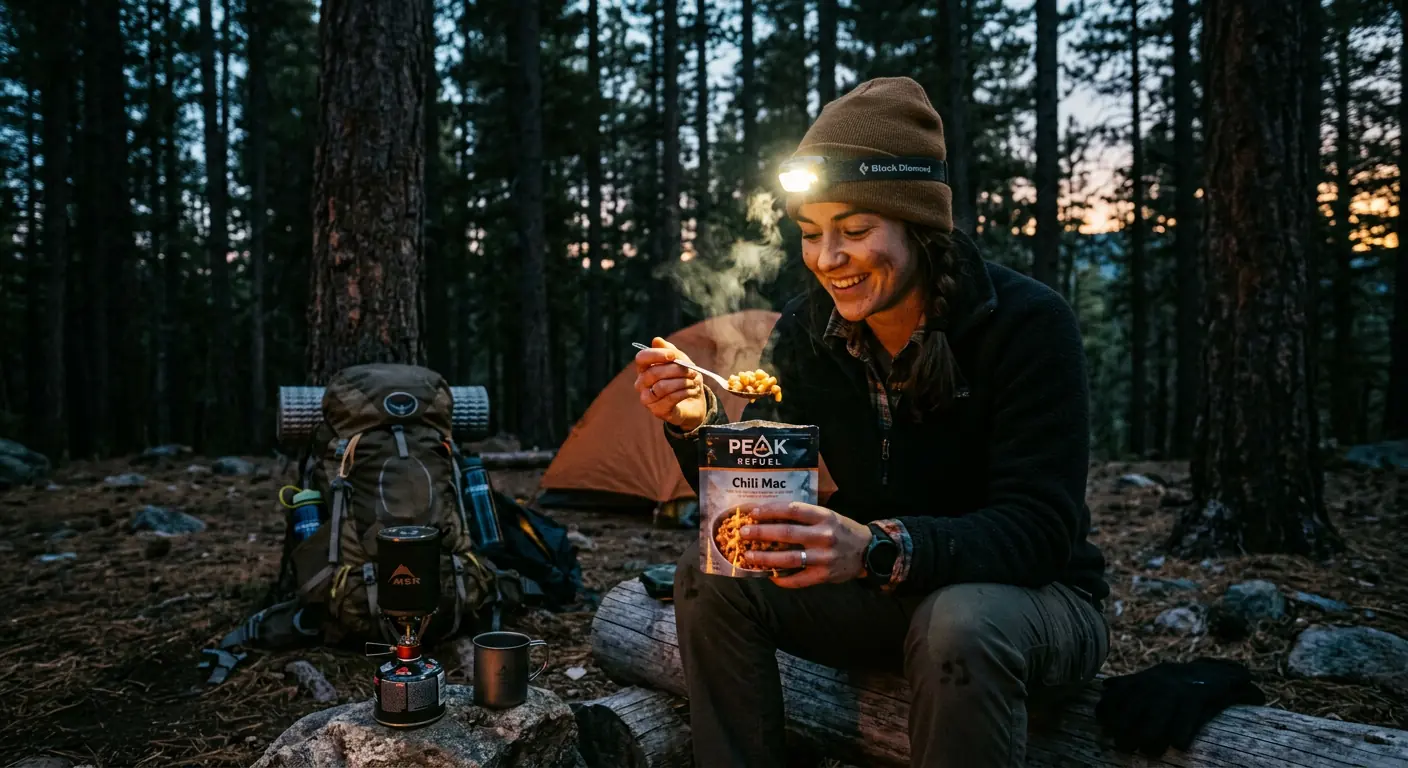
Peak Refuel is the choice when weight is the constraint. The meals use real freeze-dried meat and run higher in protein and calories per ounce than most of the field, so a single pouch is often a genuine dinner rather than the two-thirds of one you get elsewhere. The Beef Stroganoff and Chicken Alfredo are the standouts, and the Three Bean Chili Mac holds up. You add water, wait about ten minutes, and it rehydrates more evenly than most, which matters at altitude where everything takes longer.
Prices sit at the top of the range, roughly $13 to $17 a pouch. On a weekend that is not worth arguing about. On a ten-day carry it is real money, which is where the DIY section below starts to matter.
Backpacker's Pantry, Best Variety
Backpacker's Pantry has the widest menu of any freeze-dried brand, including options for vegans, people with specific allergies, and palates beyond "meat and pasta." The Pad Thai is excellent. The Louisiana Red Beans and Rice holds up to scrutiny. Their desserts (cheesecake, ice cream) are novelties that actually taste like what they claim to be.
Quality is slightly less consistent than Mountain House or Good To-Go, but the variety makes it the go-to for longer trips where eating the same three meals gets old fast.
Heather's Choice, Best Nutrition
Heather's Choice makes freeze-dried meals centered on nutrient density, actual macros from real food sources, not just carb-heavy filler. The Packaroons (coconut energy bites) are a popular trail snack. The breakfast options (Smoked Salmon Chowder, Apple Cinnamon Buckwheat Porridge) stand out in a category that mostly offers oatmeal. More expensive than mainstream brands ($14–18) but the calorie quality is higher.
DIY Strategies That Actually Work
The Instant Mashed Potato Base
Idahoan instant mashed potatoes cost $2–3 for a 4-serving pouch and provide 120 calories per ounce. Add olive oil (200 cal/oz, the highest-calorie food you can carry), hard cheese (100+ cal/oz, shelf-stable for 1–2 weeks), and a packet of instant gravy for a 700-calorie dinner that costs $2.50 and takes 5 minutes. This meal has fed through-hikers for decades. It's not exciting but it's filling, cheap, and calorie-dense.
Couscous Bowls
Instant couscous is the fastest-cooking grain available, you pour boiling water, wait 5 minutes, eat. Add sundried tomatoes, olive oil, cashews, and dried parmesan for a meal with 600–800 calories per serving. Total cost: $3–4. Prep time: under 10 minutes. Couscous doesn't absorb water perfectly at altitude, but it's close enough.
Ramen Upgraded
Ramen noodles are 190 calories per package and weigh almost nothing. The sodium content is absurd but after a sweaty day on trail, that's actually a feature. Add peanut butter (the packets from squeeze pouches are perfect), a crushed bouillon cube, sesame oil if you're carrying it, and dehydrated vegetables for a surprisingly good noodle bowl. Cost: under $2.
Tortillas as a Base
Flour tortillas are shelf-stable for 10+ days, provide 300 calories each, and are incredibly versatile. Roll them with peanut butter and honey for a 400-calorie breakfast. Wrap them around instant black beans and instant rice for a trail burrito. Eat them plain with olive oil. The Mission brand 8-inch burrito tortillas hold up better in a pack than smaller grocery store varieties.
Three DIY Dinners That Cost Under $3
Freeze-dried is convenience food. Dehydrated meals you build yourself out of the grocery aisle weigh about the same, cost a fifth as much, and taste like something you chose.
- Mac and cheese, upgraded. A boxed mac and cheese, plus 2 tbsp powdered milk and a foil packet of tuna or a handful of dehydrated peas. The powdered milk is what fixes the sauce, because the box assumes butter and milk you are not carrying.
- Couscous and lentils. Couscous rehydrates in five minutes off the stove, which saves fuel. Add instant lentils, a bouillon cube and olive oil in a small squeeze bottle for roughly 700 calories at about 5 oz.
- Ramen bomb. Instant ramen, instant mashed potato and a foil packet of chicken. It is the ugliest thing in this guide and the one long-distance hikers actually make.
Two rules make all three work. Carry a small bottle of hot sauce, because appetite fatigue is the real problem after day four and salt and heat fix more meals than any recipe does. And measure your water at home: write the amount on the bag in marker, so at camp you add water to a line instead of guessing and eating soup.
Snacks Worth Carrying
Snacks often account for 30–40% of daily calorie intake on trail. The standards that experienced backpackers return to repeatedly:
- Peanut butter (single-serve packets): 190 cal, 2 oz, no mess, incredibly satisfying.
- Dark chocolate: 170 cal per ounce, doesn't melt as fast as milk chocolate, antioxidants are a bonus.
- Mixed nuts: 160–180 cal/oz depending on mix. Buy in bulk, bag your own.
- ProBar Meal bars: 390 calories per bar, substantial enough to replace a meal in a pinch.
- Dried mango: 80 cal/oz (low for a snack), but the flavor break it provides on a monotonous food day is worth the calorie inefficiency.
- Salami or hard cheese: 120–130 cal/oz, shelf-stable 1–2 weeks, the fat and protein content satisfies in a way that carbs don't.
Food Safety on Trail
All food must be stored in a bear canister or hung in a bear bag at night, this is required in most backcountry areas and is common sense everywhere else. Keep food, trash, and anything scented (toothpaste, sunscreen, lip balm) out of your tent. Cook and eat at least 200 feet from your campsite.
Freeze-dried meals are fully shelf-stable. Cheese, hard salami, and nuts last 1–2 weeks without refrigeration in moderate temperatures. Avoid soft cheeses, deli meat, and anything with high moisture content. In hot conditions, be more conservative with any animal protein.
Best Backpacking Meals FAQs
Plan 1.5–2 lbs of food per person per day, targeting 100–125 calories per ounce. For a 3-day trip solo, that's 4.5–6 lbs of food. Adjust up for cold weather (your body burns more) and for high-mileage days. First-time backpackers almost always bring too much food; experienced hikers tend to bring too little.
For the convenience and consistency, yes, especially on longer trips when you don't want to think about meal planning. For budget-conscious hikers or those doing shorter trips, DIY approaches cost 60–70% less for similar calorie content. Many experienced backpackers mix both: freeze-dried dinners for easy end-of-day meals, DIY snacks and breakfasts to control cost.
Instant coffee has improved dramatically, Starbucks Via, Cusa Coffee, and Alpine Start all make instant coffee that tastes like real drip. For tea, any bag works. Bring a lightweight titanium mug and heat water from your stove. This adds minimal weight and makes morning camp genuinely pleasant.
Pack out all food waste, no burying, no scattering. Freeze-dried meal packaging is resealable; eat what you can and seal the remainder for pack-out. Biodegradable food like fruit scraps still needs to be packed out in most wilderness areas. A small trash compactor bag adds 1 oz and solves the problem.
Olive oil at 200+ calories per ounce is the densest calorie source you can carry. Peanut butter, nuts, and dark chocolate all exceed 160 cal/oz. Freeze-dried meals average 100–110 cal/oz. For calorie efficiency on difficult terrain, supplement your meals with fat-dense foods rather than adding volume.