Stove Choice Depends on How You Hike
There's no single best backpacking stove. The right choice depends on trip length, group size, altitude, season, and whether you're a boil-and-eat hiker or someone who makes real meals in the backcountry. Canister stoves work in most conditions, alcohol stoves save weight on short trips, and integrated systems win for convenience. Here's how to think through it.
Canister Stoves
Canister stoves connect to pressurized isobutane/propane fuel canisters. They're reliable, fast, and easy, screw on the fuel, press the igniter, boil water. The fuel canisters are widely available at gear shops and most outdoor recreation stores. Drawbacks: you can't fully use a canister (leaving some unusable fuel), canisters can't be taken on planes, and they perform poorly in cold weather below 20°F as pressure drops.
MSR PocketRocket 2
At 2.6 oz and $45, the MSR PocketRocket 2 is the canister stove to buy if you want reliability and nothing else. Boils a liter of water in 3.5 minutes, packs to the size of a golf ball, and fits a standard 100g or 230g fuel canister. The only criticism: it's top-heavy, so use a wide pot or on flat ground. It's the benchmark against which everything else is measured. For solo hikers and pairs on trips under 7 days, this is the stove.
MSR WindBurner
The MSR WindBurner ($130 for the solo system) is a canister stove with an integrated radiant burner designed specifically for windy conditions, the burner is enclosed within the pot system, preventing wind from killing your flame. It's significantly heavier than the PocketRocket (15.2 oz for the full system) and more expensive, but if you camp in exposed, windy terrain (alpine zones, coast, high desert), the performance difference is real. The PocketRocket in 30 mph winds is frustrating; the WindBurner in the same conditions works normally.
Jetboil Flash
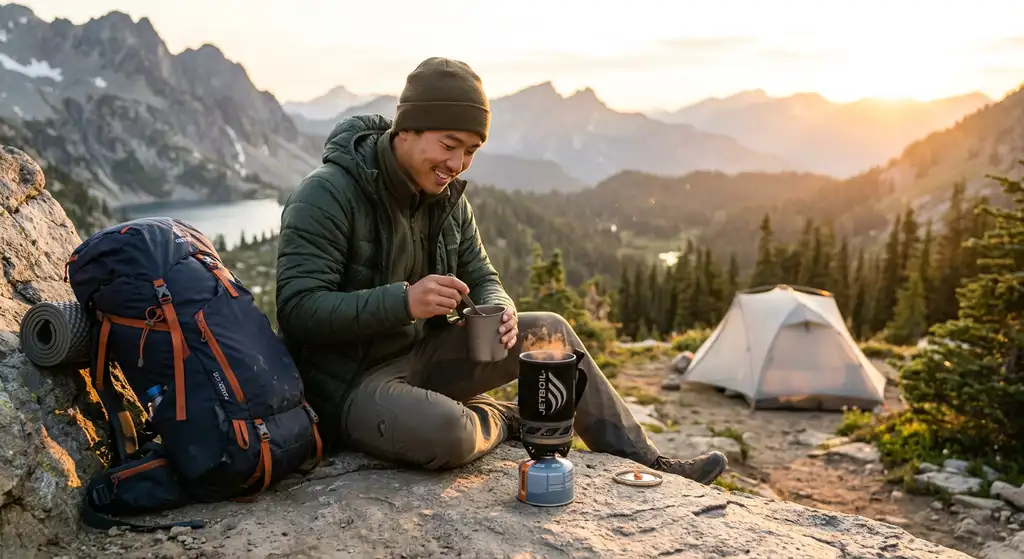
The Jetboil Flash ($110) is the integrated canister system that dominates car camping and guided trip use for good reason. It boils a liter in 100 seconds, faster than anything else in the category. The color-change heat indicator tells you when it's ready. The push-igniter starts reliably. The integrated cup-and-stove system is convenient. Weight is 13.1 oz, which is heavy for backpacking but acceptable for quick-boil-only meals. If your cooking style is "boil water, rehydrate meal, done," the Jetboil is the most convenient tool. If you want to cook actual food over a flame, the integrated pot doesn't suit that.
Alcohol Stoves
Alcohol stoves burn denatured alcohol or HEET (yellow bottle), available at hardware stores and gas stations. They have no moving parts to break, weigh almost nothing (1–2 oz for the stove itself), and are the choice of ultralight hikers on the Appalachian Trail and PCT.
The tradeoffs: slower than canister stoves (5–8 minutes to boil a liter), struggle in cold (below 20°F, alcohol's vapor pressure drops significantly), and require windscreens. They're also prohibited in some western national forests during fire season, so check regulations before relying on one.
Toaks Titanium Alcohol Stove
The Toaks alcohol stove ($20) weighs 0.5 oz and boils water as reliably as any alcohol stove on the market. For PCT and AT through-hikers who want to minimize stove weight and can resupply fuel easily, this plus a titanium pot and a windscreen is the complete cooking system at under 5 oz. Fuel cost is much lower than canisters for long trips.
Trangia Spirit Burner
The Trangia Spirit Burner ($20) is the original alcohol stove design, still made in Sweden, with a simmer ring that allows flame control, something most alcohol stoves lack. More predictable heat output. Pairs with the Trangia cook system for a remarkably complete camp kitchen at reasonable weight.
Wood Gasifier Stoves
Wood stoves burn sticks and twigs, no fuel to carry. The appeal is obvious: unlimited fuel wherever trees grow. The reality check: gathering dry wood takes time, fires are prohibited in many areas (check before you go), and wood stoves don't work well in wet conditions.
BioLite CampStove 2
The BioLite CampStove 2 ($150) uses a forced-air combustion system that makes wood fires more efficient and generates electricity via a thermoelectric module, you can charge your phone while cooking. Genuinely impressive technology. Weight is 2 lbs, which is heavy for backpacking but not unreasonable for basecamp use. The electricity generation is modest (about 1W continuous) but enough to top up a phone in a few hours of cooking. For car camping and established basecamp situations where wood is abundant and fires are legal, it's a compelling product. For backpacking trips where fire restrictions are common, it's a liability.
Making the Right Choice
- Solo or pair, short trips (1–4 nights): MSR PocketRocket 2. Unbeatable price-to-performance.
- Solo, long trips (5+ nights), weight-conscious: Alcohol stove system. Lower fuel cost, lighter total kit.
- Windy alpine environments: MSR WindBurner or Jetboil with windscreen.
- Groups of 3+: Canister stove with a larger pot, or two stoves for faster cooking.
- International travel: Alcohol stove (fuel available globally) or white gas stove (MSR WhisperLite, works in extreme cold and altitude).
Fuel Planning
For canister stoves: a 100g canister lasts about 10–12 boil cycles on a solo trip. A 230g canister handles 3–4 days for a couple. Plan conservatively, cold temperatures and wind increase fuel consumption significantly. Buy an extra canister for trips longer than 5 days. You can't mail fuel or bring it on a plane, so plan resupply points if thru-hiking.
Best Wood Burning Backpacking Stove and Canister Options FAQs
Alcohol stoves are the lightest, the Toaks Titanium weighs 0.5 oz. For canister stoves, the Snow Peak LiteMax at 1 oz is the lightest available. Integrated systems (Jetboil, MSR WindBurner) are the heaviest at 13–16 oz but include the pot and offer the most convenience.
Yes, canister stoves work well above treeline. Wood stoves obviously don't. At very high altitude (over 14,000 feet), the reduced atmospheric pressure affects canister stoves, they still work but may be less efficient. Bring an extra canister for high-altitude trips. Wind management becomes critical above treeline regardless of stove type.
You can't tell by looking. Weigh it, a full 100g canister weighs about 200g, and the empty canister weighs about 95g. Some hikers mark the starting weight with a marker. Apps like FuelGauge (for iPhone) calculate remaining fuel based on canister size and weigh-in. When uncertain on a multi-day trip, bring an extra canister.
No, for most backpacking use. Campfires are banned or restricted in many areas, take 20–30 minutes to build and prepare, produce inconsistent heat, leave a fire ring impact, and don't work at all in wet conditions. A stove boils water in 3–5 minutes reliably every time. Reserve campfires for established fire rings at designated sites when conditions allow, not as a primary cooking method.
Canister stoves struggle below 20°F as isobutane vapor pressure drops. Solutions: warm the canister in your sleeping bag before use, use stoves with a pre-heat tube (MSR WindPro II), or switch to white gas (MSR WhisperLite) which works at any temperature. Alcohol stoves struggle most in cold, denatured alcohol's vapor pressure drops significantly below freezing. In winter conditions, white gas is the reliable choice.