Fees, deadlines and rules checked on nps.gov and fs.usda.gov on October 23, 2026. Each park sets its own conditions, so read your park's CUA page before you apply. Where a park doesn't publish something, we say so.
CUA vs Concession Contract
The NPS uses two main tools to let businesses work in parks. A CUA is required for paid visitor services "when a concession contract is not necessary." The NPS describes CUAs as limited-term permits for activities that generally begin and end outside the park, priced to cover the park's cost of managing them. You apply, and if your business and plan meet the conditions, you get one.
A concession contract is a different animal. Parks put those out to bid through a prospectus, proposals are scored, and one company wins the right to run a service, often for many years. Grand Teton puts it plainly: activities such as guided kayak tours, climbing, fishing, scenic float trips and youth backpacking "are only authorized under competitive concession contracts, which are generally put out for bid every 10 to 20 years." Glacier does the same with guided hiking. Its page says day hiking and backpacking trips are "only permitted through Glacier Guides, Inc., our current concessioner. There is no CUA available for this service."
So the first question for any guide is whether the park offers a CUA for your activity at all. If it's concession only, no amount of paperwork gets you in until the next prospectus.
Who Needs a CUA
The NPS rule has three parts. You need a CUA if you provide any goods, activities or services to park visitors that:
- take place at least in part on land managed by the NPS,
- use park resources, and
- result in compensation, monetary gain, benefit or profit to you.
That covers a solo guide leading one backpacking trip a year as much as a company with ten guides. Nonprofit status doesn't exempt you either. Grand Teton defines commercial activity as anything that results in compensation or profit "whether or not such entity is organized for purposes recognized as non-profit." If your trip starts outside the park but spends a day inside it, you still need one.
How to Apply for a CUA, Step by Step
- Find the park's CUA page. Every park runs its own program through its commercial services or business office. The NPS Applying for a CUA page links to each park, and the online CUA system now shows each park's service types, conditions and fees even when it isn't taking applications.
- Check that your activity is offered. Parks list exactly which CUA types they issue and what each one allows: trails, group sizes, seasons.
- Read the operating plan for your activity. Some parks ask you to sign and return it with the application.
- Gather your documents. Zion's checklist is a good example of what parks ask for: proof of insurance (general liability and commercial auto, on an ACORD form, with professional liability not accepted), copies of every guide's current first aid and CPR cards and driver's license, the signed operating plan, your pre-trip safety talk, and copies of your ads or website. Yellowstone adds its own application questions form.
- Apply and pay at cua.nps.gov. Glacier notes that staff don't receive your application until the fee is paid.
- Operate by the conditions once approved. Grand Teton, for example, requires guides to carry a copy of the CUA, keep all business transactions outside the park, and include the line "authorized permittee of Grand Teton National Park" in brochures and websites.
- File your annual report. The NPS reporting page says the report covers visitor numbers, reportable injuries and gross receipts from park operations. Due dates vary by park: Yellowstone and Zion want it by January 31, Glacier by February 28. Zion requires one even if you ran zero trips, and the NPS says missing a report can get your next application denied.
What a CUA Costs
There are two fees. The NPS fee page sets a standard, nonrefundable application fee, and each park picks how it charges a management fee on top.
| Fee | Amount | When you pay |
|---|
| Application fee | $350 for your first application, $250 for each later application to the same park in the same CUA season | When you apply |
| Market price management fee | 3% of gross receipts under $250,000, 4% from $250,000 to $500,000, 5% above $500,000 (tiered), minus the application fee | After your annual report |
| Flat management fee | Set by the park, disclosed when you apply | With your annual report |
| Per person management fee | Set by the park, based on how many visitors you bring | After the park checks your report |
| Direct cost recovery fee | The park's actual cost of managing your CUA, given to you at the end of the term | With your annual report |
The market price method is the one you'll see most for guided trips. Yellowstone, Glacier and Zion all publish it. The NPS example: a holder who earns $750,000 in the park pays 3% on the first $250,000, 4% on the next $250,000 and 5% on the rest, for $30,000 minus the application fee. A guide who earns $40,000 in a park pays 3%, or $1,200, and the $350 already paid counts toward it.
Don't forget entrance fees. Grand Teton and Yellowstone both say clients 16 and older pay park entrance fees, and Yellowstone says guides can't use their own annual pass to cover clients. Build that into your price. Backcountry permits are separate too, and Yellowstone notes they come with their own fees.
Insurance and First Aid Requirements
The NPS insurance page says CUA holders typically need general commercial liability of $500,000 per occurrence, that higher-risk activities like guided rock climbing may need more, and that you may also need commercial auto insurance. Park superintendents set the final amounts, so check your park's application. The EXPLORE Act changed two things. All CUA holders can now use exculpatory agreements (liability waivers), and the NPS no longer requires a commercial general liability policy for CUAs covering only "low-risk activities," as the superintendent decides. For a backpacking or paddling guide, plan on needing a policy. Our tour operator insurance guide covers what that costs and who writes it.
First aid rules are also set park by park. Grand Teton requires every guide to hold standard first aid and CPR and carry a first aid kit. Zion requires basic first aid and CPR on file for every guide. Yellowstone's overnight backcountry CUA requires first aid and CPR for all guides and a Wilderness First Responder, Wilderness First Aid or EMT certification for one guide on every trip. If you're choosing a course, see Wilderness First Responder cost and course length.
How Long It Takes and When to Apply
The NPS doesn't publish one processing time, and the parks vary a lot. What the parks we checked say:
| Park | Processing time | Application window |
|---|
| Yellowstone | Up to 45 days | Year-round. Apply by November 15, 2026 to start January 1, and at least 45 days before your first trip otherwise. |
| Grand Teton | Not published | November 3, 2026 to April 1, 2027 for 2027 CUAs |
| Glacier | Not published. Incomplete applications are processed for no more than 15 business days after the window closes, then denied. | Winter CUAs November 1 to December 1, 2026. Spring and summer CUAs January 15 to March 31, 2027. |
| Zion | At least three weeks from the date received | The 2026 window closed March 31, 2026. The 2027 window wasn't posted on the page we read. |
Most CUAs last up to one year or one season. Yellowstone's activity-based CUAs run January 1 to December 31, so you reapply each year. Put the renewal on your calendar the same way you would an insurance renewal.
Common CUA Activity Types
Parks group CUAs by activity, and the online system uses standard service types such as backcountry hiking, frontcountry hiking and walking, bicycle tours, photography instruction, skiing and snowshoeing tours, and transport. Yellowstone's list is one of the broadest and is a good picture of what an outdoor guide might apply for: guided overnight backcountry trips, guided non-motorized boating, guided stream and shoreline fishing, guided interpretive tours (including day hiking), guided skiing and snowshoeing, avalanche safety courses, painting and photography workshops, bicycle tours and motorized boating. Each one is a separate CUA with its own operating plan, and each later application to the same park costs $250.
What Four Big Parks Require
Yellowstone
Yellowstone is the most open of the four for hiking and paddling guides. Its overnight backcountry CUA allows up to three groups in the backcountry per day, with a maximum group size of 12 including guides. Each guide carries a topo map, bear spray, a first aid kit and a reliable emergency communication device. You can't apply for backcountry permits until the CUA is issued and last year's reports and fees are paid, and a CUA doesn't guarantee campsites. Kayak and canoe guides apply for the non-motorized boating CUA, which covers Yellowstone, Lewis and Shoshone Lakes. Management fees follow the 3%, 4% and 5% tiers, with the annual report due January 31. Details are on the Yellowstone CUA page and application page, and the office is at yell_cua_admins@nps.gov.
Grand Teton
The Grand Teton CUA page lists guided interpretive tours, photography and painting workshops, bicycle tours, auto-shuttles, step-on guides and guided youth day hiking, among others. Youth day hiking is limited to people under 21, 10 participants per group and 120 youth per operator per season, with no overnight trips. Guided kayak tours, climbing, fishing and backpacking aren't available as CUAs here. They run under concession contracts. Every guide needs standard first aid and CPR. Applications for 2027 open November 3, 2026.
Glacier
Glacier issues CUAs for cross-country ski and snowshoe tours, bicycle tours, photography and art workshops, and shuttle services. There's no CUA for guided hiking or backpacking, which run only through the park's concessioner. Annual reports are due February 28, and a late report suspends your current CUA. The application page lists both windows.
Zion
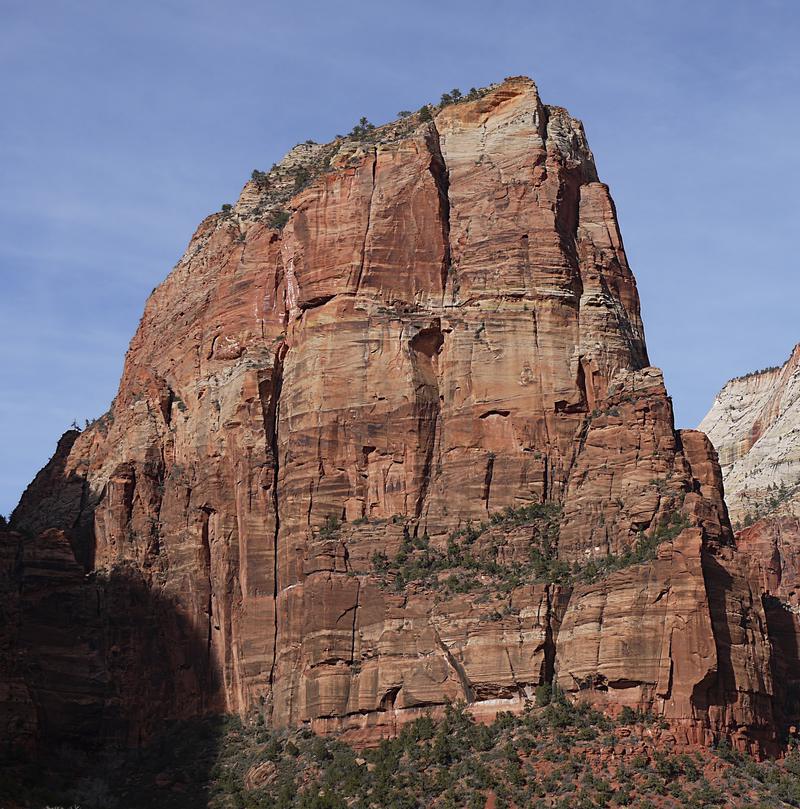
Zion offers frontcountry guided hiking in two sizes: Level III for groups of 1 to 15 people and Level II for groups of 16 to 50. Guiding is limited to a published list of trails, and wilderness areas are off limits. Angels Landing has its own commercial permits on Recreation.gov: a $6 reservation fee plus $3 per person, a maximum of six guests plus one guide, and commercial trips only on Monday, Tuesday, Wednesday and Saturday. Zion rejects incomplete application packages and says to allow at least three weeks.
Forest Service Land Is Different
National forests don't use CUAs. Guiding there takes an outfitter-guide special use permit from the forest where you'll work. The Forest Service application page says you need one "if there is a fee being charged or if income is derived from the use," and that you must hold a preapplication meeting at the local office before you apply. Commercial applicants may need a business plan, operating plan and liability insurance. Costs are cost recovery fees for processing and monitoring plus land use fees, set forest by forest. The Idaho Panhandle National Forests ask for insurance naming the U.S. Government as additional insured, and in Idaho most outfitters also need a state license. The Rogue River-Siskiyou notes the permit isn't transferable when you sell your business. For examples of forest permit fees, see how to start a tour company.
Once You Have Your Permit, List Your Trips
A CUA lets you guide in the park. It doesn't bring you guests. ExplorOFF is a marketplace for multi-day outdoor trips in national parks and wild places, and travelers find your trip next to the day-by-day itinerary for the route they're already planning. It's free to list, there's no exclusivity, and we take 15% plus card processing only on bookings we bring you. Payouts go through Stripe. A person reviews every guide profile by hand, including your insurance and your CUA, within 24 hours. List your trip on ExplorOFF.