Northern Lights in Yellowstone: Odds, Locations and When to Try
Yellowstone sits at about 44.5 degrees north, too far south for routine aurora. You need a strong geomagnetic storm, roughly Kp 7 or above, for the lights to appear above the northern horizon here, which happens a handful of nights a year. What the park does give you is some of the darkest sky in the lower 48 and an unobstructed north facing horizon at Lamar Valley, Hayden Valley and Lake Butte Overlook. Watch the free NOAA Space Weather Prediction Center forecast and be ready to move the same night.
Be honest about the odds
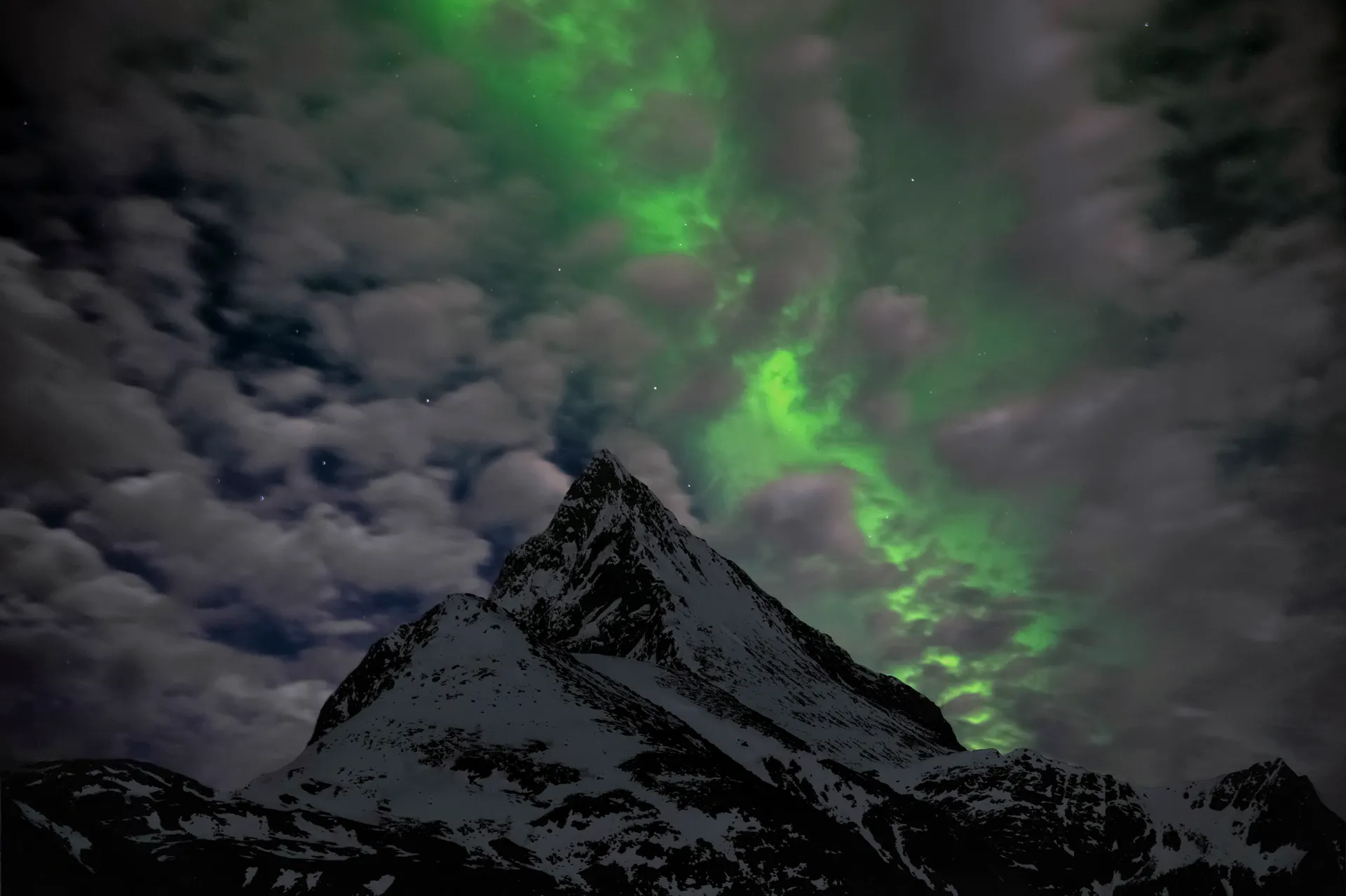
Most images captioned as northern lights over Yellowstone were taken during major storms, and major storms at this latitude are rare. In a normal year you might get three to six nights when the aurora is visible to the naked eye from northern Wyoming and southern Montana, and on most of those it shows as a green glow low on the horizon rather than overhead curtains. A camera on a tripod will record far more colour than your eye sees, which is why the photographs oversell the experience.
The one thing in your favour is the solar cycle. Activity peaked in 2024 and 2025 and stays elevated on the way down, so the late 2020s are a better window than the early 2020s were.
Where to stand
You need an open northern horizon, no town glow and no trees. Four places in and near the park do it well:
- Lamar Valley. Wide, dark, north facing and reachable by car all year on the plowed north road. The best single choice.
- Hayden Valley. Equally open, but the road is closed to cars in winter, so this is a late September and October option.
- Lake Butte Overlook. High above Yellowstone Lake on the East Entrance road, with a long view north across the water.
- Mammoth and the Blacktail Plateau. Accessible all winter, some light from the village, but easy to reach at short notice.
When to try
- Around the equinoxes. Geomagnetic activity runs higher near late September and late March. Late September is the sweet spot here because the roads are still open and the nights are already long.
- New moon. A full moon will wash out a weak display completely.
- Between 10pm and 2am. Local midnight is the usual peak, though a strong storm can produce something at any hour of darkness.
- Not in midsummer. June and July nights are too short and never fully dark.
How to actually catch one
The useful tool is the NOAA Space Weather Prediction Center 30 minute aurora forecast, which is free and updates continuously. Watch the Kp index: below 6 there is no point at this latitude, at 7 the aurora is plausible on the northern horizon, and at 8 or 9 it can reach overhead. Sign up for an alert service so you are told rather than checking. Then have a plan you can execute in 20 minutes, because storms do not wait.
For the camera: a wide lens at its widest aperture, ISO around 3200, and exposures of 5 to 15 seconds on a tripod. Focus manually on a bright star before the light arrives. Bring more warm clothing than you think, because standing still in Lamar Valley at 1am in October is a different proposition from hiking there at noon.
Pair it with something reliable
Do not build a trip around the aurora. Build it around the park and treat a display as a bonus. Our Yellowstone photography guide covers the subjects that are there every night, and Yellowstone in winter covers access once the roads shut.
Northern Lights in Yellowstone: Odds, Locations and When to Try FAQs
Occasionally. At about 44.5 degrees north the park needs a strong geomagnetic storm, roughly Kp 7 or above, which happens only a handful of nights a year. When it does, the aurora usually shows as a glow on the northern horizon rather than overhead.
Lamar Valley. It is wide, dark, faces north and its road is plowed and open to cars all year. Hayden Valley and Lake Butte Overlook are equally open but lose car access in winter.
Late September and late March, when geomagnetic activity runs higher around the equinoxes. Late September is better here because the park roads are still open and the nights are already long.