What the Hurricane Falls Trail Actually Is
The Hurricane Falls Loop is the signature day hike at Tallulah Gorge State Park in Northeast Georgia, and it is the hike most first-time visitors come for. It is short on paper, roughly two miles round trip from the Jane Hurt Yarn Interpretive Center, but it earns its strenuous rating through sheer vertical drop. You descend a long series of metal staircases, cross a swaying suspension bridge roughly 80 feet above the Tallulah River, and then climb back out the way you came. The payoff is a face-to-face view of Hurricane Falls, the tallest of the gorge's six named cascades.
If you want the full overnight version with the rim overlooks and the gorge floor, see our Tallulah Gorge weekend hiking itinerary, which folds this loop into a two-day plan.
The Stairs: Know the Numbers Before You Go
The trail combines two staircase systems. From the North Rim you take roughly 310 steps down to the suspension bridge, and from the bridge it is another 221 steps down to the Hurricane Falls overlook at the bottom. Counting both rims and the connecting boardwalk, you will hit and exceed 1,000 metal stairs on the round trip. The descent feels easy. The return climb is where people stop to catch their breath.
- North Rim to bridge: about 310 stairs down
- Bridge to Hurricane Falls overlook: about 221 stairs down
- Total elevation change: roughly 350 feet from rim to gorge floor overlook
- Surface: open metal grating, which can be slick after rain and hot in direct summer sun
The Suspension Bridge
The suspension bridge is the centerpiece. It hangs above the river just downstream of Hurricane Falls and gives you a clear sightline up at the falls and down into the rocky gorge below. It is sturdy and rated for foot traffic, but it does flex and bounce when several people are on it at once, which is part of the fun. On busy fall weekends you may wait a minute or two for space to take a photo. Tripods and large gear can be awkward here, so keep your camera on a strap.
Difficulty and Who Should Skip It
Fitness matters more than distance on this trail. The constant stair climbing is hard on knees and lungs, and there is no shortcut back to the top once you commit to the bottom. If you have heart conditions, serious mobility limits, or you are carrying a young child, the North and South Rim Trails offer the same gorge views from level paved paths without the descent. The park posts signs reminding hikers that there is no rescue elevator. Bring water and take the climb out slowly.
Permits and Timing
The Hurricane Falls Loop itself does not require a permit. A free permit is only needed if you continue past the overlook onto the gorge floor, where the park limits numbers and may close access during dam water releases. Arrive early on weekends from October through April, because the lot at the interpretive center fills by mid-morning and parking is limited. A daily parking fee applies per vehicle.
What to Bring
- Real shoes with grip, not sandals, for the metal grating
- At least one liter of water per person; there is no water source on the trail
- A light layer, since the gorge floor stays cooler and damper than the rim
- A phone or camera on a secure strap for the bridge
Where the Trail Starts and How the Loop Flows
Everything begins at the Jane Hurt Yarn Interpretive Center on the North Rim, off US Highway 441 in Tallulah Falls. Park there, pay the daily fee, and pick up the paved North Rim path. Overlook 2 gives your first real look down at the suspension bridge and the falls before you commit to the stairs. Most hikers descend the North Rim staircase to the bridge, drop to the Hurricane Falls overlook, then climb back the same way. You can also exit up the South Rim staircase and walk the rim back across the highway bridge, which turns the out-and-back into a true loop and lets you tick off Overlooks 8 through 10 on the South Rim for views of Oceana and Bridal Veil Falls.
Reading the Six Waterfalls
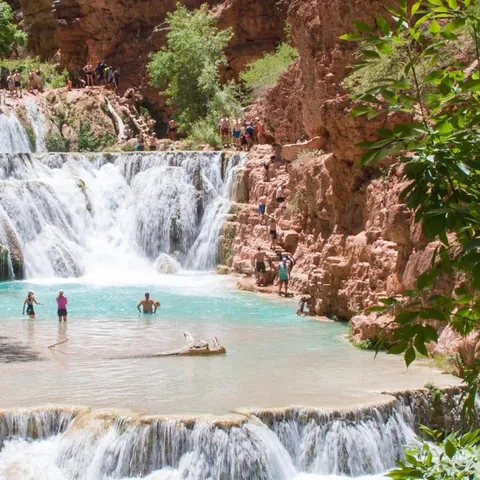
Tallulah Gorge holds a chain of named cascades, and the Hurricane Falls Trail puts you closest to the biggest one. From upstream to downstream the gorge runs through Ladore Falls, Tempesta Falls, Hurricane Falls, Oceana Falls, Bridal Veil Falls, and Sliding Rock. Hurricane Falls, the one you stand beneath at the bottom of the stairs, drops about 96 feet and is the loudest and most dramatic from the gorge floor overlook. The rim overlooks let you trace the others without descending, so even if the stairs are not for you, you still see the heart of the gorge.
Seasonal Conditions on the Stairs
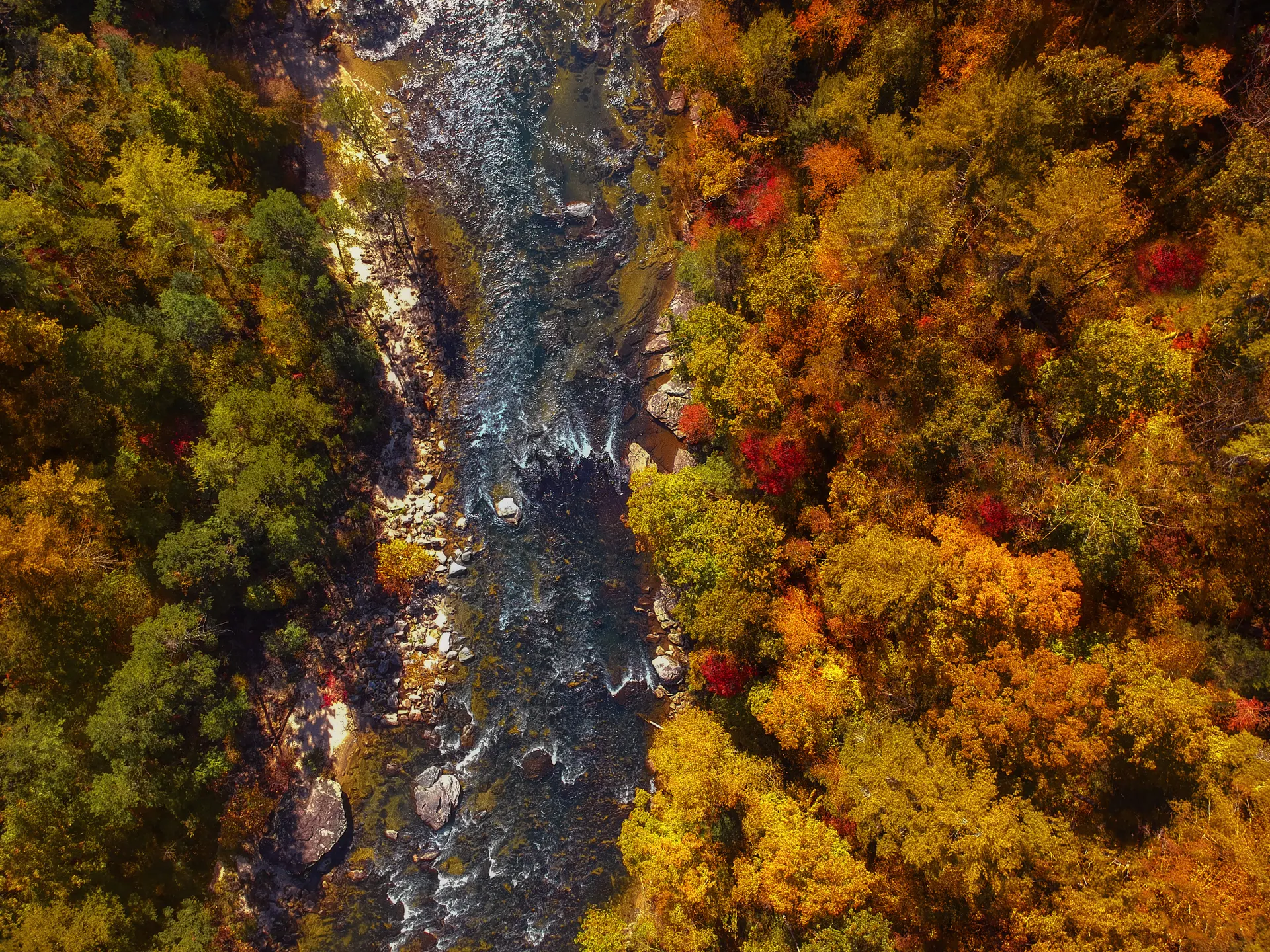
The metal grating behaves very differently across the year. In summer the open steel bakes in direct sun and the gorge floor turns humid, so an early start matters. After rain or in winter the same grating gets slippery, and a cold snap can leave a thin glaze of ice on the upper steps. Spring delivers the strongest natural waterfall flow and the most thundering Hurricane Falls, while October frames the descent in red and gold foliage. Whatever the season, the climb out is the hard part, so save energy for it and pace yourself on the way down.
Make a Weekend of It
Most people pair the Hurricane Falls Loop with the rim overlooks and a meal in nearby Clayton or Tallulah Falls. If you have two days, our complete Tallulah Gorge weekend itinerary sequences the stairs, the bridge, the gorge floor permit hike, and the best viewpoints so you are not backtracking. Spring brings the heaviest waterfall flow, and late October delivers the foliage, so plan your trip around what you want to see.
Hurricane Falls Trail at Tallulah Gorge FAQs
The full round trip exceeds 1,000 metal stairs. From the North Rim it is about 310 steps down to the suspension bridge and another 221 steps down to the Hurricane Falls overlook, with the same climb back out.
No. The loop down to the suspension bridge and Hurricane Falls overlook does not require a permit. A free gorge floor permit is only needed if you continue below the overlook to the river bottom, where daily numbers are limited.
It is rated strenuous. The distance is only about two miles round trip, but the continuous stair climbing and roughly 350 feet of elevation change make the return climb demanding. Anyone with heart or mobility concerns should stick to the level rim trails.