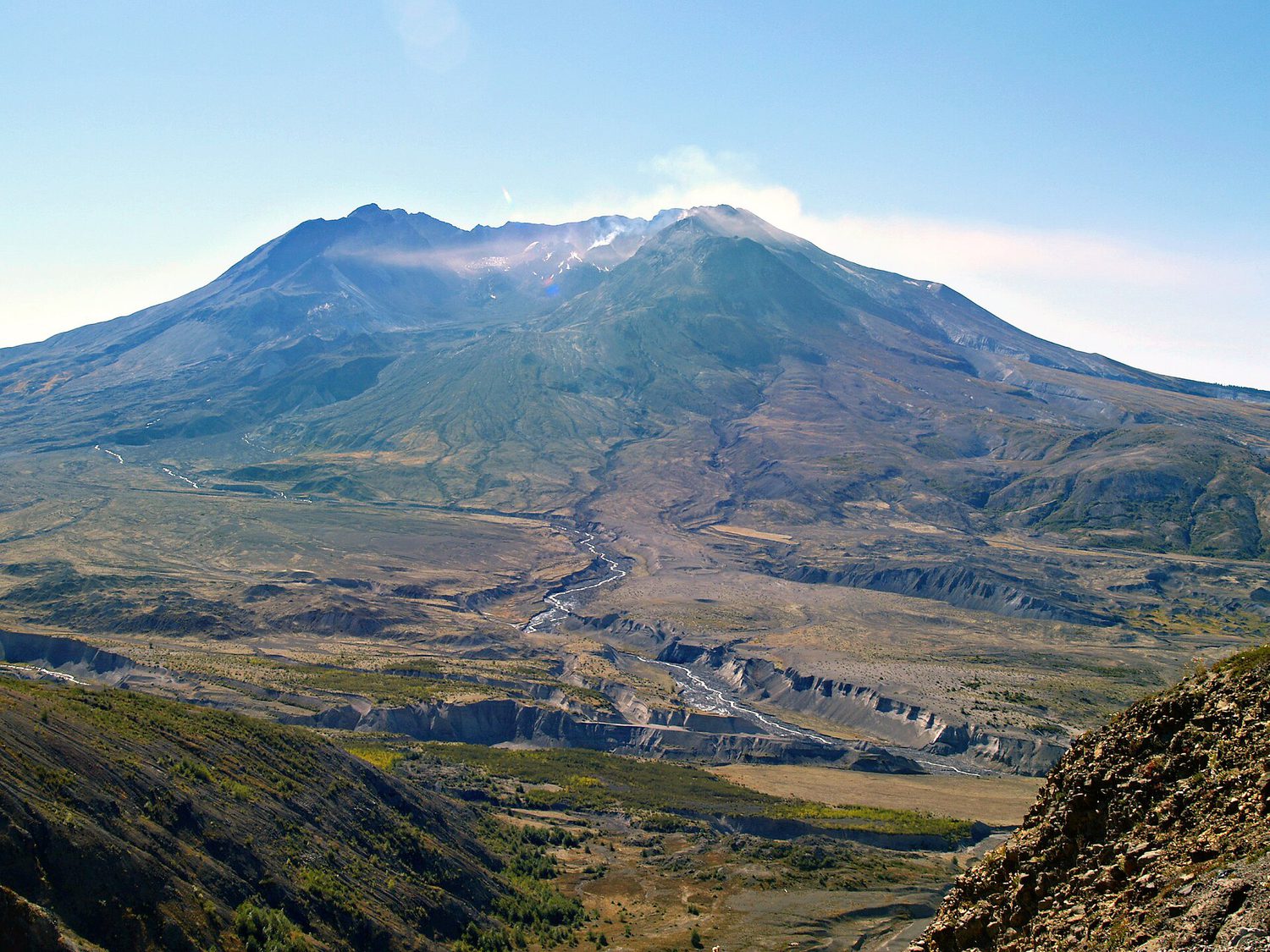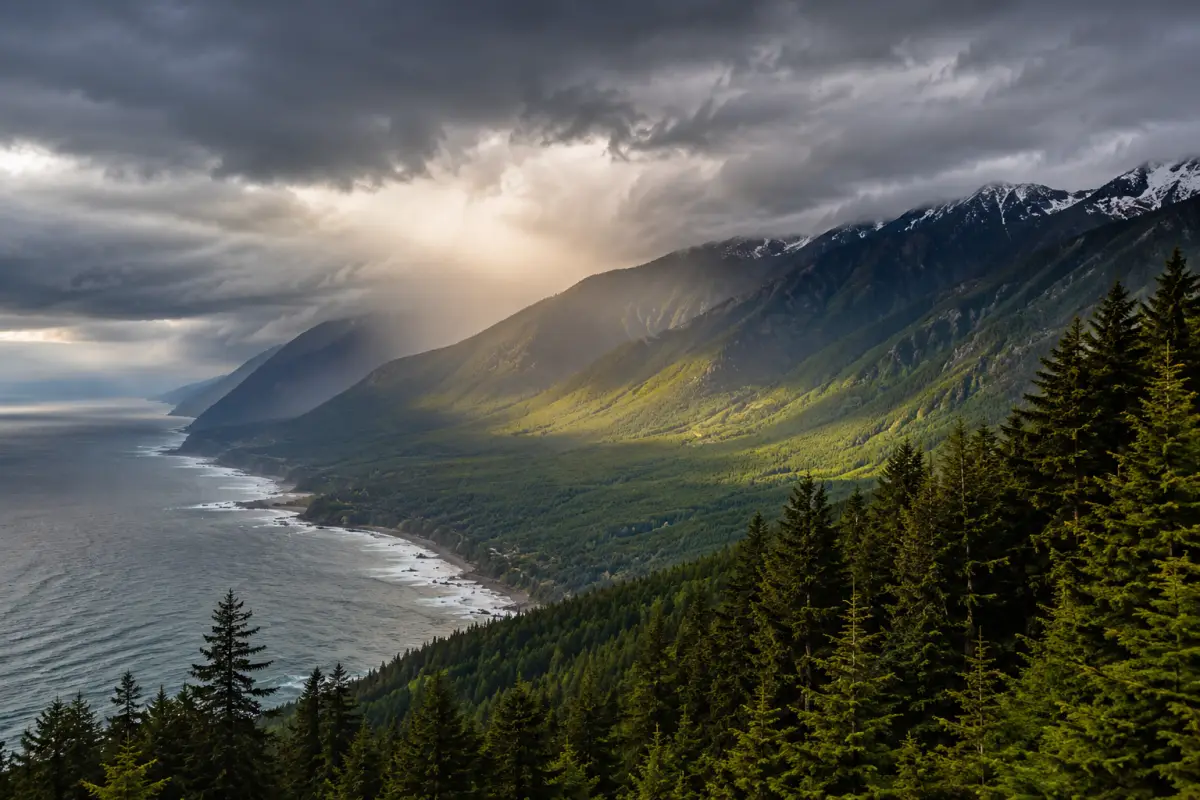
The Two-Sentence Explanation
Wet Pacific air sweeps in from the west and hits the Olympic Mountains, which force it up, cool it, and wring out 12 to 14 feet of rain per year on the western slopes. By the time the air spills down the eastern side of the range, it's warm and dry, creating one of the most extreme rain shadows in North America. Sequim, on the dry side, gets the same annual rainfall as Los Angeles.
The Numbers
- Hoh Rain Forest (west side): 144 inches of rain per year (12 ft).
- Forks: 120 inches per year (10 ft).
- Port Angeles: 25 inches per year.
- Sequim (the eye of the shadow): 15–17 inches per year, same as Los Angeles, less than Seattle.
- Port Townsend: 19 inches per year.
From the Hoh to Sequim is about 70 miles as the crow flies. The rainfall difference between those two points is the largest in the continental United States.
Why It Happens (Geography in 60 Seconds)
The Olympic Mountains rise to nearly 8,000 feet directly off the Pacific. Maritime air carrying enormous moisture from the open ocean is forced upward when it hits the western slopes. As the air rises it cools, water vapor condenses, and torrential rain dumps on the windward side. The now-dried air descends the eastern slopes, warming as it falls (the same physics that gives Colorado its "Chinook" winds), pulling humidity out of the air rather than depositing it.
The same phenomenon makes the Cascade rain shadow east of Seattle, and the most famous rain shadow in the world east of the Sierra Nevada in California. The Olympic version is more extreme because the mountains rise so abruptly and the moisture source is so close.
The Practical Map
Imagine the Olympic Peninsula as a donut. The western edge (Forks, La Push, Hoh, Quinault) is the wet zone. The center (the Olympic Mountains themselves) is the squeezed zone. The northeastern edge (Sequim, Port Townsend, Whidbey Island, the San Juan Islands) is the dry zone. The transition happens fast: drive an hour west of Sequim and you're in the rain forest.
Looking for a visual? The NPS publishes a precipitation map that makes the gradient obvious. The shape of the dry zone is roughly a teardrop pointing northeast from the mountain crest.
How to Use It for Trip Planning
- Wet forecast on the coast? Drive 90 minutes northeast to Sequim. It'll likely be sunny.
- Honeymoon, photo trip, sunny weekend? Base in Port Townsend or Sequim, not Forks.
- Want the rain forest experience? Plan for Forks/Hoh/Quinault, and bring rain gear.
- Wildflower season? The Dungeness Spit and Sequim lavender farms peak in July, drier weather makes for better visiting than the western coast.
- Storm watching? Stay on the west coast (Kalaloch, Ruby Beach) in winter for the full effect.
What to Do in the Dry Zone
- Sequim Lavender FarmsJuly is festival month; over 30 farms open to visitors. The dry, sunny climate is what lets lavender thrive here.
- Dungeness Spitthe longest natural sand spit in the US (5.5 miles), with a lighthouse at the end. Walkable at any tide, but stay landward of the wildlife refuge boundary on the inner side.
- Port TownsendVictorian seaport town with one of the best preserved 19th-century downtowns on the West Coast.
- Hurricane Ridgedrive up out of Port Angeles for an alpine day even when the coast is socked in.
- Olympic Discovery Trailpaved rail-trail through the dry zone connecting Port Townsend to Port Angeles.
What to Do in the Wet Zone
The wet side gets the rain forest, the most photogenic coastline in the country, and the deep wilderness backpacking, see our Olympic Peninsula Backpacking Guide. Embrace the rain; the moss, ferns, and old-growth trees only exist because of it.
The 3-Day Loop and the Rain Shadow
The 3-day Olympic Peninsula Loop goes around the entire peninsula clockwise from Seattle, which means you experience the rain shadow first-hand: dry weather in Port Angeles on Day 1, rain on the Hoh on Day 2, then back into the rain shadow at Quinault. The contrast in a single 3-day trip is the loop's signature feature.
Common Mistakes
- Booking lodging in Forks during a sun-trip. If you came for sun, base in Sequim or Port Townsend.
- Checking only the "Olympic Peninsula" forecast. There's no such thing, check the specific town. Forks and Sequim might differ by 50°F and 4 inches of rain on the same day.
- Skipping the dry side. Sequim and Port Townsend are some of the most pleasant small towns on the West Coast.
- Going to the lavender farms outside July. Most are open year-round but the bloom is mid-June to early August, peaking around the third week of July.
The Olympic Peninsula Rain Shadow: Why Sequim Stays Dry FAQs
It's the dry zone on the eastern side of the Olympic Mountains created when Pacific moisture is wrung out of the air as it rises over the range. Sequim and Port Townsend, on the dry side, get about 15–25 inches of rain per year. Forks and the Hoh, on the wet side, get 120–144 inches. The two zones are about 70 miles apart.
Sequim, Washington, the heart of the rain shadow. It receives 15 to 17 inches of rain per year, about the same as Los Angeles, and is famous for its lavender farms that thrive in the dry sunny climate.
About 144 inches per year, 12 feet, making it one of the wettest places in the continental United States. Forks (the nearest town) averages 120 inches. The Hoh, Quinault, and Queets valleys all sit in the wettest part of the peninsula.
It sits in the lee of the Olympic Mountains. Pacific air loses most of its moisture climbing the western slopes and arrives over Sequim warm and dry, the same physics that creates the famous rain shadow east of California's Sierra Nevada.
Sequim, Port Townsend, or anywhere along Highway 101 from Port Angeles east. Avoid Forks, La Push, and the Pacific coast lodges if your goal is sun. Hurricane Ridge (just outside Port Angeles) is also often clear when the west coast is socked in.
Yes. The worked day-by-day plan is Olympic Peninsula Loop: 3-Day Drive, with the permits, the stays and the drive times already sorted. Tell us your dates and we will put it together for you and confirm what is genuinely open on those days. Asking is free: no card, no deposit, and nothing is held until you say yes.