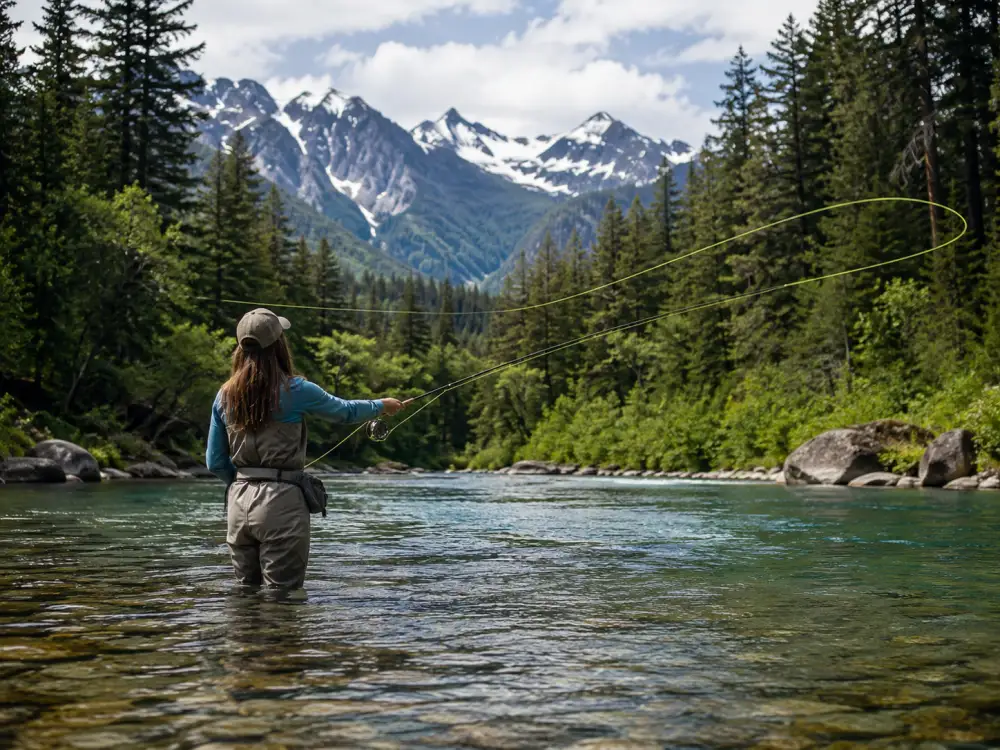
Why the Olympic Peninsula Matters for Fly Fishing
The west-side rivers of the Olympic Peninsula, the Hoh, Sol Duc, Bogachiel, Calawah, and Queets, hold some of the last truly wild winter steelhead runs in the lower 48 states. They're not stocked, not hatchery, not put-and-take. Decades of habitat protection inside Olympic National Park and on Forest Service land have kept the rivers cold, the gravels clean, and the runs ancestral. Steelhead conservation has tightened regulations enormously over the past five years; fly fishing is the dominant remaining legal method on several rivers.
Most anglers visit as a side trip to the broader region, pair a trip with our 3-day Olympic Peninsula Loop for sightseeing and a separate backpacking trip for the deep wilderness. For multi-day fishing trips, hiring a guide is strongly recommended (more on that below).
The Rivers
Hoh River
The biggest of the west-side rivers and the one most people picture first. The lower river above Forks holds winter and summer steelhead, several salmon runs (chinook, coho, chum), and resident cutthroat trout. The middle Hoh inside the park is restricted to certain seasons, check WDFW regulations every year, they shift constantly. Drift-boat float trips with a local guide are the standard way to fish it.
Sol Duc River
Native steelhead, salmon, and rainbow trout in pocket water and pools. The Sol Duc has produced some of the largest wild steelhead ever caught on the peninsula. Bank access is good along Highway 101 between Forks and the Sol Duc Hot Springs road; below the falls is the productive zone.
Bogachiel River
The Bogachiel ("Boge" locally) is the most consistent winter steelhead river on the peninsula. Drift boats from Bogachiel State Park to the Highway 101 takeout is a classic float. Wild and hatchery runs both present in the lower river. Smaller crowds than the Hoh.
Calawah River
A tributary to the Bogachiel, the Calawah holds wild steelhead and sea-run cutthroat. Smaller and more wadeable than the Hoh; popular for swung-fly steelhead anglers.
Queets River
Inside Olympic National Park, the Queets is the most remote of the productive rivers. Access requires a long drive on an unpaved road and most fishing happens via drift-boat float arranged with a guide service in Forks.
Species and Seasons
- Winter steelhead: December–April. The most iconic Olympic Peninsula fly-fishing target. Wild fish are catch-and-release on virtually all west-side rivers; hatchery fish (clipped adipose fin) may be kept on specific waters during specific windows.
- Summer steelhead: May–September. Lower numbers but spectacular fish in low, clear water. The Sol Duc is the classic summer-run river.
- Chinook (king) salmon: Late August–October. The Hoh and Queets see the strongest runs.
- Coho (silver) salmon: Late September–November. Aggressive fish that take swung flies eagerly.
- Sea-run cutthroat trout: June–October. Smaller, scrappy native trout that move between salt and fresh water.
- Resident rainbow trout: Year-round in many waters with rod and reel; check the WDFW pamphlet for closures.
Regulations: Read Before You Go
Olympic Peninsula fishing regulations change every year, sometimes mid-season, to protect wild steelhead. As of the most recent emergency rule:
- Most west-side rivers are selective gear only (single barbless hook, no bait).
- Bobber and jig is restricted on many rivers; fly fishing and certain lure setups are still allowed.
- Wild steelhead must be released unharmed and in the waterno removing from the river for photos.
- You need a Washington fishing license + Columbia River salmon/steelhead endorsement (also valid here) + a free annual catch record card. Buy at any sporting goods store or online from WDFW.
- The Hoh, Quinault, and Queets have specific tribal co-management, guides know which sections are open which days.
Always check the current Washington Sport Fishing Pamphlet and any emergency rule changes before each trip. Rivers can go closed-with-a-week's-notice when a run comes in below escapement.
Fly Fishing Inside Olympic National Park
Fishing inside Olympic National Park itself has one real difference from the rest of Washington: you do not need a Washington State fishing license, with one exception, fishing from shore in the Pacific Ocean, which still requires the state license. Anglers under 15 are exempt everywhere. You still need the free Washington catch record card if you are targeting salmon or steelhead, in the park or out of it, and fish you release do not need to be logged.
Park rules run stricter than state water in places. Most park freshwater is barbless-hook only, bull trout and Dolly Varden must always be released, and fishing hours are limited to one hour before official sunrise through one hour after official sunset. The Hoh and Queets both spend long stretches inside the park boundary, which is one reason guide services run drift-boat trips there specifically, so confirm with a guide which water you are on before you fish it.
Hiring a Guide
For first-time visitors, a guided float is the right move. Guides own the drift boats, know the runs, and stay on top of the regulation shifts. Expect to pay $400–650 per day for one or two anglers, gear and lunch included in most cases. Most outfitters are based in Forks or Port Angeles.
We're building a directory of vetted Olympic Peninsula fly fishing guides on our fishing guides resource pagethat's the right place to find a local outfitter or, if you run a guide service, to get listed.
Gear (Standard PNW Steelhead Setup)
- Rod: 7-weight for trout and summer steelhead; 8-weight for winter steelhead; 13–14 ft Spey rod for swung-fly winter work.
- Reel: Large arbor with a quality sealed drag, wild Olympic steelhead run hard.
- Line: WF floating for nymphing; Skagit head + sink tip for swung flies.
- Waders: Breathable chest waders with quality boots, felt soles are banned in Washington, use rubber + studs.
- Flies: Egg patterns, intruders, prawn patterns for winter; classic wet flies and small nymphs for summer.
- Rain gear: Hard shell jacket, you're in the rain forest, not Montana.
- Wading staff: Olympic rivers run fast and cobbled.
Where to Stay
- Forks, WA: The de facto angling base. Pacific Inn Motel, Olympic Suites, Misty Valley Inn are all walkable to outfitters.
- Lake Quinault Lodge: If you're fishing the Quinault or Queets.
- Port Angeles: Better restaurants, less convenient for the west-side rivers.
Common Mistakes
- Showing up without checking regulations. Rules change yearly and emergency closures happen. Carry a printed pamphlet.
- Bringing a 5-weight for winter steelhead. They'll break it on the first hard run.
- Using bait or felt soles. Both are illegal in selective-gear waters / in Washington statewide.
- Underestimating the rain. The Hoh gets 12 feet a year. Bring real waterproof shells, not a windbreaker.
- Trying to wade swift winter water alone. Drift boat with a guide is much safer (and more productive).
Pair With the Loop
Pair your fly fishing trip with a day on the 3-day Olympic Peninsula Loop for the headline rain forest and beach stops, most anglers do exactly this with a rest day between fishing days. For winter visits when steelhead season peaks, see our Olympic Peninsula in Winter guide for what else is open.
Fly Fishing the Olympic Peninsula FAQs
The Hoh is the biggest and most famous, the Sol Duc has produced some of the largest wild steelhead, and the Bogachiel is the most consistent winter steelhead river. For sea-run cutthroat, the Calawah is a classic. Most anglers fish at least two rivers per trip with a local guide.
Winter steelhead peak December through April, that's the iconic fishery. Summer steelhead are May to September. Salmon (chinook, coho) run late August through November. Sea-run cutthroat are best June through October.
Not legally, you just need a Washington fishing license and the right endorsements. But for first-time visitors, hiring a guide is highly recommended. The rivers are big, regulations change constantly, and a drift-boat float dramatically increases your access and your odds. Expect $400–650/day for one or two anglers.
Most west-side rivers are selective gear only (single barbless hook, no bait). Wild steelhead are catch-and-release and must stay in the water, no removing for photos. Bobber-and-jig restrictions vary by river. Always check the current Washington Sport Fishing Pamphlet plus any emergency rules before your trip; closures can happen with a week's notice.
Online from the Washington Department of Fish and Wildlife (WDFW) or at any sporting goods store. You'll need a basic freshwater license plus a Columbia River salmon/steelhead endorsement (also valid on the peninsula) plus a free annual catch record card (CRC).
Expect $400 to $650 per day for one or two anglers, with gear and lunch included in most cases. Most outfitters are based in Forks or Port Angeles and run drift-boat floats on the Hoh, Sol Duc, Bogachiel, or Queets.
Yes. The worked day-by-day plan is Olympic Peninsula Loop: 3-Day Drive, with the permits, the stays and the drive times already sorted. Tell us your dates and we will put it together for you and confirm what is genuinely open on those days. Asking is free: no card, no deposit, and nothing is held until you say yes.