The Highest Trail in the Park
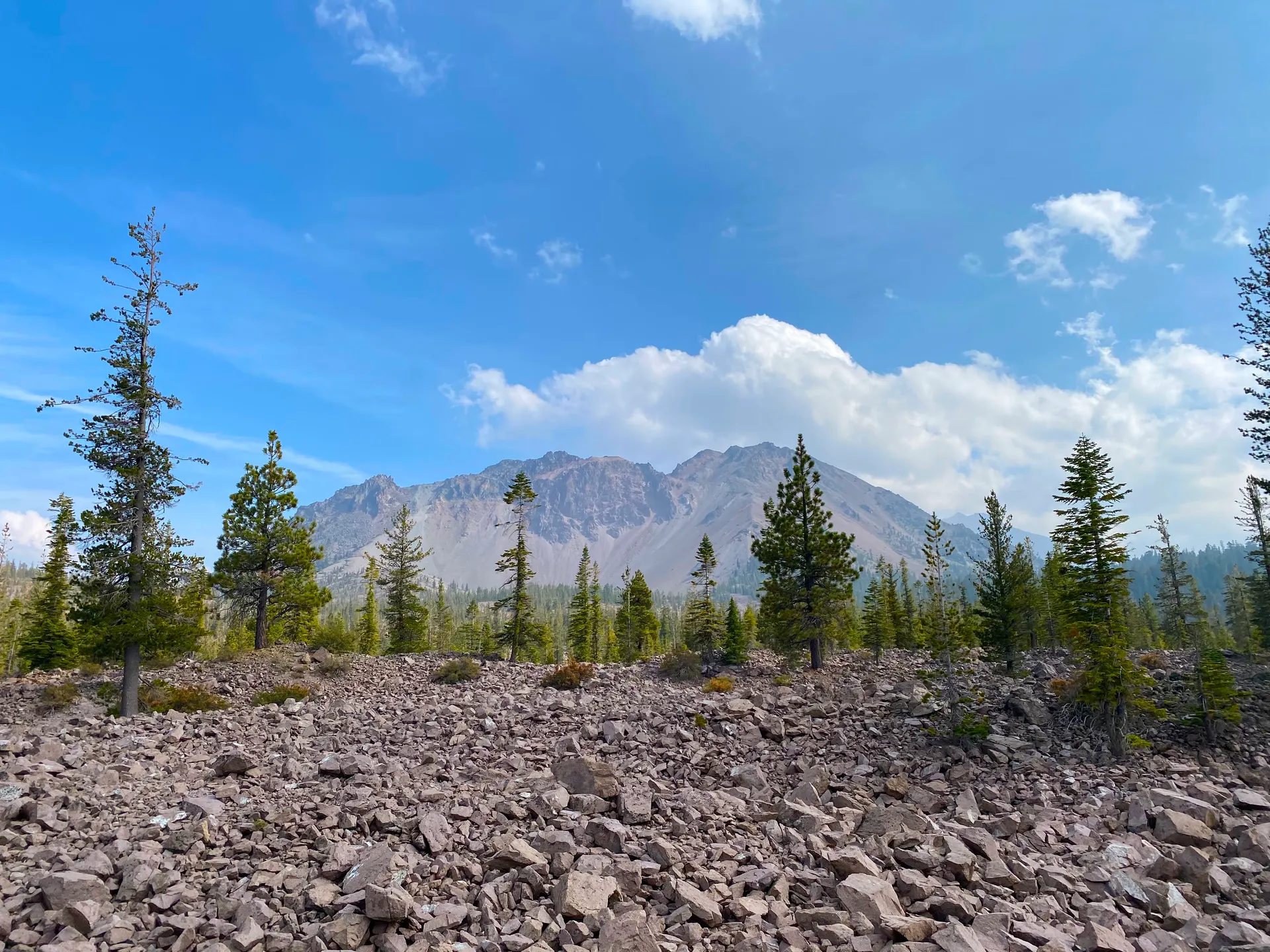
The Lassen Peak Trail climbs to the 10,457-foot summit of the largest plug-dome volcano on Earth. Lassen last erupted between 1914 and 1917, and from the top you stand on rubble left by that eruption while looking across the entire southern Cascades. On a clear morning you can pick out Mount Shasta to the north, the Sacramento Valley to the west, and the Sierra Nevada fading south. It is the marquee summit of Lassen Volcanic National Park and the natural centerpiece of any serious day-hiking trip.
For a two-day plan that builds up to this climb, follow our Lassen Volcanic day hikes itinerary, which schedules Bumpass Hell and Kings Creek Falls around a summit morning.
Trail Stats
- Distance: about 5 miles round trip
- Elevation gain: roughly 2,000 feet
- Trailhead elevation: 8,500 feet
- Difficulty: Strenuous
- Time: 4 to 5 hours
The numbers look modest, but every step happens above 8,500 feet, so the thin air doubles the effort. Hikers coming straight from sea level often feel lightheaded on the upper switchbacks.
Breaking Down the Switchbacks
The trail leaves the Lassen Peak parking area on the Main Park Road and climbs steadily through volcanic gravel and stunted whitebark pines. The route is essentially one long sequence of switchbacks with no flat stretches. The first mile gains ground gently; the middle section steepens above tree line where the wind picks up; and the final push crosses loose scree to a false summit before a short rocky scramble to the true high point. Take the spur paths to the summit crater rim for the best panorama.
Best Time and Snow
Like most high routes in the park, the summit trail is snow-covered until mid-July in a typical year. The dependable season is late July through early October. Start at sunrise to beat afternoon thunderstorms, which build fast over the peak in July and August and make the exposed ridge dangerous for lightning. By late September the trail is dry and quiet but the summit can be bitterly cold and windy.
What to Pack for Summit Day
This is an exposed alpine climb with zero shade and no water on the trail. Bring at least three liters of water per person, high-calorie snacks, a warm layer and windbreaker even in summer, sunglasses, and strong sunscreen. A wide-brim hat and trekking poles ease the descent on loose gravel. Cell service is unreliable, so tell someone your plan and carry a paper park map.
Acclimation and Pacing
If you have just driven up from Redding or Mineral, spend a night near Manzanita Lake or in the southwest entrance area before attempting the summit. Hike the lower trails like Kings Creek Falls or Bumpass Hell the day before to adjust to the altitude. On summit day, set a slow, steady rhythm, take short breaks, and turn around if anyone shows signs of altitude sickness. The mountain will still be there next season.
Getting to the Trailhead
The Lassen Peak parking area sits at mile marker 22 on the Main Park Road (Highway 89), almost exactly halfway between the two main entrances. From the southwest, enter at the Kohm Yah-mah-nee Visitor Center near Mineral, about 50 minutes east of Red Bluff on Highway 36. From the north, enter near Manzanita Lake off Highway 44 from Redding, roughly a 45-minute drive on to the trailhead. The lot is small and fills early on summer weekends, so plan to arrive before 8 a.m. The Main Park Road usually opens fully in late June or early July once plows clear the drifts, and it closes again with the first heavy snows of fall. Check the park road status before a summit day, because a storm can shut the high road overnight.
Reading the Volcano From the Top
The summit is an open-air geology lesson, and a little context makes the climb far more rewarding. As you cross the upper scree, look for the gray and pink dacite rock that built the dome and the jumbled blocks thrown out during the 1915 eruption. To the southeast you can trace the Devastated Area, where a hot avalanche and mudflow stripped the forest, now slowly regrowing. Other landmarks worth picking out:
- Mount Shasta: the snow-capped giant to the north
- Brokeoff Mountain: a remnant of ancient Mount Tehama to the southwest
- Lake Almanor: the broad blue reservoir to the southeast
- Chaos Crags: the cluster of lava domes near the north entrance
The true summit has a small register and the eroded rim of the old crater. Give yourself 30 minutes up top to eat, photograph, and soak in one of the best volcanic views in California.
Safety on an Active Volcano
Lassen is still an active volcano, monitored constantly by the USGS, though an eruption with no warning is extremely unlikely. The everyday hazards are far more ordinary: altitude, weather, and footing. Watch for these warning signs and respond early:
- Building clouds: if thunderheads form before noon, turn back before the ridge
- Headache or nausea: classic early altitude sickness, so descend
- Loose scree: step deliberately on the descent, where most twisted ankles happen
Dogs, bikes, and drones are not allowed on the trail, and rangers ask hikers to stay on the established switchbacks to protect the fragile alpine slopes. Pack out everything you bring in.
Easier Alternatives if You Skip the Summit
Not everyone needs to top out at 10,457 feet to enjoy the high country. If the full climb feels like too much, several shorter options give big payoffs for less effort. Bumpass Hell is a 3-mile round trip to the park's largest hydrothermal basin of boiling mud pots and steam vents. Kings Creek Falls drops through meadows to a 30-foot cascade in about 2.7 miles. The Manzanita Lake loop is a flat, family-friendly 1.8-mile stroll with a postcard reflection of the peak. Hiking one of these the day before is also the smartest way to acclimate for a summit attempt later in your trip.
Lassen Peak Summit Hike: Climbing a 10,457-Foot Volcano FAQs
It is strenuous: about 5 miles round trip with 2,000 feet of climbing, all above 8,500 feet. The distance is short but the altitude and constant switchbacks make it a demanding half-day effort.
Most fit hikers complete the round trip in 4 to 5 hours, including time at the summit. Start at sunrise to avoid afternoon thunderstorms over the exposed ridge.
Late July through early October, after the snow melts off the upper switchbacks. Begin early to beat July and August thunderstorms, and expect cold, windy conditions on the summit by late September.