Why the Kancamagus Is New England's Best Foliage Drive
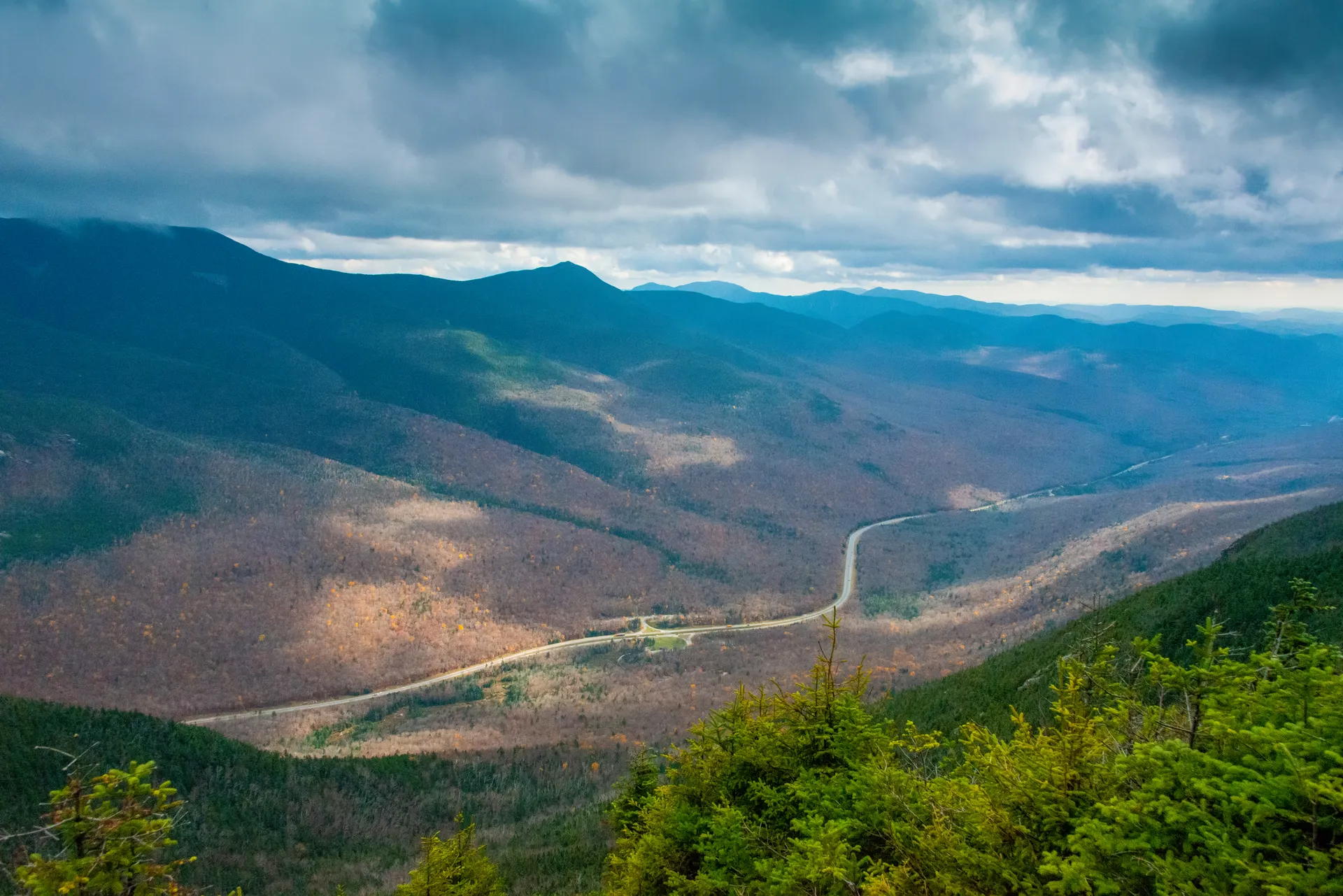
The Kancamagus Highway, known to locals simply as the Kanc, runs 34.5 miles along New Hampshire Route 112 between Lincoln in the west and Conway in the east. It climbs to nearly 3,000 feet at Kancamagus Pass, cutting straight through the heart of the White Mountain National Forest. Because there are no gas stations, no services, and no billboards along its length, you get an uninterrupted ribbon of sugar maple, beech, and birch that turns scarlet, orange, and gold every autumn. For first-time visitors, this drive is the centerpiece of any leaf-peeping trip and a natural anchor for the broader New England fall road trip.
When to Go for Peak Color
Foliage on the Kanc peaks earlier than in the valleys because of its elevation. In a typical year the high points around Kancamagus Pass turn during the last week of September, while the lower elevations near Conway and Lincoln hit their stride in the first and second weeks of October. This staggering is a gift: even if you arrive a few days off, you can usually chase color up or down the road to find a section near peak.
- Late September: Pass and upper slopes turning, valleys still green.
- Early October: Classic peak across most of the highway.
- Mid October: Lower elevations and the Swift River corridor glowing.
Drive It East to West (and Start Early)
Most people drive the Kanc from Conway to Lincoln so the major overlooks sit on the right-hand side, making it safer to pull off. Whichever direction you choose, leave at sunrise. By 10 a.m. on an October Saturday the lots at the popular stops fill, traffic crawls, and you spend more time braking than looking at trees. An early start also gives you soft morning light on the ridgelines and mist rising off the Swift River.
The Stops You Should Not Skip
The Kanc is short enough to drive end to end in 45 minutes, but the point is to stop. These pull-offs are worth the time:
- Lower Falls and Rocky Gorge: Two easy riverside stops where the Swift River tumbles over granite ledges framed by maples.
- Sabbaday Falls: A flat half-mile walk to a tiered waterfall in a mossy gorge, gorgeous against fall color.
- Sugar Hill Overlook: A sweeping westward view toward the Pemigewasset Wilderness.
- C.L. Graham Wangan Grounds: The classic panoramic overlook near the height of land.
Short Hikes Right Off the Highway
If you want to stretch your legs without committing to a full mountain climb, several trailheads sit directly on the Kanc. The Boulder Loop Trail near the Albany Covered Bridge is a 3.1-mile loop that rewards you with open ledges overlooking the Swift River valley blanketed in color. The Lincoln Woods Trail at the western end follows an old logging railroad along the Pemigewasset River, flat and family friendly. For a bigger payoff, the climb up Mount Potash delivers ledge views over the entire valley. Remember that every parking area along the Kanc requires a White Mountain National Forest recreation pass, available at the Lincoln and Conway ranger stations or self-serve kiosks.
Practical Tips for a Smooth Day
Cell service is essentially nonexistent on the highway, so download maps before you leave town. Fuel up in Lincoln or Conway because there is nowhere to do so in between. Pack layers: the pass can be 15 to 20 degrees colder and windier than the valley floor. Bring a thermos and snacks so you can linger at an overlook instead of rushing back to a restaurant. Finally, never stop in the travel lane for a photo. Use the marked pull-offs, which is exactly where the best views are anyway.
Make It Part of a Bigger Trip
The Kanc pairs naturally with Franconia Notch State Park just to the west, where the Flume Gorge and the Cannon Mountain tramway add more color and a different angle on the Whites. From there it is an easy drive into Vermont's Green Mountains or up to Maine. Stringing these regions together over several days is exactly what our seven-day New England foliage itinerary is built to do.
Driving the Kancamagus Highway for Fall Foliage FAQs
Driving straight through takes about 45 minutes, but to enjoy the overlooks, waterfalls, and a short hike or two, plan on half a day to a full day.
Yes. Parking at any trailhead or recreation site requires a White Mountain National Forest recreation pass, sold at the Lincoln and Conway ranger stations and at self-serve kiosks.
The higher elevations near Kancamagus Pass usually peak in late September, while the lower elevations near Lincoln and Conway peak during the first two weeks of October.