Most hiking emergencies are preventable. The ones that are not are survivable when you carry the right gear and know how to use it. The 10 Essentials framework has guided hikers for 90 years -- here is the modern interpretation for 2025.
The 10 Essentials (Modern System)
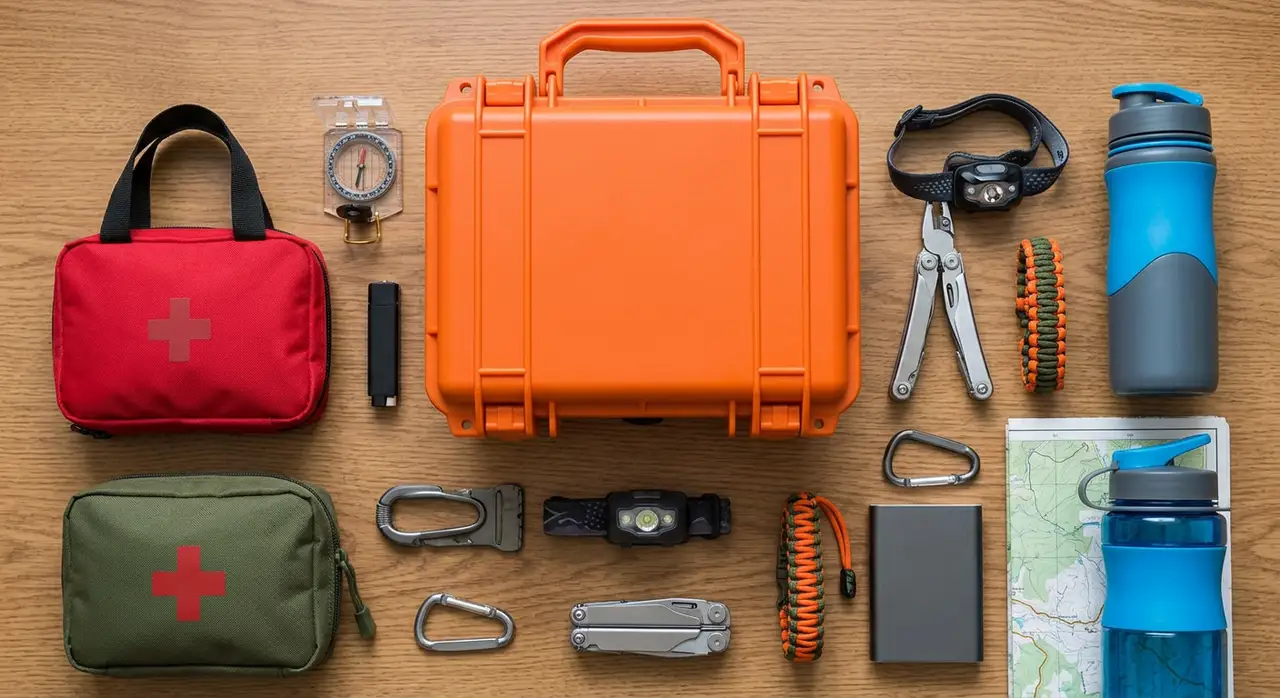
- Navigation -- downloaded offline map (Gaia GPS or AllTrails), compass, and paper map of your route
- Sun protection -- SPF 30+ sunscreen, UV-blocking sunglasses, sun hat
- Insulation -- extra layers beyond what you need; hypothermia can occur at 50 degrees F in wet conditions
- Illumination -- headlamp with fresh batteries (or a backup battery bank); never hike to sunset without one
- First aid kit -- pre-assembled kit with blister care, wound closure strips, pain relievers, and any personal medications
- Fire -- waterproof matches or a lighter, plus a fire-starting cube for wet conditions
- Repair tools and knife -- multi-tool or knife, duct tape, gear repair tape
- Nutrition -- one day's extra food beyond your planned consumption
- Hydration -- extra water plus a filter or purification tablets
- Emergency shelter -- bivy sack, emergency space blanket, or tarp; weighs 3-6 oz and can save your life
Emergency Communication Options
In order of reliability:
- Garmin inReach Mini 2 or similar satellite communicator -- two-way messaging and SOS from anywhere on earth ($350 + subscription)
- Personal Locator Beacon (PLB) -- one-way SOS only, no subscription fee, registered to your name ($250-350)
- Cell phone -- works on many trails; download your map offline before leaving cell coverage
- Whistle -- three blasts is the universal distress signal; audible over distances where voices are not
If You Get Lost
- Stop moving the moment you realize you are unsure of your location
- Calm down -- most hikers are found within 24 hours when a trip plan was filed
- Look for the last known landmark on your map and work backward
- If truly lost, stay put -- rescue teams search where you were last known to be, not where you wandered
- Make yourself visible and audible: whistle blasts, bright gear, signal mirror
Handling a Trail Injury
For any injury severe enough to prevent self-rescue: activate your emergency communication device, stay warm and sheltered, signal for help visually and audibly, and have your exact location (trail name, GPS coordinates, landmark description) ready. Treat for shock (keep flat, insulate from ground) while waiting for rescue.
Building a First Aid Kit That Actually Works
Store-bought kits are padded with bandages you will rarely use and short on the items that matter on trail. Build or upgrade your own around the injuries hikers actually get: blisters, sprains, cuts, and dehydration. A solid day-hike kit fits in a quart freezer bag and weighs under 8 oz.
- Blister care -- this is the number-one trail injury. Carry Leukotape (sticks for hours, even when sweaty), moleskin, and a few alcohol wipes to clean and dry skin first
- Wound closure -- butterfly closure strips or Steri-Strips beat large gauze pads for deep cuts; add a small tube of antibiotic ointment
- Sprain support -- one 3-inch elastic wrap (ACE bandage) doubles as ankle support and a pressure dressing
- Medications -- ibuprofen for swelling, an antihistamine (Benadryl) for allergic reactions, and any personal prescriptions in a labeled container
- Tools -- tweezers for splinters and cactus spines, small trauma shears, and nitrile gloves
Check expiration dates every spring and replace anything you used after each trip. A kit you never restock is just dead weight.
Day Hike vs. Backcountry: What Changes
The 10 Essentials scale with your exposure. On a popular 4-mile loop with cell service and rangers, your margin of error is hours. On a remote section of the Sierra High Route or a solo overnight in the Wind River Range, it is days, and a small mistake compounds fast.
For day hikes near civilization, a compact kit and a charged phone with offline maps usually suffice. For backcountry travel, add a satellite communicator, a real emergency shelter (not just a foil blanket), a water filter rather than tablets alone, and at least one full extra day of calorie-dense food. Always file a trip plan with someone who will call for help if you do not check in by a set time.
Seasonal Adjustments to Your Kit
Conditions drive what you carry more than the calendar does. Match your kit to the real hazards of the season and region you are hiking.
- Winter and shoulder season -- microspikes or traction devices, an extra insulating layer, chemical hand and toe warmers, and a thermos of hot liquid. Daylight is short, so a second light source is non-negotiable
- Summer desert (Grand Canyon, Joshua Tree, Big Bend) -- double your water, carry electrolyte tablets, start at dawn, and add a sun umbrella; heat illness kills more desert hikers than falls
- Spring snowmelt -- expect swollen creek crossings; pack quick-dry layers and never cross fast water above the knee
- Wildfire season (late summer in the West) -- carry an N95 mask, check InciWeb and air quality before you go, and know two exit routes
Before You Leave the Trailhead
Gear is only half of preparedness. The other half is the five minutes you spend before stepping onto the trail.
- File a trip plan -- tell a specific person your route, expected return time, and vehicle description
- Check the forecast -- look at temperature, precipitation, and wind at trail elevation, not just the nearest town
- Download offline maps -- confirm the area is saved before you lose signal
- Sign the trailhead register -- where one exists, it gives searchers a confirmed starting point
- Top off devices -- start with a fully charged phone and communicator, and carry a power bank
Preparedness is a habit, not a purchase. Carry the essentials every time, practice using them before you need them, and the odds shift firmly in your favor.
Hiking Emergency Essentials: What to Carry and What to Do FAQs
A communication plan. Tell someone your route and return time before every hike -- this single action is what makes you findable if something goes wrong. After that, a headlamp (more emergencies involve being caught out after dark than any other scenario) and an emergency shelter are the highest-impact physical items.
Not for most day hikes on popular, well-marked trails. For remote trails, solo hiking in technical terrain, or areas with no cell coverage, a Garmin inReach Mini or PLB is worthwhile. The inReach Mini 2 weighs 3.5 oz and costs $1/day on the recreational plan -- a reasonable investment for remote adventures.
Keep the group together, treat immediately for life-threatening conditions (major bleeding, airway), activate emergency communication, send the fastest hiker to cell coverage if no satellite device is available, document the injury and location, and stay warm while waiting. Never leave an injured person alone except as a last resort to get help.